Just recently I reviewed a 21yo Caol Ila from Signatory Vintage Cask #467. When rummaging through some sample bottles I collected over the years one of its sister casks popped up. This time it is Cask #465. How’s that for luck. And as luck would have it, I still have a wee bit of cask #467 left, so a comparison can’t be avoided. Again no picture available for this particular cask, seems to me this is very obscure stuff. I’ll use the ol’ picture of cask #470 again. So without further ado…
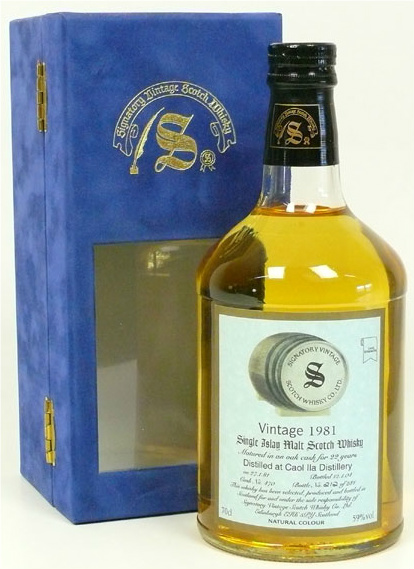 Color: Light gold. The color of this one is ever so slightly lighter than cask #467.
Nose: Grassy and vegetal. Citrussy. Fresh and actually young smelling. Even the wood smells sappy. Powdery. Hints of soft, fatty, and creamy smoke. Appetizing. Milk chocolate (with sugared citrus in it) and a tiny hint of latte. All very friendly smelling, and although this is not a heavily peated Caol Ila it is very attractive. Good balance.
Taste: Sweet and fruity. prickly smoke with some late development in the licorice department. Light licorice. also a tiny hint of cannabis, so probably a lot was allocated to the Netherlands. Alcohol and again a small hint of coffee and fern. Milk chocolate again. Small amount of woody bitterness starts the finish and lingers on the back of my tongue. Not the most expressive of Caol Ila’s but quite nice in its own way. Not a very long finish. The high strength is obvious on the tongue, but not a lot of aroma is left in my throat. It’s not what you would expect from a Caol Ila like this, but when you let that go, it’s pretty rewarding.
Comparing the two, the noses of the two are obviously pretty similar. Cask #465 has the better nose, more balance to it. Aroma’s seem to fit together better and has more depth and complexity. Still the difference is not great. The taste is very similar too. Cask #467 seems to be somewhat more raw at first, and less balanced.After a while it is also softer and sweeter in the finish. Cask #465 is for me the better pick of the two, with even a slightly better finish, so overall it performs better. Still they are really twins and the differences are in the details and easier to pick up on when doing a H2H.
Points: 86
Thanks go out to my mate Michel for providing this sample (a long time ago).
 Strathmill was founded in 1891 in an old mill, that dates back to 1823. At first is was called Glenisla but when the distillery was sold to W&A Gilbey in 1895 they changed its name to Strathmill. Through some mergers along the way finally Strathmill becomes one of many distilleries in the Diageo portfolio. Strathmill is a big component in the J&B Blended Whisky. Not a lot of Strathmill was officially bottled by its owners. Best known of course, are the 12yo Flora & Fauna bottling, The Managers’ Dram and the Managers’ Choice that was released in 2009. This year Strathmill features in the highly priced annual releases from Diageo. A 25yo was released just recently…
 Color: Copper
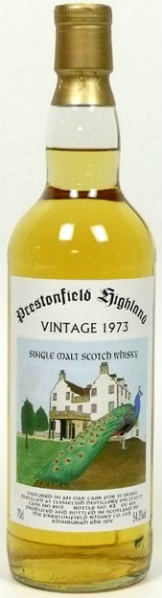 This Clynelish was distilled July 23rd 1973, a year Brora was still open but not very active, if active at all. As we all know, 1972 was Brora’s finest year, or so it seems. Time to find out what they did one year later at Clynelish…
 Well lets end this month with something different. Wow! Look at the label. Pure Grain Scotch Whisky! Today we call this a Single Grain Whisky. North British was founded in 1885 and lies near Edinburgh, on the site of a former pig farm. North British is a joint venture between Diageo and The Edrington Group. I don’t think Diageo needs an introduction, but the Edrington Group today is best known for their Highland Park and Macallan distilleries and The Famous Grouse and Cutty Sark blends.
 Most important is that this still operates continuously as opposed to a pot still. The alcohol from a continuous still is much cheaper to make. The spirit is made at a higher strength (ABV) and has less flavor, more neutral. This kind of whisky is made for blended whisky, and is not often bottled by itself. If bottled by itself, like this single grain, almost all of it is aged for a prolonged period of time, to get as much flavor as possible from the cask is matures in.
 Color: Gold
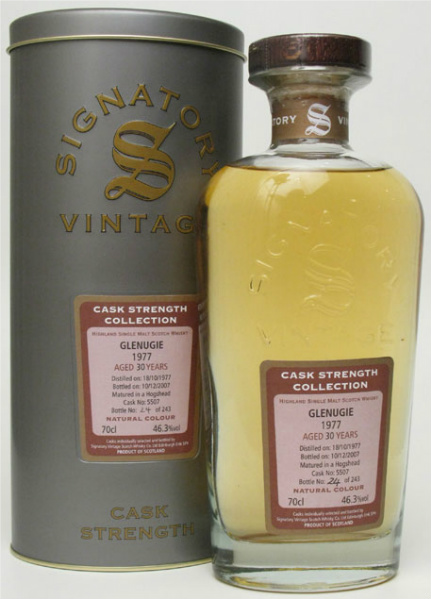 Color: White wine.
 After reviewing one of the most popular official releases by Springbank, the
  Later some mint and furniture wax. Nice throat coating finish.
 Yes! Another example from the distillery that took its water from the Penwapple Reservoir, yes say it again, the Penwapple Reservoir. This time one of the many sister casks from the last year of operation, bottled by Signatory.
 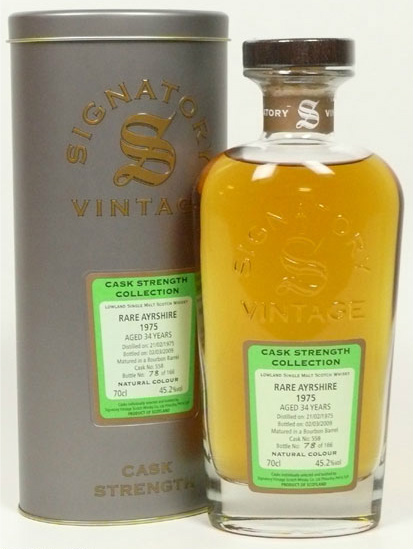 Color: Gold (slightly lighter than barrel #562)
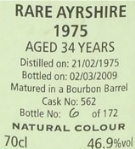 Ladyburn wasn’t long around. Opened in 1966 and already closed in 1975. It was built by W. Grant & Sons within their Girvan grain distillery complex. Not completely uncommon in those days, since there were more malt distilleries on a grain distillery site. Glen Flagler was added to the Moffat site and Ben Wyvis was added to Invergordon. All three didn’t last long and are pretty scarce these days. These Rare Ayrshire’s are still around, but there will be a time soon, they will not, and prices will soar. So is this worth your money? Lets see…
 Well officially there is no Ladyburn on the label, still it isn’t hard to guess what this must be. Out of the blue Signatory started to bottle a lot of casks from Ladyburn. Which is always nice since the place shut down in 1975 and whiskies from Ladyburn are getting more and more rare.
 Master Quill