After one blend and three reduced bottlings from their standard range, here is finally the first example of an “untouched” New Zealand Whisky. A 1993 expression bottled at cask strength and from single cask #21. That’s more like it. This way we can finally find out what the distiller intended. How did the spirit interact with the wood from the cask. No information about the cask itself has been given so we aren’t handicapped with information this time, and can just dig in…
 Color: Light gold.
Nose: Fruity and dusty, carried with an undertone of fresh wood. I would say this came from a Bourbon cask. Not hard to tell since the wood impaired quite a lot of vanilla-flavours. One with green fingers too, since it has more traits from the kingdom of plants, than the wood alone. It’s easy to admit, this one is driven by wood. Even the spices are wood related, and what about the whiff of pencil-shavings and the aroma of freshly broken off twig? Does this mean this one is dominated by wood? Not at all. The wood gave of various elements of itself, without overpowering it. All in good measure. It has a promise of sweetness (toffee) and the big wood-vanilla synergy makes this a fruity and creamy nose with some backbone and character given by the wood. Slightly oriental (Indian) and floral. Restrained, elegant and wonderful.
Taste: Nice spicy, prickly and woody entry. It starts out with fresh oak and a quite big, nice vegetal sweetness. Tiny hint of bitterness. Right from the start it is obvious this one is carried by the cask strength. Good this wasn’t reduced. It doesn’t seem to have as many woody traits as the nose. Definitely simpler in design than the nose. The fruity bit I taste is a bit peculiar. To me it seems, the mixture of yellow and red fruits don’t combine perfectly here. More cereals and bread tones towards the end. The finish is shorter than expected and it’s the grainy, bread-like and slightly bitter bit that has the biggest influence on the finish.
The strength of this malt is the wonderful nose, as well as well on entry in the mouth. From there it goes a bit downhill. The body sort of disintegrated in my mouth and although the cask strength is noticeable, it doesn’t carry the aroma’s into the finish in a big way. This is a Malt that needs to be tasted, taking big sips. Good stuff nevertheless, easy drinking Whisky, but probably not the best single cask bottled by the NZWC. We’ll see because I have two more hidden away somewhere.
Points: 85
 Color: Almost full gold.
 Color: Light gold.
 First of all the NZWC has some blends. The DoubleWood 10yo we know, but there also is a DoubleWood 15yo. Both blends had some extensive finishing in New Zealand wine casks. The Water of Leith is another blend by the NZWC, that one is 70% Single Malt, and 30% Grain Whisky.
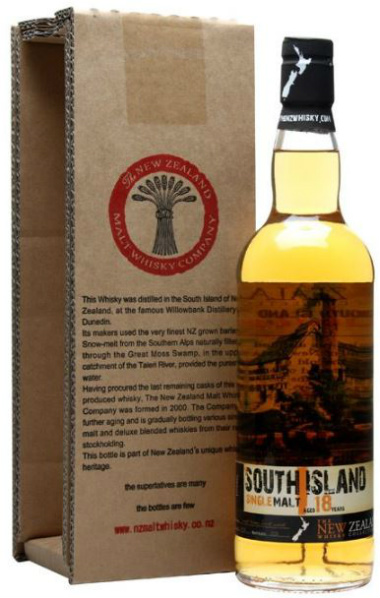 Color: Light gold.
 This time we’ll concentrate on the biggest and best known of the New Zealand Whisky producers, al be it under a lot of different names, and also under quite some different management.
 First Warren Preston bought the Distillery and some 600 ageing casks of amongst others Lammerlaw Malt Whisky and starting a firm called The New Zealand Malt Whisky Company (NZMWC). The Casks were laid down in Oamaru. Some 150 of those casks were bottled (under the Milfort brand name, but also Blended Whisky under the Preston’s brand name). Alas NZMWC went bankrupt and in 2010 the Forward looking entrepreneur Greg Ramsay (leading a consortium of investors) took over and renamed the firm The New Zealand Whisky Company (NZWC). Mr. Ramsay bought the last 450 casks of Whisky of which half were Lammerlaw Malt Whisky (18 to 24yo) and the other half Wilson’s Whisky (at least 12yo). By 2012 some 90 casks were bottled for the current range, so by now only 360 casks are left. In the grand scheme of things and the good promotion for the Whisky being carried out, I guess that the whole stock will be sold by the end of 2016. So be quick, because, this New Zealand whisky is rapidly becoming extinct!
 Color: Red copper.
 Master Quill