Cadenhead Creations 20yo ‘Rich Fruity Sherry’ (46%, Batch No. 1, 2013)

Cadenheads CreationsMerry Christmas everybody! In 2013 Cadenheads released a home-made blend called Cadenhead Creations (Rich Fruity Sherry). This first batch had an age statement of 20yo and was bottled in 2013. The blend was made with two casks of Single Malt and two casks of Single Grains. Samples of those casks are pictured here on the right. From left to right: Mortlach 1992 (cask #7848), Bruichladdich 1993 (cask #1648), Cameronbridge 1989 (cask #22804) and Invergordon 1991 (cask #39006). Since then two more Cadenhead Creations were released. A 21yo (black label, silver stripe, Blended Malt made with Ardbeg, Bowmore and Caol Ila) and a 17yo (white label, yellow stripe, another Blended Whisky made with Ardmore, Auchroisk, Caperdonich, Clynelish and Invergordon).

Cadenhead Creations 20yo 'Rich Fruity Sherry' (46%, Batch No. 1, 2013)Color: Full Gold.

Nose: Although it seems that this is a 50/50 mixture of Single Malt and Single Grain, the nose is more on the grainy side. Malty and waxy, paper and cardboard. Very nice wood. Meaty, nutty and spicy. Deeper down some hints of Sherry, not upfront as the label suggests. Fruity (but not sweet) and lots of character.

Taste: Malty and grainy again. The waxiness is here to, but here it is fruity and accompanied with a little bit of sweetness. Sweet paper and cardboard again. Some short, hot or red peppery attacks. Spicy and slightly bitter wood. Aspartame sweetness. The wood upfront and may be too strong. The wood makes it right across the body of the Whisky into the finish. Along the way the wood picks up a little bit of oaky bitterness, with together with the red peppery attack make the finish.

Rich, yes, rich wood. Fruity, well not so much if you ask me, the wood is way more pronounced. Sherry, well if you expect the dark Sherries from the picture above, that´s not the case here. It doesn’t remind me of Oloroso or PX-Sherry casks at all. This blend is about wood in many guises.

Points: 81 (for character)

Aberfeldy 12yo Limited Release (40%, OB, Batch #2905, 2014)

As mentioned before, through John Dewar and Sons, Bacardi owns five Scottish Malt Distilleries. This year Bacardi is releasing official bottlings from all of the five distilleries, and that’s not all. All Whiskies released will have age statements. As we have already seen, that’s a dying breed! Not for nothing these five malts are being marketed as “The Last Great Malts Collection” Aberfeldy is the third in a row and for the time being the last. The first was Craigellachie and the second Aultmore. The remaining two will be Royal Brackla and Deveron from the Macduff distillery, both are not released yet.

Abefeldy 12yo Limited Realease Batch #2905Color: Gold

Nose: Funky in a nice way. Creamy and fruity. Tropical fruits, papaya and pineapple. Smells a bit like a Tomatin. The fruit take the back seat and then some dry wood spiciness kicks in. Almonds. Dusty. Nice fruity and friendly nose. Caramel and cow-dung (a good thing in Whisky)

Taste: Toffee and some fruit. Waaaaayyyy to thin. Why bottle this at 40%! Bad move! Taste is there but it is watered down. Toffee again and Amaretto, but where is the rest? Hints of strange acidity in the (beerlike)finish. It’s all about vanilla ice-cream, cream, toffee and caramel with some fruit.

Better tasting than the previous 12yo. The taste was enhanced by extending the fermentation time for this bottling, and it worked. Why didn’t they enhance the ABV too?

Points: 81

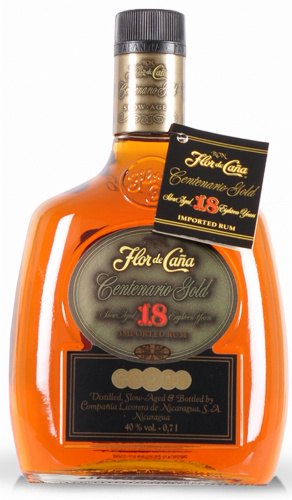
Flor de Caña 18yo Centenario Gold (40%, Nicaragua)

A long time ago in Master Quills Rum Week, I already reviewed the Flor de Caña 12yo Centenario, and as far as Rums go I wasn’t too impressed by it then. Funny enough, another rum from that week, The Diplomático 12yo Reserva Exclusiva, really grew on me over time, and is one I like a lot better these days. Flor de Caña actually is said to be a Rum for Whisky drinkers, since it isn’t too sweet. So almost two years later, and a lot more experience with Rum, lets give another, even older, example of Flor de Caña a chance. By the way, the looks of this particular bottle have been revamped lately, so this is a review of an older bottling (Code: AE-020U10CG/X), so take it away Master…

Flor de Caña 18yoColor: Orange Copper

Nose: Sweet sugared oranges mixed with nice wooden notes. Caramel and toffee. Vanilla, like you have finished your ice-cream dessert and the rest of it dried out in the bowl. Not very complex. It’s about wood, toffee and a little bit of vanilla (and some citrus skin). Good balance though.

Taste: Much drier than expected, well maybe not from Flor de Caña. Wood. Oak and cedar. Vanilla again, and actually pretty light. Tree sap and the slightest of bitters. Very easily drinkable and in no way would I have thought this was 18yo. Most rums at this age have more wood.

No over the top sweetness, nice woody notes and good balance. Pretty light yet well-balanced. That’s Flor de Caña 18yo in a nutshell. Good sipping rum. I think I should have another go at the 12yo, to see how I would like it now.

Points: 81

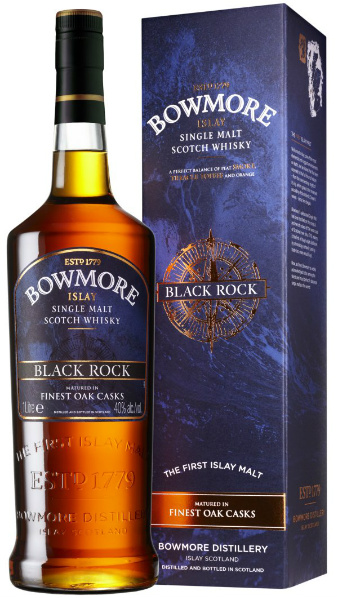
Bowmore “Black Rock” (40%, OB, for Travel Retail, 1 Litre)

This year Bowmore introduced, just like Macallan actually, a series of three bottles for travel Retail, without age statements but with names, and not any name, but names based on colors. Macallan tried it with the following nouns: Gold, Amber, Sienna (is that a color?) and Ruby. Bowmore are using the colors more as an adjective: Black Rock, Gold Reef and White Sands. The first two being also litre bottles. Non of the bottles have a great reputation and in case of some of these Macallan’s I have found out first hand that…well not that great. Now here is one of the three Bowmores, the most affordable of the three.

Bowmore 'Black Rock' (40%, OB, for Travel Retail, 1 Litre)Color: Red orange gold, cognac

Nose: Nice peat and maritime smoke, rubber and tires, but mixed with some strong acidic fruitiness. lots of earwax too. Salty, tarry and smoked dried fish. Vanilla. The longer the glass breathes the more pronounced and likeable the fruit notes get. Starting with your typical red sour berries and moving into the black fruits Bowmores have long been known for. That can still be done Excellent nose if you ask me.

Taste: Ashes and watery. Oh no, it’s too thin! Brief dry Sherry attack, which quickly dissipates and transforms in paper and ashes. Actually behind this is a (burnt) caramel note, and quite a lot of it. The back label states that is has been “treated” with E150, but I get a lot of this. Damn shame. Bowmore have become so good they don’t need that! The taste is very simple and the Sherry didn’t handle all the water used for reduction too well. It shows potential but driven by the decision to bottle this at 40% ABV (Economics I guess), they somewhat ruined it. A little bit of Rochefort under my tongue.

Easily drinkable due to the strength, but ruined a bit by reduction. Still underneath (and the nose still shows it), this was a good Bowmore.

Points: 81

Fettercairn 16yo 1995/2011 (46%, Van Wees, The Ultimate, Bourbon Barrel #408, 226 bottles)

Careful readers of the last few reviews have noticed there are some entry-level malts there and the odd Irish stuff. Coincidence or not, there were some points given in the 70’s. Like for instance The Macallan 10yo and Inchmurrin 15yo. Through the wonderful medium of Facebook I got comments like “did you lose a bet?” or “got some imposition?” or “What’s next: Fettercairn?” I initially wasn’t planning on reviewing Fettercairn just yet, but with comments like that who could resist. I have to be honest, I don’t own a bottle of Fettercairn. I had no money left when I spent it all on Brora. Luckily in the ever-growing bank of samples I did have a sample of this Ultimate Fettercairn. Hurray! Yes, you read correctly between the lines. Fettercairn isn’t a very popular Whisky, but is that fair? When I look at my list of previously tasted Fettercairns, I actually haven’t scored one below 81 points, so it can’t be bad, right?

Fettercairn 16yo 1995/2011 (46%, Van Wees, The Ultimate, Bourbon Barrel #408, 226 bottles)Color: Light gold

Nose: Creamy vanilla. Ice cream, but also small hints of a whiff of (burnt) garbage. What!?!?! Let’s put that particular smell away and move on. Spicy wood, dark chocolate, nice oak actually. With some air, pencil shavings and more floral and slightly soapy. Move the Whisky around in your glass and you’ll pick up the more floral bit. Wet flower-pot soil and half-dried grass. I’m thinking first refill (not first fill) Bourbon barrel. Apart from the little off-note I picked up earlier (I actually did just take the garbage out), there is nothing out of the ordinary here. It smells like a typical Whisky from a Bourbon barrel.

Taste: Somewhat sweeter initially than I expected. Creamy vanilla. Warming and quite some wood, less of the oak, but more of the pencil shaving that are there in the nose, but also cardboard. Pepper and a hint of acidity (also from oak, that reminds me again of garbage. What!?!?! No, I’ve never eaten garbage in case you’re wondering). Small amounts of the vanilla/caramel/toffee group are rightly detected. Warming finish that is a little bit hot (and woody).

So why does Fettercairn have such a bad reputation? I honestly couldn’t tell you, since I have only tasted a mere five expressions. I have tasted this independent bottling now and another one from Cadenhead’s (a 10yo from 1993, 81 points). The other three were the official 24yo (85 points) and 30yo (82 points), both from 2009, and the 30yo “Stillman’s Dram” from 2005 (83 points). It seems to me older is not always better with Fettercairn.

Points: 81

Dailuaine 1999/2012 (59.3%, The House of MacDuff, The Golden Cask, Cask #CM172, 270 bottles)

Almost another year has passed since reviewing my last Dailuaine, bottled by Jürgen a.k.a. The Whisky Mercenary. This time a younger version, distilled in 1999, with a fairly light color, so probably not a very active cask.

Dailuaine 199920/12 (59.3%, The House of MacDuff, The Golden Cask, Cask #CM172, 270 bottles)Jürgen’s version was quite strong and with a cask picked by John McDougall I again have some high hopes for this Dailuaine. Let’s see if this light Dailuaine packs some punch, and does it also have some cannabis I picked up in several other Dailuaines?

Color: Light citrussy gold.

Nose: Vegetal, fern and high on malt. High alcohol too, sweet. Thin honey, toffee and hard caramel. Pretty anonymous. This cask didn’t do a lot for the spirit. One use too many I guess. Tine hint of soapy foam. A very “green” Malt, and actually not very interesting. Dull.

Taste: Malty and powdery and yes, some wood. Pretty powerful and sweet. Rustic. A Malt from the country so to speak. Lots of marzipan and very fresh and likeable. Strangely enough there is a citrussy soury note that only shows itself in the finish. I know it s the oil from orange skins! Although likeable, something is not quite right here. (The strange soury note?).

Typical high strength Whisky where the cask didn’t impair a lot, or so it seems. There maybe something wrong with this one, but nothing to worry about too much, yet this one doesn’t speak to me. Good enough for bottling it is as single cask, but personally I wouldn’t have. Tasted blind I would have thought this was a Cadenheads bottling, since they have released lots of Whiskies like this in the recent past, but they bottle a lot. The House of MacDuff bottle considerably less, so you could expect only nice picks in their range. If so, why was this one picked? Probably for its malty sweetness I guess (or the orange?). No cannabis this time though.

Points: 81

The Glenlivet 12yo (40%, OB, Circa 2005)

A few days ago I reviewed The Glenlivet 15yo and with prices of “better” Whiskies doubling by the week, it isn’t wasted time to look at some entry-level malts (again). Are the malts we anoraks always described as malt for the novices, still any good? Since we hardly can afford anything but the entry-level malts these days (the users, not the collectors), should we return to these Malts or should we move on and look for an alternative? As my dear readers already know, I review more stuff than only Single Malt Whiskies, and I can tell you that al the alternatives for Whisky, just don’t taste like Whisky and if they are any good in their own right, its price will be quite high too, so I’d rather look at entry-level malts and find some gems there. There are enough affordable whiskies around for us to find. The 15yo isn’t expensive, and this 12yo is even cheaper. This 12yo, although in my opinion suffers a bit from batch variation, is for a lot of tasters a benchmark Malt around the 80 points mark. The expression I’m about to review was bottled around 2005, but I have tasted a version from 2012 recently that scored only 77 Points. So let’s see if this earlier expression is any better…

Glenlivet 12yo (40%, OB, Circa 2005)Color: Gold

Nose: Malty, sweet-smelling and very aromatic. Fruity. Pineapple! Leaps out of the glass. Some Sherry influence, but also toffee and caramel (from coloring the Whisky?). Vanilla, but also powdery and almost no wood. Vanilla ice-cream. The smell is so full and pleasant I quite like it. Can hardly believe this comes from a standard 12yo Glenlivet @ 40% ABV (albeit from an older expression). Simple, but very effective stuff. I just hope the palate is not as sweet as the nose suggests.

Taste: Sweet, more wood influence here. Licorice. Entry into the mouth is syrupy and very nice, and as with the nose, it’s surprisingly aromatic. When kept in the mouth for a while it seems to break down a little bit. Some sour notes develop, and the initial full aroma get a bit thinner. The finish has some staying power, and is less sweet than the “beginning” of the Malt. However I can’t get away from the feeling this has gotten quite some caramel coloring. I’ve been involved in some tests where we colored our own Whiskies with original Whisky industry grade E150, and the effect of caramel is that is gives it a typical taste and mellows stuff out a bit. I’m getting that here.

If Glenlivet 12yo was always like this, this would be something of a benchmark Single Malt. Something to compare the others to. Alas that’s not true. As said before, I’ve tried a recent one that was less interesting than this one, but this example from round about 2005 is pretty ok for such a dirt cheap Whisky. I can’t use it as my 80 points benchmark Whisky, since I score it…

Points: 81

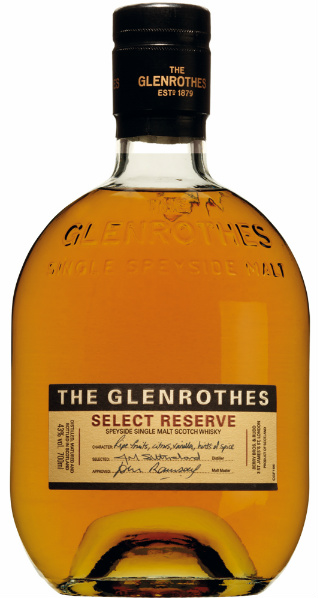
Glenrothes “Select Reserve” (43%, OB, Old Label, Circa 2011)

Yes another cannon ball bottle with Glenrothes Whisky in it. This time no vintage, but yes, we do have another new Whisky without an age statement. Probably young stuff, also since the Whisky isn’t very expensive. Nope not expensive at all. The bottle still has a cork in it albeit a plastic one. Nothing wrong with NAS Whiskies, just have a look at any Kilkerran for example, and the plastic cork is far better suitable for its job than a natural cork, with all is problems, like breaking whilst opening the bottle. I just hope the solvents in the soft plastic of the cork don’t mess with the taste of your Whisky. I just hear the industry whispering in the wind that Whisky wasn’t meant to be kept at home for a long time. Ha!

This Whisky costs about the same as The Glenlivet French Oak I reviewed last. That Whisky does have an age statement: 15 years old! Lets keep that one in kind whilst reviewing this Glenrothes.

Glenrothes Select Reserve (43%, OB, Old Label, Circa 2011)Color: Light gold

Nose: Malty and lots of vanilla and cream. Marshmallows. Dusty, slightly grassy (dry) and in the distance a wee bit of white pepper. It’s also fruity but I can’t get my finger on it, what kind of fruit is actually here. You know it’s fruity, but it seems to borrow fruity elements of loads of different kinds of fruit. Hints of dry paint and Macchiato Coffee.

Taste: Light, fruity and thin. Sweet. This one is quickly gone, yet the finish is warming and the fruit part of it is pleasant. Sweetish and creamy. Little bit of banana and lemon pudding. Definitely malty. I would have never guessed this is 43% ABV.

For a middle-of-the-road dram, I liked the nose of the Glenlivet 15yo French oak better. On the palate this Glenrothes is less interesting and a bit soft. The finish is too short too. Comparing this with the Glenlivet 15yo French Oak Reserve, even though that one is less fruity, it was more exciting due to the backbone the oak gave it. This Glenrothes is softer and fruitier but even though it is all that, it isn’t more pleasant. It is slightly less balanced and a wee bit weaker (also in the finish), so I score this a point below the Glenlivet French Oak Reserve.

Points: 81

Agostón Garnacha & Syrah 2013

Bodegas Virgen del Aguila, Paniza Agoston-Jabali lies at the foot of Iberico mountain range in Carinena (a DO), in north-east Spain. The Ibérico mountain range has a wide variety of landscapes and eco-systems. Half is used for vines, the other half is still forest or rocky mountain slopes

Agostón was first made in 2008. The maker calls it “daring, young, fruity & loved by everybody” All wines in this series are blends of two grape varieties. Here we’ll review the “yellow” one that is made with Garnacha and Syrah. The “red” one is made with Tempranillo and Cabernet Sauvignon. Both red wines are true 50/50 blends. The “green” one (a white Wine) is a blend of Viura and Chardonnay and last but not least a rosé Wine that has an orange label is made with Garnacha and Cabernet Sauvignon. As can be seen, all are blends of a “typical” Spanish grape and an International grape. Very daring and modern…

Agostón Garnacha & Syrah 2013Color: Deep red with purple.

Nose: Fruity and jammy. Very modern and accessible. Not very complex. Extremely likeable, like one likes a lemonade. Bold fruit, cherries, with cream and vanilla. A little bit of dairy, at first some acidity but after moving the wine around a bit in the glass, some typical notes from Syrah emerge. Obviously grapes that have seen a lot of sun. Warm but not dry or dusty. The red and black fruits are pretty aromatic.

Taste: Again very fruity and jammy but here the thick fruits are helped along with some nice acidity. Hardly any tannins to be found. I can’t imagine this has seen wood, although a little bitterness is there, also some vanillin seems present. Although very easily drinkable it will hold the fort when combined with cheeses and meats. Will do nicely too on its own.

Actually a very likeable and very nice wine, that has won some prizes along the way. Still I feel it is a very modern wine. Taylor-made for the modern, fast-forward and demanding market. No fuss, just grab-n’-buy, or buy-n’-drink or drink-n’-forget. Very fruity and just needs the drinker to sit back and enjoy himself/herself. It will not terrorize your conversation or hinder you while apping away on your phone. Nothing overly complex, no talk about tannins or how long you should put it in your cellar. Nice stuff though and not too expensive to boot. Good pick for bars and restaurants. Hip!

Points: 81

Weingärten Weissenkirchen Wachau Smaragd 2007 Grüner Veltliner

Asparagus season isn’t over yet, so we decided to do another round. Last time around I decided to accompany the asparagus with an Austrian Riesling, but there was another Austrian wine lying around, so I decided to open another Austrian white wine. This time a Grüner Veltliner from Wachau by Domäne Wachau.

Grüner Veltliner is a white wine grape variety that stems from Savagnin and further down the line, Rotgopfler and Pinot Noir. Despite of the name Veltliner, the grape isn’t related to Roter Veltliner and Frühroter Veltliner. Most Grüner Veltliners are planted in Austria and to a lesser extent, Slovakia and the Czech republic, but more recently also in the United States and Australia. One-third of all the grapes planted in Austria is Grüner Veltliner. In Slovakia one-fifth and in the Czech republic “only” one-ninth of the planted grape varieties is Grüner Veltliner. Most Grüner Veltliners age well and accompany food excellently.

LabelEspecially in the Wachau wine region on of the following terms can be found:

  • Steinfeder: lightest version with up to 11.5% alcohol,
  • Federspiel: a slightly more powerful version with 12.5% ​​alcohol,
  • Smaragd: the most rich and powerful Grüner Veltliner with 12.5% ​​alcohol and often more. (Smaragd can be compared with the german term Spätlese, the grapes are harvested late and often ripen for a prolonged time on stainless steel or large casks). (This Smaragd is 13% ABV).

Finally, Weissenkirchen is one of Domäne Wachau‘s village-bottlings. Besides Weissenkirchen itself, it comprises of the villages of Joching, Wösendorf and St. Michael. The wines are elegant, full-bodied, fruity and quite mineral.

Color: Straw

Nose: Lemony and acidic. Smells very fresh and refreshing with whiffs of alcohol. You can already smell the balance between the sweetness and the acidity. Nosed blind this could have easily been from Alsace. Nice yellow fruits. Hints of peach and dried apricots, but also some sweat! (No that’s not a bad thing, in this wine). All in all, light and fresh, but with body.

Taste: Definitively more spicy. Fruity syrupy sweetness (high iron content). Apple treacle, raisins, tree sap with the slightest hint of licorice. Green apple skin. Some hints of wood, although this probably never came in contact with wood. Some unbalance when near the finish. Short, slightly sugary, finish. The sweetness in the finish is a bit “strange”.

Of the two Austrian wines we recently had with Asparagus, we liked the Riesling Better. Having said that, on its own, this one isn’t bad either.

Points: 81