The Glenlivet 15yo “French Oak Reserve” (40%, OB, 09.11.2009)

After the oldie from 1975 and the two recent “special” releases, Alpha and Guardians Chapter, here we look into a more “normal” release by The Glenlivet. This is a 15yo standard release Glenlivet, where the tipple came in contact with some French oak. French oak is known for impairing a slightly more tannic flavour to Whisky, whereas American oak usually gives off a more Vanilla or Toffee note. I expect a very easy drinkable Whisky with maybe a little “bite”.
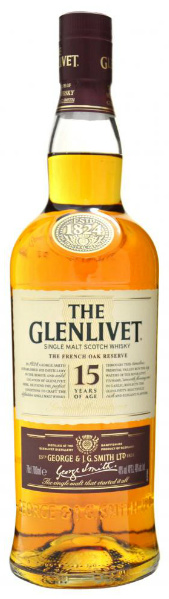
Glenlivet 15yo "French Oak Reserve" (40%, OB)Color: (Light) gold, slightly pink?

Nose: Altogether light and slightly malty. Nice hints of wood. A little bit of toffee, vanilla and sweet apple. Very middle of the road, but also decent and pleasant. It smells like a good daily drinker. A little bit of dust on wood and nuttiness. Picture dust floating in the air in the sunlight in a room with unpolished wooden furniture. Also a touch of oil from tangerine-skins. Nothing out of the ordinary for a decent Single Malt Whisky, yet nice nevertheless.

Taste: Sweet, creamy with toffee and vanilla. A little tannic bite from the wood. Otherwise again very pleasant and very middle of the road. Slighty malty and nutty. Daily drinker written on its forehead. Slightly bitter on the finish, like licking walnut skin for a moment. Obviously from this particular type of oak, French you know.

A very reasonably priced 15yo, which offers a middle-of-the-road experience, with a little bite from the French oak. Pleasant but hardly entertaining, good but nothing special. Especially since it has aged for 15 years, in a time where all Whiskies are released without an age statement. It probably sells a lot, and why not. There is nothing wrong with it and it isn’t a bad Whisky either. Bang-for-your buck material, or a starters Whisky at 40% ABV  if you are interested in the effect tannins can have from French oak. Good but a bit boring (for me).

Points: 82

Bunnahabhain “Moine” 5yo 2008/2013 (46%, The Ultimate, Peated, Bourbon Barrel #800011, 341 bottles)

Just the other day, Jan from Best Shot Whisky Reviews reviewed a nice 5yo Islay peated whisky, so why shouldn’t we do just the same. Why? Because we can! Next up a Moine. A Moine say you, yes a Moine, the peated Bunnahabhain. This is bottled by dutch indie bottlers Van Wees under their Ultimate Label. Unchillfiltered and uncolored. Van Wees already bottled quite a few of these Moines, and if you are interested, get one quick since the latest expression bottled in 2014 costs a tenner (in Euro’s) more than the earlier bottlings…

Bunnahabhain Moine 5yo 2008/2013 (46%, The Ultimate, Peated, Bourbon Barrel #800011, 341 bottles)Color: Very pale straw yellow and/or greenish. Almost colorless.

Nose: Fat and fruity peat. I certainly have smelled this before. Than more peat and after that even more peat. Although this has lots of peat, I wouldn’t call this “heavy”. It has some smoke obviously, but you never know, they don’t always come together. The smoke part is light, as is the wood and toast. The fruit plays a big role in this Whisky as does its youth. Sweet licorice and spice. Black tea leaves and green plants. Given some time, it becomes less fatty and gets more floral even (and soapy) and the peat gets more meaty. Little bit of bonfire and coal dust. Not bad, not bad at all.

Taste: Sweet with delicate smoke and peat. Cardboard, plywood and sugar. It’s an almost lovely peated whisky lemonade. Extremely appetizing. Fern and tree sap. After several sips, you get the (thin) sweet watery feel, with tasty peat, but it is highly un-complex. Finishes on citrussy peat and a little bit of bonfire with ashes.

These Ultimate Moines are dirt cheap and sell well, but are not very highly regarded. Yes, at first it is peat peat peat and it looks like a vodka that has aged for a week in stainless steel with a blade of grass thrown in for color. But just forget about your typical peated Islay Whisky. It’s not a heavy peated Whisky, with sea spray and Iodine. Nope, it’s a more easily drinkable, fruity and sometimes floral, modern Islay Whisky. It fits right in with the newer easy drinkable and easy accessible expressions of the big boys like Laphroaig Select, Bowmore Small Batch and many Caol Ila’s. Those are easy drinkable too, but this has more peat to it and still is like a peated lemonade. Don’t expect a lot of complexity. It didn’t do a lot in the cask except for marrying its flavours, and its only 5 years old. But who cares, this is to drink and lie back, it’s about enjoying life. Peat reinvented and very easy drinkable. No high marks here, but still I enjoyed it a lot, and isn’t that the most important?

Points: 82

For fun, I did a head to head of this Moine with the Kilchoman Spring 2010, and found the Kilchoman at 3yo to be more balanced, smokier, less sweet yet more interesting and funkier (the Oloroso Sherry finish probably did that). More happening, more flavor. It’s more of everything actually.

Warre’s Heritage Ruby

Heritage Ruby is Warre’s entry-level red Port. I attended a tasting lately where a lot of different products were presented and some cross-references were made. Arran finished in an ex-Amarone cask Whisky was matched with a Lenotti Amarone wine, but also an Edradour 10yo Port casked Whisky was matched with a Port. That Port was a Niepoort Ruby, yes a basic Port and it was so good, that it sold out completely that evening. Very fruity and extremely accessible and drinkable. So I thought, let’s have a look at another basic Ruby. Warre was my introduction to Port so I have some of those bottles lying around. A short trip to the cellars of Master Quill produced this (not the most current) bottle…

Warre's Heritage Ruby PortColor: Dark ruby-red with high viscosity.
Nose: Syrupy red Wine. Very fruity (but not as fruity as the Niepoort offering was), strawberry, blackberries and some blossoms as well, slightly perfumy. This is slightly darker (as an experience, as well as in color) but still very fruity. Jam, syrup. The added darkness comes from hints of soil and dry sunny earth. Small hint of petrol adds to the depth. Do I detect a tiny hint of coal smoke? Excellent nose.

Taste: Starts out with a very pleasant kind of sweetness, very restrained even when the whole is pretty syrupy and chewy. Not cloying. a very refined kind of sweetness, pure. Ahorn maybe. Next a balancing act with some lime-like acidity. The nose is fantastic and when you take a sip all is well too, The body itself is more on raisins and the sustained acidity, but not completely integrated. The acidity is maybe a wee bit too high and in the finish it all falls apart for a bit. Finish is also not very long.

I might have been a bit harsh on this one, for I still find it a very pleasant and drinkable Port. It has some faults towards the end, and for the money it is an excellent Port.

After a lot of the other types of Port like Vintages, Colheita’s, LBV’s and so on, I have to say that even an entry-level Port like this one or the Niepoort I tasted is still very good. You get a lot of quality from even a dirt cheap bottle like this or any other Ruby I guess, (or even Tawny, White or Pink Port). The quality assurance of the Port Institute makes sure that probably every bottle that goes out to the consumer meets a high set standard. Maybe we’ll know when I taste a no-name Port with the seal of the institute. ABV is 19%.

Points: 82

Bik & Arnold Dubbel (8.5%, 33 cl)

The Muifelbrouwerij was featured earlier on these pages with its Bergs Bier. That Beer was made for the town of Berghem. This Bik & Arnold is also a commissioned Beer. This Beer was made for Slijterij Zeewijck in IJmuiden, The Netherlands (An off licence). Zeewijck commissioned three Beers from Brewer Martin Ostendorf. The first one being a Blond Beer, called Blonde Kaairidder, which in comparison to other Blond Beers is quite high in alcohol. The second, a Dubbel, is this Bik & Arnold. And the third one is a Tripel called Breesaap. Lets start off with this Dubbel, a dark brown Beer, which hopefully isn’t too sweet, because I’m not very fond of those über-sweet brown Beers…

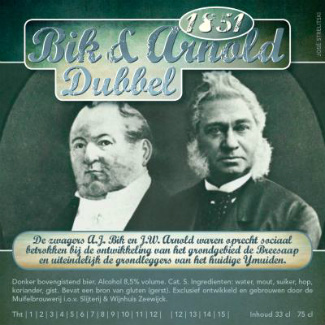
Bik & Arnold LabelColor: Very dark brown, with light Cappuccino foam (not a lot) and some yeast depot.

Nose: Hints of roasted malts, dark candy sugar and some vegetal notes from the coriander. Also the typical dishwater note returns. I know it sounds horrible but it isn’t. Murky and yet also fresh.

Taste: Hmmm nice, very easy and not as sweet as I expected, but it is sweet like light honey. The dark color and all the Belgian Dubbels, made me expect something more heavy and cloying, sweeter too, but this is another kind of Dubbel. Lighter in style and subtle. Very tasty and easy drinkable due to its slightly fruity acidity. It has a slight bitterness on the finish from roasted malts and chocolate but mostly dark candied sugar. Also the dishwater note settles in the finish.

For a beer that is as dark as it is, I expected a bit more of those dark Beer, or Dubbel, components. do I miss it? Nope. Due to the cloying sweetness some Dubbels have, I am not a fan of Dubbels. The beer is very good as it is. A nice light and refreshing Dubbel where every component seems to fit. Good balance and well made.

Points: 82

Kopke Christmas (Reserve Ruby)

Kopke logoJust in time for Christmas, or should I say, just in time for last-minute Christmas shopping, another Kopke Port. The Tawny Kopke I reviewed last, turned out to be quite good, and doesn’t break the bank, so why not try another Kopke, but this time a Ruby. They call this a ‘Reserve’ to distinguish it from more generic rubies, and considering this is for a special, festive occasion, this (young) Ruby should be quite good also, and again this is a pretty inexpensive Kopke. Should you buy this for Christmas?

Kopke Christmas Port (Reserve Ruby)Color: Ruby red, with lost of purple near the edges of the glass.

Nose: Raisins and fresh, typical Ruby if you ask me. Very fresh (fresh air) young and lively, but also promising a lot of sweets. Thick, fat and buttery with heaps of raisins, something you would expect from a PX Sherry (the raisins). The whole does not smell like a PX at all. After all this, it smells more like a “red wine”. Cheesecake, a little bit of wood and some acidity and mustiness later on, so the smell does develop a lot in the glass.

Taste: More of the same, young and fresh, sweet and sour. Distant hint of bitter wood (walnuts), but the note is not dominant. It does fit the nose, but the taste is not very complex, and does seem a bit unbalanced. In this case the sweet and the sour don’t like each other very much. And the bitterness (not only walnuts, but also earwax), well, also not completely in harmony. The fruits in this Port are more of the half-sweet black and red summer fruits, and do I detect some tannins drying my tongue? Yes. This finish is half-long, but also a bit anonymous. This Port almost seems stopped dead in its shoes in its transition from a Red Wine to a Port. It’s still too much a Red Wine.

After my comments especially those for the taste, one might think It’s not a very good Port, but that wouldn’t be true. It’s a nice Ruby Port, not extremely special, but very drinkable. I suspect this to be very young. It’s alright, but if you like your ports a bit more special, a bit more festive, and a bit more “Tawny” I would recommend the Kopke 10yo matured in wood I reviewed last some more. For me Warre’s Warrior is also slightly better and especially a more balanced, somewhat sweeter, example. ABV for this Christmas Kopke is 19,5%.

Points: 82

Grimbergen Goud 8º (8%, 33 cl)

Grimbergen Goud 8º, together with Grimbergen Optimo Bruno are the specialities in the range of Grimbergen Beers. The other beers in the Grimbergen range are the usual suspects in Abbey Beers: Blond, Dubbel & Tripel. Recently I already reviewed Grimbergen Optimo Bruno, so I’m happy to review this Grimbergen Goud 8º to complete (already) the Grimbergen Specialties. Goud 8º is a strong Blonde Beer that has an additional fermentation in the bottle, also some aromatic hops are used.
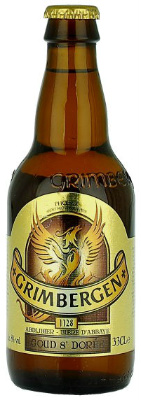
Color: Orange Gold with light yellow to white foam.
Nose: Light and fresh. Yeast, as in white bread. The nose has a summery feel to it. Also some hops, but not a lot. Dust and unlit cigarette tobacco.

Taste: Well, this tastes like a Tripel really. Fresh with slightly warming alcohol. Nice and unpretentious. Hints of esters, dried apricots and orange skin. It’s a bit of a shame, this does not continue into the finish. The finish itself is a bit sour and light. This does have a small hint of cannabis on the taste though! Although the brand is owned by Heineken, the beer does not come from Amsterdam. It is unknown how the Cannabis got into the mix 😉

Not a lot to add about this Grimbergen really. It’s not bad at all. A nice beer to drink outside or by the waterside and see people go by and enjoy. Nice Belgian Beer.

Points: 82

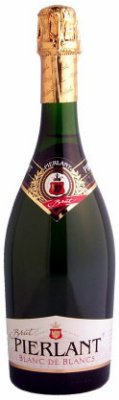
Pierlant Blanc De Blancs Brut

Here we have some bubbles from Landiris France, and again a wine both my wife and my mother love. My wife loves champagne, but with a plethora of Champagne houses and really how many of them are really good, sometimes we venture into other sparkling wines, especially for those occasions when the lively conversation makes you almost forget what you have in your glass. So for those carefree moments we buy sparkling wines like this. Nice to drink, nothing complex, and it doesn’t mean you have to get a second mortgage.

Pierlant Blanc De Blancs BrutThis wine is 100% Blanc de Blancs and produced with the following white grapes: Chardonnay, Colombard, Ugni Blanc (Trebbiano) & Gros Manseng harvested from: Bordeaux, Charentes and the Loire Valley. The wine has an ABV of 11%.

Color: White wine, with a fine mousse.

Nose: Slightly sour and sunny green apple skins, lightly fruity and elegant. Hints of spice, but overall very light. Nice aperitif wine.

Taste: The same here, light aperitif wine, without any off notes. Half sweet and slightly acidic. Nice balance. Very easy and simple and extremely drinkable. Light wine, with a light and dry finish. When drinking a lot of this the wood like bitterness gets noticeable and starts to dominate. So I wouldn’t drink a whole bottle by myself.

In our case, this wine accompanied a nice light tuna and past dinner, with a lot of fresh vegetables. and I have to say that this wine accompanied such a diner very well. Excellent match! In the end this is excellent summer stuff.

Points: 82

Tomatin Legacy (43%, OB, Bourbon & Virgin Oak Casks)

There is a new Tomatin in town, and they’ve called it Legacy. No age statement on this one. First of all what does legacy exactly mean? Searching on-line I find this: anything handed down from the past, as from an ancestor or predecessor. We know this “Legacy” is aged in Bourbon and Virgin oak casks, so is this the way Whisky was made in the past? I will have to ask, but surely my interest in this Legacy has been aroused. maybe it’s not about the casks, but the way the distillate shines through?

Second thing i noticed is that it’s 43% ABV, making the 12yo the only one in the standard range this is 40% ABV. The rest is higher with 43% and 46%. Having said that, Tomatin placed this Legacy before the 12yo, simply by making it cheaper. Pretty neat.

Recently The Glenlivet released the Alpha, of which in a weeks time the true contents will be released. The Glenlivet used a huge social media ad campaign to aid its sale, whereas Tomatin did not. By now we do know that is also is made using Bourbon casks (first fill) and new wood (second fill). Alpha is 50% ABV. and costs 4 times as much as this Legacy. Let’s have a look…

Color: Light gold.

Nose: Clean and youthful, hints of mocha, caramel, toffee, but the hints don’t smell sweet. Wet new wood, freshly cut-down tree. tree sap (not resin!) and some nuttiness. Very toned down, no sharpness and only some spiciness from the wood but no burning alcohol of very young distillate. Very honest. Some vanilla and warm butter. Not bad!

Taste: Malty and half sweet. Wood and cardboard. Again wet fresh wood and tree sap, and again a very toned down profile, laid back. A hint of licorice and even an even smaller hint of tar. Not a very long finish. The virgin oak isn’t omni-present in this one so it doesn’t dominate. It’s not very sweet, but the sweetness is sugary. Good balance.

In the nose very different and younger from the Alpha. Extremely drinkable. This would be the lemonade in my lectern. The last bottle opened, but also the first one finished.

Alpha has the same color and is higher in ABV, smells spicier (older) and definitely more mature, the wood on the Legacy smells like a freshly cut down tree. Tastewise the Alpha comes across as older, spicier and bigger bodied, aided by the ABV. Conclusion: incomparable, the Whiskies are quite different and aimed at different people. Legacy is one to give some time to and feel what and aged whisky distillate really is. One to analyze, but also the easiest drinkable malt around. And it costs next to nothing to boot!

Points: 82

Thanks go out to Jennifer for providing me with this sample!

Glenfiddich 15yo “Solera Reserve” (40%, OB, Circa 2003)

Solera is an ageing system for Sherry (and other fortified wines), in which younger wines in upper rows of casks are used to top up casks of older wines stored below. Every time a batch is bottled, the wine is taken from the bottom row. Not everything though, usually up to 30% of the cask is bottled. After this, the casks in the bottom row are topped up with the wines from the casks in the row directly above, and that row is topped up with wines from the row directly above that, and so on. After a startup period this system gives wines of a consistent age and quality, even if one particular vintage is weaker than the others.

Color: Light copper gold.

Nose: Very malty, and immediately recognizable as a Glenfiddich. It has a lot of traits of the 12yo “Special Reserve” I reviewed earlier. Lots of vanilla. There is also a light Sherry influence. Waxy. But overall it’s quite flowery and light. When tried blind, a definite Lowlander, (which it is not). Likeable.

Taste: Creamy, and very malty. In the back there is a little bit of mint, which makes it fresh and lively. Ice cream, winegums and apples. It starts to break down late in the mouth, where it shows an added sour note. The finish is short. Where the nose was more floral, the taste is more fruity. Loveable.

I don’t know if it’s a step up from the 12yo “Special Reserve”, but it is most definitively a variation. And yes, I think it’s better, and it’s extremely drinkable. Again nothing wrong and again a perfect malt to get you into Single Malts. It’s well made. Even if it’s the only Single Malt at the hotel bar, I would still pick this over any other drink available. But when spoiled for choice, well, it’s a great malt to get you into Single Malts.

Points: 82

Ledaig 8yo 2001/2010 (50%, Kintra, Single Cask Collection, Bourbon Hogshead #800124, 36 bottles)

We took the peat road last time and when I look outside I can understand why. let’s get off that beaten path and tread not to Islay, but this time to the Isle of Mull. Being Dutch myself, let’s have a look at another indie Dutch bottler Kintra. Erik Molenaar is the boss of this outfit. Did Erik source a tiny Hogshead of Ledaig? “Honey. I shrunk the Hogshead” maybe? Nope, Erik shared a cask with a shop in Maastricht. Slijterij Bams. The share of the shop was 218 bottles, Erik’s share was only 36. Funny enough the label of ‘the other’ bottle states 50.6%. The humor doesn’t stop here. Bams don’t have it on their list anymore. Sold out? But The Kintra version is still available! So I can’t wait to try this. I hear that modern Ledaigs can be pretty good…

Color: White wine.

Nose: Warming. Light peat and grassy. Citrussy (fresh) and muddy. Great combination. Non-offensive. Cold wet black tea leaves. Oily old machine. Very nice nose. Perfumy, smoky and quite elegant for a heavily peated whisky. Almost burnt out fireplace on a freezing cold day or evening. Beauty and beast in one. Sour sweat and I do smell a stew in here.

Taste: Sweet with licorice. Soap. Black and white powder. Succulent grass, but also some hay. Burnt cables and lemon. Alas this isn’t as balanced as the nose, nor is it as likeable. It’s sweet at first with a sort of acidic licorice attack. Lot’s of ash in the finish. The lack of balance is a bit disturbing. There is also a bitterness like earwax and a hint of crushed bugs.

It seems simple, but especially the nose shows great balance. The youth shines through on the palate and seems to me to be less balanced. Here the sweetness and the laid back acidity do not match. The more air the whisky gets, the more the balance loses out on both the nose and the palate. Very strange to get this from, what should be a powerful heavily peated Whisky, at this age. What can I say. Maybe Erik made a wise decision to have such a small cask share? Well, totally bad this is not, it just deteriorates rather quickly with air (I used no water to achieve this).

Points: 82