Glenfiddich 15yo “Distillery Edition” (51%, OB, Litre)

Glenfiddich is still the mother of all Single Malts and deserves our respect, even when snuffed about by connoisseurs. That in fact would be very unfair, since a lot of (older) Glenfiddichs have proven themselves to be more than great. It has been more than a year and a half when I reviewed the 15yo Solera Reserve and now comes the time I’ll review another 15yo. This time the 15yo distillery edition.
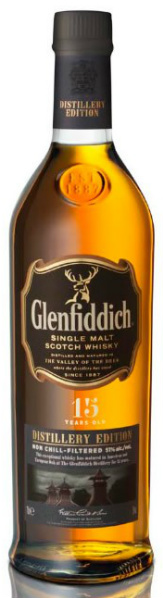
Glenfiddich 15yo Distillery EditionSome time ago there used to be a 15yo Cask Strength, which was exactly 51% ABV too, just like this one, so I can’t help but feel this is it’s replacement. Who else in their right mind would think that all Glenfiddichs at Cask Strength come out at precisely at 51% ABV? The 15yo is also a pretty special age statement for Glenfiddich, since all hand bottled Glenfiddichs were released as 15yo’s.

Color: Copper gold

Nose: Spicy and creamy sweet. Hints of, slightly soapy wood and quite heavy on the caramel. Damp earth, fresh-cut grass and quite some Sherry influence. Typical sugared vanilla note from ex-Bourbon casks. Vegetal but also dried meat combined with wood-spice. Sawdust and dry. Whiffs of fresh air drift by. Not bad at all…

Taste: Starts with sweet wood and a spicy and slightly acidic red wine note, although this probably hasn’t seen a wine cask. Sherry must have “done” that. The sweetness sticks and stays right through the finish. Licorice and vanilla. Full and nutty body. Nice fruitiness shows up in the finish.

A nice Glenfiddich aided by higher strength, showing this has more potential than the usual 40% ABV Glenfiddichs. I know Glenfiddich is seen by many as an easy and simple entry-level Single Malt, but if you are able to look past that there is a lot of potential here. Definitely a mixture od ex-Bourbon and ex-Sherry casks (which is also stated on the label). Like so many Glenfiddichs this is decently priced, and considering this is 15yo, comes in a litre bottle, has 51% ABV and still doesn’t cost much, this would be a stong contender for any bang-for-you-buck award. Recommended.

Points: 83

Casal de Ventozela Branco Vinho Verde DOC 2013

Vinho Verde is a Portuguese wine from the Minho province in the far north of the country. The region has many small growers, which train their vines high off the ground, in trees, on fences, and even telephone poles so there still is some room on the ground for growing food crops. Vinho Verde means “green wine” as in “young wine”, so Vinho Verdes are made to be drunk in their youth, so don’t age them. Grape varieties used for white Vinho Verde are; Loreiro, Arinto, Trajadura, Avesso and Azal. Also red and rosé Vinho Verde’s are made.

In the old days, the slight effervesce of the wine came from malolactic fermentation taking place in the bottle, normally a wine fault, but in the case of Vinho Verde, it is considered a nice “effect”. Today in most cases the effervesce comes from artificial carbonation.

Casal de Ventozela BrancoThe wine has an ABV of 11,5%, which for a Vinho Verde is rather high.

Color: Light white wine, pale straw, not green. Medium viscosity.

Nose: Very fruity and almost lemonade-like. Lots of aromas leap out of the glass. A happy and summery smell. Typical sweet creamy yoghurt with chunks of peach and even some banana. Vanilla ice-cream (mind you, not vanillin from wood). The wine does have tiny bubbles (effervesce) which adds to the summery feel. After a while the creaminess dissipates and the nose gets more acidic and even more refreshing. Nice green notes too. Gooseberries. Very nicely made with an interesting and nice nose.

Taste: Good balance between its acidity and sweetness. Both are quite soft. Again the acidity is the same as yoghurt. The fruits are also more of the acidic kind, like lemons and limes, with the peach and banana in the background. The nose and the taste match, whereas the nose was more creamy and sweetish, the taste is definitely more acidic. The tiny bubbles this wine has also add to the refreshing quality it has.

Probably a seafood wine, it does need a culinary companion. Perfect for sushi and I will have to try another one with asparagus! Lovely stuff.

Points: 83

Santa Cristina Chianti Superiore DOCG 2006

Cleaning out the Wine Closet I found another Santa Cristina. I already reviewed the Toscana IGT 2009, the Cipresseto 2007 Rosato Toscana and the Umbria IGT 2011. This time the oldest Santa Cristina of the bunch, a Chianti Superiore DOCG 2006. The Chianti is made with 95% Sangiovese and 5% Merlot for balance. 13% ABV.

Santa Cristina Chianti Superiore DOCG 2006

Color: Dark ruby-red.

Nose: Spicy with fruity jam. Black fruits like blackberries, blackcurrants but even strawberries found their way into this wine. It smells sweet and thick, as I said, jam-like. Deep and brooding, very typical for a wine from a warm climate. All in good balance. It has body and there sure is some flesh on the bone, musty and meaty.

Taste: Nice first sip with earth and a lot of depth. The fruits are all present too, but this time around even hint of plum are present in the “confiture”. A little bit of acidity balancing the whole out, and giving it a bit of zest and life. Some soft tannins and chalk, but nothing much. Tannins and a hint of vanilla from wood. The wood also adds structure to the wine. Good finish and even a while after swallowing, a nice taste remains in my mouth. Good balance and maybe not the most complex of wines, but who cares, just enjoy it.

I thought earlier that I ended a trilogy of Santa Cristina’s claiming that the red from Tuscany was easily the best. This Chianti Superiore, shows us again that as far as I am concerned the reds are the way to go with Santa Cristina. This Chianti is maybe even the best of the bunch and did well with some ageing. Recommended.

Points: 83

Cooley 13yo 1999/2013 (51.4%, The Whisky Mercenary)

Cooley! How cool is that! As the label states, this is peated Cooley so probably spirit that was made to become a Connemara. But what is Cooley?
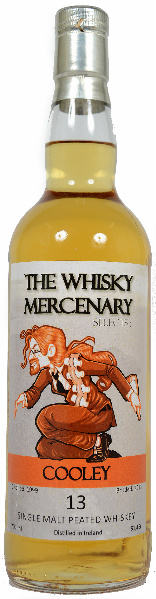
In 1985, Jack Teeling bought a former state potato alcohol distillery and two years later converted it into an independent Irish Whiskey distillery with a column still and two pot stills, located on the Cooley Peninsula in County Louth, hence the name. Cooley is known for distilling only twice, where other Irish distillers distill three times.

25 years later Mr. Teeling sold his distillery for €71 million to Beam Inc. On January 13th 2014 however, Japan’s Suntory Holdings sort of bought Beam Inc. for about €10.2 billion, making Cooley part of Suntory now. In the same deal our beloved Laphroaig, will enter the Japanese outfit wich already contains Bowmore.

Cooley 13yo 1999/2013 (51.4%, The Whisky Mercenary)After selling Cooley to Beam Inc. Teeling bought Diageo’s recently closed Great Northern Brewery in Dundalk with a group of investors and is converting it into a distillery. Great Northern made Harp Lager, Smithwicks, and Carlsberg (for the Irish market) and Diageo moved the production of these beers to their Guinness St. James Gate brewery in Dublin. Production of Teeling Whiskey should commence after the summer of this year. Today Teeling Whiskey is already on the market, obviously sourced from another distillery.

Color: White Wine.

Nose: Sweetish, light, lemony and young. Very fresh, lightly smoky, dusty and fatty peat. A long time ago, I had a tall bottle of cask strength Connemara (59% ABV), and this smells very similar. Grassy and lemongrass. Alcohol, chocolate and a bit fatty. Hints of wood. Lemon again which pushes the peat and smoke to the background. The smoke returns after some breathing. Bonfire. The wood and fire notes are really great. Small hints of toffee, cardboard and strangely enough some perfume. Empty glass has a lot of smoke and toffee notes.

Taste: Smoky sweet and quite a lot more peat than in the nose. Wood, ashes. Bonfire again. A little bit of bitterness from the peat (and the wood). Quickly turns dry and fatty. Soot, ashes and a lot of dust. Animalesk (there is that word again), with lemons. Quite some balls for an Irish Whisky. Cloying toffee with nice depth. Lacks some zest, or freshness, to be a proper Irish Whiskey if you ask me. Salty lips. Finish is half-long and somewhat introvert.

On the nose, quite a nice Cooley. Taste wise it’s also nice, but not very complex. WYTIWYG (What You Taste Is What You Get). Definitely a nice Cooley, but I have to say there are some more outspoken examples around. Great nose though.

Points: 83

The Balvenie 1989/2003 “Portwood” (40%, OB)

It’s almost a year ago I review my last Balvenie, and since there are lot’s of them around, why not have another look at a product from this distillery. Up untill now I reviewed some Balvenies with an age statement, this time I’m going to have a look at a Balvenie from a vintage, 1989 to be precise.

Those of you who know Balvenie, know that one of the best Balvenies around is the 21yo Portwood. yet in 2003, a vintage Portwood saw the light of day, this 1989 but also a 1991 exists. Two years later, in 2006, a 1993 vintage was released. I haven’t tried this 1993 yet, but earlier the 1991 was rather disappointing, still it fetched 78 points. Let’s have a look if this 1989 is any better, maybe even as good as the famous 21yo!

Balvenie 1989/2004 Portwood (40%, OB)Color: Pinkish gold.

Nose: Buttery, and creamy. Sweet cookie dough, but also a slight woody and winey note is present. The more this breathes, the more a spicy woody note comes to the fore. Red fruit hard candy. Quite dusty after a while. Vanilla and dough again. Also some candied sweet tangerine skins.

Taste: A sweet candy note, malty and quite dull at first. The Port even though is not heavy, dominates the palate, still it dominates in a transparent way, since it lets through the malty distillery character of Balvenie. All in all a funky battle between winey wood, (with a slight bitter edge to it),  and it’s sweetness. Definitely some citrus in here, Tangerine or sugared orange skins.

Again a very nice and never misbehaving Balvenie. Nothing wrong with it, but it also doesn’t stick out either. This Balvenie will also never drive to fast or smoke a cigarette where it isn’t allowed. It obeys. It isn’t bad either, but for me a little bit boring. Still it’s a Portwood, and it isn’t harsh as some whiskies that came in contact with Port pipes can be. The aroma’s fit well together, so it has good balance. A bit weak with its 40% ABV, but it offers yet another variation on the Balvenie theme, again with a lot of reduction.

Points: 83

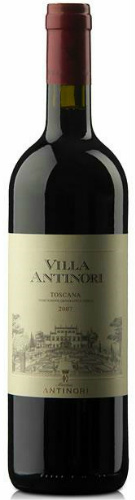
Villa Antinori Toscana IGT 2007

The history of the Antinori family dates af far back as the 12th Century, when Rinuccio di Antinoro produces wine at the Castello di Combiate near Croci di Calenzano, outside of Florence. The particular wine I’m reviewing today, Villa Antinori, was first made in 1928 and at that time it was a Chianti, but a Chianti that could be further aged. Much later, in 2001, Piero Antinori, reworked this wine into a Tuscan IGT. The wine itself is a Super Tuscan blend: with 5% Syrah, 25% Cabernet Sauvignon, 15% Merlot and of course 55% Sangiovese. After the malolactic fermentation the wine was aged in French, Hungarian, and American oak barrels for one year. ABV is 13.5%.

Villa Antinori Toscana IGT 2007Color: Dark ruby-red

Nose: Spicy and fresh, seems young although it does have some ageing under its belt. Some warm very aromatic Tuscan soil, nice! It has its roots firmly in the ground. Warm summer wind late in the evening. Nice red fruits, cherries, blueberries and slightly herbal with a little bit of wood to give it some more character. Nicely balanced wine. Lovely wine with sometimes some whiffs of field flowers.

Taste: Very supple and extremely easily drinkable and delicious. Again some terroir, but not as much as the nose had. Well integrated blend, everything seems to fall in place. Nice depth. Not very tannic, though there is some drying sensation on the tongue and it’s only slightly acidic, but the acidity increases after some more breathing. Breathing also gives the wine something of a bite, bitterness that is, from the wood. The finish is all right and half-long.

This first accompanied food and when that became to spicy, it easily overpowered this wine. The wine itself seems quite light at first, but it did pick up after more breathing. Recommended drinking window for this wine is said untill 2014, so if you have this lying around it’s now probably at it’s best, but I feel still can handle another couple of years…

Points: 83

Glen Garioch Founder’s Reserve (48%, OB, Circa 2013)

Glen Garioch, pronounced Glen Geerie, used to be a powerhouse of a whisky and several legendary bottlings, like some “vintage” 1968’s or the Samaroli’s from the 70’s. It’s this tasters feeling, and I could be very wrong here, after that, Glen Garioch felt a little bit silent. Not production-wise of course. It just seems to have slipped into anonymity. I haven’t written a review of a Glen Garioch up untill now, since I don’t come across a lot of samples of Glen Garioch, nor do I buy a lot of more recent Glen Gariochs. A classic case of being biased? Thus the curtain rises and taking center stage is this bottle of Glen Garioch Founder’s Reserve.

Four years ago Glen Garioch revamped the looks of their bottles. Exit the standard scotch liquor bottle with the stag label, and enter this elegant ánd dumpy (metro man) bottle. In the new range of Glen Garioch are some NAS (No Age Statement) bottles, Like this ‘Founder’s Reserve’ and the ‘Virgin Oak’. There is also a 12yo and the rest is all ‘Vintage’, where the younger ones are all cask strength and the older ones are bottled at the new preferred strength of 48% ABV. After 40%, 43% and 46% ABV, now an even higher proof becomes standard.

Color: Full Gold.

Nose: Very young and malty, spicy wood and it smells almost like new make spirit (this wears off with lots of breathing, so a half full bottle will smell better than a full one). Funky. Very spicy. Oriental. Nosed blind I would have gone for an Indian Whisky. Hints of sulphur. It fits the fashion of issuing younger and younger whiskies. This probably is not older than five or six years old with maybe some partial ageing in virgin oak. Grassy, vegetal (hints of lavas) and latex paint. Indian spices mixed in with butter and vanilla. Not quite what I expected. It starts out young and anonymous, almost lacking character, but give it room to breathe and this becomes a different puppy altogether. The character it has on the nose comes form the oak, nice cask management.

Taste: Punchy (hot) oak carried by the higher than usual ABV. Bitter wood, Indian spices again and an edge of silky bitterness. Also, I’m guessing here, this does need the higher ABV. Half-sweet and light with the slightest hint of bitterness from virgin oak, fresh walnut skins, cardboard and some licorice (and tar). This is a young woody whisky. The wood pushes the fruity notes a bit to the background. Anonymous at first, but also nothing actually wrong. But after some breathing… Warming finish with quite some staying-power. For a short while a creamy aftertaste.

Tomatin Legacy is also a Whisky that is not older than 5 years old. But for me a better and cheaper choice if you compare it to a freshly opened Glen Garioch. However the Tomatin doesn’t change much over time, whereas this Glen Garioch evolves quicker than anything Charles Darwin encountered. Just smell it after a while. Wonderful. Consider my interest in Glen Garioch rekindled.

These new kinds of NAS Whiskies are definitely tailored for a new type of Whisky-drinker. I’d like to know how this new Whisky-drinker is described…

Points: 83

(When I tasted it right after opening I gave it 76 points, go figure)

Thanks go out to Laura!

Warre’s Warrior (Reserve)

And finally a Port emerges on these pages and since it took so long, it might come as a surprise that I really like Port. I normally do not like sweet drinks, but reading back on these pages it should become clear to you, that I do like (overly) sweet Sherries like the PX’s, but also Port. Due to some issues with shelve space I do not have a lot of Sherries and Port’s open, nor should I, since both Sherry and Port shouldn’t be kept open for too long, it’s not Whisky you know.

As with lot’s of Port “houses” it has a long, very long history. Even this Warrior has a long history. Warre themselves claim that: “[Warrior] is the oldest brand of Port in the world, having been shipped continuously since the 1750’s”. The company that became Warre’s was established in 1670, but the first Warre came to the firm in 1729.
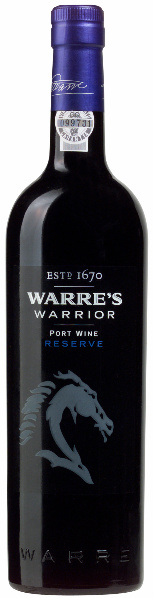
Let’s start of with Warre’s Warrior. I’d like to start with Warre since a long time ago, Warre’s Otima 10 (or 20) was my first bottle of Port ever. Warre’s Warrior comes from Quinta da Cavadinha and Quinta do Retiro Antigo from the Pinhão and Rio Torto valleys, also the home of Warre’s Vintage Port.

Color: Deep red and thick.

Nose: Very sweet and raisiny. It definitely smells like a Port to be had as a dessert, or with a dessert. For me it smells like a warm summer, mellow and toned down. I can imagine drinking this in summer, slightly chilled. It smells nice, but lacks complexity, it isn’t very pretentious, but easily drinkable.

Taste: Ahhh, very fruity and aromatic, much more of a flavor explosion than the nose suggested. Various red fruits. Sweet raspberry mostly. The nose suggested an extremely sweet Port, heavy sweetness and raisins, but on the contrary. Even though it shows long legs and smells of raisins, it doesn’t taste like that. This Warrior is fruity! Half-sweet and has a very nice balance with its (sometimes sharp, but refreshing) acidity. A little bit of oil from orange skins. Tannins play a role too, they’re drying the tongue. Last but not least, the finish, it’s short. Slightly woody too. If the finish was longer and a little bit sweeter, this would really be perfect, but as it is, it still is a steal.

Thick Ruby Port that sticks to the glass. Even though it has a lot of balance, the nose and the taste seem to be two different wines in one (ain’t that a contradiction!). It’s a surprise, but treat it as a present, since we’re getting two types of Port for the price of one, and it’s dirt cheap to boot. Due to a lot of regulation and control from the Port Institute, only Ports with a decent quality are released. This Warrior is definitely worth looking into for an inexpensive daily drinker. ABV is 20%.

Points: 83

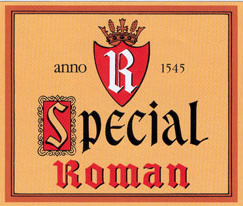
Special Roman (5.5%, 25 cl)

Special Roman is made by Brouwerij Roman from Mater, Belgium. Mater is in the Oudenaarde municipality, a region where Flemish Brown Beer is made. Brouwerij Roman was founded in 1545 as a farm brewery and inn, and has an impressive portfolio of beers. Amongst others the Ename Abbey Beers are made here as well as Sloeber and the Adriaen Brouwer Beers. In the list of products Special Roman is absent, but the page about Special Roman does still exist. Maybe it’s discontinued?

Color: Dark Brown, coffee-colored foam.

Nose: Murky, dark but also fresh. Candied Sugar, putty and hints of acidity.

Taste: Candied Sugar and unexpectedly only lightly acidic. Maybe some acidity fell victim to the additional ageing? Likeable. Malty (roasted) and hints of burnt sugar. Definitively some hops are in the mix. Not a lot of yeast is noticeable. It seems light and the finish is short. Nice stuff nevertheless. Elegant and perfumy and half-sweet. The sweetness isn’t dominant at all.

This beer is less acidic than other Flemish Brown Beers due to the use of hops. It is a top fermenting beer, and this example was aged 10 months past it’s best before date, and it aged well. 8ºC is the advised drinking temperature.

Points: 83

St-Feuillien Blonde (7.5%, 33 cl)

This time a top-fermented Abbey beer made by Brasserie St-Feuillien (recently also called Brasserie Feuillien and/or Brasserie Roeulx). It’s history can be traced back to 1873 to the Friart Family, but the name, and the history behind it is much older. In the seventh century AD an Irish monk named Foillan (Faelan) passed through Le Roeulx to preach the gospel, but before he could do that he abused and finally beheaded by highwaymen. Right there where this happened, a chapel was built in his name (twelfth century AD). The chapel was eventually extended into an abbey, and as good Belgian monks do, they brew a great Beer on site…

Those of you who regularly read my Beer reviews know I like to age my Belgian Beers. Most Trappist and Abbey beers (top-fermented) usually get better with extra ageing, but not all. Some do get better, but become dirty, with sometimes a lot of unpleasant looking yeasty flakes floating in the Beer. This St-Feuillien Blonde was aged for an extra three years (quite unusual for a Blonde, even an Abbey one). Another thing that could affect the beer is the extremely hot day we’re having. (33° C), also quite unusual for this country.

Color: Brown Gold with very fine caramel colored fine cream.

Nose: Right out of the gate, unexpectedly fresh and citrussy. orange skin and brown candied sugar. After a while this beer turns. The fresh smelling start most definitely wears off and changes into a sweet-smelling kind of funkiness like cold dish water! Absolutely strange and interesting. I guess the turn comes from the yeast warming up, and there is quite a lot of yeast floating in my glass (sets slowly).

Taste: Again fresh and syrupy. Excellent balance between the sweet, the bitter and the freshness. It’s even less acidic than expected. Very nice, lovely stuff. Very late character building bitterness comes through, with a nice fresh green spiciness to it.

Optically not pleasing with all those flakes floating around, but especially the palate is great. Probably not for ageing, but when tasting this blindfolded, I guess the extra ageing did improve this beer (and it probably changed a lot over time). I will have to try a new bottle of this Beer soon, just for comparison of course!

Points: 83