Warre’s Colheita 1999 (2012)

Yes another Warre’s Colheita! This is an earlier one from 1999. Just like it’s predecessor, both 1999 and 2002 weren’t declared as Vintage Port years, so the wines that were meant to be vintages were used for L.B.V.’s and Colheita’s (amongst others). Although the wines weren’t good enough to declare a vintage, most probably the best the year had to offer ended up in these Colheita’s.

Warre Colheita 1999/2012Color: Much paler than the 2002 Colheita. Pale red and less viscous than the 2002 reviewed earlier.

Nose: Fresh and some wood. Powdery, nice complexity. The wood added a lot of nice notes in here, From a Whisky point of view this nose is better than the one from the 2002 Colheita. A fantastic and delicate balance. Dry and complex. A little soap in this one too. Licorice and elegant wood. Hints of wood polish and petrol. Hints of old furniture. Definitely a more interesting nose. Nutty.

Taste: More syrupy and sweeter than the nose promised, but still enough acidity, maybe even better balance and a little bit more depth to it. Seems also higher in ABV (although it is not) than the 2002 Colheita, the alcohol is more present in this one. Less sweet and again the complexity shows over time. Less lively and summery red fruit, but that doesn’t mean its less everything. This has a lot going for it too. It has added depth and is a different Colheita from the 2002 Colheita.

The 1999 Colheita is a more refined and delicate Colheita than the 2002, which is simpler, sweeter and fruitier in it presentation and is more Obvious. The difference between both is in the details for sure, so it probably was a good thing I had a few sessions comparing both to each other. It hardly makes any sense to score both differently and a difference is purely a matter of taste, but I will score this one point higher for its elegance.

Points: 85

The Glenlivet Guardians Chapter (48.7%, OB)

Once upon a timea few teams were sent out around the world by The Glenlivet Distillery with three potions made by Whisky wizard Alan Winchester. Wizard Alan wanted to know the taste of the world, or should I say, the tastes of the four corners world. Thus three potions were concocted and named as follows:

  • Revival, Exotic & ClassicClassic: The quality of timelessness and enduring excellence,
  • Exotic: The quality of rich diversity and enigmatic depth,
  • Revival: A regard and passion for past styles, reinterpreted with a contemporary twist.

With lots of patience the teams set out and traveled many, many miles to visit groups of Whisky geeks all ’round the world. I use the term “geek” lightly, because I’m a Whisky geek myself and probably a geek in many other respects too, but I digress…

37 countries were visited, and many different countries showed many different results. Some liked the Classic potion best and some liked the exotic potion better, but the next country liked the revival potion the best. Valuable information in its own right, since different places have different tastes. Alan WinchesterAs luck would have it Mr. Al-Kindi, an Iraqi mathematician from the ninth century A.D., planted a seed that would eventually become statistics, and with this statistical knowledge one of the potions was voted the best by all members of all countries that had the opportunity to try all of the potions. The expression called “Exotic” was chosen by 39% of the tasters. Which brings us to today. The exotic-expression mentioned above is now bottled as The Guardians Chapter, and here are my findings…

Color: Orange Gold

Nose: Lots of Sherry upfront with creamy butter. Very full and bold. Whiffs of citric acidity. This Whisky really wants to leap out of the glass, to be snorted up first, to asses its merits and make you want to take a sip, but lets not indulge ourselves just yet. Very heavy on the Sherry actually, thick and cloying and very sweet. A bit heavy and aromatic. It was first called “Exotic”, but the Alpha I reviewed earlier, was more exotic that this. Lots of sugared fruits come next. Apricots, lime, hints of banana, and finally also some oak comes to the front. All in all a very bold expression, no subtleties here. After the oak a breath of fresh air emerges from my glass. Well crafted and modern Whisky. It smells a bit ‘designed’. Bold aromas of fruit and sweetness. Perfect for a young public that wants to be introduced to Whisky. Extremely drinkable and I guess a bottle like this will be finished quite quickly. More citrus now, toned down orange skin. The wood gives off whiffs like it has some virgin oak in the mix.

The Glenlivet Guardians Chapter

Taste: Sweet yes, caramel and toffee first (American wood). Very syrupy, with some elegant wood and wax polish. A little bit of (Sherry) cask toast (with tannins) and tar (European wood). A vegetable and dry grassy note. Warming and a nice finish. Good balance. It’s all here, a new oak twist with thick cloying Sherry notes and nice clean Ex-Bourbon cask in the mix.

Just like the Alpha, a nicely crafted Whisky. Very likeable and drinkable. A modern and very bold NAS Whisky that wants you to know it’s here. I guess this is somehow aimed at a young public, but I can imagine this sitting in my collection of open bottles, this will be empty soon. Compared to Alpha, this is definitely bolder, heavier and more up front. This is a loud whisky where Alpha was more fresh and elegant. For me the Alpha was even more of an exotic whisky. Nice to see how different these two limited releases of The Glenlivet are, and they are finally moving into the 21th century.

Points: 85

Thanks go out to JJ “The Marathon man”, for again, this rather large sample.


Aberlour 18yo 1994/2012 (59.6%, The House of MacDuff, The Golden Cask, Bourbon Cask CM 193, 234 bottles)

Back to core-business! To finish off the month of March, here is a review about an indie Aberlour. Aberlour is a very interesting distillery that in my opinion keeps on producing good malts, correction, good Sherried malts at affordable prices. Just have a look at my review of the excellent A’bunadh. This here is the first independently released Aberlour, and as with most Aberlours that are released by independent bottlers this is from an Ex-Bourbon cask, they probably need all the Sherry casks for themselves.

Aberlour 18yo 1994/2012 (59.6%, The House of MacDuff, The Golden Cask, Bourbon Cask CM 193, 234 bottles)Color: Light gold.

Nose: Fresh at first, creamy and very fruity. Biscuits and slight hints of mint. It smells somehow sweet, caramel and toffee in a good (not added) way. Pencil shavings. It seems like a good spirit with quite a nice full on sweet, cookie dough, and funky, body. In the distance it does remind me of White Wine (Barrel aged and buttery Chardonnay).

Taste: Spicy wood and not as sweet as the nose suggested. Wood, pears and a little bit of vanilla. Although not the most complex Whisky, the cask gave off more woody notes (all in check), and less of the Bourbon notes the cask could have given off. Having said that, the Whisky is actually quite nice in a toned down sort of way. It’s almost a shy Aberlour, not confident about itself,  because it didn’t come from a Sherry Butt, quite unneccessary so. It’s nice but only a little bit quiet and introvert in character. The high-proof matches the sweetness, the creaminess and the cookie dough perfectly. Not hot at all. Finishes off with oak, again toned down.

A very interesting malt. Without the independents we would hardly have a real clue about the quality of the Aberlour spirit, since most Aberlours that are released by the owners themselves have a huge amount of Sherry cask thrown in. This is more a naked version of Aberlour. It reveals a lot that the spirit behaves well in an ex-Bourbon cask. It would be quite nice to compare this to an independently bottled Oloroso Sherry cask at cask strength.

Points: 85

Gabbiano Solatio Toscana IGT 2011

The surroundings of Tuscany in Italy are breathtaking, and I know that people who live there should be inspired too. I expect wine makers in Tuscany must be especially inspired since they make wine from the fruits of this land. This is the fourth bottle from this region, amongst others with two decent reds, but up ’till now, not a real stunner yet. I now got a bottle from a real wine specialist so I have high hopes for this Gabbiano Solatio from 2011 (Picture shows the 2010 vintage). I like the label, the orange color really stands out on the shelves and the knight and the sun, really look appealing, The wine is a blend of 50% Syrah, 45% Cabernet Sauvignon and 5% Sangiovese. Not a lot of Sangiovese for a Tuscan blend, and compared to others no Merlot. That leaves more room for the character grapes of Syrah and Cabernet Sauvignon. I guess we may be on to something…

Gabbiano Solatio Toscana IGT 2011Color: Dark ruby-red.

Nose: Smells spicy and most definitely of Syrah and a bit less of Cabernet Sauvignon, no sense in mentioning the Sangiovese. Although Syrah and Cabernet Sauvignon can be pretty full-bodied, this blend smells fresh and lively. Sweet jam of red fruits, and the slightest hint of fresh acidity, yes all that on the nose. It leaps out at you from the glass. Very appealing, and appetizing fruity Wine. Strawberries and cherries, ain’t that lovely! Great balance. The nose alone is way better than the previous contenders!

Taste: Not heavy, but with a fair amount of body and soft tannins. Some slight wood influence matches the tannins. Not as heavy on the sweet fruits as the nose suggested, but very appealing never the less. I did suit our dinner fine, grilled chicken with rice and a creamy tomato sauce. It would have been less complementary to it, if it would have been much sweeter.

Just like the other Tuscan Red Wines I review earlier, this is an entry-level wine. Nothing very fancy, but even with pizza and pasta I’d like to drink something I really like without breaking the bank. A great Tuscan with easy drinkability and easy food pairing qualities, and in the first 24 hours after opening, very suitable for drinking by itself. Good one. Recommended!

Points: 85

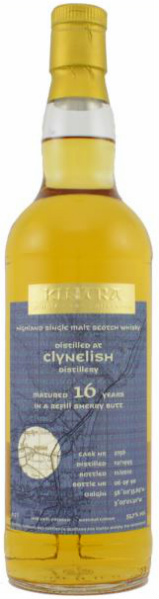
Clynelish 16yo 1995/2012 (53.7%, Kintra, Refill Sherry Butt #2156, 90 bottles)

It’s funny how a big company like Diageo works. For instance, There are almost no independent bottlings available by Diageo owned Lagavulin whereas the is a vast amount available from fellow Diageo and Islay distillery Caol Ila. There are almost no independent bottlings available from Oban, but a huge amount from fellow Diageo Distillery Clynelish. Here is another independently released Clynelish from the massively popular 1995 vintage. Although vintages belong more to Wine, vintages also became popular in Whisky.

Clynelish 16yo (Kintra)This Clynelish, of which only 90 bottles were released (a Butt shared with others, and Butts are large casks), is marketed by Kintra from the Netherlands. A small outfit, but from a nice guy and with good looks (both the bottle and the guy). As the label states, this is from a Refill Sherry Butt, but even if its from a Fino cask, is doesn’t have a lot of colour. A somewhat inactive Butt?
Color: White wine.

Nose: Somewhat acidic malt. Vegetal. Drying. Does fit the Fino Sherry profile, it’s smells like flor. Herbal and dusty. Milk chocolate with distant hints of vanilla. A little bit dry grass and freshly cut, sappy oak. Freshly peeled almonds. Typical Fino Sherry Butt.

Taste: Again very malty and very Fino Sherry. Wood upfront, and after that some glue and toned down vanilla. There is some sugary sweetness in this Whisky, but that is “hidden” by the Fino and the active wood. No wax! Salty lips. Malt returns in the finish. Otherwise a little bit hot, and spicy.

This is absolutely a pre dinner dram. Tasting this I want to eat! Typical Fino Sherry Butt, playing with wood and grassy, nutty tones. Not as waxy as we are used to from Clynelish. Don’t let the colour fool you, the Sherry did its job here, as did the wood, without being dominant. If you like your whiskies Fino, than this will be no disappointment.

Points: 85

Get well soon Erik.

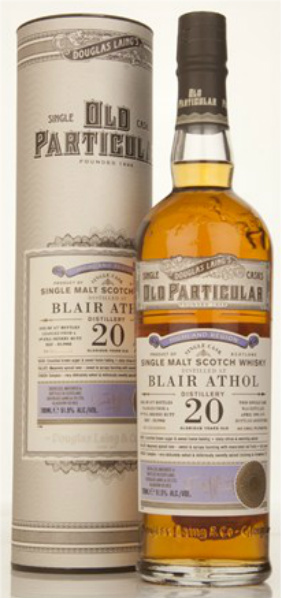
Blair Athol 20yo 1993/2013 (51.5%, Douglas Laing, Old Particular, First Fill Sherry Butt, DL REF 9908, 477 bottles)

The Glenglassaugh I reviewed recently was a first on these pages, but so is this Blair Athol. Blair Athol puts more than 90% of its new make into Bourbon Barrels and/or Hogsheads, and most of those are used for the Bells Blended Whisky. Less than 10% of the new make winds up in Sherry Casks and eventually most of those are used for the 16yo Flora and Fauna expression. Official expressions of Blair Athol are scarce. A long time ago there were a 8yo and a 12yo, and more recently a version of Blair Athol found its way into the Rare Malts series (a 27yo with distillate from 1975), and in the Managers Choice series (a 13yo with distillate from 1995).

When visiting the stand of Douglas Laing last year at the London Whisky Show, Chris Birthday Boy Leggat, gave me a sample of this and told me he was very curious what I would think of it, so let’s have a look…

Blair Athol 20yo 1993/2013 (51.5%, Douglas Laing, Old Particular, Sherry Butt, DL REF 9908, 477 bottles)Color: Golden nectar with the slightest red hue.
Nose: Malty and full. Dusty and sweet. Sweet wine. Hints of cookie dough and warm apple pie. Hard to detect the fruitiness through the dough and the pie (and the apparent sweetness). Funky (in a Bootsy Collins kind of way) with the occasional whiff of fresh air. Aroma’s here are from the low-end of the spectrum, heavy and sweet, as opposed to acidic and fresh citrus fruits. With some breathing the oak finally emerges.

Taste: Sweet with pie again, but lots more wood than the nose suggested. The wood gives it character and hardly any bitterness. Very creamy, more like clotted cream than plain vanilla. There is however a little strange hint of acidity that affects the balance a bit, this acidity continues into the finish. It is strong enough to get in between of the sweetness and the cookie dough and cream. If you ask me more a kind of acidity from the wood, than the Sherry. With extensive breathing more wood emerges, just as in the nose, as does the smallest hint of fresh cola. The balance picks up with breathing, so don’t be too quick drinking this. Salty lips.

I’m guessing from a Fino Sherry Butt (or maybe even Manzanilla, which also seems a bit salty). Blair Athol isn’t one of those distilleries with a huge following and almost never is truly great. This one is as good as Blair Athol can be. Nice.

Points: 85

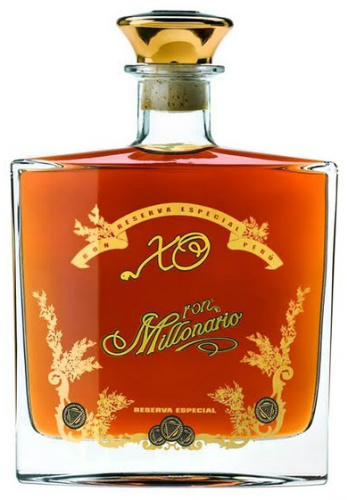
Ron Millonario XO Reserva Especial (40%, Peru)

Rum, Rhum, Ron all words for the same beverage. The fact that there are so many ways to describe this drink shows us that Rum is made all over the world. But then again, which drink isn’t? Whisky is made all over the world now and so is Wine. This particular Rum, or Ron in this case wasn’t made on a small Caribbean island, but in the northern part of Peru, South America. Ron Millonario have a website, but somehow it only shows their 15yo Solera Reserva Especial. This Super Premium XO Reserva Especial is nowhere to be found. The  Millonario Rums are made by slow distillation of sugar cane molasses, using three old Scottish column stills. The distillery has its own coopers that make casks from American and Slavonian! oak. The 15yo Rum is made with four stage Solera system. Chip Dykstra mentiones that for the XO a fifth stage may be introduced, lifting the age by 3 to 6 extra years over the 15yo mentioned above. Mind you, in Rum, 15yo means that the oldest Rum is 15yo, whereas in Whisky 15yo means that the youngest Whisky is 15 years old.

The XO is limited to 6000 bottles per annum.

Ron Millonario XO Reserva EspecialColor: Copper Brown

Nose: Sweet, floral and quite light. The rum also brings a small hint of acetone and dry wood. Dry powdered raspberry sweets, which also resemble not quite ripe cherries. Toffee, old vanilla and wood again. It doesn’t promise heavy sweetness. Tiny hints of young Cuban tobacco and cookie dough and wet brown sugar, which still doesn’t make this Rum smell “sweet”. Very interesting smell, but not a powerhouse.

Taste: Well balanced stuff, this is (Yoda). Seems a bit light at 40% ABV though, but still has a lot going for it. Very sweet (honey) and well made. Small hints of licorice that goes extremely well with the honey I mentioned earlier. It has quite some staying power and the finish sometimes resembles a cognac. Very smooth stuff. Elegant.

The profile seems to be a bit middle of the road for me, but the view from the middle is quite spectacular. The sweetness is perfect as is the balance. The only thing wrong with it is that it’s quite expensive, but hey, most Whiskies cost (a lot) more than this, so I guess buying this it would be money well spent. Recommended!

Points: 85

Kopke Moscatel 10 Years Old

Moscatel is the Spanish and Portuguese word for a fortified wine made with the muscat grape variety. Muscat grapes are not a single grape variety, but a whole group of hundreds different grape varieties, ranging from white to almost black grapes. Muscat grapes are one of the oldest grape varieties still left, already used by the ancient Greeks. Therefore it’s not surprising a lot of different wines in large parts of the world are made with this grape variety, ranging from Moscato d’Asti in Italy to Kopke’s Moscatel from the Douro region in Portugal. Muscat wines can be dry, medium, sweet, sparkling or a desert wine (fortified). Wines made with Muscat grapes have a low acidity, and can’t be aged a lot, unless it’s fortified like this Moscatel by Kopke, which is a whopping 10 years old. By the way: Muscadelle, Muscadet and Muscardin do not belong to the Muscat family.

Kopke Moscatel 10 Years OldColor: Copper, or very dark amber.

Nose: Deep old sweetness, syrupy and reminiscent of sultanas. But it’s not only oozing promises of sweetness, but also some acidity seems to be present, which is rather uncommon for a Muscat Wine. Hot earth with a tiny, tiny hint of smoke, which gives the Moscatel a lot of character. Hints of pineapple, dry leaves, licorice and it has a little bit of a floral perfume too. Creamy. The nose is not far from some PX Sherries. Lovely.

Taste: Milk chocolate, vanilla and sultanas again. Peaches and apricot syrup. Some alcohol is showing as with cherry bonbons. The sweet (which seems to dissipate fast) and the acidity mingle well, and after the sweetness retracts, the acidity takes over, without being aggressive like lemon juice would. Where the nose promised a lot of sweetness the taste, luckily, is more balanced, due to perfect acidity, yet not very complex. Then nose is most definitely more complex than the taste is. So it’s not syrupy sweet nor does it have the consistency of a syrup, since the Moscatel is quite thin in texture. In the glass some long legs are showing, but not a lot, nor are they very thick. The finish is not too long, and has a little touch of grape skins. The taste has nothing to do with PX Sherries though 😉

Lovely stuff, easily drinkable and I’m quite curious for other Moscatel wines now. I hope to find one that has some more complexity in the taste. ABV for this Moscatel is 19%.

Points: 85

Bowmore Week – Day 2: Bowmore 14yo 1998/2013 (46%, Cadenhead, Small Batch, Bourbon Hogsheads, 792 bottles)

Here we are, into day two of Master Quill’s Bowmore Week. This review will be about a Bowmore from Cadenhead’s new Small batch series. Just like with the Original Series (46% ABV) and the Authentic Series (cask strength), the small batches come in at 46% or cask strength. The 46% versions in this new Small Batch Series come in this round dumpy bottle as depicted below, whereas the Cask strength versions come in more square dumpy bottles. Like Glenfarclas used a long time ago. The only difference between the Original and the Authentic Collection and the Small Batch bottling is that the latter is in almost all the cases a bottling of two casks where the former were single cask bottlings. This may be a golden opportunity for Cadenheads to mix two casks that can complement each other, where single cask bottlings will always show the flaws of that one cask. A year prior (2012), Cadenheads have already bottled two Bourbon Hogshead Bowmore’s in the Authentic Collection, which could be nice for comparison.

Cadenhead Bowmore 14yoColor: White Wine

Nose: Butter, cookie dough and flowery peat. A very feminine profile. It’s flowery and perfumy without it being FWP or soapy. Citrussy and very light on peat. Hints of (tarry) wood and salt. Fat light peat and licorice. Quite “simple” on the nose compared to yesterday’s standard 12yo. This one has to breathe a bit and needs a bit of warmth to fully release its aroma’s. The longer it stands the more smoky it gets, kippers. Coastal.

Taste: Very well integrated Bowmore. A sweet and very full body, yet not heavy and quite un-complex. Good sweetness. Hints of mocha and cappuccino. A nice peppery bite and citrus with custard. Lemon sherbet. Nice hints of wood. Extremely drinkable, but also quite simple. The pepper is an added bonus. The finish is not too long though, and the pepper stays with you longer than the finish does.

Where the nose needed a little time to show itself, the taste is immediately up front without a lot of evolution. But when its good from the start who needs evolution? Very nice and simple profile, but as I said before, not very complex, but immediately likeable and extremely drinkable. I do like it.

Points: 85

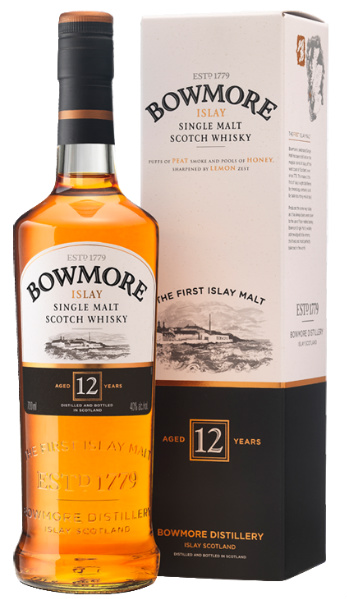
Bowmore Week – Day 1: Bowmore 12yo (40%, OB, Circa 2013)

Bowmore WeekYes this is the start of a new “Week” at Master Quill. This time it’s december and the weather is still pretty good for this time of year. Still the cold should be not too far away and I most definitely have an itch for something more peaty. Bowmore, as Caol Ila are known as the more medium peated Islay Whiskies, as opposed to Ardbeg, Lagavulin and Laphroaig that have a more heavy hitting reputation, and Bruichladdich and Bunnahabhain which are even lighter in peat than Bowmore is. Not to forgetting about Kilchoman (new) and Port Ellen (closed).
Bowmore itself had a little problem in the eighties and nineties with some of their Whiskies being called Badedas of heavily soapy, or even full of FWP (French Whore Perfume). I once had a Bowmore from 1989 that had so much of this it made me physically ill (on two different occasions when tasted blind). It made me ignore Bowmore for a long time (and the independent bottler that bottled the stuff as well…)

But after way more than a decade, and hearing Bowmore of late are very good it is time to have another go at Bowmore and look at some of their newer bottlings and maybe some old, who knows? Lets start the Bowmore Week with the newest version of the standard 12yo.

Bowmore 12yoColor: Full Gold.

Nose: Peaty, sweet and animalesk (smell it and you’ll know what I mean). Salty, smoky and vegetal. The peat gives off this typical coastal character. Burning off garden waste (not everything is dry), but also a clean wood fire. These two different kinds of fires coexist in this Bowmore! Hidden (sweet and aromatic) fruits come next, very nice! Little bit of toffee, vanilla and caramel. Fresh, sea air. But the whole is very elegant (for something from Islay). Not in your face. But Bowmore isn’t about heavy peating anyway. Cold tea. Good balance and quite complex, especially for such an entry-level Bowmore @ 40% ABV. Smell it for a while because not all is released at once.

Taste: Sweet, with lots licorice, peat, cardboard and black & white powder. Hints of vanilla ice-cream and wee bits of yellow and red fruits. Waxy, peppery and a funky kind of sugary sweetness underneath (ever so slightly too sugary sweet sometimes, but the fruity sweetness is good). Again an association with garden leaves, but this time just lying there (before being burned off). Very good Whisky. Alas, the palate can’t keep up with the more than excellent nose. To be taken in big gulps for maximum pleasure. Medium finish, but the aftertaste is very pleasant.

This is great Whisky, and has a lot of potential. I would have liked this very Whisky also being bottled at “the new export strength” of 46% ABV, I would be very curious how it would have turned out, also at cask strength it would be a blast. It smells fantastic, the taste is a wee bit simpler but still well made, very well made. It’s almost too good for an entry-level malt. It just is too watered down, which (alas) makes it an entry-level malt.

Points: 85