Octomore 5yo “Edition 02.1 / 2_140” (62.5%, Bruichladdich, Ochdamh-mor, American Oak, 140 ppm, 15.000 bottles, 2009)

After the sweet and weak Glenfiddich, time for a potential beast. This Octomore, the brainchild of Jim McEwan was, when it was released, the most heavily peated Whisky in the world. Today we look a little bit differently at 140 ppm, since Octomore 06.3 is peated to a level of 258 ppm! Octomore 06.3 is a lovely Whisky and shows quite some fruits and the peat doesn’t even seem that heavy as it sounds. But time to rewind a bit and have a look at Octomore 02.1 that was already released in 2009. The first Octomore that was released is known to the world as 01.1, peated to a level of  131 ppm and bottled in 2008. The first ever Octomore distilled by Jim has never been released, but a small group of people had the chance to try it at the Whisky Show 2015 in London earlier this month, and Jim has probably brought it with him elsewhere too. The first ever Octomore was distilled in 2002 and peated to a level of 80.4 ppm. Filled into a first fill Oloroso butt and bottled at 62.3% ABV. I didn’t take notes since I was listening to Jim, but managed to score it 91 Points.
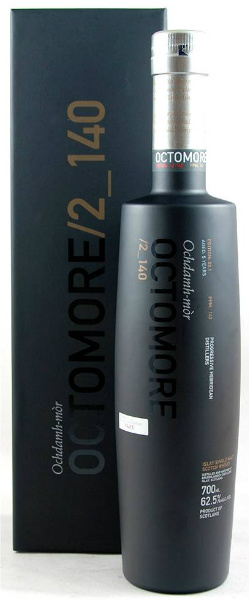
Octomore Edition 02.1 / 2_140 (62.5%, Bruichladdich, Ochdamh-mor, American Oak, 140 ppm, 15.000 bottles)Color: Very light gold.

Nose: Fatty peat and hints of red fruits, mostly berries. Peated barley and slightly medicinal, iodine. Smoky. Actually this smells like a lot of Whiskies from Islay do. In nothing you get that it is more than heavily peated. When you let it breathe for a while, a more (yellow fruity) sweetness emerges. Altogether for this to reach a more balanced state, you must give it some time. More meaty, smoky, tarry and salty aroma’s emerge. Burning off dry plants. Licorice, sweet wood and smoke in the mist. Wait even longer and hints of menthol and lemon can be smelled. the whole gets even softer. Old furniture and even creamy. Vanilla Ice cream with pepper and salt. Old paint and some nuttiness emerge late. Cotton candy. If you handle it well, if you are patient with it and use a glass that can handle air well, you’ll be rewarded. Wonderful nose which keeps on giving and giving.

Taste: Again  very creamy. Peppery and lots of it. Peppery attack with lots of licorice and sweet wood. Matches the nose perfectly. Quite sweet, but the rest of the aroma’s are pretty “there” as well so it handles the sweetness perfectly. Hints of old wood integrated with the licorice. Lots in common with Port Charlotte (obviously). Taste is very balanced, but less complex than the nose. It will be great to see Octomore (and Port Charlotte) mature.

Excellent example of a Whisky you have to work hard for, to be rewarded. It needs a lot of time and air to be at it’s best and show you all it’s got. Use the wrong glass or being impatient with it, will degrade this to nothing special at all. This is a wonderful yet modern spirit, which already is great if you know where to look. Lots of potential. The aroma’s are so big it even hides the high strength. I didn’t try it with water, but I’m sure it will take water well. Pour yourself a dram and then drink something else first, come back to this later.

Points: 87

Glenfiddich 19yo “Age of Discovery” (40%, OB, Madeira Cask Finish)

After an (alas imaginary) short break on the beaches of Barbados, back to Scotland again. From the oldest Rum brand in the world we now focus our gaze at the Whisky that started it all for Single Malts, Glenfiddich. Up ’till now lots of Glenfiddich have found their way onto these pages. The Whisky at hand is the first of three “Age of Discovery” bottlings. All three are accompanied by little stories about traveling and discovering new territories by usage of tall sailing ships. This particular Madeira cask finished Glenfiddich is about discovering the isle of Madeira (and Madeira Wine). The other ones are about sailing up the rivers of America for Bourbon casks (not a Bourbon finish, but wholly matured in Bourbon casks) and finally a Red Wine finish with the story of Darwin visiting the wine making regions of Argentina. Let’s not get ahead of ourselves and have a look at this Madeira finished one first.

Glenfiddich 19yo "Age of Discovery" (40%, OB, Madeira Cask Finish)Color: Full gold.

Nose: Funky and acidic. Where is this going? Some wood, rotting wood. Barley and grainy in fact. Waxy.  I’m getting a lot of wax lately, so maybe that’s just me. Luckily with time the aroma’s start to gel a bit. Started out very unbalanced, but the balance returns. Still the whole doesn’t seem to be very complex and obviously is very light. Maybe it wasn’t such a good idea to reduce it to 40% ABV. Mint & toffee come next. Unbelievable how malty this is after 19 years.

Taste: Sugar water with mocha, toffee and more sugar-water. So yes, quite sweet and appealing. Did the Madeira do that? Lots of vanillin from the American oak. Creamy. Pudding. Custard. Caramel, Toffee. After that it falls flat on its face. Short finish and hardly any aftertaste save for some creamy sweetness. Sure it’s nice and very, very easily drinkable, but hey, where is the development, where is the complexity? It’s a shame this got reduced so much because it tastes like nothing special now. It’s nice, but it is in no way better than a good Malt that costs much less than this one does.

I don’t know if this was meant for travel Retail? A lot of those big box Whiskies that are meant for travel Retail are 40% ABV. Why? Is the industry afraid the traveller at hand will open and drink the bottle on the spot? On the ferry or on the plane? Well, if that’s so, a traveller will get pretty plastered drinking a bottle at 40% ABV as well. So no need to put so much water into the Whisky bottle I would say. I guess you pay for the packaging this time. It’s nice, but could have been so much more. Expect to finish this bottle very quickly, because it drinks like lemonade, but alas also has the complexity and length of a lemonade.

Points: 81

Mount Gay 1703 Old Cask Selection (43%, Barbados)

Now I’m getting sunburned, so I’m digging out the last Bajan Rum from the sand, for now, and find some shade. Last but not least, and a short trip of Bajan Rums wouldn’t be complete without an offering from the oldest distillery around: Mount Gay. And this is not the distillery’s entry-level Rum, mind you. Mount Gay Distillery had plenty of time to build up a nice stock of aged Rums. For this “1703” blend, casks were used that have been aged from 10, up to 30 years. So I’m expecting something different.

The history of Mount Gay starts with a man called John Sober (what’s in a name). John was fortunate inheriting a distillery on the Island of Barbados but didn’t know what to do with it. John asked for some help and got it from his friend John Gay (what’s in a name). John Gay died in 1801 and John Sober renamed the distillery in John Gay’s honor. John Gay managed the distillery well and perfected the distilling process thus producing a fine Rum, and making John Sober a lot of money in the process. Actually Gay was John’s middle name, his name was actually Alleyne, but there already was a Mount Alleyne on Barbados (what are the odds), so Mount Gay it became.

Mount Gay 1703 Old Cask Selection (43%, OB, Barbados)Color: Orange Brown.

Nose: Not your obvious sweet-from-the-start nose. No, this has already a lot of wood, but also elegance and presence. Definitely some old (woody) Rums have found their way into this “1703”. Wood, lots of orange peels, honey and wax. Wood comes in many guises and that’s not bad for the composition of this nose. Sawdust and spices. Vanilla as well (American Oak). Old roasted coffee beans and walnut skins, but also some creamy sugared yellow fruits, although they are well hidden. One thing is for sure, this Rum is all about wood, and lots of it. It works in the nose, but I’m already getting a little bit nervous, how will this work out when you sip it?

Taste: Luckily not as woody as the nose suggested, but the first thing that enters my mind is its relative lightness. It tastes diluted, as if I was nosing a cask strength sample and now am tasting a 40% ABV retail version. The entry of fresh, fruity (orange again) and sweetish Rum is short-lived, because the wood kicks in rather quickly. The old Rums that are in this blend play their part and give it a backbone of various wood aroma’s. The wood in the taste however seems to “reduced a bit” and that in itself is quite an accomplishment. The wood gives the medium length finish a walnut skin bitter edge, but in no way does it ruin it. It’s the vanilla from the finish that seems to linger on…

Quite a daring expression of Mount Gay, definitely for aficionado’s who are not afraid to “drink out-of-the-box”. For some more normal Rum drinkers this has too old stuff in it, bringing lots of wood. Don’t worry this very sentence contains the last reference to “wood” in this review. Considering the public this was, probably, made for, I find this a bit to weak. This Rum might have been better with a higher strength. I know 43% is more than the usual 40%, but I feel this Rum needed even more alcohol to do it justice, 46% at least maybe even 50% ABV. It would have aided the body and lengthened the finish a bit.

Points: 85

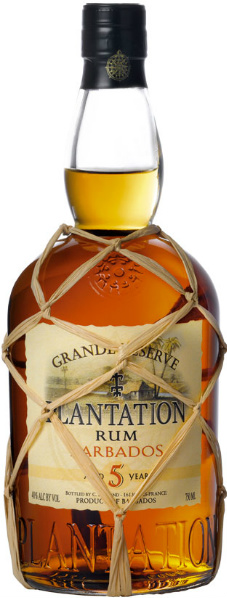
Plantation Grande Reserve 5yo (40%, Barbados)

Lying on a Bajan beach suits me, albeit only in my mind that is. That’s enough reason for me to stay on the beach for a while longer and dig up some more Bajan Rums from the sand. Today we’ll take a look at another independent bottling. This time Plantation, the Rum brand of Cognac Ferrand from France obviously. Italy’s Fabio Rossi (Rum Nation), who actually comes from Wines and Whisky, found a passion for Rum. Now the same goes for Cognac Ferrand as well. They also found a passion for Rum. The people of Cognac Ferrand buy aged Rum’s from several Caribbean distillers, ship them to France and finish them for a couple of months in Cognac casks before bottling. This 5yo Grande Reserve is no different, it gets the same treatment as the others, except this blend of Bajan Rum’s has aged less than other Plantation expressions.

Grande Reserve 5yo (40%, Plantation, Barbados)Color: Gold.

Nose: Quite closed at first and light. Fresh and fruity. Later more sweet and waxy, with hints of vanilla, yet still light and fresh. Vegetable and leafy, combined with a flowery breath of fresh air. Very friendly. Minute hints of mocha coffee, toffee and cow dung (you must think I’m mad by now). Orange flavored powdered candy. The orange note for me is to weak and to synthetic for it to be real orange. Remember this is quite light and none of the aroma’s really stand out. It’s a very introvert Rum. Let it breathe some more and yes some soft orange peel shines through.

Taste: Again quite light, weak black tea with sugar. This has enough character though. Slightly burnt sugar. Fern and a proper sweetness, although the burnt cask note hides part of its sweetness. It’s quite alright. Sometimes this reminds me a lot of Cognac. For me this is a young rum, which hasn’t picked up a lot of sweetness yet and other typical Rummy aroma’s and has quite some Cognac influence, more than other Plantation bottlings, like the Old Reserves. Medium to short finish with notes of runny caramel with a slightly burnt edge which stays well into the aftertaste. Very likable though.

A young Rum with obvious young Rum traits. Lacks a bit of depth like many of its older brothers and sisters have. Its playful and nice. Likeable and cute, with a nice dark ridge of burnt sugar and cask toast. So it’s not all lovely and cute but also has a bit of Chucky to it. So in the end this is a well made although, young and undemanding and underdeveloped Rum. I still say you should get it because it costs next to nothing and is very well made.

Points: 83

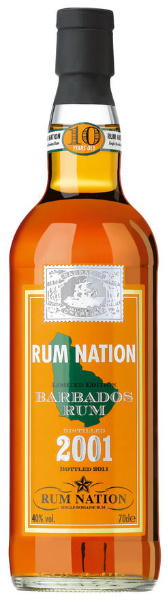
Rum Nation Barbados 10yo 2001/2011 (40%, Single Domaine Rum, Barbados)

After the peated Benriach and the chilly foreplay to winter, lets head back to a nicer climate and head towards Barbados. Although Scotland is a beautiful county, I’d rather be in Barbados right now. Edinburgh, not even 10° C. Barbados more than 30° C. What would you do? Remember my review of the Cockspur 12? Well the Barbados Rum I’m about to taste, actually comes from the same place. Both Cockspur 12 (not 12 years old though) and this Bajan Rum come from the same distillery: The West Indies Rum Distillery. You always hear about, location, location, location don’t you? Well, this distillery is located right at the beach, just like some of the best Scottish distilleries, with the one distinct difference I already mentioned above. I just image lying my tired bones on the beach, enjoying the sun, and then bubble up de gap to the distillery for some “refreshments” safe! This Rum was bottled by Italian bottler Fabio Rossi under his Rum Nation brand he founded in 1999. We maltheads already know Fabio as the man behind indy Whisky bottler Wilson & Morgan.

Barbados Rum 10yo 2001-2011 (40%, Rum Nation, Barbados)Color: Orange gold, amber.

Nose: Wonderfully complex smell. Oak and vanilla, short whiff of acetone with fresh air and clean alcohol. Most definitely not too to sweet. This is quite a breath of fresh air after all those sweet and sweeter Rums. Sure toffee and caramel, but this time with spicy wood, slightly burnt wood and without the sugary type of sweetness, although it does smell a bit like brown sugar. Hints of dark chocolate, bacon and even a pinch of cherry liqueur, salt and cola. It almost smells like an overly toffeed Bourbon, and I have to say the fresh and nutty smell of oak is just about right in this one. Maybe this is a Whisky drinker’s Rum. Well done!

Taste: Yes, this is no dud, in fact this is very good! Wonderful entry of sweet almonds and again wonderful oak. Long and warm caramel. The nuttiness, oak and caramel are aided by hints of licorice and orange rubber (lab rats will recognize it), to form the body of this Rum. It’s warming without ever being heavy. Great balance and quite a nice finish, with hardly any bitterness to it. Wonderful vegetal aftertaste too. It’s chewy and you just want another caramel from the bag, and another, and another. I love it and I will be sorry when it’s gone.

Well, dear readers, for me this is a hidden gem. I already thought Cockspur was nice, but this also is really something. Exceptional balance, all flavours are well-integrated and match up quite nicely. I even prefer this one over the Cockspur 12. Get it as long as its available. Today Rum Nation still bottles a 10yo Bajan Rum, but they have changed the bottle into a dumpy one. I haven’t tried that one yet, but I am sure it will be just as good as this one.

Points: 85

The Benriach 17yo “Septendecim” (46%, OB, Peated, 2013)

Last summer I already reviewed The 18yo Benriach “Dunder”. A peated Benriach finished in high ester Rum casks. This “Septendecim” is a 17 year old peated Whisky. Well, I may be wrong, but maybe this “Septendecim” is the basis for all those 18yo Limited production’s of late? Up untill now there are already three releases in this series. It started with “Albariza” which was finished in PX Sherry casks, the second was the aforementioned “Dunder” and last month the Benriach “Latada” was released. Again a peated Whisky finished this time in Madeira casks.

The Benriach SeptendecimColor: Gold.

Nose: Fatty, fatty, thick peat. The peat is instantly recognizable from the Dunder I reviewed earlier. Bonfire in the woods. Tiny hints of electrical fire and molten plastic. Sounds terrible, but it doesn’t harm the overall smell, so easy yourself back into your chair. Quite clean and smoky. Kippers, salty and tarry. But it’s not Islay I’m getting. I still get a secondary feeling of a forest. Clairvoyant? Who knows. After some air, the whole gets even more cleaner, smokier and shows hints of citrus. Lemon, not lime. Quite nice. I would have never given this 17 years if I had tasted it blind. Hints of coffee, but not dark roasted stuff, more Cappuccino. Last one to show itself is the wood. Fresh oak.

Taste: Sure, fatty, a bit fruity and obviously peaty, but also much lighter on aromatics. Cold chocolate milk and coffee again. It has some sweetness too, but that is more hidden. Just like the nose, I wouldn’t have given this 17 years. Even at 46% ABV. it doesn’t seem to be heavy on the alcohol, I’m actually amazed how light this actually is. The lightness (and the coffee with milk) makes this dangerously drinkable for a richly peated Malt. I keep wanting more, and want to sip it more. Having said that, It would have been nice to try this one at 50% ABV and see a bit more complexity at this age. Medium finish with a buttery, vanilla and smoky aftertaste.

The “lightness” in the taste made me believe this is the Whisky they use as a basis for the “Limited Production Series”, especially when its 17 years old and that leaves some room for finishing.

Points: 85

The Glenlivet 12yo (40%, OB, 2012)

About a year ago I already reviewed The Glenlivet 12yo, but that one was bottled around 2005. Now I stumbled upon an example of the same stuff, this time bottled in 2012. We all know the big boys want consistency, so now we have a chance to find out. For those of you who don’t know already. Due to the enormous rise in popularity of Single Malt Whiskies, a distillery can’t afford anymore, to wait 12 years to make an entry-level Malt. This 12yo will be replaced in most markets, apart from Asia and the USA, where I’m informed, the consumers like “numbers” more than the consumers in other markets. The replacement is The Glenlivet “Founders Reserve”. Yes, a Whisky described by only letters, no numbers anymore for us Europeans.

The Glenlivet 12yo (40%, OB, 2012)Color: Gold.

Nose: Malty with sweet fruit and quite some wax. Nice aroma. One thing if for sure. The aroma of the 12yo never holds back, its vibrant and wants you to drink it. Definitely not a closed spirit. Vanilla and oak, parts of it even new oak, since the wood smell is a little bit sharper. Sweet and candied. Fruity. No pineapple this time, but I do get some apricots. Powdered coffee creamer (the initial smell of it, not the fatty part). At least this nose lives up to its earlier brothers (or sisters if you like).

Taste: Strange enough, this starts with wood, partially bitter and partially burnt. Then a quick passing by of some (sugared) fruit and some soapy (ear) wax, which is quickly overtaken by paper. Diluted red fruits and the bitterness never moves an inch. Not as sweet as the older versions. Quite a difference from the 2005, 12yo, I mentioned above. Not a long finish and the aftertaste isn’t all that pleasant as well.

When reviewing the 2005 version and comparing that to the new “Founders Reserve” I was quite shocked by the difference in taste. The “Founders Reserve” tastes as a very young and immature Whisky, almost as if it wasn’t ready, but the marketing department wanted it out anyway. Now that I have tasted this 12yo from 2012, and do remind yourself how much the Whisky world has changed between 2005 and 2012, the difference in quality isn’t all that great, although the taste is quite different. My advise would be, get yourself an old 12yo, but do not pay too much for it, and be surprised how nice it was.

Points: 76

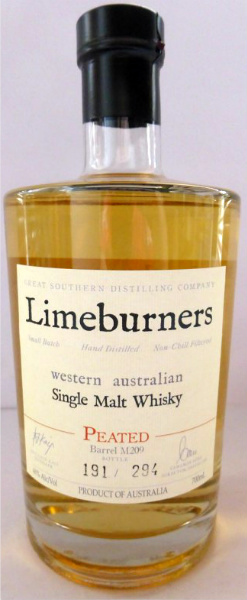
Limeburners Peated Single Malt (48%, Great Southern Distilling Company, Bourbon Barrel M209, 294 bottles)

After the funky mushroom Whisky from France, let’s try another ‘World Whisky”. This time we will look at a peated Limeburners single cask Single Malt Whisky. Limeburners is the brand name for the Single Malt Whisky from The Great Southern Distilling Company from Western Australia. They call themselves a boutique distillery with a focus is on quality. The plan is to source all ingredients locally. Nice touch is that the distillery is powered by the Albany wind farm and the Whisky is reduced with filtered rain water. How’s that for sustainability?

Limeburners M209 aColor: White wine.

Nose: Softly smoky and peaty. Fatty with lots of vanilla. Creamy. Leafy, vegetal and the oak almost smells freshly cut. The peat quickly takes the back-seat and lets the cask drive. The wood drives slowly listening to Lana Del Rey on the car radio. Hints of new make. Judging by the nose alone I would say, bottled slightly too soon and not as peaty as I expected. Given some time to breathe it seems like all of the aromas introduced themselves one by one, and now work together for a more balanced feel. More citrussy too, distinct aroma’s of soft (sugared) lemon. Am I still objective when I pair the soft lemon with lemongrass. Nice, but where has the peat gone? It’s almost a lowlander in style.

Taste: First entry is definitely new make, with its distinct alcoholic and sweet taste. Beer, hops, lots of paper, woody bitterness and again very green, leafy and vegetal. Fresh tree sap. Virgin oak cask? I also get some raspberry hard candy and creamy vanilla. Typical american oak vanillin. The peat only shows itself in some sort of spicy pepperiness. Not bad but nothing special yet too.

The nose already gave it away, but especially in the taste it is noticeable, this is a bit too young. Also the notes of virgin oak are quite “there” so I think at least this cask has some more to give to the next distillate that will enter it.

Points: 75

Lascaw 12yo (40%, Distillerie du Périgord, Fûts de spécialité à la truffe)

Next up a French Whisky, that seems utterly French, since it was finished in casks that once held truffles, yes a fungus! The Whisky itself (before it is finished) turns out to be a 12yo Scottish Single Malt brought in by the Perigord distillery to finish for several weeks in the aforementioned special casks. Alas the source of the Whisky is confidential. Just to clear one thing up, the casks previously didn’t hold truffles, but were used for ageing a spirit (Vodka) with truffles infused in them. Distillerie du Perigord has a website, at the time of writing, only in French, which show the distillery is known mainly for its fruit spirits and liqueurs and some French specialties like Pastis and Poire William, and now this French-Scottish Whisky.

Lascaw 12yoColor: Orange gold.

Nose: Creamy and fresh. Light and fruity. Lots of yellow fruits with hints of menthol. Fruity sweetness with hints of oak. I braced myself for so thick and earthy fungus smell, but nope it’s not like that at all. Its fresh and fruity, Light and quite elegant, with a tiny hint of burning candle and pine. That part reminds me of christmas. Simply a nice smelling Whisky. Give this some time to breathe (believe me, this does need a lot of time to breathe) and yes, a whiff of mushroom does pass by. Remember the smell when cleaning champignons? It may not only be the smell of the mushroom itself, but also from the earth its growing in. Sure it has that, but don’t expect to get a lot of it. I already used more words about the mushroomy bit, than is actually noticeable, but it is noticeable. If nosed blind, the mushroom would be considered a part of the wood aroma I guess. Remarkable change when it breathes, more and more towards the christmassy bit I described above. Even more earthy, dry and more and more candle wax, boiling water and dry pine. Mocha coffee. The pine is integrated, it’s not overpowering the smell at all. Very interesting nose.

Taste: Light, creamy, watered down oak and cardboard, no yellow fruits but there are some red fruits in the finish. Quite malty and in a way it has aroma’s of porridge and old beer. This probably has been reduced too much to show off its aroma’s in the taste. Slight hint of oaky bitterness in the finish, and for me there is no truffle in the taste. It’s all in the nose. Tastes like a blend.

The nose is more than all right. Give it time and it will show you its special. A good nose you get from wood aged spirits. Not really a mushroom Whisky though. Taste wise it’s too thin with quite a short finish. Not something I would run out to buy, but an education and experience nevertheless.

Points: 70

Merci à Richard pour la bouteille.

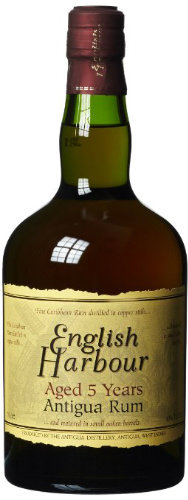
English Harbour 5yo (40%, Antigua, West Indies)

And here is another Rum in a dumpy bottle. This time, just like the El Dorado, we have a Rum with an age statement that really does mean that the contents have been aged for that period of time. Where the El Dorado is 15yo, this English Harbour only has 5 years under its belt.

Antigua Distillery Ltd. is established in 1932 with a 3-column Savalle still from France placed one year later. In 1943 Antigua Distillery Ltd. buys the Montpellier sugar estate with 2500 acres of cane field. We have to wait until the fifties to see the first Rum called Cavalier Muscavado Rum. The first Rum that was called English Harbour was released in 1990. Today the portfolio holds the 5yo we’re about to review, a 10yo, but also a 1981 vintage. This 1981 Vintage is the last of the Rum distilled on the original Savalle Still from 1933, which was eventually decommissioned in 1991…

English Harbour 5yoColor: Light orange gold.

Nose: Sugary sweet, nutty, fresh and fruity. Appetizing. Slightly dusty and some woody dryness. Fresh sugarcane-juice and hints of Bourbon. Typically vanilla, toffee, caramel and a hint of roasted coconut to finish it all off.

Taste: On entry first quite thin, but just right after that a slow, caramelly, sugary sweet sip slides down my throat. lots of toffee and creamy notes. Nougat (with hazelnuts). A distant laid back fruitiness emerges, which I can only describe as the marriage of sweet sugared cherries with dried apricots. It’s neither of the two but some sort of marriage of the two. Half long finish with a light backbone of oak, leaving a very pleasant, and slightly hot, after taste.

For the cost a very good Rum you can do anything with. The work-horse of your collection. It’s a very nice un-demanding sipping Rum, but will work excellent in cola and cocktails. Yes is may be slightly simple due to its youth, but it is highly drinkable, not too sweet, not to woody. Everything seems in its place and has no off notes whatsoever. Good stuff.

Points: 83