PX Sherry: Elite Selección Dorada

Here’s an appeal to all. Start drinking Sherry. NOW! Because it may be too late already. Let’s face it people. We love our whisky and we particularly love it when it’s from a good Sherry Cask. But as can be seen, prices are soaring when a nice sherry casked whisky is released these days. I’ll be reviewing some Pedro Ximenez (PX) Sherries the following days, but there is a lot more out there. You might want to try a nice Oloroso (maybe the best performing casks for whisky). Some of you might like a dry Fino. But there is a lot out there, and a lot of differences in quality too. One thing is sure, when trying out some nice Sherries you won’t break the bank.
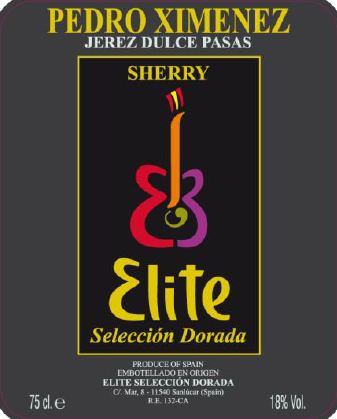
The Sherry I’m about to try is made by Elite Vinos y Licores,  S.L. and this PX is part of their premium range. Just not super premium prices (yet).

Color: Mahogany Brown.

Nose:  At first, raisins, raisins, raisins and figs, but that quickly changes into fresh mushrooms, mushroom soup and wet earth. Hints of liquorice and old & dark tarred wood. I said hints. The mushroom cream soup is predominant. Dusty lavas. Very atypical and interesting nose for a PX.

Taste: For a PX Sherry it’s quite thin, and not syrupy as most other PX-Sherries that are around. At first a nanosecond of an acid attack but then the slow-moving sweetness comes in with a little bit of lingering woody sourness. Coffee in the aftertaste. Very easily accessible. Burned creamy sugar as in the top layer of Creme Brulée. The acidity is a very nice addition to the taste of this PX. It doesn’t seem to be as sweet as the competition, and it is certainly not as thick. The finish therefore, is not the longest in the business.
Very easy drinkable PX. It’s not overly sweet and syrupy. It has very nice construction of fine tastes. Nicely balanced and very restrained PX.

Points: 84

Brora 23yo 1981/2004 (48.6%, Ian MacLeod, Dun Bheagan, Sherry Butt #1513, 336 bottles)

Hello November! Looking outside, this month seems to bring us damn close to winter. Here we have a bottle of Brora 1981 bottled by indie bottlers Ian Macleod in their Dun Bheagan range. Ian MacLeod have a few other brands you might know. The Chieftains Range or “As we get it” for instance. The company is also the owner of the Glengoyne distillery, which is one of my favourites. Go!

Color: Orangey Gold

Nose: Green. Sweet, a type of lemonade sweetness. Musty and wet tea leaves. Slightly sherried and a hint of plain oak. Green apples. Vanilla ice cream. Perfumy. Some more wet cold black tea leaves and dried grass.

Taste: Thick and sweet. There are the tea leaves again. Syrupy. Sherry. Nicely round and precisely the right amount of wood to give it some body. Nice warming and the sweetness remains for the finish. Chewy plywood. Not overly complex and dangerously easily drinkable.

Brora is my number one Single Malt Whisky. It’s fabulous stuff and when it’s bad, like this one, it’s still a whole lot better than many others. Once there was a time there weren’t a lot of 1981 casks around, but today the market is swarmed by these, and some are better than others. The casks from this range 15xx are all pretty different. Butts, Puncheons and even some Hogsheads. So there should be some difference. I’ve tasted about four of those, one of them a cask sample of an unbottled cask, and all are comparable in quality. Nice, easy drinking whiskies. Not very complex though.

Points: 87

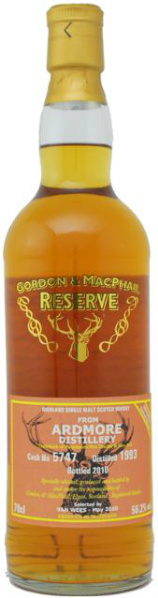
Ardmore 17yo 1993/2010 (56.2%, Gordon & MacPhail, Reserve, First Fill Bourbon Barrel #5747, 244 bottles)

Let’s do another Ardmore and compare it to the day before yesterday’s offering by The Whiskyman. We all know that 1992 is somewhat of a good vintage for Ardmore. So let’s see what happened in the distillery a year later. This 1993 was bottled by Gordon & MacPhail and they were so kind to do that for Van Wees of The Netherlands.

Color: Gold

Nose: The same meaty, slightly peaty nose as The Whiskyman’s offering. Nice soap with green apples and other fruits. Leather. Dryer and more powdery. A little more wood too.

Taste: Great fruity sweet start, more ashy. Somewhat less complex and a tad more sourness from the wood. Same kind of peat. The peat itself is more chewy and more farmy. Toffee. Some mint in this one too. Rare black fruits in the drier and warming finish, but overall, a little less impressive than yesterday’s Ardmore.

This is an Ardmore, no doubt about it. Just nose it and you’ll smell the family resemblance to The Ardmore bottled by the Whiskyman. It’s from another year, but the nose is quite similar. In the taste department it’s a bit less balanced, but still has a lot going for it. I’m always a sucker for those black fruits in the finish. Like old style Bowmore for instance.

These 90’s Ardmore’s seem to me to be the Brora’s of the modern age. Great stuff. Recommended. I definitively have to look into Ardmore some more. So hopefully to be continued.

Points: 87

Ardmore ‘Peat fighting man’ 20yo 1992/2012 (49.9%, The Whiskyman, 146 bottles)

Dominiek Bouckaert is known for being the billionth ICT guy that does something in whisky. When I started with whisky I was an ICT guy myself and of course was introduced to the stuff by another ICT guy. In fact I was introduced to Whisky by two of them. One was partial to Laphroaig (eventually my first self bought Single Malt), and the other was more into Talisker (I’m something of a Talisker-collector now).
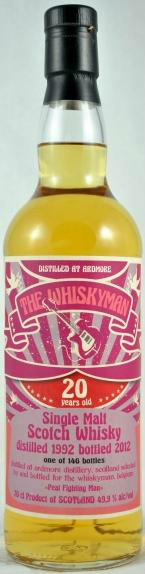
Besides ICT, Dominiek took it upon himself to dabble a bit with distribution of the Malts of Scotland (A german bottler) and play a bit with Luc Timmermans doing their Hand Written Labels. and last but not least, Dominiek has his own label now. The Whiskyman. Nice psychedelic colorful labels with a wink, wink, nudge, nudge to music. Beatles and Stones to start with, and this is an example of the latter called peat fighting man.

Color: White wine

Nose: Sweet, citrussy and malty, but this time with depth. Fishy, salty peat, lemon and wet grass. Given some time, the lemons are replaced by oranges. Fresh. Smoke, soap and latex paint. Ultra clean wood and hay. All elements fit nicely together. Very bold statement. From the name Dominiek gave to this Whisky, I would have expected some kind of peat attack, but far from it. The peat is there, but fits in rather well instead of singing the lead. A bit like how Charlie Watts fits in the Stones.

Taste: Sweet with a lot of liquorice. Again, not in your face peat, but nice warming peat. It’s not quite farmy, but it has an organic quality to it. Toffee, tea and clean wood again. Fruity. Lots going on here. Nice, very nice.

Very well-balanced malt. Great find, well done Dominiek. Now we want another one!

Points: 89

Thanks go out to Jack for handing me this sample.

Glencraig 1970/1996 (40%, Gordon & MacPhail, Connoisseurs Choice, Map label, IF/CCC)

Ahhh, yes, Gordon & MacPhail never cease to amaze me! Next up is this Glencraig 1970/1996 (40%, G&M, Connoisseurs Choice, Map Label, IF/CCC), but now it turns out that the exact same bottle with the exact same code (IF/CCC) was also released with the Old Map label too. Why? Can we conclude from this that 1996 was the year the labels got changed?

Glencraig is the little sister of Glenburgie. Glencraig was the name of the whisky that was distilled from 1956 untill 1981 in a pair of Lomond Stills at the Glenburgie distillery. Another example of a true Lomond pair of stills existed at Miltonduff, where the subsequent whisky was named Mosstowie. Mosstowie was made between 1964 and 1981. A tad different was the case at Inverleven, where only the spirit still was of the Lomond type.

Color: Full Gold

Nose: Grainy. Apples. Every component from apple. Compote and waxy apple skin. Smells a bit thin. Did they reduce this too much? Very elegant wood shines through. Dusty vanilla, almost like smelling airborne powdered vanilla. Slight hints of orange juice. Creamy and some hard candy.

Taste: Wood is the main marker, but not bad. Sweet and fruity with liquorice. Actually the spiciness from the wood carries it. The grainy element is here too. This could have been a very old blend. Hints of french cheese, a Camembert. Funky, I love this cheesy element in this Whisky! Slightly warming. Given some time to breathe the whole gets more sweet. Still the wood stays with its licquorice element. Finish isn’t even bad. It stays longer than expected.

Yes, reduced too much. It is in places weak and watery, and it seems to me, that some areas of the taste got subdued a bit, wich affected the balance. Just let it breathe for a while in your glass and you will be rewarded. This is actually better than we think. Give it some time.

Points: 86

Dallas Dhu 1971/1994 (40%, Gordon & MacPhail, Connoisseurs Choice, Old Map label, ID/H)

Again a distillery that was founded in the Pattison crash year of 1898. Building was finished one year later and the first spirit that came off the still was on the 3rd of june 1899. It’s history is like many other distilleries. Closures during both world wars, and of course a big fire on the 9th of April 1939. The last day spirit came off the stills was the 16th of March 1983. 1983, a dark year when a lot of distilleries were closed. In 1986 the distillery was sold to Historic Scotland who run the place as a museum now.

Color: Full Gold

Nose: Fruity and sweet. Lightly woody. Fresh and a bit rural. Distant farmyness. Wet grasslands. Wet trees. That sort of thing. Hard powdered candy with some liquorice. Woody vanilla ice cream. Smoked bacon with cardboard and almonds.

Taste: Sweet and sherried. Cardboard in here too. There also seems to be some smoke in here. Watery vanilla ice cream. Some sourness of the wood is in the finish and later on some bitterness too. Nothing to worry about.

It’s very easy drinkable. But for me this is an example of those G&M’s from the past where the whisky didn’t stand the reduction to 40%. Also I find that the caramel coloring changed the original whisky considerably. Fortunately G&M know their market and don’t reduce their whiskies that much. Don’t know about the coloring though…

In the past I hated these Map labeled Connoisseurs whiskies and in fact I believe I don’t own even one. For me they got reduced too much and some are that much colored, that the caramel coloring changes the character of the whisky. The industry made you believe that it doesn’t alter the whisky, but having done some tests, it certainly does. It brings some sort of roundness and balance you get from most blends and it makes all of those Connoisseurs Choice Whiskies a bit similar in taste and definitively similar in color. Still the old Dallas Dhu that’s in here shines through.

Points: 86

Again Muchos Grazias to Nico for this sample.

Juan López Selection No. 1

Yeah!, I got a bonus day! Somehow the weather gods decided that we have here, deep in autumn, one nice day. Nice temperatures and sometimes some sunshine. And dry! Why not try, what will probably be, the last cigar of the year.


Juan López was founded in 1876 by Juan López Diaz, today a local brand with a minor market share. The cigars are considered to be medium to strong. Today there are only three standard cigars in production. A Petit Corona, and Selection No. 1 (a Grand Corona) and No.2 (a Robusto). As far as I know, there never was an Edición Limitada, but there have been 11 (eleven) Edición Regionales, almost three every year. Here we’ll have a look at the Selection No. 1. First release of this Grand Corona, was in 1990. The band was placed on the cigar since 2005. I believe the one I’m smoking, has aged for about 4 years.

Juan López Selection No. 1 (46 x 143 mm, Corona Gorda, Grand Corona, Box code unknown)

Color & Looks: Colorado. Bulgy. Wrapper looks OK, but through it you can see that the binder has a large vein. Let’s hope this doesn’t disturb the draw. Tightly packed. So it looks somewhat smooth, yet it’s nicely cut without any frails.

A cru: Lots of aroma to boot. Fresh, almost a kind of lemon juice freshness. Old books and leather. Milk chocolate mousse. Gentile. After the cut the smell stays the same. And it really looks tightly packed.

Taste: Surprisingly good burn. Taste is quite woody, and a little bit sharp and dry. Right from the start a lot of smoke. Woody and a bit sour. When taken with coffee it enhances the acidity of both. Water suits the cigar better, but it really needs a Cognac or a Whisky.  The wrapper has a nice white ash, but the binder and the filler are really dark. Mostly black with a little gray in it.

It’s really not the taste bomb I expected, and it is medium to strong. The second-hand smoke is really beautiful. After 3 centimetres the taste mellows out a bit and the second-hand smoke becomes even better. At last its warming up a bit. It’s a little creamier now. The white ash from the wrapper looks stunning. Not a lot of development and the taste is half strong. During the half way point the smoke got less thick, but picks up again quickly. Draw was good throughout the whole cigar.

The finish comes quickly. When It turned ‘bad’ I still had a considerable amount of cigar left.

Buy this cigar for a friend and go and sit beside him/her to really enjoy the cigar, since I thought it to be better from the second-hand smoke than to smoke it yourself. The cigar doesn’t develop at all and stays the whole time on dry wood. I think this will do great when accompanied by Cognac or a whisky.

Points: 73

Ardbeg 1999/2012 ‘Galileo’ (49%, OB, ex-Marsala and ex-Bourbon Casks, 15.000 bottles)

And here is Ardbeg. Last of the Islay whiskies to feature on Master Quill. The first Ardbeg is also the last one being released. Ardbeg Galileo. A Whisky that in part was matured in Marsala Casks.

Ok, two difficult words. Marsala? Galileo?

Marsala is a Sicilian red wine which mostly is sold for export as an fortified wine. Port and Sherry are also fortified wines. By the way, the Sicilians themselves drink it as… well a normal wine. We all know the Whisky market is booming, but the Sherry market isn’t. We also know that Sherry Butts and Puncheons made of european oak, are the best casks for maturing Whisky, and that good cask are getting scarse, because we, the consumer, don’t like Sherry too much. Sherry casks made of American wood, but foremost other casks, like Marsala, are used to see if they work.

Galileo Galilei was born on February 15th, 1564 and departed from this earth on the 8th of January, 1642. Galileo was an Italian physicist, mathematician, astronomer, and philosopher who played a major role in the Scientific Revolution [Wikipedia]. In the case of Ardbeg, Galileo was best known as an astronomer.

This bottling also commemorates the fact that Ardbeg is part of an Whisky experiment in space. On ISS some Ardbeg (and I guess it’s not the Galileo Whisky) in MixStixs are subject to experimentation on the topic of molecular maturation. (Can we mature whisky more quickly and thus make more money, by maturing it in space or at zero gravity? Or am I just being negative?)

Color: Reddish Gold

Nose: Obviously Peat and a lot of smoke. Non fishy, yet clean and almost industial smelling peat. Winey and wine related ash. Flowery and fresh wall paint. Sweet caramels, dried apricots and a hint of peaches on syrup.

Taste: Sweet. Ashy again. Wood and winey and a quick sour note. A little bit of liquorice and foffee. It actually tastes the same as it smells. Strange unbalanced soury finish with the cold contents of an ashtray and some mint lateron. There is not a lot happening in the finish. Astonishingly simple and short. The wine brings a sort of sourness that is all over the palate and isn’t doing the probably standard bourbon casked Ardbeg any good.

I hate to say it, but aren’t “Ardbeg” putting more money into marketing than in the actual Whisky? Don’t get me wrong, I love Ardbeg, just look at my top 25. Alas, this isn’t my Ardbeg anymore. It became some kind of hype, a brand, a handbag. It’s not bad, but I’m gonna pass on this. It makes my head spin.
I haven’t had any Marsala on it’s own yet, but tasting this Ardbeg, Marsala should be closer to Port than it is to Sherry. When using Marsala casks, don’t overdo it please!

Points: 82

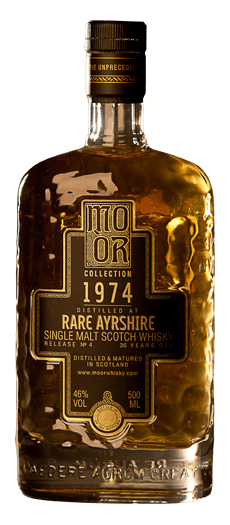
Ladyburn ‘Rare Ayrshire’ 36yo 1974/2010 (46%, Mo Òr, Bourbon Barrel #2608, 261 bottles, 500 ml)

As said before this distillery was briefly opened between 1966 and 1975. As far as vintages go not a lot were released. Officially a lot of 1973’s were released. This vintage was also released by Blackadder and Duncan Taylor. Signatory Vintage released a lot of 1975’s (and one 1974). Two of these 1975’s I have reviewed on these pages earlier. Last but not least in this case, Cadenheads had some releases from the opening year 1966, but that was a long time ago in 1979 and 1980. Besides these few ‘players” not a lot of Ladyburns are to be found. Now here pops up a 1974. As far as I know, there are three 1974’s released. Cask 2607 by Signatory @ 53.9% ABV (in 2011). Cask 2604 by Dutch bottler Van Wees @ 52.1% ABV, (also in 2011), and from 2010, Cask 2608 by fellow Dutch bottler Mo Òr @ 46% ABV. It’s not hard to guess how much (or how little) this got reduced. Rumour has it, these 1974 are pretty good.

Color: Light Gold

Nose: Very aromatic. Sweet and clean. Pops out of the glass. Fruity and lively. Great combination of farmyness and fruity sweetness. On the nose it’s already a lot better than the 1975 Ladyburns I tried before. Nice wood too. Great greenish notes with gravy. If the taste will be anything like the nose, we’ll have a winner on our hands. When this get’s time to breathe the lively fruits make room for something more dark and broody. Meaty and some perfume. Very interesting.

Taste: Fresh, fruity (pineapple) and in nothing you would say this is such an old malt. Not as complex as the nose is. The initial fruits are very quickly replaced by caramelized wood. Finish is good and slightly woody. But considering it’s age you would definitively expect more wood in this.

Very likeable Ladyburn. The nose is very much better than the 1975 Signatories I tried before. Taste wise, maybe not so complex, but less woody than the Signatories. Very nice Ladyburn, one of the best that’s still around, ánd reasonably priced as well!

Points: 86

Thanks again to Henk for this sample.

Dailuaine 17yo 1980/1997 (43%, Hart Brothers, Sherry)

Dailuaine is a distillery that also is around for a long time. Founded in 1852 and rebuilt into a big distillery, for the time, in 1884. Just five years later Dailuaine became a landmark since it got Scotland’s first Pagoda roof, from Charles Doig. Also noteworthy is the fact that Dailuaine and Talisker distilleries merged in 1898. Again the year of the Pattison Crash. Mind you, Dailuaine and Talisker aren’t exactly across the street from one another.

Again we have here a distillery with a fire. But this fire forced the distillery to close for three years! This happened between 1917 and 1920. After that, like with many others, the years of expansion. Today Dailuaine is in the portfolio of Diageo and mainly used for the Johnnie walker blends.

Color: Light Gold.

Nose: Musty, vaguely sherried and sweet. Rather thin. Floral and perfumy, which do not necessarily go together. The nose is quite elegant. Vanilla. Nice clean sour oak. Barley and apple compote. Given some time, the floral part is overshadowed by the sour oak. Otherwise quite nice and good balance.

Taste: Well I got cannabis in there again! Typical sweet and sourness from applesauce. Honey. Very clean otherwise. The woodyness doesn’t need a lot of time to rear its head, pencil shavings. This isn’t bad. Without it, its character would be even less interesting. Still this has a lot of body. The sourness of the oak, dominates this finish. Reduction is ok on the palate, but makes the finish a bit weak and short.

A bit anonymous this one. Taking this blind it could have been anything.

Points: 85

Thanks go out to Serge for handing me this sample a long time ago.