At this point in time, the review of Springbank 15yo (the previous post) was written yesterday, so there is a big chance comparisons will be made between this Longrow and said Springbank. Yesterday’s review was written in one go. Happens often, yet is not a standard practice. Some Whiskies need a lot of time to show all they got and thus whiskies need to be revisited several times to truly “get” them and write up a proper review. These are often the more closed ones or the most complex ones. Yesterday’s Springbank wasn’t really all that complex to be honest. Sure, a lot is to be had from that Springbank, it’s very good, yet it offers it all up at the same time, not a lot of layering or development over time, so it lent itself perfectly for a one-go review. Also, some reviews write themselves and some, well, some just don’t. Sometimes it is actually very hard work, especially if a Whisky is closed and refuses to properly open up, not with warmth and not with water. Sometimes, and this luckily rarely happens, the mind just draws a blank, slowing the creative process. There are also a few reviews on these pages that were finished one or maybe two years after they were started, abandoned due to the mind drawing a blank, and rightfully so, because the subsequent review would have been sub-standard. But I digress.
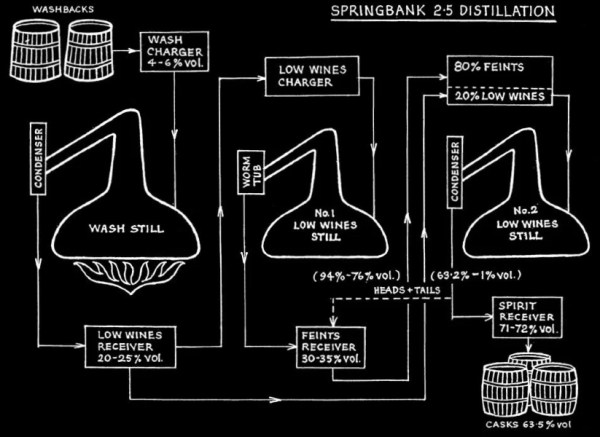 After rummaging some more in the box mentioned in the previous review, I found another sample of interest, but since some data seems to be missing, that one had to be postponed, whilst I wait for some additional data to come in. After some more rummaging in said box, I found another sample from the Springbank distillery, this time around, not a true Springbank, but a Longrow. Same distillery, just more peat and only distilled twice as compared to a true Springbank which is distilled 2.5 times (as shown to the right). When you follow the flow in the chart, half of the Spirit flows through two low wines stills (#1 and #2), and the other half only through one low wines still (#2). In essence it is a 50/50 mixture of two times distilled Spirit and three times distilled Spirit. Fun fact, this Longrow was bottled by an independent bottler called Cadenhead, which has the same owner as the Springbank distillery. Nevertheless, Cadenhead bottles a lot more than Springbank/Longrow/Hazelburn alone and have been doing that for a very, very long time.
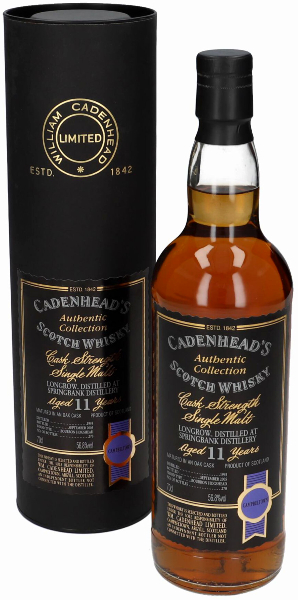 Color: Gold.
Nose: Initially sweet and fruity. Nice vegetal peat, ever so slightly floral. Almonds and wax, typical Longrow of this age I would say. Sweet black tea (no milk used over here). Hints of coffee flavoured hard candy. Smells tasty, can’t hardly wait to take a sip. Just like the Springbank 15yo this also has a similar breath of fresh air, yet less so. Hints of cold gravy, this Longrow has a meaty quality to it, that definitely does not come from a Sherry cask, since this matured in a Bourbon hogshead. The meaty bits are right upfront. Leave the glass breathing and the meaty bits dissipate rather quickly. Since this is an ex-Bourbon refill cask, it is able to show more subtleties from within the spirit, where a Sherry cask can easily overpower the Spirit. You never know, but didn’t the colour on the Springbank 15yo give it away a bit? Tread carefully because often a lot of assumptions are made pertaining the colour of a dram. More funky vegetal notes emerge. See? It’s only 11yo and matured in a Bourbon cask, and this shows more complexity than the 15yo Springbank, and don’t get me wrong the Springbank 15yo is still a good Whisky, don’t get me wrong. Hints of white ashes and sweet woody liquorice, both well integrated with the peat. It is a young bottling at 11yo, but still it doesn’t smell heavily peaty, it smells like a peaty whisky that has matured for longer than it actually did. Peat gets softer and more mellow when the Whisky ages. Just compare a 10yo Longrow to an 18yo or a 21yo Longrow. Good Spirit, good cask. This Cadenhead offering is not really an elegant Longrow, and young Longrow’s rarely are, but it is most definitely a very accessible Longrow, it smells well balanced and well integrated, nothing really overpowers and everything adds to the whole. Definitely some development in the nose. The peat is more earthy now, with dry black tea leaves thrown in for good measure. Hints of distant fireworks, organic farmy notes and diluted red fruits, how’s that for complexity? No noticeable sulphur. Develops nicely with only some breathing, oxidizes very nicely, can take a lot of air.
Taste: Almonds, nutty, with a sweetish start. Sweet black tea. The first sip has a bitter tea-like finish to it, a note this Longrow could do without maybe? Second sip is more of the same actually, still nutty and still with a bitter edge to it, which is all right now, no worries. The taste actually matches the nose very well, both match quite good. In the taste, here it also has this vegetal feel to it. Waxy and velvety with a tiny burnt note, not entirely sure this is from toasted oak though. After the Springbank @46% ABV, I welcome this Longrow @56.8% ABV, it has more power, transports the aroma’s better and is more warming, which is nice with a peated Whisky. Next some Menthos, especially when you keep it in your mouth for a while without chewing on it. Very tasty stuff indeed this Longrow, apart from the ABV maybe, this one has a daily drinker quality to it. A fairly easy Longrow, one you will just want to keep pouring.
This is an accessible Longrow, easy going and very well balanced. Definitely not hot, and sure doesn’t taste like an 56.8% ABV Whisky to me. No need to add water. I did try though, sure it changes a bit (it becomes somewhat fresher, slightly less sweet), but it didn’t get any better, stays more or less on par with having it neat. In other words, you could surely add some water, in which case, you would end up with more tasty Whisky, because water also didn’t make it worse!
Points: 87
This time thanks go out to Andre Z. for the sample!
 Color: Light gold.
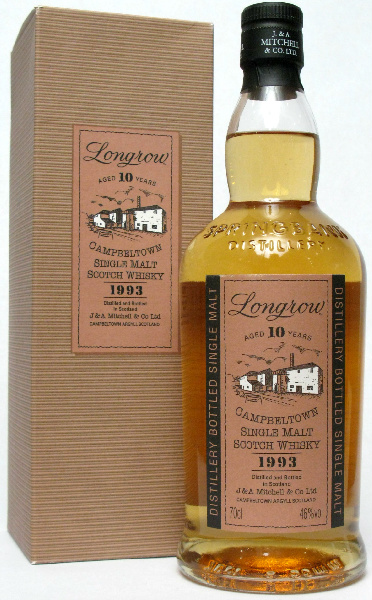 Color: Light gold.
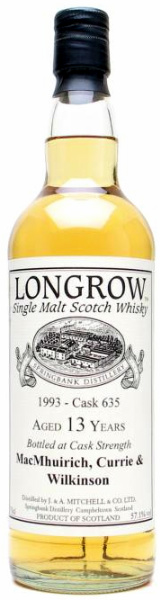 Color: Light gold.
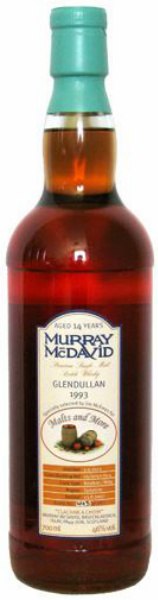 Color: Dark gold, slightly orange.
 From 1955 through 1956, the distillery is again completely rebuilt, this time because of economics, not disaster. In 1966 the distillery is equipped with six stills, but are not configured in the expected three pairs which a normal double distilling distillery would have. Benrinnes have two groups of three stills which makes for a partial triple distilling configuration (sounds a bit like Springbank doesn’t it?).
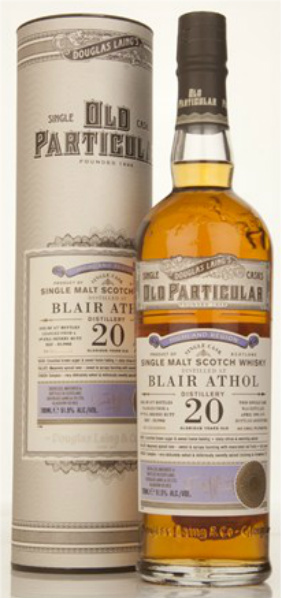 Color: Golden nectar with the slightest red hue.
 Color: White wine.
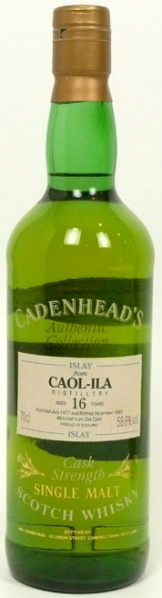 Color: Gold
 Caol Ila. This was recognizable blind. This has a nice full body with a perfect sweetness (slightly acidic) that matches the toned down peat a lot, combined with the smoke…a winner. Macaroons (made with almonds) and a slightly bitter finish (from the wood) and overall a tad too simple for a score into the 90’s.
 oday I have the chance to give this another go. First of all, I can look at this by daylight and I can’t see the red lemonade anymore. It has this orange brown color most Bourbons have.
 Master Quill