 Kintra is no stranger to these pages but up untill now, all Kintra products were Single Malt Whiskies, but this time Erik Molenaar surprises us with a Rum, and not just any Rum, but one form Caroni, a Rum distillery sadly closed for over a decade. Caroni is a rum from Trinidad (& Tobago). Founded in 1923 and in its final form, worked from 1975 to 2003. Caroni is known for its heavy style that was perfect for British Navy Rum.
Color: Orange-brown
Nose: Very vegetal and smells from under the bonnet. Oil, petrol and fumes. Industrial and automotive, but in a good way. Lots of dry oak and tree sap. Unlike Whisky, a heavy style Rum like this Caroni, can cope with lots of oak, especially this Caroni’s dirty style! Furniture polish, burnt sugar and some tangerine skins. Black tea and when snorted up vigorously, a little hint of mint. Perfumy like the best kind of Rye Whiskey or high rye content Bourbon. Leaps out off the class with lots of complexity and very good balance. It’s a Rum that you want to smell over and over again, it never ceases to give. Wonderful. Amazing how something can smell dirty and industrial, ánd elegant at the same time.
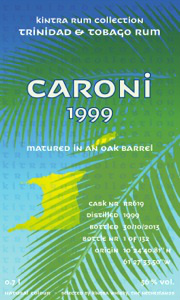 Taste: Again a lot of oak, but as with the nose, this Rum can cope with the wood. The whole is quite dry and very aromatic, but very balanced. yet less complex on the palate. It does resemble Rye Whiskey a lot on the palate. Just cancel out the burnt sugar note and some other slight markers that are typical of Rum… The oakiness is well masked, but it really shows itself on the slightly bitter, waxy and drying finish.
Truth be told, this actually stayed too long in the cask, but since the Rum itself is so overwhelmingly rich, it can deal with the oak that’s there in abundance. Is that a problem? No it certainly is not. It’s the only small issue, but Rum, like Whisky, is what it is because of ageing in oak, and we all want nice woody tastes to begin with but quickly complain when we taste too much wood. Finally here is a Rum that deals with a lot of wood and keeps it in check. I really, really hope this is not a one-off deal for Kintra. An excellent find from a beloved closed distillery and a very nice price to boot. Thanks Erik, keep up the good work. More Rum please!
Points: 87
 Cooley! How cool is that! As the label states, this is peated Cooley so probably spirit that was made to become a Connemara. But what is Cooley?
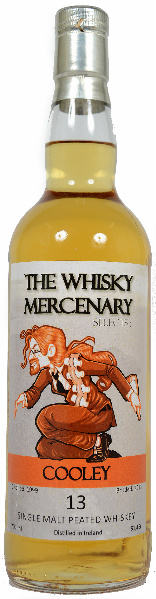 After selling Cooley to Beam Inc. Teeling bought Diageo’s recently closed Great Northern Brewery in Dundalk with a group of investors and is converting it into a distillery. Great Northern made Harp Lager, Smithwicks, and Carlsberg (for the Irish market) and Diageo moved the production of these beers to their Guinness St. James Gate brewery in Dublin. Production of Teeling Whiskey should commence after the summer of this year. Today Teeling Whiskey is already on the market, obviously sourced from another distillery.
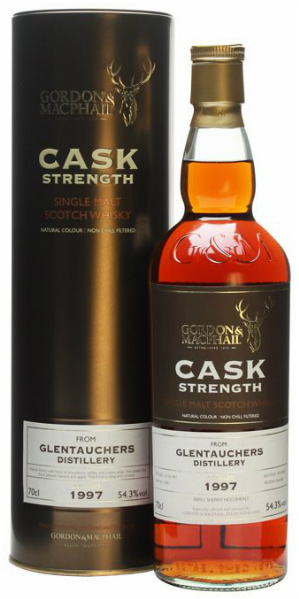 Color: Copper Brown.
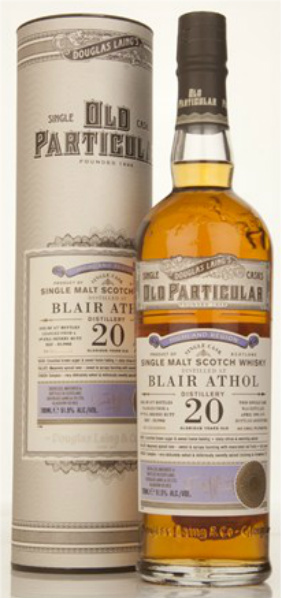 Color: Golden nectar with the slightest red hue.
 Looking at the history of The Ultimate, most bottlings up untill 2005 were bottled at 43% ABV, and after that at 46% ABV. Sometimes however, a cask strength Whisky is released. Sometimes as a ‘Rare Reserve’ release, sometimes because a Whisky just doesn’t respond well to water and sometimes, being the Whisky lovers they are, they leave a Whisky be. It’s already good and it would be a shame to reduce it, let’s just bottle it.
 Color: Pale gold.
 Color: Light gold.
 Here we are, into day two of Master Quill’s Bowmore Week. This review will be about a Bowmore from Cadenhead’s new Small batch series. Just like with the Original Series (46% ABV) and the Authentic Series (cask strength), the small batches come in at 46% or cask strength. The 46% versions in this new Small Batch Series come in this round dumpy bottle as depicted below, whereas the Cask strength versions come in more square dumpy bottles. Like Glenfarclas used a long time ago. The only difference between the Original and the Authentic Collection and the Small Batch bottling is that the latter is in almost all the cases a bottling of two casks where the former were single cask bottlings. This may be a golden opportunity for Cadenheads to mix two casks that can complement each other, where single cask bottlings will always show the flaws of that one cask. A year prior (2012), Cadenheads have already bottled two Bourbon Hogshead Bowmore’s in the Authentic Collection, which could be nice for comparison.
 Color: White Wine
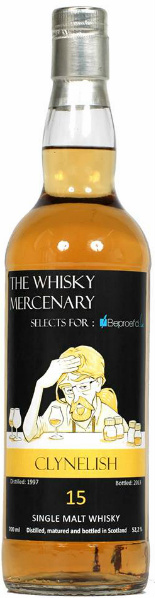 This Clynelish caught me completely by surprise, since Jürgen didn’t tell me he was sending this, and getting free Whisky in the post is, niiiice 🙂 We all know Jürgen from his series of Whiskies he picks out and releases under his
  For those of you who didn’t know already, there have been some changes within Douglas Laing company. Brothers Fred (father of… & father in law of…) and Stewart Laing parted ways and divided the old Douglas Laing firm between themselves. Fred retained the ‘Douglas Laing’ name, ‘The Provenance’ series and ‘Big Peat’ and last but not least acquired the help of daughter Cara, who had to be bought back from Bowmore.
 Color: Almost copper gold.
 As I said, lots of discussion, since all casks are good, didn’t cost a lot and have some differences. So nice whisky to compare to each other. I still have some Sherry Butt #72315 left, so I can compare it to this Sherry Butt #72319. Word in the grapevine is that the first one (Sherry Butt #72315) is the “worst” of the three, all are very clear about that. Some consider Sherry Butt #72318 to be the best and some Sherry Butt #72319.
 Color: Copper Brown (less red/orange in color than Sherry Butt #72315)
 Master Quill