Imperial 9yo 1991/2001 “Port Wood Finish” (40%, G&M, Private Collection, Cask #99/48 1.2, 2600 bottles)

Back to some Whisky. This time around we’ll have a look at a distillery not only closed, but also torn down and already replaced. That happened quickly. In 2012 Imperial ceased to exist and just a few years later a new distillery was finished occupying the same very site. Many have thought that the new distillery would be called Imperial as well, when in fact it is called Dalmunach after a nearby pool of the river Spey. Imperial wasn’t hugely popular as a Whisky hence the new name maybe, but Pernod Ricard (the owners) never ceases to amaze us, by installing new stills replicating those of Imperial. Well in some time we can taste the replicated taste of Imperial, but for the time being let’s taste the original, shall we?
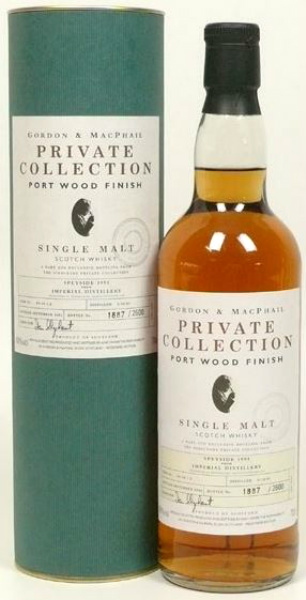
Imperial 9yo 1991/2001 Port Wood Finish (40%, G&M, Private Collection, Cask #9948 1.2, 2600 bottles)Color: Full gold with a slight pinkish hue.

Nose: Winey and candied red fruits. Easily recognizable as a Port finish. Barley, paper. New oak and some pencil shavings. Fresh-air notes, with some sugary sweetness following suit. Nice creamy vanilla mixed with fruity acidity. Typical American oak (the cask it was in before it was finished) but also some sandal wood. The Port integrated well and is used well. In those days experiments with Port finishes often went wrong since the Whisky was left in the Port cask for too long. The whole however is pretty simple and young. What you smell is what you get. Don’t expect a lot of development, if any, but keep in mind that even with the Finish, this Whisky is only 9 years old. Fruity Whisky. Smells nice. ’nuff said.

Taste: Sweet creamy vanilla and candy sweetness. Hard raspberry candy and sugar. A chunk of toffee, molten ice-cream and nice toasted cask that gives it a back bone. Milk-chocolate. Actually pretty tasty. You can taste the potential harshness of the Port. Winey yes, a bit, followed by a somewhat burnt synthetic aroma. The slightly burnt note from the Port cask stays around. If this was finished much longer it would have been over the top. It was arrested in its development just in time, which was quite unusual in those days, but I may have said that already didn’t I? Soft, smooth and tasty young stuff with a pronounced weakness in the finish-department.

Simple yet well tasting stuff. If only the finish would have been stronger. I mean the finish of the Whisky itself, not the Port finish. Still, even for a Port finish from the start of the new millennium, there is nothing wrong with this. Buy a bottle of this and expect it to be empty quickly. This time also nothing wrong with the low ABV of 40%. A higher ABV may have lengthened the finish a bit, but I’m OK with it as is…

Points: 81
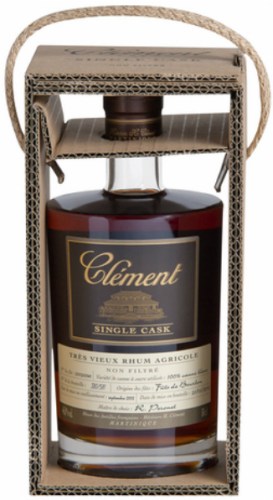
Clément 9yo 2002/2012 Trés Vieux Rhum Agricole (46.8%, Bourbon Cask #20070077, 100% Canne Bleue, 587 bottles, 50 cl, Martinique)

After the excellent offerings from J.M it would be a blasphemy not to recognize Homère Clément, the godfather of Rhum Agricole on Martinique. In 1917 Homère started his distillery on the domaine he acquired in 1887. With the death 0f Homère in 1923, the property with its distillery is taken over by Charles Clément. Charles started making Rhum under the Clément Brand in 1940. The Cléments were already making Rhum for about ten years but under the brand name of the domaine itself: Rhum du Domaine d’Acajou. Charles died in 1973 and the next generation Clément is taking over. It is the generation of George and Jean-Louis-José Clément who saved J.M from bankruptcy but don’t interfere with its Rhum making and management. Investing in the property and distillery, to allow the people behind J.M to make the best Rhum possible.

From Clément’s prestige range comes this single barrel. This “100% Canne Bleue”, non filtré is the first of two single barrel releases. Canne bleue is a cane variety that, apart for its blue color, is known to be the best sugar cane variety for producing Rhum Agricole. Not so long ago a second version in this series saw the light of day, called “Vanille Intense”. Not to be mistaken for a spiced Rhum. No vanilla and/or vanillin was added. Only casks were selected that had the natural potential of releasing slightly more than usual amounts of vanillin from the American oak, as opposed to European oak, which tends to release more tannins.

Clément 9yo 2002/2012 Trés Vieux Rhum Agricole (46.8%, OB, Bourbon Cask #20070077, 100% Canne Bleue, 587 bottles, Martinique)Color: Dark orange brown.

Nose: Fresh and smells of new wood. Also a leafy, plant-like quality. Caramel. Big, hefty aroma, sometimes a whiff of this reminds me of Jamaican high ester Rum, although the whole profile is quite different from that. In the distance even a red fruity aroma. Mostly berries. Burnt sugar with hints of spicy White Wine. Gewürztraminer. Sweet spices. Oregano and to a lesser extent thyme. Toned down vanilla ice-cream.

Taste: A very nice subdued sweetness. It’s like the sweetness has depth in part because its burnt sugar. Milk chocolate, some vanilla and a hint of a paper-like quality, cardboard, cola and lots of cask toast. Just like a great wine, this Rhum Agricole has perfect balance between the sweetness and acidity. The sweet is obvious, the acidity is from the oak. Just like the nose it has this great woody flavour, without it being too sappy or bitter, although the bitterness that is there stays on well into the finish, and even the hoppy aftertaste. The finish is long and has a tiny amount of soapiness to it as well as a bit of red berries and the burnt sugar. The burnt sugar retreats and lets a more creamy and toffeed layer take over for the aftertaste.

It’s really amazing how much color this Rhum Agricole got from only nine years in a Bourbon barrel. It looks like a stunning dark brown Rhum. That must have been very active casks. This is good stuff. Big aroma, big body, long finish. For some a bit too much of the burnt wood and sugar notes, but it comes with the territory. Good ‘un this is. Usually more is more, but I somehow do like the 50 cl size of this. It’s easier that way to get another “100% Canne Bleue” single cask, from a different cask naturally, for comparison. This is a big one. The J.M 2002 shouldn’t be tasted right after this.

Points: 87

Bunnahabhain 9yo 2001/2010 (46%, Daily Dram, for Bresser & Timmer and The Nectar Belgium)

Bunnahabhain was founded in 1881 and the first spirit trickled from the stills two years later. The distillery was closed two times. The first time in 1930 (for seven years) and the second time in 1982 (for two years). In 2003 the distillery was bought by Burn Steward Distilleries, and they really started to market Bunnahabhain. First of all a series of new bottlings saw the light of day, and in 2010 they started to upgrade the core range with the 12yo and the 18yo. The ABV was raised to 46.3% ánd the new versions are unchillfiltered and no coloring is added. Way to go!

Bunnahabhain is known for being the least peated of the island, still like a lot of others, raising to the occasion by answering the call of the public for more ppm’s. Burn Steward therefore started to bottle a “Moine” expression, with more peat, mimicking pre sixties Bunnahabhain.

Color: Warm Orange, slightly hazy.

Nose: Rubber like bicycle tyres, but also a floral note. Very strange. Almost a strangely burnt Cognac? It smells like a grape distillate. Burnt sugar and toffee. Skins of hazelnuts. First whiffs were ehhhh, lets say, very atypical. I can only hope this will not be one of those harsh tasting rubbery fresh Sherry bombs. Luckily it does get a lot better when aired for a while. I would say, leave the cork off for a short while, a week or two maybe 🙂

Taste: Ash and toasted wood. Burnt sugar again, with its bitterness. This must be a somewhat mistreated or bad cask. And/or very poor Sherry. Sweet grains and caramel. Burnt sugar and rubber. Hint of soap. Thick and chewy. Simple and rather unbalanced. Dark chocolate with burnt bitterness. Quite woody in fact, something you could miss by the overwhelming Sherry influence. Was the cask really empty, when the Bunnahabhain spirit entered the cask?

Little if any distillery character. This could have been any spirit, from any distillery. No merits at all for Bunnahabhain, because this is a Sherry influenced grape thing. This is all fresh Sherry cask. And for me not even one of the nicest casks around. Is this nice? I don’t know. There shall be fans of this, but I’m not one of them. If you like Loch Dhu, then please give this a try.

Points: 76

Thanks go out to Nico for handing me this sample.