Ahh it’s been way too long since I have reviewed a Beer. Wow, it’s almost a year back! Sure Whisky takes up a large part of my life (when talking about booze that is), but I sure do enjoy other drinks as well. I really have to do more with Beers and Rum and I have to say other drinks are also in the pipeline. Lets get back to basics (for me) and review a Beer from the number one Beer country in the world: Belgium! This time we’ll have a look at Brugse Zot Dubbel. Brugge is a really beautiful town in Flanders, Belgium. Highly recommended if you haven’t visited yet. Get yourself a Vlaamse Stoverij (Beef stew) with any great brown Beer, and you’ll be king for the evening! Brugse zot (Jester from Brugge) is a Brown Beer brewed by Brouwery De Halve Maan.
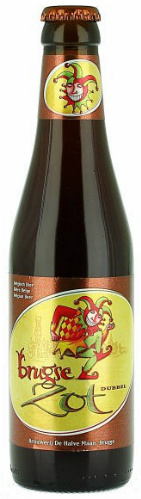 Color: Red brown, mahogany with a lot of Cappuccino foam.
Nose: Fresh air and hints of citrus. Quite a yeasty, yet clean smell carried by carbon dioxide. Creamy winey honey, but all the way through it keeps its acidic freshness. Candy Sugar and only a hint of mustiness or cold dishwater. No sign of anything burnt.
Taste: Quite a lot of bitterness at first. It tones down a bit for the (lighter) body but returns and stays behind on the tongue for the warming finish, which must come from Saaz hops. Brown sugar candy and muscovado sugar, but having said that it’s absolutely not a sweet Beer. Here also that typical hint of fruity acidity. Slightly burnt sugar and a hint of vegetal and dry licorice. The unexpected fruitiness comes even better to the fore when the Beer is drunk with big gulps and chewed.
This Beer is known for its usage of six different malts for a complex aroma, but tasting this Beer now (at the right temperature of 8 C) it doesn’t seem too complex. When reading the list of malts and the usage of hops this also tastes like a beer that has been designed to be like this. It works well. Its all right by itself but probably even better with a Flemish stew as mentioned above (also made with brown Beer).
Points: 78
 Cleaning out the closet, I found some (but not a lot) Beers well beyond their best before dates. Most can be, and should be aged like most Trappist and some Abbey beers. This Piraat (Pirate) is a heavy blonde beer with refermentation in the bottle, isn’t one of them though. Yesterday I poured two beers into the sink, clear examples that you shouldn’t age everything. Those two were Kasteel Blond 11 and Abdij van ‘t Park Blond.
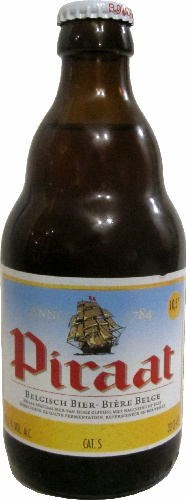 Color: Orange gold with, not a lot of, off-white foam.
 Grimbergen Goud 8º, together with Grimbergen Optimo Bruno are the specialities in the range of Grimbergen Beers. The other beers in the Grimbergen range are the usual suspects in Abbey Beers: Blond, Dubbel & Tripel. Recently I already reviewed Grimbergen
 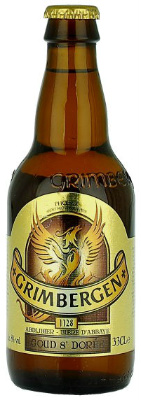 Color: Orange Gold with light yellow to white foam.
 Special Roman is made by Brouwerij Roman from Mater, Belgium. Mater is in the Oudenaarde municipality, a region where Flemish Brown Beer is made.
  Taste: Candied Sugar and unexpectedly only lightly acidic. Maybe some acidity fell victim to the additional ageing? Likeable. Malty (roasted) and hints of burnt sugar. Definitively some hops are in the mix. Not a lot of yeast is noticeable. It seems light and the finish is short. Nice stuff nevertheless. Elegant and perfumy and half-sweet. The sweetness isn’t dominant at all.
 There are a few “rock-stars” amongst the Belgian brewers and one of them surely is Pierre Celis, who unfortunately is no longer with us (1925-2011). Pierre Celis was born and lived in Hoegaarden, famous for its white beer. As Pierre saw the his beloved white beer disappear in 1955, he decided in 1966, to remake the white beer under his own name. His uninsured brewery burned down in 1980, after which he reopened his brewery in Austin, Texas, USA.
 After he sold his brewery to the Michigan Brewing Company, Pierre returned to Belgium to add a new notch on his stick. He developed a dark Belgian Beer to age in caves. Grottenbier roughly translates into Cave-Beer. Pierre favored caves for their constant temperature in which the beer could mature. At first the caves of Folx-les-Caves were used, but soon the Enterprise was transferred to the marl-caves of Kanne.
 This time a top-fermented Abbey beer made by Brasserie St-Feuillien (recently also called Brasserie Feuillien and/or Brasserie Roeulx). It’s history can be traced back to 1873 to the Friart Family, but the name, and the history behind it is much older. In the seventh century AD an Irish monk named Foillan (Faelan) passed through Le Roeulx to preach the gospel, but before he could do that he abused and finally beheaded by highwaymen. Right there where this happened, a chapel was built in his name (twelfth century AD). The chapel was eventually extended into an abbey, and as good Belgian monks do, they brew a great Beer on site…
 Color: Brown Gold with very fine caramel colored fine cream.
 Grimbergen is somewhat of a (commercial) giant amongst Belgian Abbey Beers. Only Leffe sells more beer. It already was big when Scottish & Newcastle were the owners but when that company was bought by Dutch Beer Giants Heineken, well… Next question, is Grimbergen any good? At this point I don’t know, but I picked this Optimo Bruno to find out. Optimo Bruno saw the light of day in 1988 as a beer specially made for easter. Grimbergen Beers are made by Alken-Maes from Waarloos, not to far from the abbey. The top fermented Beers are made L’Union in Jumet. (Top fermenting means that the yeast lies on top of the wort). Last but not least, the beer did not receive post fermentation in the bottle, so even extended ageing (2 years past its best before date) kept this beer “clean” and there is no deposit.
 Color: Brown, a little bit of cream-colored foam.
 In the early eighties Pierre Gobron and Chris Bauweraerts (Brothers in law, and thus Brothers in Beer) started brewing beers as a hobby, and founded Brasserie D’Achouffe near Houffalize in 1982. Houffalize is in the Ardennes, where lots of stories are about elves (They call the leprechaun an elf).
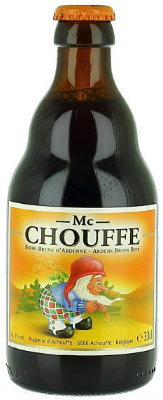 Color: Brown. Not a lot of foam, but a lot of CO2
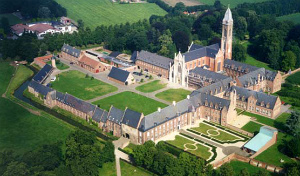
 The Tongerlo beers are brewed by brewery Haacht, and they are doing so since 1990 (when they got the rights to this Abbey beer). I’m sad to report that a few years ago, brewery Haacht, in all its infinite wisdom, have decided to delete
  Even this new Tripel got the chance to age for 2,5 years after it’s best before date. You may think I’m mad, but with most Belgian beers it only adds to the character, don’t worry you, won’t get sick. Breweries are obliged to put a short-term on the label, but are starting to add the bottling date. Frank Boon decided to stretch the best before date far beyond the standard three years and easily puts best before dates twenty years into the future!
 Color: Orange yellow with some flakes (due to ageing). Almost white foam.
 At this point I must give off a little warning. I was in a beer shop recently and overheard some clients talking about pouring the big bottle of Rodenbach Vintage down the toilet. The big bottle should even be better than this Grand Cru, but this is a Flemish Red Brown beer, it’s acidic, so probably not for everyone…
 Master Quill