If you thought both Cragganmores were bottled a long time ago, then you must have a look at this St. Magdalene. This one was bottled one century ago. The 20th century to be precise. Nope its not antique yet since this was only bottled in 1999. Remember Prince? St. Magdalene itself is alas no more. Closed in 1983, it’s buildings now housing people ins stead of casks. An eternal shame led by economics of the eighties. In those days we had a Whisky loch (lots of unsold Whisky), and today almost a shortage. Big disappointment here, since St. Magdalene is my favorite Lowland distillery. Just have a look at my review of the legendary 1979 Rare Malt edition. By the way, bottles of this 1981 Gordon & MacPhail that were sold in Germany had stickers on the back that informed the public about caramel coloring…
 Color: Gold.
Nose: Nice, grassy and citrussy. Quite nice and elegant after all those heavy hitters I reviewed before. Waxy and fruity, again in sugared and dried apricots. Quite grainy too, it’s almost like an old blend from the sixties. Vegetal, less grassy actually but more like fern and almost flowery. Sweetish and waxy apple skins. Marmalade. With some air mare grassy and vegetal. Dry grass and hints of hay, making this an easily recognizable Lowlander. Distant white pepper and some slightly rotting wet wood or bad breath. (not bad here). Not un-complex, and very pleasant to smell. A shame this style is almost disappearing. Do cherish your old Magdalenes and Rosebanks people!
Taste: Sweet (paper) and fruity. Pleasant stuff. Yes, quite light and fragile, but that is helped along by the sweetness. After the sweetness comes wax, paper and cardboard, still quickly overthrown by a delicious fruitiness. Warm apple juice with apricots, Short peak of prickly black pepper. Hidden behind the fruity (not sugary) sweetness a hint of black coal. Highly drinkable. Decent finish with a nice fruity aftertaste.
I thought this would be killed by reduction and caramel coloring, but no. It still has a lot of life in it, just like the ancient Gordon & MacPhail Strathisla 30yo I have on my lectern. That’s also elegant, brittle and light, but still giving a lot. I feel old malts could “take” a lot more than today’s modern Malts.
Points: 87
 Unlike Benrinnes, Dailuaine has been featured a few times already on Master Quill, the last one just a month ago, so it doesn’t need a big introduction, nor does
  Color: Gold
 From 1955 through 1956, the distillery is again completely rebuilt, this time because of economics, not disaster. In 1966 the distillery is equipped with six stills, but are not configured in the expected three pairs which a normal double distilling distillery would have. Benrinnes have two groups of three stills which makes for a partial triple distilling configuration (sounds a bit like Springbank doesn’t it?).
 Color: Gold.
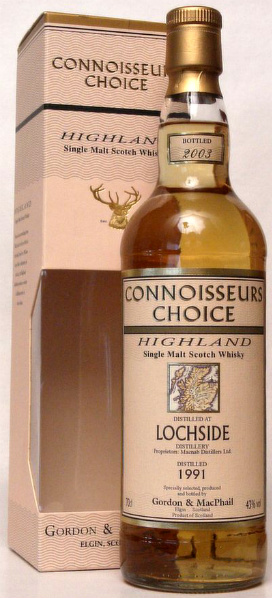 Color: Light Gold.
 Ahhh, yes, Gordon & MacPhail never cease to amaze me! Next up is this Glencraig 1970/1996 (40%, G&M, Connoisseurs Choice, Map Label, IF/CCC), but now it turns out that the exact same bottle with the exact same code (IF/CCC) was also released with the Old Map label too. Why? Can we conclude from this that 1996 was the year the labels got changed?
 Color: Full Gold
 Color: Full Gold
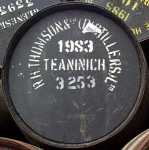 Teaninich isn’t amongst those superstars of Single Malt Whiskies around, but it has a fanatical following with certain enthusiasts. Well I’m one of them. Almost every time I taste a Teaninich, blind or not, this always tickles my fancy. I connect with it. It suits my palate. Dare we say: “For reasons not even science can wholly explain…”
  Teaninich was founded in 1817. In 1970, yes a small jump in time, a whole new six still ‘distillery’ was built alongside the current one, consisting of four stills. The new one was called the A-side (The old stuff was therefore called the B-Side). They worked together as one distillery. In 1984 the old distillery was mothballed, and 15 years later, demolished.
 Master Quill