Tomatin 40yo 1967/2007 (42.9%, OB, Seven Bourbon Hogsheads, 1614 bottles)

As can be read on these pages, Tomatin rarely disappoints. There is always room on my lectern for a tropical Tomatin. Especially older Tomatins quite hit the mark with fabulous aroma’s of tropical and citrus fruits for which it is known. Tomatin has a high reputation with bourbon cask only bottlings like the 15yo that has been discontinued to be replaced with the 14yo port finish. The 25yo has been discontinued too, which also was made with Bourbon casks only. Now, here we have a 40yo Tomatin formed from seven Bourbon Hogsheads with distillate from 1967. You may have heard of The Beatles and Sgt. Pepper? Yes 1967. And this is still available. How is that possible? Is this bottling a dud of some sorts? Time to find out…
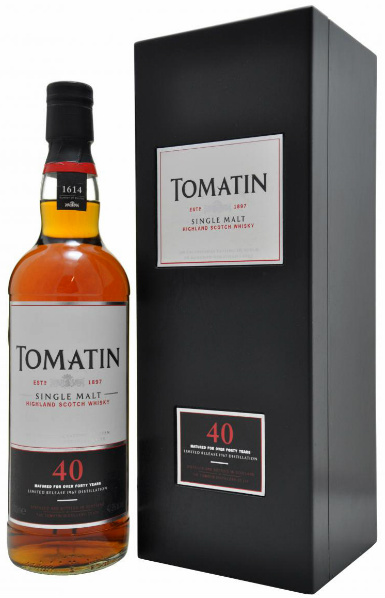
Tomatin 40yo 1967/2007 (42.9%, OB, Seven Bourbon Hogsheads, 1614 bottles)Color: Copper brown gold.

Nose: Sweet and fruity, quite typical for older Tomatins. Lots of vanilla and quite thick. Highly aromatic. Quite syrupy too. Hints of mint and black coal and even some tar and sweets. Complex with lots of development. Give it time. Almonds are coming through after a while. Great nuttiness, rarely seen in Tomatin. Fruity, dusty and dirty at times. Great.

Taste: Fruity again, but also some bitter hops, waxy bitter wood. Elegant. Sweet and brittle at the same time. Lovely waxy stewed and candied fruits towards the finish. Lovely vanilla, with memories of old wood in the back. Apricot and vanilla pudding with fresh and acidic red berry sauce on top. Hints of mint are here in the taste as well. Fabulous development built up in layers and a lovely finish to boot. At the end of the finish the expected woody bitterness (and pencil shavings with almonds) appear or stay behind when the momentarily overpowering waxy fruitiness dissipates. Sweet almond cookies are all over this Malt. The taste is less complex than the nose and shows a surprising fruity freshness and youthfulness.

Malts like this were reasonably expensive when they came out and prices have been rising ever since. However, modern malts can never be like this anymore. So why dish out 300 euro’s for a modern 12yo generic special edition when you can pay a measly 100 more and get yourself a museum-piece still readily available on the market today. This is history in a bottle. Isn’t that worth something?

Points: 89
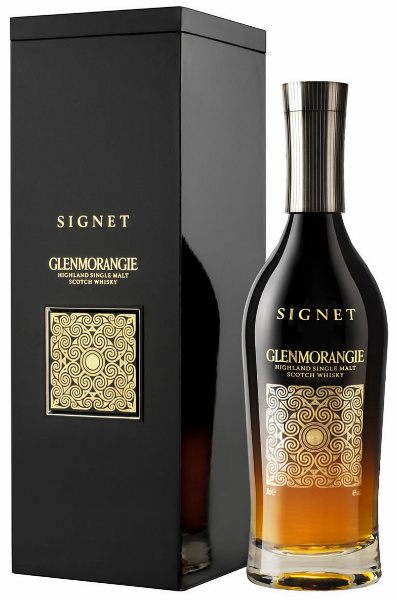
Glenmorangie Signet (46%, OB, White Oak, Oloroso Sherry Finish, Circa 2012)

I never was a big fan of Glenmorangie. Early on in my explorations of Single Malt Whisky I came across the litre bottle of the 10yo. Good value, looked great. Wow a litre bottle even. I didn’t like it. I had bought some other expressions but when I had the chance to taste them elsewhere I was quick to sell them off. Never regretted it since and in fact never came across a Glenmorangie I really liked. Well one I did like, a 30yo 1972/2004. Rare stuff. Ten years I didn’t look back and never got interested in Glenmorangie again. Just one of those malts that didn’t suit my tastes I thought. Recently I got a sample of the extremely rare 18yo and yes, that one was so nice and drinkable that I got myself a bottle of that. Great golden box too. If you ever going to bury a small pet, look no further than Glenmorangie 18yo. After that I accidentally had a blind tasting of the new 10yo and again didn’t like it. Back to the Whisky. Glenmorangie’s Dr. Bill (Not Dr. Phil) was experimenting a lot at Glen Moray, and when all lessons were learned, Glen Moray got obsolete (and sold off). Maybe not entirely for that reason. Glenmorangie started to churn out great designer Malts. Maybe not the 18yo, which still has an age statement and is more old school I guess, but probably true for this Signet. Just look at the design of the packaging here! Signet is a NAS Whisky and besides the white oak and the Oloroso finish, is known for the usage of heavily roasted chocolate malt. Glenmorangie SignetColor: Light copper gold. Nose: Malty and fresh. Citrus lemonade with a burnt caramel twist. Fruity and very likeable. Am I going to be surprised with another decent Glenmorangie? The white oak is discernible, but not very up front. Also some toasted wood, or maybe the toast comes from the chocolate malt? The white oak is masked just like the peat in good old Laphroaig 10yo was masking the heavy sweetness of the Malt. The masking agent in this Glenmorangie being sweet-smelling Oloroso Sherry. I have to say it is what you would expect considering “the ingredients”. Well crafted stuff. I hope this is what it is by design then and not trial and error at Glen Moray. Wink, wink, nudge, nudge. Taste: Sweet Sherry, petrol and nice warming wood. Fresh untreated oak (not the toasted oak from the nose). Vanilla creaminess grows stronger in the finish and has great staying power, where the body seemed to be light at first. Silky burnt notes or silky tannins, are accumulating in my cheeks and are a pretty nice complement to the creaminess. Better finish even as the 18yo, which should have been bottled at 46% too. Both the nose and the taste are nice and both are about aroma. However if you are looking for development and/or complexity, not the case. You quickly understand how this Malt tastes and that’s where it stays. probably the reason this is a NAS bottling. Don’t get me wrong, Dr. Bill did a great job making this, designing this Whisky. It is really good and a must try if you get the chance. Its different from the 18yo and twice the price. I hope one day a Signet with more age will see the light of day. A version with more complexity and foremost more development in the glass.
Points: 88

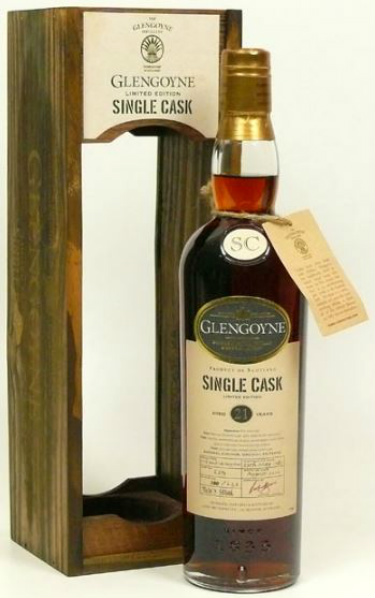
Glengoyne 21yo 1985/2006 (53%, OB, First Fill Sherry Butt #629, 632 bottles)

Two years ago Master Quill had a week specially dedicated to Glengoyne. In that week I reviewed a Glengoyne from 1985 called “Summer” a Limited Release. There also was a Winter (1984 Vintage), a Spring (1972 Vintage) and an obviously an Autumn (1969 Vintage). Essentially all four are Single Cask releases (SC) like the one I’ll be reviewing shortly. This 1985 should be quite interesting since it was drawn from a sister cask of the “Summer”. Summer was drawn from cask #608, and this SC was drawn from cask #629, so that should be interesting.

Glengoyne 21yo 1985/2006 (53%, OB, First Fill Sherry Butt #629, 632 bottles)Color: Mahogany brown.

Nose: Nice Oloroso Sherry nose, with lots of fruits. Fresh and acidic. Wonderful depth. Earthy and dusty, but never dull or heavy. Creamy with hints of vanilla. A very vibrant fruity nose. This probably was a considered a contender for the “Summer” spot. Small hints of warm asphalt. Dusty with some licorice, mocha and licorice. Meringue. Extremely balanced and likeable.

Taste: Cardboard, almonds and quite some licorice again. Warming. Spicy and soft old wood. Creamy and very nice. Fruity vanilla, pudding with warmed up red fruits on top (part fruit, part sauce). Spicy sharpness (hot) because of the alcohol, without that, quite soft and creamy. Slight acidic touch towards the finish, and enough wood. Again, just like the nose. Extremely balanced. Wonderful Oloroso Sherried bottling.

Although a very good Glengoyne Single Cask, I thought the “Summer” was even better. More complexity and even better integrated aroma’s. A bigger body and an even better finish. However, make no mistake. This Butt #629 is no dud, far from it. Hardly any Sherry bottling these days is a good as this is. You know the lonesome tropical Island question, and what to take? If I had to take this one instead of the “Summer” I still would go in a heartbeat!

Points: 89

Tomatin Cù Bòcan (46%, OB, Virgin Oak, Bourbon and Sherry casks, 2013)

In 2013 the people of Tomatin Distillery started with something new (for them). They released a lightly peated dram that has aged in three different types of casks. Virgin oak and the usual suspects of Sherry and Bourbon casks. They invented a new brand called Cù Bòcan rather than calling it an official Tomatin Cù Bòcan although everyone views it as such. After this Cù Bòcan which is placed in the standard range, two more versions were released as Limited Editions. A Sherry version (6.000 bottles) and a vintage 1989 (1.080 bottles). Cù Bòcan is a legendary hell-hound that stalked the people of Tomatin (the town) for centuries. So it is a Whisky with a story, but don’t expect a Whisky with a hellish amount of peat. Compared to Shorty, Ardbeg’s dog, Cù Bòcan must be the size of a Chihuahua (from hell).

Tomatin Cù BocànColor: Light gold, with a hint of pink.

Nose: Extremely malty. Coffee and new oak. Tiny note of smoke, and I’m still waiting for a little bit of peat. Vanilla and again some smoke. Vegetal and buttery. Ice-cream with ferns and a drop of sweat. Good balance though, everything seems to be in the right place. A bit late in the mix come the fruits, yellow and tropical. Yes Tomatin all right. Reminds me also of the Tomatin Legacy. I’m working at it, but no peat. Still a likeable nose nevertheless.

Taste: Young and estery. Sweet and vanilla ice-cream. Fresh virgin oak bitterness. A prickly sensation like smoke, burnt wood and the contents of an ashtray. In no way bad or overpowering though. Like the nose all in good balance.

This Cù Bòcan is in good balance, well made yet very young tasting. A true stereotypical NAS Whisky. In the end I didn’t get the peat, but enough smoky notes. Tomatin Legacy is also a NAS offering and uses the same casks minus the Sherry casks. In some markets the Legacy costs half of this Cù Bòcan. Cù Bòcan is nice stuff but is too close to Tomatin’s Legacy offering to justify the price tag.

Points: 83

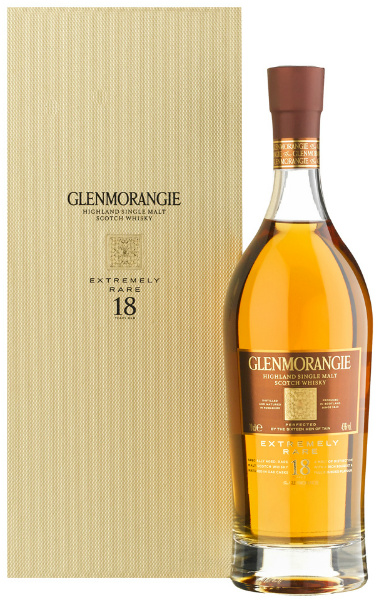
Glenmorangie 18yo “Extremely Rare” (43%, OB, Circa 2010)

I’m not to sure what I think about the NAS (No Age Statement) craze at the moment. Sure the number is not important, but the taste is. So why did the scotch (marketing) guys were indoctrinating us (the consumer) with the slogans that “age matters”, and “older is better” and so on. We’ve come to live with age statements, and now they want to make us believe that “age doesn’t matter”. NAS gives them the freedom to blend without restrictions, any age goes as long as its 3yo, otherwise they can’t call it Whisky, and thát still is a word they would like to use on the labels.

We are now living a while with NAS bottlings, and yes, the Whiskies got younger, but not necessarily better, if you ask me. And by the way, I still prefer age statements. I’m more inclined to buy something that is good and has an age statement, like Benromach 5yo than something that doesn’t have an age statement like Tomatin Legacy or Laphroaig Select. But maybe that’s only me. In the end I do believe that age matters.

Time for another 18yo, this “Extremely Rare” Glenmorangie. What’s up with the funny name? It already has an age statement and it seems to be a blatant lie, since I see this in every shop and nobody tells me there is a shortage of this. Stop it! Great packaging though (it’s from their “Prestige Range” you know), and for an 18yo it’s not very expensive to boot. The whisky was aged for 15yo in Bourbon Casks and finished for three years in Oloroso Casks.

Glenmorangie 18yoColor: Gold

Nose: Fruity and spicy wood. Nutty and sweet. Honey. Hint of smoke and cask toast. Dried sweet orange skins. Lots of sugared yellow fruits. Almond dust. Quite a full aroma for a Glenmorangie. Reine Claude’s, wax, some smoke again and vanilla. Chocolate.

Taste: Matches the nose. Marzipan and lots of yellow fruits. Figs and toffee with the sweetness kept in check. Waxy as older malts tend to get (nice!). Easily drinkable, immediately nice. Not a lot of wood actually. The wood impairs milk chocolate, yet hardly an oaky sensation. Just like the Highland Park, 43% is too low, 46% probably would have been better. There is enough going on in this one to not let it get hot. Especially the finish, again just like the Highland Park 18yo, is the weakest link.

You see that age matters. Just like the 18yo Highland Park, this again is a perfect example how Whiskies do need quite some ageing, especially in a cold climate as Scotland has. Although there are some nice examples of NAS Whiskies, I do like my 18yo’s

Points: 87

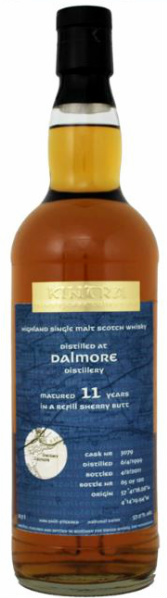
Dalmore 11yo 1999/2011 (57.2%, Kintra, Refill Sherry Butt #3079, 120 bottles)

Dalmore then. Not so long ago I reviewed the official Dalmore 12yo and rummaging through the ever-growing stock of samples, I found this almost 12yo Kintra bottling. If it was only given two extra months and two extra days, this too would have been 12 years old!

Dalmore was founded in 1839 by Alexander Matheson but the Sunderland’s start distilling there. Soon after the MacKenzie brothers, Charles, Andrew and Alexander start to run the distillery. When Alexander Matheson dies in 1886, his successor sells the distillery to the MacKenzie brothers (1891). In 1917 the Royal Navy takes over and use the facility to make mines! After three years the Navy moves out and in 1922 the distillery is again up and running. In 1960 The MacKenzie brothers merge with White & Mackay and in 1990 White & Mackay were bought by American brands. In 2001 White and Mackay were sold again and called Kyndal spirits but the White & Mackay name returns a year later. In 2007 it is sold yet again to the United Breweries Group, an Indian conglomerate.

Dalmore 11yo 1999/2011 (57.2%, Kintra, Refill Sherry Butt #3079, 120 bottles)

Color: Light ocher gold

Nose: Big. Vanilla ice-cream and light wood, with some light menthol cigarette as well. Powdery and dusty. Cherries and Licorice. Horseradish. The wood is very perfumy. Definitely floral and perfumed soap. Strong aroma from a high strength Whisky. Half sweet, salty toffee with funky Fino or Manzanilla Sherry notes, but not as much as in other Fino matured Whiskies, so this might not be one. Red fruit hard candy drops and it does have a salty edge. Animalesk (cow dung) and soft wood. So enough happening on the nose.

Taste: Nice burn and quite sweet actually. Spicy sugared oak with white pepper, but also a sour oak note which turns into ripe black fruits. Quite a lot of wood. Coconut and maybe some peach. The horseradish returns and here it is less sharp but more sweet. Ahhh how nice it is to have a cask strength Whisky again. A breath of fresh air. Vanilla ice-cream returns for the finish. Otherwise the black fruits stay on so the funky sourness is there to stay too. Nice example to analyze like this. But the a word say it all. It is a Whisky you have to work with. If taken casually you won’t fully appreciate it, and maybe even won’t like. This needs your full attention and time.

Quite a nice development. It starts out pretty sweet, after which the wood shows itself. After that, the body collapses a bit to reform behind the lines to come back with a nice finish. Although not without its faults, the whole is quite nice and absolutely an experience. Nice how easy the development can be followed. The more it breathes the better it gets. Very nice pick Erik!

Points: 85

Aberfeldy 12yo Limited Release (40%, OB, Batch #2905, 2014)

As mentioned before, through John Dewar and Sons, Bacardi owns five Scottish Malt Distilleries. This year Bacardi is releasing official bottlings from all of the five distilleries, and that’s not all. All Whiskies released will have age statements. As we have already seen, that’s a dying breed! Not for nothing these five malts are being marketed as “The Last Great Malts Collection” Aberfeldy is the third in a row and for the time being the last. The first was Craigellachie and the second Aultmore. The remaining two will be Royal Brackla and Deveron from the Macduff distillery, both are not released yet.

Abefeldy 12yo Limited Realease Batch #2905Color: Gold

Nose: Funky in a nice way. Creamy and fruity. Tropical fruits, papaya and pineapple. Smells a bit like a Tomatin. The fruit take the back seat and then some dry wood spiciness kicks in. Almonds. Dusty. Nice fruity and friendly nose. Caramel and cow-dung (a good thing in Whisky)

Taste: Toffee and some fruit. Waaaaayyyy to thin. Why bottle this at 40%! Bad move! Taste is there but it is watered down. Toffee again and Amaretto, but where is the rest? Hints of strange acidity in the (beerlike)finish. It’s all about vanilla ice-cream, cream, toffee and caramel with some fruit.

Better tasting than the previous 12yo. The taste was enhanced by extending the fermentation time for this bottling, and it worked. Why didn’t they enhance the ABV too?

Points: 81

Glencadam 10yo (46%, OB, 2008)

Glencadam is a rather unknown Single Malt and this 10yo is marketed as ‘The Rather Delicate’. Never before has a Glencadam been featured on these pages. Did that happen for a reason, or have I missed out on something? The 10yo we’ll be reviewing here, was first released in 2008. Yes, this is the first batch of this new 10yo. This 10yo has seen no colouring nor has it been chillfiltered ánd it has been bottled at 46% ABV. So a lot has been done to make this the best it can be.

Glencadam was founded in 1825 and since than it has changed hands many times. Dark clouds formed above the distillery when in 2000 the distillery was mothballed by its owner Allied Domecq, wanting to close it for good. Luckily in 2003 the distillery was sold to Angus Dundee Distillers. On the premises of the distillery there is also a blending and bottling facility, as well as five dunnage warehouses. The majority of ageing casks are ex-Bourbon casks. Obviously also some Sherry casks are there, and the third flavour of choice are Port pipes. Glencadam fills its casks at the unusual high strength of 68% ABV.

Glencadam 10yoColor: White wine

Nose: Floral and fruity sweetness. Full of aroma. Quite a surprise (I’m trying this right after the “neutral” Inchmurrin 15yo). Creamy vanilla, honey and fruity, stewed apples, and warm apple sauce. The nose has a rum like quality, but also a nice fruity acidity to it. Lime maybe. Quite complex and full of aroma, I didn’t expect much, but this sure delivers some goods!

Taste: Sweet and nutty, almonds. Very creamy and actually very nice. Vanilla ice-cream but again with a fresher acidic citrussy touch. Did I already mention this has a lot of apples in the taste too? Well, there is! Again it also has a little rum-like quality to it. Clay and sweet and spicy vanilla from probably first fill Bourbon casks.

I wasn’t expecting this. Full aroma, nice body and an interesting bouquet of flavours thrown together. Well made stuff and a nice addition to the list of standard 10yo’s. The label states “The Rather Delicate” but that was probably written by a copywriter with a cold or someone who looked only at the color of this Whisky. I disagree. It is a nice creamy, fruity (apples and lime) Single Malt full of flavor. Not light nor delicate. If they call this delicate I’m really intrigued to try the rest of the series. Nice!

Points: 85

Fettercairn 16yo 1995/2011 (46%, Van Wees, The Ultimate, Bourbon Barrel #408, 226 bottles)

Careful readers of the last few reviews have noticed there are some entry-level malts there and the odd Irish stuff. Coincidence or not, there were some points given in the 70’s. Like for instance The Macallan 10yo and Inchmurrin 15yo. Through the wonderful medium of Facebook I got comments like “did you lose a bet?” or “got some imposition?” or “What’s next: Fettercairn?” I initially wasn’t planning on reviewing Fettercairn just yet, but with comments like that who could resist. I have to be honest, I don’t own a bottle of Fettercairn. I had no money left when I spent it all on Brora. Luckily in the ever-growing bank of samples I did have a sample of this Ultimate Fettercairn. Hurray! Yes, you read correctly between the lines. Fettercairn isn’t a very popular Whisky, but is that fair? When I look at my list of previously tasted Fettercairns, I actually haven’t scored one below 81 points, so it can’t be bad, right?

Fettercairn 16yo 1995/2011 (46%, Van Wees, The Ultimate, Bourbon Barrel #408, 226 bottles)Color: Light gold

Nose: Creamy vanilla. Ice cream, but also small hints of a whiff of (burnt) garbage. What!?!?! Let’s put that particular smell away and move on. Spicy wood, dark chocolate, nice oak actually. With some air, pencil shavings and more floral and slightly soapy. Move the Whisky around in your glass and you’ll pick up the more floral bit. Wet flower-pot soil and half-dried grass. I’m thinking first refill (not first fill) Bourbon barrel. Apart from the little off-note I picked up earlier (I actually did just take the garbage out), there is nothing out of the ordinary here. It smells like a typical Whisky from a Bourbon barrel.

Taste: Somewhat sweeter initially than I expected. Creamy vanilla. Warming and quite some wood, less of the oak, but more of the pencil shaving that are there in the nose, but also cardboard. Pepper and a hint of acidity (also from oak, that reminds me again of garbage. What!?!?! No, I’ve never eaten garbage in case you’re wondering). Small amounts of the vanilla/caramel/toffee group are rightly detected. Warming finish that is a little bit hot (and woody).

So why does Fettercairn have such a bad reputation? I honestly couldn’t tell you, since I have only tasted a mere five expressions. I have tasted this independent bottling now and another one from Cadenhead’s (a 10yo from 1993, 81 points). The other three were the official 24yo (85 points) and 30yo (82 points), both from 2009, and the 30yo “Stillman’s Dram” from 2005 (83 points). It seems to me older is not always better with Fettercairn.

Points: 81

Inchmurrin 15yo (46%, OB, 2012)

Bottled on the 14th of november 2012, we have here an Inchmurrin which is a Single Malt Whisky made at the Loch Lomond distillery. Loch Lomond was founded in 1965 and distillation started a year later. On site there is a malt distillery as well as a grain distillery. The distillery has two copper pot stills and four stills with adjustable rectifying columns (for Single Malt production). Because of these different stills and the fact that the rectifying columns are adjustable a series of different Single Malts can be made. Today Loch Lomond produces the following Single Malts: Loch Lomond, (Old) Roshdu, Inchmoan, Craiglodge, Inchmurrin, Croftengea (heavily peated), Glen Douglas and Inchfad.

Inchmurrin 15yoSince 1993 also a Coffey still is placed for Grain Whisky production and therefore the company is able to produce a Single Blend named Loch Lomond (you’d think they were good at making up names for their products)

Color: White wine.

Nose: Extremely malty, grassy and has notes of lactic acid. How’s that for a start! We continue with cardboard and a strange kind of acidity. Vegetal and woody. Toasted wood which makes the whole rather spicy. Slight whiff of menthol. When you let it breathe a while in your glass this is actually not a bad nose, the strange funkiness that was there in the beginning dissipates, to give us a more normal nose.

Taste: Grainy, very grainy. Neutral. It tastes like a Vodka on wood. It ís a Single Malt, so what happened in those casks over all those years? Grain and wood, not a lot more actually. Freshly cut baguette with its paper bag. Hint of vanilla. It isn’t sweet and has only a hint of bitterness. Finish is uneventful, and the higher strength gives it some staying power. But nothing really special stays behind.

First of all let me say that the bottle looks very nice when you have it in front of you. Highest marks on the packaging. The Whisky itself seems almost like a Grain Whisky that was aged in a bunch of rerererefill casks, very inactive indeed. Probably the most neutral Single Malt Whisky I ever tasted. Let’s make it my 70 points benchmark.

Points: 70