The day before yesterday I reviewed the first Braeval on Masterquill.com, the domain I was finally able to acquire. Today we’ll have another first, this time the first Braes of Glenlivet. Well not really since both are one and the same distillery.
Braes of Glenlivet was founded just in 1973, so it’s not thát old. At that time Seagram’s was a company with only two distilleries: Strathisla (I love Sherried Strathisla’s from the 60’s and 70’s) and Glen Keith (equally so). Both distilleries are next to one another by the way. Chivas needed more capacity, due to huge demand of the Chivas Regal 12yo blend in the States and was looking for a distillery to take over. When that didn’t work, plans were made to “build” five distilleries in the same amount of time. Braes of Glenlivet was the first in 1973 and Allt-a-Bhainne the second a year later. The next three distilleries were brought into the portfolio by acquisition in 1978: Glenlivet, Longmorn and Glen Grant (now owned by Campari since 2006). Other noteworthy facts are that the name of Braes of Glenlivet changed to Braeval in 1994 (to allow Glenlivet to be The Glenlivet, as in “there can be only one”). Breaval was mothballed between 2002 and 2008 and is the highest situated distillery in Scotland. 1665 feet.
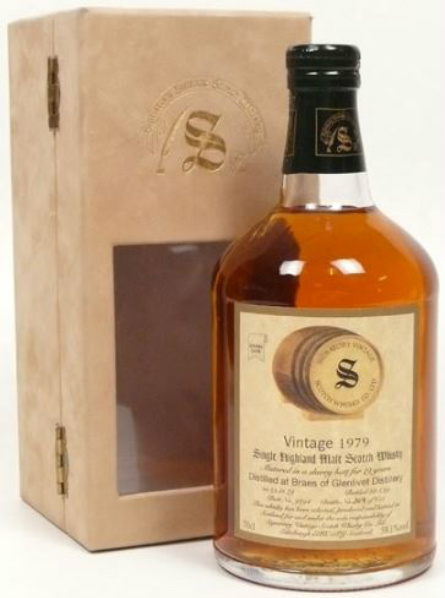 Color: Copper Gold.
Nose: Musty and a high quality Sherry note. Not a big heavily Sherried nose (hence the color). But dry and meaty. Slightly smoky (char) and vegetal (fern). Nicely oaky but also pencil shavings, which usually isn’t oak but cedar. Perfumy. This needs some air to balance itself out. Again the wood is playing a big role in this Braes/Braeval, just like the one I reviewed before. The vegetal part is developing into what I can only guess is a Japanese tea kind of note. Not floral, so it’s not the perfumy part of the nose, but very deep, profound, but also elegant and light. Having said that, next up is a hint of Velpon or Uhu (clear glue). Great herbal and earthy complexity (surely not only from the wood?), with a tiny hint of new make spirit. This is a very nice one to take deep breaths of. Stuff for connoisseurs I guess, so maybe not everybody’s cup of tea.
Taste: Strong, sweet and dry at the same time. Very nice. Lot’s of Beer and Hops, and not really Sherried for me. The hops doesn’t make this all that bitter. Quite some masked sweetness and again quite woody too. The bitterness is really a hoppy one. Interesting. Just like it’s younger brother, it’s coming undone a bit in the finish. The alcohol is really prominent, so most definitely a force to deal with. Finish with tea and wood, a hint of soap and rather drying. Beer and soap who would have guessed? The complexity of the nose isn’t really here in the taste. And I really miss the high quality Sherry I smelled initially. Beer and Sherry who would have guessed?
What really caught me by surprise were the similarities between the 1991 Braeval bottled by The Whisky Mercenary and this particular expression from 1979. Especially on the nose. One was distilled in 1991 and this one in 1979. Both have a similar full on smell and a woody part that plays a big role in the bigger picture. This Signatory has a more pronounced Sherry derived full and sweetish body, whereas the 1991 was more fruity.
Points: 85
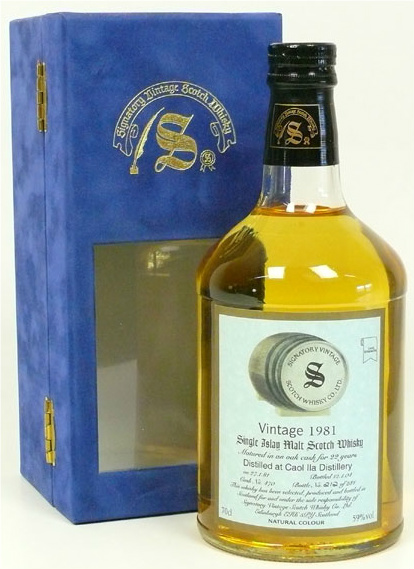 Color: Light gold. The color of this one is ever so slightly lighter than cask #467.
 Strathmill was founded in 1891 in an old mill, that dates back to 1823. At first is was called Glenisla but when the distillery was sold to W&A Gilbey in 1895 they changed its name to Strathmill. Through some mergers along the way finally Strathmill becomes one of many distilleries in the Diageo portfolio. Strathmill is a big component in the J&B Blended Whisky. Not a lot of Strathmill was officially bottled by its owners. Best known of course, are the 12yo Flora & Fauna bottling, The Managers’ Dram and the Managers’ Choice that was released in 2009. This year Strathmill features in the highly priced annual releases from Diageo. A 25yo was released just recently…
 Color: Copper
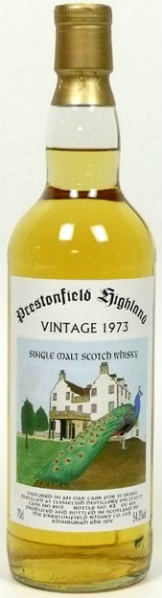 This Clynelish was distilled July 23rd 1973, a year Brora was still open but not very active, if active at all. As we all know, 1972 was Brora’s finest year, or so it seems. Time to find out what they did one year later at Clynelish…
 Well lets end this month with something different. Wow! Look at the label. Pure Grain Scotch Whisky! Today we call this a Single Grain Whisky. North British was founded in 1885 and lies near Edinburgh, on the site of a former pig farm. North British is a joint venture between Diageo and The Edrington Group. I don’t think Diageo needs an introduction, but the Edrington Group today is best known for their Highland Park and Macallan distilleries and The Famous Grouse and Cutty Sark blends.
 Most important is that this still operates continuously as opposed to a pot still. The alcohol from a continuous still is much cheaper to make. The spirit is made at a higher strength (ABV) and has less flavor, more neutral. This kind of whisky is made for blended whisky, and is not often bottled by itself. If bottled by itself, like this single grain, almost all of it is aged for a prolonged period of time, to get as much flavor as possible from the cask is matures in.
 Color: Gold
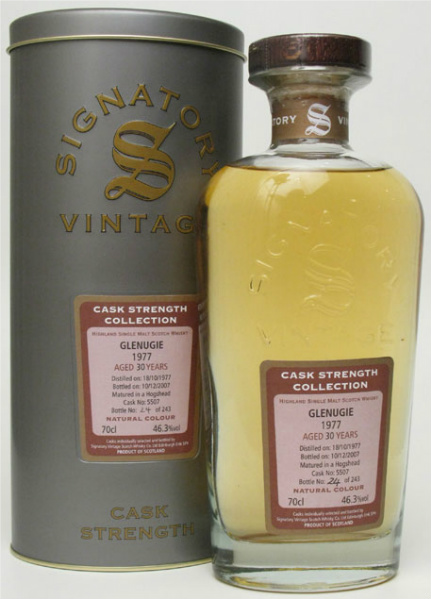 Color: White wine.
 Yes! Another example from the distillery that took its water from the Penwapple Reservoir, yes say it again, the Penwapple Reservoir. This time one of the many sister casks from the last year of operation, bottled by Signatory.
 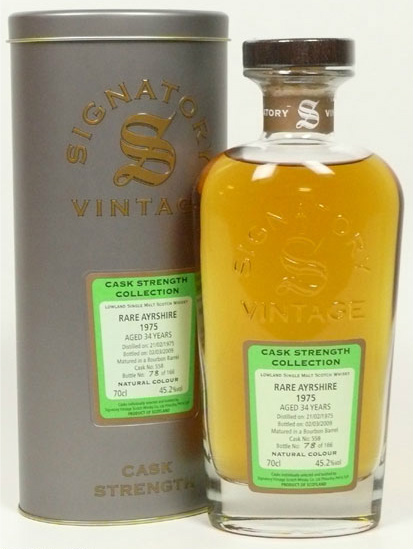 Color: Gold (slightly lighter than barrel #562)
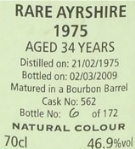 Ladyburn wasn’t long around. Opened in 1966 and already closed in 1975. It was built by W. Grant & Sons within their Girvan grain distillery complex. Not completely uncommon in those days, since there were more malt distilleries on a grain distillery site. Glen Flagler was added to the Moffat site and Ben Wyvis was added to Invergordon. All three didn’t last long and are pretty scarce these days. These Rare Ayrshire’s are still around, but there will be a time soon, they will not, and prices will soar. So is this worth your money? Lets see…
 Well officially there is no Ladyburn on the label, still it isn’t hard to guess what this must be. Out of the blue Signatory started to bottle a lot of casks from Ladyburn. Which is always nice since the place shut down in 1975 and whiskies from Ladyburn are getting more and more rare.
 Master Quill