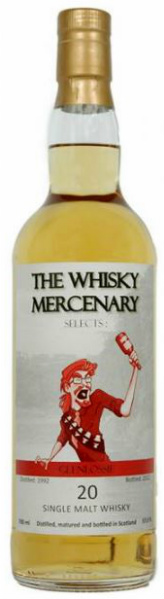
Port Morant 15yo 1992/2007 (46%, Berry Brothers & Rudd, Islay Cask, Guyana)

This Demerara Rum from Port Morant was bottled by Berry Brothers & Rudd and somewhere in its life came in contact with a cask that once held Islay Whisky. The label doesn’t state from which Islay distillery the cask came…

BBR Port Morant 1992 Demerara RumColor: White Wine with lots of viscosity.
Nose: Very aromatic with lots of petrol and tar, paper and cardboard and you know we like this in a rum. Vanilla, caramel, Demerara sugar. Industrial at first and not very fruity, Solvents, but not the usual stuff. Small hint of mint and a good body of wood, but nowhere near the amounts of wood that can be found in aged Rums. Fantastic balance, but wait. A lot more is happening here after a while. The wood opens up and the whole becomes more floral and adds notes of dry leaves. That’s a first for me with Demerara’s. Next are some spices, cardamom, white pepper and it finishes of in great funkiness. Actually it never ends, put it away and pick it up again and you smell new things. Wonderful stuff. Although this comes from an Islay cask, meaning peat I guess, I can not detect any peat at all but there is a tiny, tiny hint of smoke. Can’t imagine they would use an unpeated Malt Whisky cask for this.

Taste: Yes there is the peat! Very up front and comes sailing in on a wave of restrained sweetness. Nice. Fits the toasted wood note that comes next. Mocha, toffee and chocolate (not the darkest kinds though), hints of cucumber, can it get any crazier than this? The wood and the peat give off a slightly disturbing kind of bitterness to this not-so-sweet Demerara. The jury is still out if it actually fits the Rum. Sometimes this note resembles an electrical fire. Still, it oozes character and proves again that Demerara’s are a force to recon with. Alas, most distilleries are closed by now, luckily most stills have survived…

It reminds me a bit of a Cadenhead Enmore, also a Demerara Rum from Guyana which will be reviewed in the future. Talking about Cadenheads, also a Scottish independent bottler, that also used some Islay casks, but from them we know they were Laphroaigs, one of the most heavily peated Islay Whiskies.

Points: 87


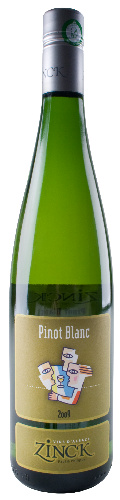
Paul & Philippe Zinck Pinot Blanc 2009

And suddenly the sun came out! Nice temperature so I felt like a nice light and refreshing wine. I have a batch of Pinot Blancs lying around for the white asparagus season, but thought I would give this one a try by itself, for me you never can go wrong with an Alsatian Wine. This Pinot Blanc is made by Domaine Zinck from Eguisheim, Alsace, France. Zinck have four great Grand Crus: Eichberg, Pfersigberg, Goldert and Rangen. The last two I also know from Zind-Humbrecht. Spectacular stuff. This Pinot Blanc is from the “Portrait” line of wines and are made as an introduction to Wine. We call that entry-level. Zinck Pinot Blanc

Color: light yellow with a slight green tint, medium viscosity

Nose: Flowery and half sweet. Meaty and buttery with hints of earth. Quite a “thick” and aromatic nose (lots of yellow fruits), seems sweet at first. Vegetal and herbal, maybe sage. Coastal (the terroir is silty), and fruity, melon-style.

Taste: Syrupy sweet. The acidity is in check. The sweetness and the acidity somehow doesn’t seem to be well married together. Something not quite right and I can not put my finger on it. The fruity melons are here too, and just like the nose, “thick”. Quite some bitterness too, that stays well into the finish. Where it shouldn’t be. Chewy and behind it all sweeter than it appears to be.

Pinot Blanc is not Alsace’s favourite grape variety, and I guess this wine shows why. It is recommended with food, asparagus. Don’t have that here at the moment, but I’ve tried it with a salad, OK and with spicy chicken legs, that was quite good actually. Since the wine is quite thick the Pinot Blanc managed the spicy chicken well. Easily drinkable. I personally didn’t like this as much as a lot of other wines from the region, but it does seem to fare better with food than on its own. Well just a matter of taste really, since my wife did love this on its own and is more than happy to drink the rest of the bottles that are in the cellar.

Points: 77

Casal de Ventozela Branco Vinho Verde DOC 2013

Vinho Verde is a Portuguese wine from the Minho province in the far north of the country. The region has many small growers, which train their vines high off the ground, in trees, on fences, and even telephone poles so there still is some room on the ground for growing food crops. Vinho Verde means “green wine” as in “young wine”, so Vinho Verdes are made to be drunk in their youth, so don’t age them. Grape varieties used for white Vinho Verde are; Loreiro, Arinto, Trajadura, Avesso and Azal. Also red and rosé Vinho Verde’s are made.

In the old days, the slight effervesce of the wine came from malolactic fermentation taking place in the bottle, normally a wine fault, but in the case of Vinho Verde, it is considered a nice “effect”. Today in most cases the effervesce comes from artificial carbonation.

Casal de Ventozela BrancoThe wine has an ABV of 11,5%, which for a Vinho Verde is rather high.

Color: Light white wine, pale straw, not green. Medium viscosity.

Nose: Very fruity and almost lemonade-like. Lots of aromas leap out of the glass. A happy and summery smell. Typical sweet creamy yoghurt with chunks of peach and even some banana. Vanilla ice-cream (mind you, not vanillin from wood). The wine does have tiny bubbles (effervesce) which adds to the summery feel. After a while the creaminess dissipates and the nose gets more acidic and even more refreshing. Nice green notes too. Gooseberries. Very nicely made with an interesting and nice nose.

Taste: Good balance between its acidity and sweetness. Both are quite soft. Again the acidity is the same as yoghurt. The fruits are also more of the acidic kind, like lemons and limes, with the peach and banana in the background. The nose and the taste match, whereas the nose was more creamy and sweetish, the taste is definitely more acidic. The tiny bubbles this wine has also add to the refreshing quality it has.

Probably a seafood wine, it does need a culinary companion. Perfect for sushi and I will have to try another one with asparagus! Lovely stuff.

Points: 83

Warre’s Heritage Ruby

Heritage Ruby is Warre’s entry-level red Port. I attended a tasting lately where a lot of different products were presented and some cross-references were made. Arran finished in an ex-Amarone cask Whisky was matched with a Lenotti Amarone wine, but also an Edradour 10yo Port casked Whisky was matched with a Port. That Port was a Niepoort Ruby, yes a basic Port and it was so good, that it sold out completely that evening. Very fruity and extremely accessible and drinkable. So I thought, let’s have a look at another basic Ruby. Warre was my introduction to Port so I have some of those bottles lying around. A short trip to the cellars of Master Quill produced this (not the most current) bottle…

Warre's Heritage Ruby PortColor: Dark ruby-red with high viscosity.
Nose: Syrupy red Wine. Very fruity (but not as fruity as the Niepoort offering was), strawberry, blackberries and some blossoms as well, slightly perfumy. This is slightly darker (as an experience, as well as in color) but still very fruity. Jam, syrup. The added darkness comes from hints of soil and dry sunny earth. Small hint of petrol adds to the depth. Do I detect a tiny hint of coal smoke? Excellent nose.

Taste: Starts out with a very pleasant kind of sweetness, very restrained even when the whole is pretty syrupy and chewy. Not cloying. a very refined kind of sweetness, pure. Ahorn maybe. Next a balancing act with some lime-like acidity. The nose is fantastic and when you take a sip all is well too, The body itself is more on raisins and the sustained acidity, but not completely integrated. The acidity is maybe a wee bit too high and in the finish it all falls apart for a bit. Finish is also not very long.

I might have been a bit harsh on this one, for I still find it a very pleasant and drinkable Port. It has some faults towards the end, and for the money it is an excellent Port.

After a lot of the other types of Port like Vintages, Colheita’s, LBV’s and so on, I have to say that even an entry-level Port like this one or the Niepoort I tasted is still very good. You get a lot of quality from even a dirt cheap bottle like this or any other Ruby I guess, (or even Tawny, White or Pink Port). The quality assurance of the Port Institute makes sure that probably every bottle that goes out to the consumer meets a high set standard. Maybe we’ll know when I taste a no-name Port with the seal of the institute. ABV is 19%.

Points: 82

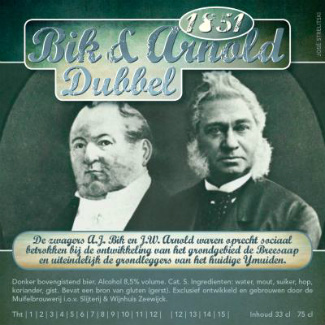
Bik & Arnold Dubbel (8.5%, 33 cl)

The Muifelbrouwerij was featured earlier on these pages with its Bergs Bier. That Beer was made for the town of Berghem. This Bik & Arnold is also a commissioned Beer. This Beer was made for Slijterij Zeewijck in IJmuiden, The Netherlands (An off licence). Zeewijck commissioned three Beers from Brewer Martin Ostendorf. The first one being a Blond Beer, called Blonde Kaairidder, which in comparison to other Blond Beers is quite high in alcohol. The second, a Dubbel, is this Bik & Arnold. And the third one is a Tripel called Breesaap. Lets start off with this Dubbel, a dark brown Beer, which hopefully isn’t too sweet, because I’m not very fond of those über-sweet brown Beers…

Bik & Arnold LabelColor: Very dark brown, with light Cappuccino foam (not a lot) and some yeast depot.

Nose: Hints of roasted malts, dark candy sugar and some vegetal notes from the coriander. Also the typical dishwater note returns. I know it sounds horrible but it isn’t. Murky and yet also fresh.

Taste: Hmmm nice, very easy and not as sweet as I expected, but it is sweet like light honey. The dark color and all the Belgian Dubbels, made me expect something more heavy and cloying, sweeter too, but this is another kind of Dubbel. Lighter in style and subtle. Very tasty and easy drinkable due to its slightly fruity acidity. It has a slight bitterness on the finish from roasted malts and chocolate but mostly dark candied sugar. Also the dishwater note settles in the finish.

For a beer that is as dark as it is, I expected a bit more of those dark Beer, or Dubbel, components. do I miss it? Nope. Due to the cloying sweetness some Dubbels have, I am not a fan of Dubbels. The beer is very good as it is. A nice light and refreshing Dubbel where every component seems to fit. Good balance and well made.

Points: 82

Warre’s Colheita 1999 (2012)

Yes another Warre’s Colheita! This is an earlier one from 1999. Just like it’s predecessor, both 1999 and 2002 weren’t declared as Vintage Port years, so the wines that were meant to be vintages were used for L.B.V.’s and Colheita’s (amongst others). Although the wines weren’t good enough to declare a vintage, most probably the best the year had to offer ended up in these Colheita’s.

Warre Colheita 1999/2012Color: Much paler than the 2002 Colheita. Pale red and less viscous than the 2002 reviewed earlier.

Nose: Fresh and some wood. Powdery, nice complexity. The wood added a lot of nice notes in here, From a Whisky point of view this nose is better than the one from the 2002 Colheita. A fantastic and delicate balance. Dry and complex. A little soap in this one too. Licorice and elegant wood. Hints of wood polish and petrol. Hints of old furniture. Definitely a more interesting nose. Nutty.

Taste: More syrupy and sweeter than the nose promised, but still enough acidity, maybe even better balance and a little bit more depth to it. Seems also higher in ABV (although it is not) than the 2002 Colheita, the alcohol is more present in this one. Less sweet and again the complexity shows over time. Less lively and summery red fruit, but that doesn’t mean its less everything. This has a lot going for it too. It has added depth and is a different Colheita from the 2002 Colheita.

The 1999 Colheita is a more refined and delicate Colheita than the 2002, which is simpler, sweeter and fruitier in it presentation and is more Obvious. The difference between both is in the details for sure, so it probably was a good thing I had a few sessions comparing both to each other. It hardly makes any sense to score both differently and a difference is purely a matter of taste, but I will score this one point higher for its elegance.

Points: 85

Warre’s Colheita 2002 (2013)

A Colheita port is, like a Vintage Port, from a single vintage year ​​with the big difference that these ports are matured in oak barrels and filtered before bottling. Maturation takes place for at least eight years, but often longer, which makes it a Tawny Port. Usually the year of bottling is mentioned on the label, as is the vintage year. Because Colheita’s are filtered, not a lot of further ageing happens in the bottle, but still a lot of Colheita’s can be laid down for a while. No decanting necessary.

Warre Colheita 2002Color: Deep ruby-red which just started to fade a bit. High viscosity.

Nose: Sweet candy. Slightly winey, but foremost syrupy and very fruity. A little bit of soap. Lots of cherries and other sweet red fruits like ripe and succulent strawberry. After some breathing some spiciness and a slight hint of wood emerge. It smells young at first and fresh (acidic?). The whole seems to be crafted from the aromas of red wine, sweetness and some barrel ageing. The color is ruby-red too, so not your typical brownish tawny Port. Yes, it does smell very nice and perfumy though. I swear, when I nose this a lot I get some fresh mown grass and warm butter in there too. Easily accessible and definitely a quality wine. Do I detect a little bit of sulphur in the nose after a while in the glass?

Taste: It’s candy! Luckily not overly sweet and in the taste some nice acidity shines through. Good balance, but not very complex. Lacking depth at first. Again, not your typical tawny. It’s very nice, but it plays in another division. Very fruity and oozes summer. It sometime drinks like 5% ABV, but it still packs 20% ABV, which can be tasted in the finish. The finish itself is long, warming and very pleasant, and adds a lot to the complexity of the whole. It has the smallest hint of wood and fresh nuts, walnuts without the bitterness and hazelnuts. A little bit of tannins on the tongue. Very drinkable.

I can imagine drinking this slightly chilled, sitting outside in the sun. Very refreshing due to its toned down sweetness, nice acidity and accessible fruitiness. Although a little bit different, it did remind me of Kopke Special Reserve Tawny (150th Anniversary in Holland), although that one was even more summery, fresh and light, this Warre has more body and a heavier finish.

Points: 84

Santa Cristina Chianti Superiore DOCG 2006

Cleaning out the Wine Closet I found another Santa Cristina. I already reviewed the Toscana IGT 2009, the Cipresseto 2007 Rosato Toscana and the Umbria IGT 2011. This time the oldest Santa Cristina of the bunch, a Chianti Superiore DOCG 2006. The Chianti is made with 95% Sangiovese and 5% Merlot for balance. 13% ABV.

Santa Cristina Chianti Superiore DOCG 2006

Color: Dark ruby-red.

Nose: Spicy with fruity jam. Black fruits like blackberries, blackcurrants but even strawberries found their way into this wine. It smells sweet and thick, as I said, jam-like. Deep and brooding, very typical for a wine from a warm climate. All in good balance. It has body and there sure is some flesh on the bone, musty and meaty.

Taste: Nice first sip with earth and a lot of depth. The fruits are all present too, but this time around even hint of plum are present in the “confiture”. A little bit of acidity balancing the whole out, and giving it a bit of zest and life. Some soft tannins and chalk, but nothing much. Tannins and a hint of vanilla from wood. The wood also adds structure to the wine. Good finish and even a while after swallowing, a nice taste remains in my mouth. Good balance and maybe not the most complex of wines, but who cares, just enjoy it.

I thought earlier that I ended a trilogy of Santa Cristina’s claiming that the red from Tuscany was easily the best. This Chianti Superiore, shows us again that as far as I am concerned the reds are the way to go with Santa Cristina. This Chianti is maybe even the best of the bunch and did well with some ageing. Recommended.

Points: 83

Plage du Sud Pays d´Oc IGP 2013

Next up a Rosé wine from the Languedoc region in France.

Plage du SudNot so long ago, Rosé Wines had colours almost like light red wines and were made with grape varieties like Syrah and Cabernet Sauvignon. But the fashion has changed, today the fashion is more about more elegant and more refined rosé wines from the Provence region in France and northern Italy. Very pale Rosé’s with very light old pink colours or even salmon-like colours. Plage du Sud is one of those Rosé wines from the south of France that has that pale pink colour rreferring to the Mediterranean feel from the Cote d’Azur. The wine is made with ​​Grenache (60%), Cinsault (35%) and 5% Syrah to give it a slightly heavier body.

Color: Pale old pink. Very elegant looking

Nose: Lots of aroma. Fruity with peach and banana. Sweet and sour in one gulp. The acidity is very nice and refreshing. Peach yoghurt, but also slightly floral, yes it smells of (pink) roses.

Taste: Less complex than the nose and not as aromatic as expected. Nice balance though. Light and simple. Not acidic nor sweet, keeps in the middle. All is in control and very drinkable. After a while the fruity aroma’s return. Quite nice stuff and nobody should be having troubles finishing a bottle like this. Just relax, sit back and enjoy the nice weather looking at people passing by. Do not sip this, drink this with big gulps, it tastes even better that way. Luckily they also sell nice 1,5 litre bottles 🙂

Excellent example of the modern style, pale looking Rosé wines from the south of France. The colours of these wines are really stunning.

Points: 80

Los Statos de Luxe Delirios

Los Statos de Luxe LogoLos Statos de Luxe, as you might have guessed from the name, was one of the cheaper brands coming from Cuba. Not a lot is known about the brand. Founded around 1940, and was totally discontinued around 2005. From 1980 on, the brand was no longer hand-made and all the models were machine-made and had a ring size of 40. Three of the five produced models were 140mm long, and the other two were 123 mm long, which makes our Delirios their smallest cigar. Delirios were only sold in a cardboard packaging containing 10 cigars.

This is a  Cuban Delirios by Los Statos de Luxe (40 x 123mm, Standard Mano, Petit Corona, Box Code Unknown).

Los Statos de Luxe Delirios

Color & Looks: Colorado, mocha brown. Looks smooth but the wrapper is very thin and cracks easily. No veins. The Cigar is very light and is very loosely packed. Mediocre build, but it doesn’t look bad and keeps it together.

A cru: Light and grassy. Typical light cigar with hints of leather.

Taste: Initial taste is light and pleasant. Tasteful and easy-going. An excellent everyday smoke and dirt cheap to boot. Actually a shame it isn’t available anymore. It used to be quite unremarkable, but with some extended time in the humidor it picked up really well. Tasty! Ash is light grey and almost white. Due to the loose build, the cigar burns extremely fast, and just after two cm’s an added note of gasoline enters the fold. as do some other chemicals. Ash falls off quickly. Fennel and grassy and wine-cellar notes. Good puffs of smoke and tastes rather well with a mild coffee.

The second half is less interesting than the first half, but there is enough quality in the whole to begin with. The second half is a bit harsher, stronger and lacks complexity. More wood and dirt now, but also leather and ammonia, altogether more chemical toward the end. To sum up, a pleasant Cigar with some chemical off-notes. A good start of my Cigar smoking season I would say…

Points: 78