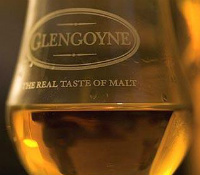
 Hurray, we have another ‘week’ at Master Quills! No April fools! As you all know this sort of event is very nice to do. This is already the fourth time we’re doing a ‘week’. We started out with the Bourbon week, that was not all about Bourbon. The second time around we had a go at the tipple of Japan, and I’m not yet talking about Saké. The last one, up ’till now, was Rum. Now we’ll do the first about a Single Malt Whisky, Glengoyne in particular. Glengoyne is famous for not using peat at all. They are so proud of it they even mention such a thing on their labels, or used to. Second, Glengoyne is also one of the distilleries that uses (or used) the Golden Promise Barley variety, one of the best tasting barley’s around. Glengoyne is owned by Ian MacLeod, we all know as the independent bottler of the Chieftains range and Dun Bhaegan.
Last year the core range, the 10yo, 12yo, 15yo, 18yo, 21yo and the cask strength version got a new look. This 12yo is a few points up in ABV from the 10yo and cost only a fraction more.
 Color: Gold
Nose: Malty and quite stuffy at first. The stuffiness dissipates very quickly. After that, very clean, which doesn’t exclude the initial stuffiness. This is the way to find out how the Spirit of Glengoyne ages, without being obscured. Fresh seaside air. Sweetish and clean oak. Going by the smell alone I would say mostly refill casks were used. Toffee and a little bit of wood and vanilla. Slightly floral. Undemanding and unobtrusive.
Taste: Sweetish (corn?) and quite simple. Malty, slightly bitter, fruity (pineapple) and sweet. A little bit of toast. It’s quite nice and dangerously drinkable. Slightly warming. All in all quite simple. Short finish, that leaves a trace of sugar in the mouth. Slight imbalance towards the finish (sour beer).
A very easy, simple and inoffensive entry-level malt, without faults, but also nothing special. A good inexpensive choice for a novice, and if you don’t like this, stay away from single malts altogether! Still when compared to the cask strength version, well that is quite another story…
Points: 81
 For what I read, people weren’t too happy about this one when is was younger, so it was no problem to let this lie for a couple of years. I left it for almost 10 years, but now it was time to have a look how it is doing.
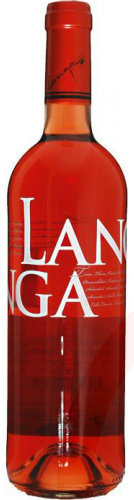 This is the Rosé wine Langa makes. This 2009 is made of Syrah and Cabernet Sauvignon. The newer versions are made with Merlot rather than Syrah.
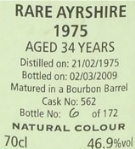 Ladyburn wasn’t long around. Opened in 1966 and already closed in 1975. It was built by W. Grant & Sons within their Girvan grain distillery complex. Not completely uncommon in those days, since there were more malt distilleries on a grain distillery site. Glen Flagler was added to the Moffat site and Ben Wyvis was added to Invergordon. All three didn’t last long and are pretty scarce these days. These Rare Ayrshire’s are still around, but there will be a time soon, they will not, and prices will soar. So is this worth your money? Lets see…
 Well officially there is no Ladyburn on the label, still it isn’t hard to guess what this must be. Out of the blue Signatory started to bottle a lot of casks from Ladyburn. Which is always nice since the place shut down in 1975 and whiskies from Ladyburn are getting more and more rare.
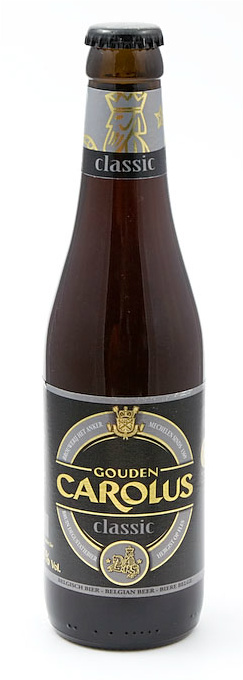 Gouden Carolus, once, only one beer, but since then a lot more versions of Gouden Caroli hit the market. Actually there was an emperor’s beer before 1960, but this is the year the name Gouden Carolus was given to it.
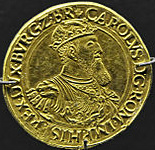 emperor Charles V on it, who spent his childhood in Mechelen. This beer is also from Mechelen, what a coincidence! It is even a protected regional product from Mechelen.
 Now for a whisky from the stables of Jim Beam in Clermont or Boston Kentucky. Yes Jim Beam have two distilleries and use them interchangeably. As you might have read, Jim Beam White is what it all started for me, but that days have gone. No Jim Beam White on my lectern anymore, or is it? Jim Beam is famous, and Jim Beam is famous for using only two recipes, two mash bills for everything, mostly only varying in ageing and proof.
 tiresome in comparison to the
  Master Quill