Isle Of Jura 13yo 1989/2002 (46%, Murray McDavid, MM 1564)

Here is the third and final bottle in our trilogy of Murray McDavid bottlings. Don’t worry there will be more. After the Rhoshu and the Glendullan, this time we will have a look at a (Isle of) Jura. Both of its fellow Murray McDavid bottlings have proven themselves to be reasonable Whiskies and not so long ago I reviewed a very good Jura as well. So we’ll start this review with high hopes…

Isle Of Jura 13yo 1989/2002 (46%, Murray McDavid, MM 1564)Color: Light gold.

Nose: Sweet malts, but also lightly spicy, frankincense, with lots of vegetal and waxy notes. Highly fruity. Sugared apples, with even some licorice and cinnamon, and some sweet red berries. Reminds me a bit of Calvados. This is a very appetizing nose. Vanilla and dusty, yet not dry. Full of aroma, and warm sugar-water. When smelled to vigorously, a note of paper emerges as well as a tiny hint of old, worn out jasmine soap, a bar you find in the back of granny’s closet, amongst the over sized… well, you know what I’m talking about. Actually this does smell like a Whisky not from these times, but more from the era of black coal. Granny’s era. Sweet and lively. Fruity without a lot of wood. Nice complexity and ditto balance. Lovely.

Taste: Sweet, thin apple water and bitter apple skins. Here the wood does show itself with quite the wood and bitter sap notes. With hints of charred oak. A bitterness we are quite familiar with, reminding me of some nuts. Remember the thin brown skins on walnuts and hazelnuts? If you can get past the bitterness there is a fruity lightness behind it. Malts again and some hay on a summer’s day. Lacks the complexity of the nose though. The finish is another of its weak points. Too short and a bit mono-dimensional. Lacks development from the body, well into the finish. The aftertaste makes you wonder if you haven’t drunk an I.P.A. earlier, for its slight hoppy bitterness left behind in your mouth.

Not a highly drinkable dram, it’s simple, and a wee bit too bitter for a daily drinker. The nose makes you a promise of something special. The nose is actually pretty stunning, and I’m really, really sorry, I can’t say the same for its taste.

Points: 82

Edradour 10yo 1994/2004 (46%, Signatory Vintage, The Unchillfiltered Collection, Cask #349, 783 bottles)

In 2004, 2005 and 2006 most of the 1994 vintage were released by Signatory Vintage in the Straight from the cask series. You must remember the 50 cl bottles in the colored wooden boxes with all kinds of (fortified) wine finishes. However a few of those were rescued from that sometimes ill fait and released as is, under the unchillfiltered moniker, reduced to 46% ABV. Here we have one such cask that didn’t undergo a wine finish, simply because the Whisky at hand came from a Sherry cask.

Edradour 10yo Cask #402Color: Orange gold.

Nose: Quite creamy and already lots of aroma. Very dry with enough influence from the wood. It does remind me of cherry liqueur, without it being overly sweet. The Whisky also has a more vegetal side to it as well as some good Sherry funk. Fruity. Watered down red fruit juice, with toffee, chocolate butter and (milk) powder and some herbal smelling wood. Quite spicy when I come to think of it.

Taste: Paper, pepper and sometimes a bit hot. Artificial hard red candy juice. Remember those little raspberry ones? Warming and in the distance quite sweet. Candied citrus fruits (predominantly oranges) and the zestier note is provided by some lemon curd. After that the lengthy finish starts with some burnt newspaper ashes, cheap chocolate powder and some soft dark wood, not necessarily oak. Nutty coffee (Inca).

This is quite a Whisky, but I can’t help to feel that something is not quite right. That is probably personal, because I get that a lot with Edradour. Probably a typical Edradour marker, I still have to get used to. Still, this is quite quaffable. Go for one if you come across it. Maybe the 1994 vintage is sold out by now, but there should be still some 10yo’s from 2004 around. The picture is from one of the 2004 vintages, the 1994 looks the same.

Points: 82

Abuelo Añejo 7 Años Reserva Superior (40%, Panama)

After the affordable and very light young Añejo Reserva Especial, comes this 7yo Reserva Superior. And as luck would have it, I have the 7yo right here on my lectern, and I’ll review it shortly. First a short history lesson:

The history of the Ron Abuelo brand is actually the history of Varela Hermanos. It starts in 1908, when the Spanish immigrant Don José Varela Blanco established the first sugar mill in Pesé. Panama is then a fairly new country, since it just gained independence from Colombia in 1903. In 1936 Don José started distilling sugar cane juice. In 1976 Don José’s distillery was replaced by a new one that was surprisingly called the Don José distillery. Besides Ron Abuelo, also other spirits are made in the stainless steel column still.

Abuelo 7yoColor: Orange gold.

Nose: Floral and fruity, yet light. Dry and dusty. More dry wood in the mix, but still not a lot. Vanilla powder, toffee and a touch of honey. Luke warm sugar-water. Vanillin from oak. Slightly spicy, balanced and light. Latte Macciato with mocha sprinkles. Appetizing but not very complex.

Taste: Fruity and instantly very nice. Nice half-sweetness matches with the right amount of oak. Fruity and waxy. Toffee, but also a tiny bite. Toasted cask I would say. Much fuller and thicker than the Añejo, but still not very heavy. That’s the Panamanian style of Rum making. This time also an apply, fruity acidity, and sometimes a slight bitter note towards the finish. However, I don’t pick up on those, every time I try this. Nice and easy, no frills and certainly a decent Rum. A little bit of sour oak lingers on in the finish and somewhat later even some menthol.

As far as I know, this is not a lot more expensive than the entry-level Añejo. That one seems to be made for mixing, whereas this one is made to be drunk by itself, or maybe with an ice-cube. It has more going for it than the Añejo and is also nice for mixing, but why should you. Well made, a bit middle of the road and still pretty light. No faults and no off-notes. This may very well be the definition of Panamanian Rum.

Points: 82

Benromach 2008/2014 “Organic” (43%, OB, Virgin Oak)

Not really a NASser since this is a vintage 2008 bottling. We also know this was bottled in 2014 so it is a 5yo or 6yo. Benromach doesn’t like hide its Whiskies in a shroud of mystery. Of course I love an aptly named Whisky but I was brought up with age statements so I like to (officially) know what I’m getting. Maybe all those NASsers are for a younger, more hip, generation? We’ll see. This “Organic” was distilled in 2008 and filled into virgin oak casks, just like they do with Bourbon spirit. Don’t worry, this will not turn this Whisky into a bourbon since only malted barley was used, and no corn nor rye. Why not make a rye Whisky then Benromach, wouldn’t that be something different and exiting?

Benromach Organic 2008Color: Gold

Nose: Yes woody. Sawdust, but also vanilla and warm vanilla pudding. Custard. I would say American Oak, wouldn’t you? Sugary sweet. The apparent sweetness is balanced out with some spicy oak, but not all oak is spicy, it also has a sappy oak quality to it. Sweet barley. Given some time, (when the taste becomes waxy), the nose tuns more floral. Floral with sandalwood.

Taste: Sweet at first, then vanilla and a more fruity note. Still all sugared fruits. Behind that the oak comes in again, but it’s not all wood alas, The wood also emits a cardboardy taste. Luckily that is soon exchanged with the sappy oak. That sappy oak turn a bit waxy and that in turn becomes a bitter edge into the finish. The bitterness also has some staying power. The finish is rather austere, so its quite different from the sweet start. The florality and waxiness of the nose, becomes also evident in the aftertaste.

For a Whisky this age and only new wood was used, this has already picked up a lot of color (as do Bourbons). Nosing and tasting this Whisky it really is what you may have expected. A Whisky that is defined by the use of new wood. Otherwise quite sweet and obviously not very complex, but more than expected.

Points: 82

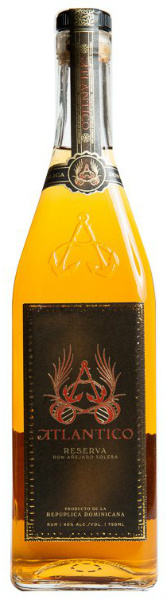
Atlantico Reserva (40%, B1-1,635-BLAA, Dominican Republic)

Atlantico Rum hails from the Dominican Republic but its HQ stands in Miami, Florida. Atlantico Reserva was first aged for three years in American virgin oak, blended and aged for another two years. That’s not all, next up some solera aging of up to 15 years. If you don’t know what solera ageing is, please have a look here. Atlantico is a blend of Rums distilled from both molasses and pressed sugar cane juice (like Rum Agricole and Cachaça).

Atlantico ReservaColor: Light gold with a pinkish hue.

Nose: Extremely fruity. From the start, lots of advocaat (egg nog) and Banana. Vanilla Ice-cream with chocolate sprinkles and advocaat. Mocha and toffee. Dusty, and very dessert-like. Nice stuff. All the components are easily recognizable, but also rather closed. They don’t easily emanate from the glass. It needs some vigorous movement to get it out. Well balanced, but not very complex. Appetizing. The dustiness is wood related and shows itself more after some time spent in the glass. Otherwise you’ll have a hard time “getting”some wood out of this. Lovely stuff, just a wee bit too light.

Taste: Half sweet, so nothing overly sweet or cloying. Tastes rather thin, although it has a lovely aroma. Sugary sweetness and maybe a tad of honey. Advocaat is in here too. Cream and toffee, with an alcoholic base (brandy). A short sharp bite in the middle of the body and then it fades away. No long finish, and nothing stays on for a long time. Its gone, leaving you with no other choice than wanting another sip, because tasty, this is.

This one is very easy to sum up. A light, slightly closed yet delicious Rum. That’s what its all about. Advocaat and Ice-cream with pieces of (dark) chocolate and banana. Short finish, so gone too soon. This Atlantico Reserva would probably benefit from a higher strength and a more complex sweetness.

Points: 82

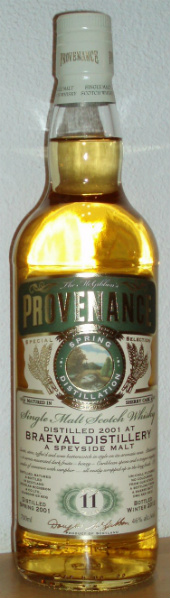
Braeval 11yo 2001/2012 (46%, Douglas McGibbon, Provenance, Spring/Winter, Sherry Cask, DMG 9312)

You don’t have to polish your glasses. So soon after the other Braeval and Braes of Glenlivet Whiskies I reviewed, yet another Braeval graces these pages. Yes, another independent bottling of Braeval. This should come as no surprise since the owners Pernod Ricard (Chivas Brothers) don’t do a lot with this brand either. More or less the same situation as Strathisla, which is owned by the same company. It seems to me all their energy flows into The Glenlivet and Aberlour and not a lot of faith exists in marketing Single Malts from these lesser known distilleries. Bacardi (John Dewar & Sons) which owns Aberfeldy, Craigellachie, Aultmore, Macduff, and Royal Brackla, have recently decided to market the Whiskies of all their distilleries with an age statement. Lets hope Pernod Ricard will follow suit.

Braeval 11yo 2001/2012 (46%, Douglas McGibbon, Provenance, Sherry Cask, DMG 9312)Color: White wine. Not too pale.

Nose: Sweet, Bourbony and malty. Sweetish and pretty clean. Vanilla and pleasant oak. Spicy and leafy. Whiffs of latex paint and even slightly perfumy. Sometimes even vanilla ice-cream and Cappuccino. Becoming grassy over time, combined with a breath of fresh air. Not very outspoken though. 46% ABV is a decent strength, and since all aroma’s aren’t that outspoken I guess this didn’t benefit from reduction. Still a very agreeable nose.

Taste: Spicy and slightly (new) woody. Sweetish and lots of vanilla. American oak Sherry cask? Good balance. Good strength, but I’m sure this would be better undiluted, maybe that way it was too hot or just to plain strong for some. After some time the new wood and leafy note stays and combines with a little bit of barley with vanilla, mocha and vanilla ice-cream. Fresh forest after a rain shower, including the wet forest floor and mushrooms. Nice, innocent and anonymous.

Unlike both other examples of this distillery I reviewed before, this one has been reduced to 46% ABV. This example is also from this very decade and a bit younger than both others, so what does that do for this distillery? Well hard to tell actually since this isn’t a very complex malt. As all other Braevals, this is pretty good, yet this example is a bit anonymous. Reduction places it into the path of maybe less experienced drinkers, who still are a bit cautious with cask strength Whisky.

Points: 82

Spey 12yo (40%, OB, Selected Edition, Virgin Oak Finish, 8.000 bottles)

When the Speyside distillery was sold to Harvey’s of Edinburgh in 2012, the new owner changed the name of the Whisky to “Spey” and by 2014 released three new versions: Tenné, this 12yo and finally a 18yo. I wasn’t very enthusiastic about the Tenné. Let’s see if this 12yo is any better. The Tenné is a rather young Whisky, finished in Port pipes. The 12yo is…well, 12 years old and was given a finish in new wood. Strange enough this older Whisky was given a lower ABV than it’s younger sister Tenné. 40% ABV compared to 46% ABV. For me that is usually not a good way to start…

Spey 12yo (40%, OB, Selected Edition, Virgin Oak Finish, 8.000 bottles)Color: White wine, much less color than pictured here.

Nose: Fresh, citrussy with hints of smoke (probably from toasted wood). Fresh oak and toasted fresh oak. Clean but also a dirty edge to it. Mocha and milk chocolate. Powdered sugar. Maybe simple but well-balanced. Leafy and dry grass. No off notes whatsoever. Shows a lot of potential, but, it’s already 12yo and it smells much younger. Young but without the typical smell or even hints of new make spirit. Hints of pencil. Not only shavings of the wood, but the whole pencil with the painted wood and the lead. Very interesting and surprising compared to the Tenné. Seems to let aroma’s pass in layers.

Taste: Sweet and barley. Sugary sweetness, which matches the powdered sugar from the nose. Malted barley. These two notes make up the taste. Again this seems very young without even hinting at new make spirit. (I recently reviewed The Glenlivet Founder’s Reserve, thát has the notes of new make spirit). Clean and grainy spirit. Sweet and vegetal. Has some staying power. Virgin oak and tree sap, reminiscent of ripping a branch of a shrub or tree. Although low in ABV, this Whisky doesn’t seem to suffer from it. Hints of sweet apple juice, freshly pressed at home, and a flowery note, Jasmin.

I can’t put my finger on it, but I like this. The sugar levels are just in check. It is no high-flying Whisky, but it has some lovely aroma’s to it. This time, I won’t even ramble on about the low ABV. This does nicely at 40%. Fruity and likeable. Surprising stuff. Who would have thought this about a Whisky from a young distillery, which found it necessary to finish its aged Whisky in new oak. Interesting. Almost ten points more than the younger offering called Tenné.

Points: 82

Glenfiddich 18yo “Married in Small Batches” (40%, OB, Batch #3404)

Slowly but surely we move on up (and down) the rather large collection of Glenfiddichs, the mother of all malts. Earlier we’ve already covered the 12yo “Special Reserve” (80 Points), the 15yo “Solera Reserve” (82 Points) and the 15yo “Distillery Edition” (83 Points). The odd one out was a Vintage 1974 (91 Points) bottled for the nice people of La Maison Du Whisky in Paris, France. This time around we’ll up the age again and move from 15yo up to 18yo and with that, we arrive at a bottle that was married in small batches. The latest offering of this bottle is now called Small Batch Reserve, maintaining the 18yo age statement.

Glenfiddich 18yo "Married in Small Batches" (40%, OB)Color: Full gold

Nose: Malty, waxy (like in old bottles), and very fruity. A fruit mish-mash since no specific fruit is discernable. A vegetal and new wood smell. Nice and elegant. Dusty but also creamy. Nice combination between vanilla and the waxyness I mentioned before. Not overly complex for a malt of this age, but it does have great balance and is well made around good maltiness, the wax and the fruit.

Taste: Waxy and lots of woody notes. Wood, oak, cardboard and just the right amount of bitterness. Next toffee, caramel, creamy not sticky nor sweet. Hints of the wax is in here too. Malt and old cellar notes. Peanut skins and maybe walnut skin bitterness right at the back of my tongue. Vanilla, but typical vanilla you get from American oak. Definitely a Glenfiddich with some (wooden) balls. OK at 40% and definitely is presented as an old (18yo) malt. Like the nose, this is not overly complex, but very drinkable (even with this wooden bite). This lacks the fruit I got in the 15 Distillery Edition, and lacks the acidity I got from both 15yo’s. This is definitely older and spicier (like it should) and placed in the range as such. Despite the oak, this has a short finish.

Often scuffed at and I never got that. Even if it would taste lots worse than it actually does, I still love the history and the pioneering work done by this malt. But it doesn’t taste bad, and it is pretty good stuff. Why does it have a bit of a reputation then? Sure the 12yo is pretty simple, and most of them are bottled at the lowest strength possible. Most anoraks prefer “the other” Grant brand Balvenie. Yes it’s not complex, but very enjoyable nevertheless and very inexpensive to boot.

Points: 82

For Tony, Mr. Glenfiddich!


Michel Couvreur Special Vatting (45%, 3 Distinct Single Malt Barrels aged over 10 years, L005)

Michel Couvreur CaveMichel still had his house in Bouze-les-Beaune and returned there in 1978. Behind the house he dug out a new cellar in the hillside, making it a center for importing good Sherry casks from spain (to the south of where he was), and Whisky (from the north). One of his cellars is pretty humid, with natural water running down the walls, I’m not even mentioning here what grows on the walls! The first cellar that lies between the house and the rest of the underground complex is drier and is where all the casks are stored (see picture above). Visiting there some time ago, I saw some nice casks of Sherried 1981 Brora (which I got to taste) and a 1969 and some seventies Springbank. If Michel thought the Whisky had matured enough, he transferred the Whisky to large glass bottles and stored them in dark passageways. On August 17, 2013 Michel left for the big distillery in the sky at the age of 85 years.

Michel Couvreur Special VattingColor: Murky orange brown.

Nose: Beautiful full Sherried nose, like the best of them all: old Macallan. Creamy and fruity. Vanilla and Ice-cream. All the best from Sherry but without its harshness, and without its sulphur. Full and elegant Sherry aroma, but very light. It doesn’t leap out of the glass at you. Mocha and soft and squishy wet wood. Fruity candy again. Licorice and a green and leafy note. Honey and young creamy Edam cheese.

Taste: Initially sweet Sherry, but eventually drier than expected. Quite some heavy Sherry aroma. A bit like one of the best A’bunadh’s with some water. Given some time the sweetness develops into a honeyed sweetness. Although Michel is never connected to much with Oloroso, it does have a lot of traits from Oloroso casked Whisky, like A’bunadh. Sweet and dry at the same time. Quite some oak hides behind the Sherry. The oak comes through and is easily recognizable by the bitterness it gives off, making the Sherry-ness transparent. A sort of hoppy bitterness with ashes. Funky! (But not funky Sherry). Tastewise a bit unbalanced.

This one I would have liked to try at an ever higher strength. For me this example smells better than it actually tastes. It has a kind of bitterness that lasts into the finish, I’m not so keen about. Lovely nose though. A good Whisky but I liked the previous example a little better.

Points: 82

Nikka Pure Malt Black ‘Smoky and Mellow’ (43%, OB, 50 cl, 08J12C)

Well yes, why not have a go at another Japanese Whisky. This time a true Pure Malt or Blended Malt. It is not very hard to guess from which distilleries the Whiskies originate that make up this Blended Malt. Yes you’ve guessed it: Yoichi (for the peat) and Miyagikyo (for the fruit). Black is one out of a series of three. The other two are Red (predominantly Miyagikyo, Rounded and Smooth) and White (predominantly Yoichi, Smoky and Peaty). Red is supposed to be blended with Malt Whisky from Scotland, as White is supposed to be blended with peated Whisky from Islay.

Nikka Pure Malt BlackColor: Light orange gold

Nose: Lots of vanilla, smoke from burning of branches with leaves and a lot of moisture. Also some red fruits. Fat peat and custard. Excellent combination. Children’s clay, strong and spicy wood. When given the time to breathe the nose stabilizes. Seems like young Whisky to me.

Taste: Vanilla with a peppery attack, transforming into a Whisky from a Cream Sherry cask. Hard fruity candy. Full, likeable and strong flavor for instant gratification. Actually not very refined. Not bad, but like the Akashi reviewed earlier, the finish is not the strongest point of this Japanese Whisky. Some kind of peppery heat (smoke) stays on the roof of my mouth, but at the same time you have a pretty short finish down my throat. Curious. There is a fruity sugar-water coating that stays behind in the mouth. Needs air to develop.

It seems to me this product is made with a lot of young Whisky from first fill casks. First refills are needed for longer maturation to make a better Whisky. Interesting. As I said before. Whisky not for analyzing and to fuss over. Just sit back and enjoy. It will grow on you. Probably also good Whisky for cocktails!

Points: 82