Highland Park 12yo (40%, OB, 2015)

Three years ago I already reviewed a Highland Park 12yo. That one was bottled in 2003 at 43% ABV. Today we’ll have a look at another Highland Park 12yo, only this time we have one that was bottled this year at 40% ABV. if you look closely on the (modern) bottle, a laser printed code is discernible. For instance, on this bottle, the code is L0042T L4. The thing to watch for is the letter T. I won’t go to deep into this here, but following the alphabet, P stands for 2012, (Q was skipped), R is 2013, S is 2014 and T, which we have here stands for 2015. So lets see if the people behind Highland Park were able to maintain the quality of their 12yo.
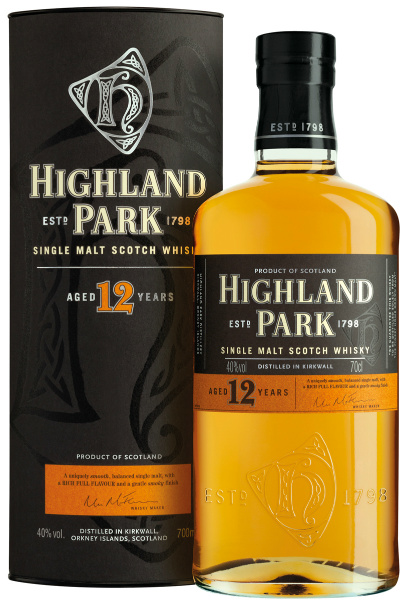
Highland Park 12yo 2015Color: Gold.

Nose: Barley. Oxidized funky Sherry. Yes, Heather and honey, so it’s still Highland Park people. Nice hint of smoke. Fresh, a breath of fresh air, with plenty of aromatics thrown in. Next a floral and sweet candied yellow and red fruit note appears. Forest strawberries fruit gello. The hints of smoke, the toasted cask, almonds, the funky Sherry, and obviously the heather and honey make this instantaneously recognizable as a Highland Park Whisky. No doubt about it. Do I detect a sort of rural smelling sulfur compound?

Taste: Very sweet and thin. Alas. Smoke and toasted wood, and also some Heather and honey. Just like the Balvenie 12yo, this is a very easily drinkable malt that will not last long. You’ll finish the bottle in no time, no time at all. Nice smoky taste and some woody bitterness. Dark chocolate. This would be a good one to compare to the Benromach 10yo, which also has a smoky note.

Just like the Balvenie, they made this into the entry-level bottling of the range. It is sugary sweet but it does show that it is a Highland Park, and that’s a big plus. Easily recognizable. Compared to Highland Park 12yo’s of the past, it lacks a bit of depth, or maybe that’s because this was bottled at 40% ABV. It has become more user-friendly because it is more sugary and fruity sweet to lure you in like they do with children and candy. But I have no problem with that, since this should be the introduction to Highland Park. If you ask me this is a very modern and popular take on an introduction to a brand of Whisky. Just try the Springbank 10yo as an introduction to Springbank and you’ll know what I mean.

Points: 82

The Balvenie 12yo “Doublewood” (40%, OB, Circa 2014)

Somehow a lot of Balvenies were already reviewed on these pages. However not the most popular one, the entry-level 12yo “Doublewood”, yes not a NAS bottling yet. Before the 12yo, the 10yo “Founder’s Reserve” was the entry-level Balvenie, but that one was discontinued in favour of this “Doublewood”. As I said before, Balvenie is a Single Malt I like to like, or like to love if you prefer, but somehow I don’t buy a lot of them anymore. Sometimes a bit weak and if they are really good, they are also really expensive. Once I had my own bottle of “Doublewood”,long, long ago, and it was very nice. I had several “Doublewood’s” since, but just like the 15yo “Single Barrel” I found the quality to be somewhat slipping, but they always stayed true to the Balvenie style, and for me that is elegance. Time to fill in one of the gaps on these pages and finally review the 12yo “Doublewood”. I can only hope this recent bottling does the trick for me again…

The Balvenie 12yo DoublewoodColor: Bright ocher gold.

Nose: Lots of caramel to welcome you, and hints of sugared orange skins. Creamy with slightly spicy oak. Sweet sawdust and sweet whipped cream. Hints of Cream Sherry, but the American oak donated a lot of vanilla to this Balvenie. It’s almost like there is also some virgin oak in this one. Hints of dried crushed leaves in autumn and a tiny burnt note. Smells fresh and well-balanced, although it does remind me of a heavily caramelized Whisky.

Taste: Nice but also rather thin. Sugary sweet and again caramel and cream. Yes, loads of vanilla are present as well as fresh almonds. It’s an ice-cream of a Whisky. The creamy aroma’s are quite big so it seems ok at 40% ABV. The lowest possible ABV to call itself Whisky, does show in the short finish. It hardly leaves any after taste. The finish itself seems to be built around a toffee flavour.

So this is probably a very nice entry-level Whisky. Very appetizing and sweet, with all the sweet markers. Toffee, caramel, Sugar and vanilla. Nothing to scoff at. Pretty good balance, but also quite simple. Not for analyzing, but for drinking without giving it too much thought. The only beef I have with this one is the short finish.

Points: 83

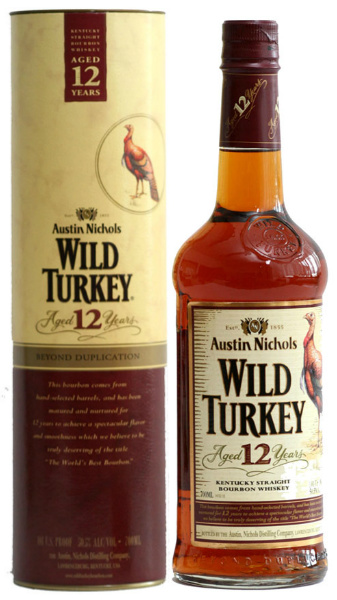
Wild Turkey 12yo (50.5%, OB, 2007)

It’s still september, so why not add another Bourbon to our collection of reviews. This time, we’ll focus on a Wild Turkey 12yo 101 proof, that was bottled a few years ago. Today’s version looks somewhat different and more blue. According to the Wild Turkey website, todays 12yo (as well as a 13yo) is only meant for the Japanese market. Over here, we still have a 101 proof, but that is one without an age statement (NAS).

Wild Turkey 12yoColor: Orange gold.

Nose: Fatty and full of aroma. Candied oranges with lots of toffee. Quite sweet-smelling. It almost smells like a dry Rum. Very appealing. Right after this (and not before), the smell of the wood. New oak with lots of vanillin obviously. Lots of nuts. Almonds combined with rather new thick leather. All aroma’s are big in this one. Also some hints of dust and vanilla powder and cookie dough. Pushed even further in the background are small, small hints of red fruits and toasted wood. Big and tasty smelling. If this tastes like it smells, this really is a winner. It’s all about toffee, vanilla and nuts.

Taste: Not as big on the toffee now, but still a big aroma. Wood plays a bigger role, and that is no surprise, considering the age of this Bourbon. Vegetal wood with a slight hint of soap. That sounds worse than it actually is. Vanilla combined with sugary sweetness. Sweet corn even. Not overly complex, but nice and big and very tasty. Quite a big finale of toffee and some big aromatic sweetness, but aided by the toasted wood note quickly balancing out the sweetness, also showing its age.

I always liked Wild Turkey’s Rare Breed, but this is another winner! I will have to return to Rare Breed for a comparison. If I remember correctly, Rare Breed shows more Rye compared to this sweetish 12yo. I also did a quick comparison with the Four Roses Single Barrel I have on my lectern, and they are quite similar in quality, and not even that far apart in taste. Four Roses has a different kind of sweetness though. It’s sweetness isn’t all that big and more focused, but very present as well. Wild Turkey has a broader kind of sweetness. Maybe the sweetness is more integrated because of its age?

Points: 83

Jim Beam “Signature Craft” 12yo (43%, OB, Small Batch)

Marketed as the super premium “Top Shelf” Bourbon in the Jim Beam range of Bourbons. No don’t worry the Small Batch series isn’t discontinued, just they are seen as Bourbons for aficionado’s and less for the “people”. Second the Signature Craft’s will bear the Jim Beam name as opposed to the Whiskies released in the Small Batch series. Bearing the Beam name is also the reason this Signature Craft Bourbon doesn’t break the bank. It’s an easy access brand. For those who don’t know The Small Batch series, it comprises of: Bookers, Baker’s, Basil Haydens (Old Grand Dad recipe and yeast strain) and Knob Creek.

Jim Beam Signature Craft 12yoColor: Copper gold.

Nose: A lot of honey and the typical Jim Beam yeast strain. Wow, really very honeyed. It’s hard to get past that. This needs to breathe for a while. Quite mellow for a 12yo Bourbon that has spent all of its life in new wood. The wood starts to work here, and adds vanilla and a teensie bit of spiciness to the whole. Honey still, but becoming more dry. Hints of a Cognac-like fruitiness. Hints of dry powder and old leather. More hints can be found, but in the end it’s all creamy vanilla with loads of honey.

Taste: less sweet than expected. More (new) wood influence here and quite warming. Runny caramel with hints of burnt sugar. Added character by the honeyed, woody bitterness in the finish. Toffee. Also a hint of menthol seems to be here, chilling my lips. The finish itself isn’t very long, and that’s quite surprising for such an old Bourbon. Well balanced though.

Somewhat sweeter than the Four Roses Single Barrel and Buffalo Trace. Super Premium, well maybe. I have to say that this is a well-balanced and very easily drinkable Bourbon. Sometimes surprising to be 12yo, since the wood isn’t always there overpowering the whole by it prolonged maturation. Although not super premium by my book, I do still like it. It stands shoulder to shoulder with both Bourbons mentioned above. By the way The Signature Craft series do remind me a lot of Four Roses. The look and feel, not the taste that is…

Points: 83

Rhosdhu 12yo 1996/2008 (46%, Murray McDavid, Bourbon Cask, 2.000 bottles)

Murray McDavidNext we are going to have a look at three bottlings by Murray McDavid. Murray McDavid was founded in 1996 by Mark Reynier, Simon Coughlin, and Gordon Wright, naming it after Mark’s grandparents, Harriet Murray and Jock McDavid. The motto “Clachan a Choin” translates as “the bollocks of the dog”, so yes, the logo has a dog in it. Besides being an independent bottler, maybe their biggest claim to fame was acquiring Bruichladdich Distillery in the year 2k. In 2000 the distillery was still mothballed, but Mark and his mates quickly turned it into a working distillery. Less than 12 years later in the summer of 2012, Bruichladdich was sold to Rémy Cointreau UK Limited, as well as the independent bottler Murray McDavid. Rémy Cointreau didn’t know what to do with the bottler, so less than a year later they sold it to Aceo Ltd, a supplier of casked whisky and distillery services like cask storage, bottling and labelling.
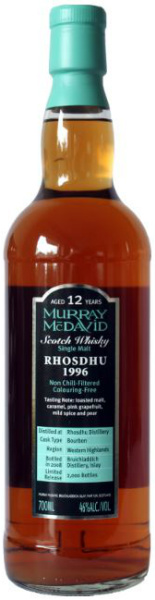
So the first of three bottlings from Murray McDavid will be a rendition of a Loch Lomond Whisky: Rhosdhu.

Rhosdhu 12yo 1996/2008 (46%, Murray McDavid, Bourbon Cask, 2.000 bottles)Color: Gold.

Nose: Spicy and briny. Funky, with some prickling cigarette smoke. Lots of grain, but also some traits I get from Rhum (of the Agricole kind) and Bourbon itself. Actually more like a Rye Whiskey. A dry and sweet fruitiness mostly. Definite cask toast. Vanilla and tangerine. Lots of saw dust and dare I say it (again), cardboard. It smells like an old (sweet) Single Grain, at the fraction of the cost. Dry powdery and again (citrus) fruity. Give it some air, and boy, does this need some air, and it’s even tarry sometimes.

Taste: Again quite grainy and fruity. A bit raw but therefore it needs the fruity sweetness it has. Vanilla powder and smelling like an old vanilla pod. Noticeable paper and cardboard again, but in no way is this disturbing in this one. Slightly weak in the finish, but otherwise a decent Whisky, helped by quite an active cask. Some acidity enters the fold when it’s time for the finale. The finale has great depth, with a toffee and caramel sweetness. Part of this caramel is even slightly burnt. The sweetness is just right, helped along by the leafy and spicy backbone.

I remember this when freshly opened and it didn’t do too much for me then (79 Points). This time around, with some more oxidation, this turned out nicely. This is a Whisky that needs a lot of air and really benefits from the heat of your hand. Keep it in the palm of your hand, don’t hold it by the stem. Knowing its secret, and if it was available today I would most certainly buy it. If you have it, remember how to treat it. Heat and air will do the trick.

Points: 83

Edradour 23yo 1983/2006 (52.1%, OB, Port Cask Finish, Cask #06/0554, 743 bottles)

Since Edradour is owned by Andrew Symington, this might as well have been a Signatory Vintage bottling. Lots and lots of Edradour have also been bottled as Signatory Vintage bottlings. 1983 is the oldest vintage of Edradour ever bottled by one of the owners, apart from two 1973 bottlings of which one was bottled by Andrew himself in 2003 (as an official Edradour). By the way, all the 1983 bottlings are Port Cask Finishes. Onder the flag of Signatory Vintage, Andrew bottled one 1968 Edradour and a small batch of 1976 bottlings, so the 1983 might not be the oldest Vintage after all.

Edradour 23yo 19832006 (52.1%, OB, Port Cask Finish, Cask #060554, 743 bottles)Color: Full Gold.

Nose: Dusty, flour and dry. Seems Sherried. Vanilla and cream. Powdered coffee creamer. Spicy oak. Spicy and fruity, but still with some hints of integrated wood. Cold butter, right out of the fridge and the fatty smell you get from a cold BBQ one month after its last use. So old fat and hints of burned stuff. Next are the first whiffs of baking white bread. Mixed with the odour of printed newspaper. Leafy and fresh. Small hints of (dark) chocolate with cherry liqueur, but not entirely black. This even has tiny hint of tar, giving the whole some depth. Not bad at all.

Taste: Much more fruity than the nose was. Creamy vanilla pudding with a red fruit acidic aftertaste. After that some bitter tree sap and bitter oak. The oak isn’t overpowering, but it’s there in broad strokes, making up the body of the Whisky. Quite complex wood, so it doesn’t come across as a young Whisky, which it in fact isn’t. Some hidden, fruity sweetness and again the paper of newspapers. Nice and well-integrated oaky bitters in the finish. It’s signature is carved in wood.

To sum things up. This is a wood driven old vintage Edradour finished in a Port pipe. The finish is done sparsely, since it isn’t an overpowering typical Port Finished Whisky. Nice, but not something I would go out of may way for to get it. Let’s call it an experience.

Points: 83

Grappa Week – Day 5: Marolo Moscato (42%, 70 cl, 2005)

Grappa Week LogoAfter the Villa Isa Moscato which showed us what a Moscato Grappa is, I still feel it can be done better. The Villa Isa is a very accessible Grappa made from Moscato grapes. It’s friendly, fruity and easily drinkable. Today’s Marolo is a Grappa company with quite a reputation, so lets see if this Marolo can beat the Villa Isa (as if it were a competition).
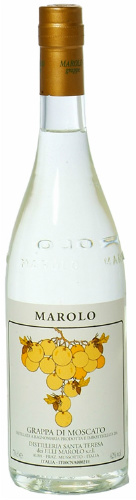
Marolo is all about Paolo Marolo and his successor, and son, Lorenzo. Paulo started in 1977 because he wanted to turn the rustic product into art! Anybody still wondering if Paolo is Italian?

Grappa Moscato MaroloColor: Colorless.

Nose: Hay and dry grass. But not so heavy and over the top. Soft. Small hints of fresh-cut grass or the smell you get when pruning a tree. More sappy and “wet”. From the start some more nice fruit, in part citrussy. Lemon (not lime). This is a more toned down version and cleaner, since this wasn’t aged in oak. Slow and laid back. No hurry, we’ll get there. Besides some spiciness, there is a vegetal and powdery note as well, which seems a very watered down mixture of lavas, licorice and toffee. When I nose it with some more vigour, the Moscato grape variety pops out in a dry and dusty way.

Taste: Fruity and sugary. Sugar water. Not thick, syrupy, fruity and heavy on the Moscato as I expected. In fact this matches the nose better. It is again laid back in style, soft and toned down. Very young, clean and clear, just like the look of the Grappa. In the background there is a more heavy note, something like diluted burnt caramel. Mixing with the heavy note, is a short stint of fruity acidity quickly overtaken by spice (white pepper, thyme and maybe some others). Lovely fruity finish and the more time passes after swallowing the better the finish gets, (it gets more spicier). Of course, when you wait too long, its gone. Making it the right moment for another sip.

A very quiet and elegant Moscato. It has its sweetness and in part it even is sugary. But this time, it’s all right. Easily drinkable and it seems to be the right distillate for some good introspection. I like the Marolo better than the Villa Isa, but they are also quite different from each other. One a bit loud and fruity, the other more introvert. One with ageing in wood the other young and clean. Even though the Marolo is also quite accessible, it still is a Grappa you have to get to know, to get the most out of it.

Points: 83

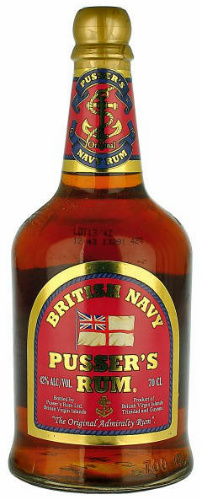
Pusser’s Red Label British Navy Rum (42%, 2010, British Virgin Islands)

For those of you who have read the previous post about Lamb’s Navy Rum, will know about the daily ration of Rum that was issued to its sailors by the British Navy. The person that was doing the issuing was the Purser a.k.a. the Pusser.

In 1979, Charles Tobias bought the rights and the blending information from the Navy, and founded Pusser’s Ltd. on Tortola in the British Virgin Islands. The first bottle of Pusser’s saw the light of day just one year later. Pusser’s British Navy Rum is still the same blend of five West Indian Rums, a majority of which is pot-still distilled Rum. As far as I know this Red Label has been replaced by a similar looking Blue Label version also 42% ABV. Some markets have a Blue Label bottled at 40% ABV.

Pusser's Rum Red LabelColor: Copper orange.

Nose: Sweet Demerara, but above all Jamaican high ester Rum. Right on top, fresh orange juice with oils from the skins. It instantaneously reminds me of the Pusser’s 15yo I know pretty well. I love that one, so this nose is making me smile already. Give it some time to breath and the influence of the Jamaican Rum’s in the blend wear off a bit to give way for toffee and milk chocolate and the occasional whiff of cow-droppings (in a good way). Underneath there is also some dryness and some funky wood to balance things out. Black tea, paper, pencil shavings and some sugared or over ripe tropical fruits.

Taste: Yeah that’s more like it. This starts out with a thin version of Demerara Rum. That quickly turns into a more sugar-water note, with the Demerara shoved into the back seat. Wood and a fruity acidity. Raspberry and white chocolate. Every aroma passes by in quick succession and after the rather short finish, you just want your next sip of this. Quick, quick!

Where the Lamb’s was disappointing and gloomy, this Pusser’s makes the sun shine and leaves you wanting more, not only more Pusser’s but also a bite to eat. Appetizing. This is a light Pusser’s that can be used as a mixer. It’s affordable and why should you get a less interesting Rum to mix with when it costs exactly the same? For the time being, if I needed a Rum for a Coke, this would be it, especially when at this price it’s also a worthy sipping Rum. It’s also quite nice as an aperitif Rum, whereas the Pusser’s 15yo is a thicker and heavier Rum (at twice the price of this Red Label), which is a true after dinner Rum, a digestif. I will forget about Lamb’s, and will get Pusser’s instead.

Points: 83

Glenmorangie 10yo “Traditional 100 Proof” (57.2%, OB, 1 Litre, 2005)

Next up an oldie from 2005. A cask strength Glenmorangie. We don’t see many of them these days, especially one that isn’t touched by any special cask. The back label mentions that this unchillfiltered Whisky came straight from the cask made from mountain oak. So what kind of wood is this? My guess is American Oak from the Ozark Mountains, Arkansas USA. Hinting that this is a 10yo Glenmorangie fully matured in Bourbon casks and bottled at cask strength. Nothing more and nothing less. My most avid readers will know that I am not a very big fan of Glenmorangie but got quite a surprise when I reviewed a recent 18yo

Glenmorangie Traditional 100 ProofColor: Light gold.

Nose: Aromatic and spicy yet closed, or maybe there isn’t a lot going on? Vanilla and typical bourbon cask notes. Slightly soapy and fresh and obviously high in alcohol. Vegetal and woody. It almost smells like it looks. It does smell a bit of sackcloth and oak. Dusty and powdery. Not very complex.

Taste: Sweet. Vanilla and pudding. Sweet alcohol. Mocha and vanilla pudding. Hints of Cappuccino and vanilla ice-cream. A woody bite, almost cigarette like, but also a short-lived fruity sweetness. Sugared raspberries and half-ripe forest strawberries. Thick toffee to hold it all together. Nice coffee-ish finish. Well balanced. This reminds me a bit of a young Bladnoch. That one has more butter, is softer and is a bit more vegetal, but that may very well be the only difference.

At first, a simple Whisky, but it grows on you. Give it time to breathe and it develops nicely. Nevertheless, this is actually an example of why I didn’t like Glenmorangie back in the day. (Let’s say, 10 years ago). It looks great, promises a lot, but this particular Whisky is simple and un-rewarding on the nose. It may very well be the reason I stopped buying Glenmorangie for a whole decade. The taste is a lot better though. I only picked up the fruity bits, when tasting this in the morning before breakfast. Last night after a very tiresome day, I didn’t pick up on the raspberry and strawberry at all.

The recent and “extremely rare” 18yo I tasted a while back, somewhat restored my faith in Glenmorangie and made me buy that very 18yo. Today, and tomorrow can be different, you can get three of those 18yo’s for the price of this cask strength Glenmorangie. A no brainer if you ask me.

Points: 83

The Glenlivet “Nàdurra Oloroso Matured” (60.7%, OB, First Fill Oloroso Sherry Casks, Batch OL0614)

Back in the lion’s den. Purely by coincidence, I recently reviewed some independent bottlings of Whiskies produced by distilleries of Pernod Ricard, like Braeval and Glenallachie, but also some official bottlings like Strathisla 12yo, Aberlour 16yo and The NAS Glenlivet “Founders Reserve”, but also the nice AS Glenlivet from 1983. Now another Glenlivet, and yet another new NAS bottling. I promise you, I’m not sponsored!

The Glenlivet Founders’ Reserve is the new entry-level Glenlivet that replaces the 12yo in Western European and some other markets except Asia and the US. This NAS Oloroso Nàdurra replaces the nice AS 16yo Nàdurra. I know, that one came from Bourbon casks only. However, the 16yo Nàdurra will be replaced by three new versions that will be called…Nàdurra. The first one of these is this NAS Oloroso version, soon to be followed by a NAS Bourbon version and later a NAS Peated version. Since both Aberlour and The Glenlivet have the same owner, everybody will be comparing this one to the Aberlour A’bunadh.

Glenlivet Nàdurra Oloroso Matured (60.7%, OB, First Fill Oloroso Sherry Casks, Batch OL0614)Color: Dark gold, copper gold. Quite light for first fill Oloroso.

Nose: Lots of vanilla, new wood and a bit sharp on first sniff. A breath of fresh air. Spicy wood and pencil shavings. I get a lot of pencil shavings recently, maybe its me. I don’t get a lot of A’bunadh like first fill Sherry though. Considering the color and also the way this smells, my guess would be that this Oloroso Nàdurra is younger than its sister from Aberlour. A’bunadh is pretty up front dark first fill Oloroso, and this Nàdurra is not. It really does smell like a young whisky with nice notes of wood without being overpowered. Nice, but not complex. The wood also gives off light chocolaty notes and some sweetish vegetal bits. Old bar of soap (from the eighties) and some licorice. For me a lot of these aroma’s come from wood and obviously from the Sherry used, but for me they aren’t typical Oloroso aroma’s you get from an A’bunadh. Wood it is then.

Taste: Sweetish and a bit hot. New wood, tree sap with its light bitterness. Coffee and licorice, a nice combination. Hints of glue. Prior to swallowing a hint of, and here it comes again, pencil shavings. We all have chewed on a pencil some time during our lives haven’t we? Italian laurel licorice. When the wood, a slight hint of bitterness, and the high strength pass, not a very big finish remains. Youth?

A young Whisky that by itself is a study of wood and not of Sherry. It isn’t complex, slightly underdeveloped, and it surely does have its moments. I guess the choice is right to think of this Whisky a bit as a Whisky for…well, not entry-level, by bottling this with a high ABV. Another good decision is probably that it is made to another profile from the A’bunadh which is more about the Sherry itself, whereas this is more about the wooden cask itself. Nice stuff, helped along by the high strength and spicy wood. Younger and really no match for A’bunadh in my opinion, but those who like higher strength Whisky, but found the A’bunadh too much, will disagree. (maybe a comparison to Benromach 10yo 100 proof would have been a better angle…)

Points: 83