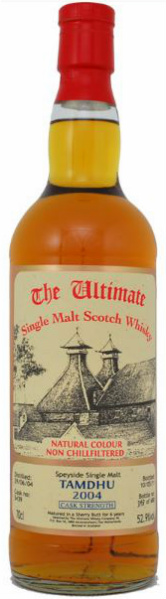
Hello everybody! How is this new year treating you? I’m totally fine, thank you. Let’s start this new year off on Master Quill with another oldie, bottled by Douglas Laing. The last Whisky I reviewed in 2013, was a very young and recently bottled Tamdhu by fellow indie bottler The Ultimate (Van Wees). This time however we will take a look at a 25 year old Glenrothes from 1975. If only this would have been a 25yo Ardbeg from 1975, bottled by the same outfit… Maybe by saying that, I’m doing Glenrothes wrong, so lets not waste any more time and have some Glenrothes please!
 Color: White Wine.
Nose: Fresh and funky at the same time. Minerality and flor from Fino Sherry. Probably from a second fill cask. Smells sweetish and very lively, maybe even young, from a less than active cask. Nutty, roasted and fresh almonds, which for me is also quite typical for dry Fino Sherries. Nice distant maltiness. Nose develops nicely too.
Taste: Great, or maybe even fantastic fruit candy sweetness, very unique. When that dissipates a nice soury and woody touch matched with some nice creaminess. Vanilla Ice-cream. Slightly bitter black tea, and a bit salty on the lips. The wood gives off a little bite, which I like. All in all, it’s quite mild and tasted blind I would have never guessed it has 50% ABV. Nicely balanced, and very Fino.
The bitterness that is there has two functions. It gives some oomph to the fresh, fruity and lively profile (which is good), but also dominates the finish a bit (which is not so good). Nevertheless, the whole is very a-typical for a Glenrothes, and I can easily understand why this didn’t fit the profile for an official release, or why it wasn’t used for a blend. On the other hand, this is exactly why, especially the earlier bottlings of Douglas Laing are so popular. It is a chance of a lifetime, to taste some Whiskies from distilleries who do not resemble the products of their makers. Somewhat similar to the Douglas Laing Taliskers, or Tacticals if you prefer. Most of those are not very obvious Taliskers too. This is a very nice Glenrothes and for me better than a lot of the official Glenrothes, even though in the end I’m not the biggest fan of Fino Sherry Casks being used for Whisky, I prefer Oloroso, but that’s a matter of taste obviously, having said that, this Glenrothes managed to get:
Points: 88
 Color: Pale gold.
 Color: Light gold.
 As I said, lots of discussion, since all casks are good, didn’t cost a lot and have some differences. So nice whisky to compare to each other. I still have some Sherry Butt #72315 left, so I can compare it to this Sherry Butt #72319. Word in the grapevine is that the first one (Sherry Butt #72315) is the “worst” of the three, all are very clear about that. Some consider Sherry Butt #72318 to be the best and some Sherry Butt #72319.
 Color: Copper Brown (less red/orange in color than Sherry Butt #72315)
 Here we go again. Another monstrously long title, again a Single Malt of which the distillery name is not on the label, but we know it’s a Bunnahabhain. So three in a row, this being the third Bastard Malt in a row, reviewed here on these pages. The Creative Whisky Co. Ltd. is non other than David Stirk. Fellow Rush lover and Whisky bottler par excellence, or should I say Exclusive Whisky bottler?
 This Bunna is pretty dark in color so my guess would be a Sherry cask. Since David didn’t specify what (kind of Sherry) the cask previously held, we can only speculate what this is. Maybe a Sherry Hogshead, or maybe a Butt that was shared with others, or only half the Butt was bottled? My guess would be the former (a Hoggie). It looks like a Oloroso or PX Sherry Hogshead to me, so we’ll have to try, to make another guess at it…
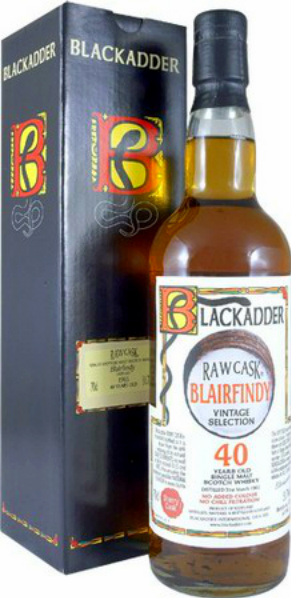
 Well hello Blairfindy! Wait a minute, Blairfindy isn’t a real distillery is it? As far as I know, there isn’t a Blairfindy distillery, and there never was one too. No, Blairfindy turns out to be “another” name for Glenfarclas, used, when the bottlers weren’t allowed to use the real distillery name on their labels. Something like Tactical for Talisker, Leapfrog or Laudable for Laphroaig and so on. Blairfindy, amongst others, was the name of the farm, the Grant family (of Glenfarclas fame) originated from. Although the Glenfarclas name isn’t on the label, it most definitely is a Glenfarclas, and an old one to boot…
 Color: Copper gold.
 and is said to be even better than cask #72315. Alas Cask #72318 sold out rather quickly too, so Van Wees bottled a third one: #72319. That one should still be available, but already I heard a fourth cask is being bottled. If my information is correct there still are two casks left from this series, to make six in total. Let’s have a look at the series first one, cask #72315.
 Color: Full gold
 At this point I must give off a little warning. I was in a beer shop recently and overheard some clients talking about pouring the big bottle of Rodenbach Vintage down the toilet. The big bottle should even be better than this Grand Cru, but this is a Flemish Red Brown beer, it’s acidic, so probably not for everyone…
 This is the first Tobermory on these pages and the Whisky itself comes from the Island of Mull. This distillery was founded already in 1798 and was originally called Tobermory. Tobermory closed in 1930 and was turned into a power station. It stayed closed as a distillery, untill it reopened in 1972, but this time as Ledaig. Ledaig’s history, from its reopening was a rocky one, with a lot of buying and selling of the distillery with production stops to match. The current owner is Burn Stewart (which itself is/was owned by an insurance company (since 2002), that again was rescued by the government of Trinidad & Tobago in 2010. You don’t want to know…)
 Back to Tobermory (or Ledaig). Ledaig was sold to Burn Stewart in 1993, and they decided to give back its original name: Tobermory. In 2005 Tobermory issued three 32yo from 1972. These were Oloroso Sherry finished Whiskies. One with a black label, one with a red label and this green label reviewed here. Purists mention an additional brown labeled version for sale at the distillery. Also 32yo and 1972, but “put on bottle” in 2010, so it must have been kept in stainless steel tanks of on glass from 2005 to 2010 to stop further ageing. Not a lot is known about this bottle…
 Color: Brown
 sometimes seems thinner than the other two.
 Master Quill