Bruichladdich 10yo 2003/2013 (56.3%, Malts of Scotland, First Fill Sherry Hogshead, MoS 13051, 285 bottles)

Almost two years ago I reviewed a Glen Keith bottled by Paderborner outfit Malts of Scotland. Being an indie with quite a reputation it took me quite a while to review another bottling of theirs. A sample of this very Bruichladdich was bestowed upon me by the former owner of this very cask. MoS renames the cask numbers so we do not know the original cask number. I hate it when Thomas does that, just like Bert does with his Asta Morris bottlings. Something to hide guys? Well nothing more to say really, (I’m a bit distracted by some nice live music by Primus), so let get on with it…
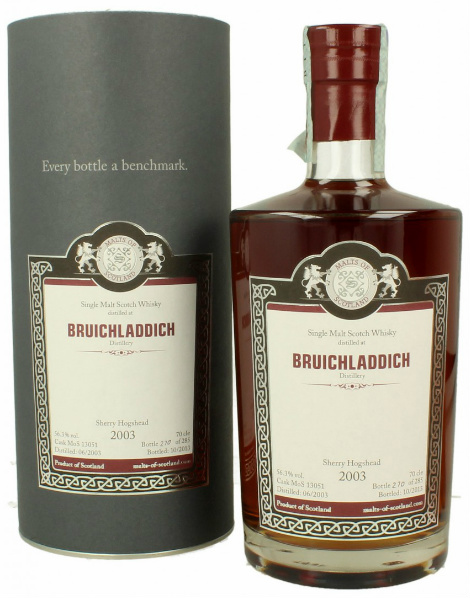
Bruichladdich 10yo 2003/2013 (56.3%, Malts of Scotland, Sherry Hogshead, MoS 13051, 285 bottles)Color: Orange brown.

Nose: Mellow Sherry of the Oloroso kind. Soft wood, dry forest plants like fern and slightly sulphury. Freshly baked bread. Chocolate, brown sugar, honey and fruity acidity from red fruits and berries. Vanillin and a distant bonfire in the woods. Wet earth and mocha. Raisins. Nice and pretty laid back. Mint in the finish (when warm).

Taste: The fruity acidity from the nose. Waxed chocolate sprinkles, cola and some wood. Again some sulphur, but not a lot. Extremely warming. The acidity stays on well into the finish and deep into the finish the sulphur gets more room to play, but still it is not a lot and never overpowering. It’s in the background carrying the aroma along with black tea leaves and a hint of woody bitterness. Not a very long finish though. Reminds me a (more than a) bit of the Bunnahabhain and to a lesser extent of a Bruichladdich I reviewed earlier. A quieter version of both I guess.

I have to say this one needed warming up. Even at room temperature I found it pretty closed, but when I held it in my hand for a while it showed a lot more of itself. Honey in the body and mint in the finish for instance. When I finished it, I poured myself a fresh dram, and again, very closed. This is an example of a closed and dry heavily Sherried expression as opposed to a fruity one. Bottled at the right time. Ready for another strange remark? The empty glass smells better than the full glass…

Points: 85

Thanx Andy!
Caol Ila 21yo 1981/2002 (58.2%, Signatory Vintage, Cask #465, 364 bottles)

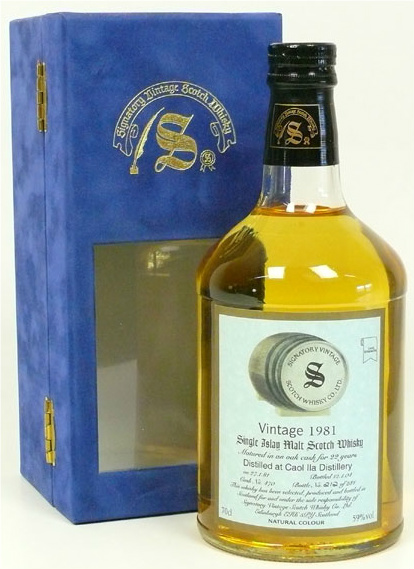
Just recently I reviewed a 21yo Caol Ila from Signatory Vintage Cask #467. When rummaging through some sample bottles I collected over the years one of its sister casks popped up. This time it is Cask #465. How’s that for luck. And as luck would have it, I still have a wee bit of cask #467 left, so a comparison can’t be avoided. Again no picture available for this particular cask, seems to me this is very obscure stuff. I’ll use the ol’ picture of cask #470 again. So without further ado…

Caol Ila 22yo 1981/2004 (59.0%, Signatory Vintage, Cask #470, 281 bottles)Color: Light gold. The color of this one is ever so slightly lighter than cask #467.
Nose: Grassy and vegetal. Citrussy. Fresh and actually young smelling. Even the wood smells sappy. Powdery. Hints of soft, fatty, and creamy smoke. Appetizing. Milk chocolate (with sugared citrus in it) and a tiny hint of latte. All very friendly smelling, and although this is not a heavily peated Caol Ila it is very attractive. Good balance.

Taste: Sweet and fruity. prickly smoke with some late development in the licorice department. Light licorice. also a tiny hint of cannabis, so probably a lot was allocated to the Netherlands. Alcohol and again a small hint of coffee and fern. Milk chocolate again. Small amount of woody bitterness starts the finish and lingers on the back of my tongue. Not the most expressive of Caol Ila’s but quite nice in its own way. Not a very long finish. The high strength is obvious on the tongue, but not a lot of aroma is left in my throat. It’s not what you would expect from a Caol Ila like this, but when you let that go, it’s pretty rewarding.

Comparing the two, the noses of the two are obviously pretty similar. Cask #465 has the better nose, more balance to it. Aroma’s seem to fit together better and has more depth and complexity. Still the difference is not great. The taste is very similar too. Cask #467 seems to be somewhat more raw at first, and less balanced.After a while it is also softer and sweeter in the finish. Cask #465 is for me the better pick of the two, with even a slightly better finish, so overall it performs better. Still they are really twins and the differences are in the details and easier to pick up on when doing a H2H.

Points: 86

Thanks go out to my mate Michel for providing this sample (a long time ago).

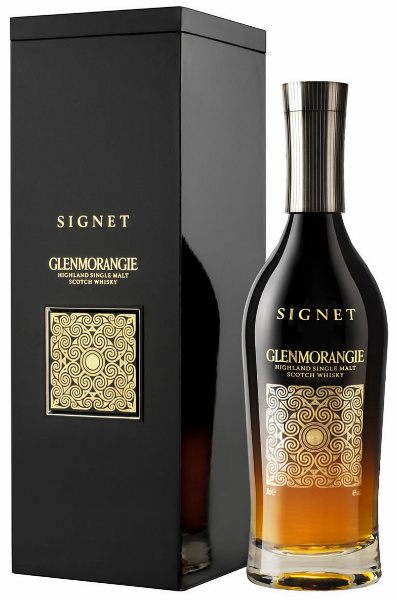
Glenmorangie Signet (46%, OB, White Oak, Oloroso Sherry Finish, Circa 2012)

I never was a big fan of Glenmorangie. Early on in my explorations of Single Malt Whisky I came across the litre bottle of the 10yo. Good value, looked great. Wow a litre bottle even. I didn’t like it. I had bought some other expressions but when I had the chance to taste them elsewhere I was quick to sell them off. Never regretted it since and in fact never came across a Glenmorangie I really liked. Well one I did like, a 30yo 1972/2004. Rare stuff. Ten years I didn’t look back and never got interested in Glenmorangie again. Just one of those malts that didn’t suit my tastes I thought. Recently I got a sample of the extremely rare 18yo and yes, that one was so nice and drinkable that I got myself a bottle of that. Great golden box too. If you ever going to bury a small pet, look no further than Glenmorangie 18yo. After that I accidentally had a blind tasting of the new 10yo and again didn’t like it. Back to the Whisky. Glenmorangie’s Dr. Bill (Not Dr. Phil) was experimenting a lot at Glen Moray, and when all lessons were learned, Glen Moray got obsolete (and sold off). Maybe not entirely for that reason. Glenmorangie started to churn out great designer Malts. Maybe not the 18yo, which still has an age statement and is more old school I guess, but probably true for this Signet. Just look at the design of the packaging here! Signet is a NAS Whisky and besides the white oak and the Oloroso finish, is known for the usage of heavily roasted chocolate malt. Glenmorangie SignetColor: Light copper gold. Nose: Malty and fresh. Citrus lemonade with a burnt caramel twist. Fruity and very likeable. Am I going to be surprised with another decent Glenmorangie? The white oak is discernible, but not very up front. Also some toasted wood, or maybe the toast comes from the chocolate malt? The white oak is masked just like the peat in good old Laphroaig 10yo was masking the heavy sweetness of the Malt. The masking agent in this Glenmorangie being sweet-smelling Oloroso Sherry. I have to say it is what you would expect considering “the ingredients”. Well crafted stuff. I hope this is what it is by design then and not trial and error at Glen Moray. Wink, wink, nudge, nudge. Taste: Sweet Sherry, petrol and nice warming wood. Fresh untreated oak (not the toasted oak from the nose). Vanilla creaminess grows stronger in the finish and has great staying power, where the body seemed to be light at first. Silky burnt notes or silky tannins, are accumulating in my cheeks and are a pretty nice complement to the creaminess. Better finish even as the 18yo, which should have been bottled at 46% too. Both the nose and the taste are nice and both are about aroma. However if you are looking for development and/or complexity, not the case. You quickly understand how this Malt tastes and that’s where it stays. probably the reason this is a NAS bottling. Don’t get me wrong, Dr. Bill did a great job making this, designing this Whisky. It is really good and a must try if you get the chance. Its different from the 18yo and twice the price. I hope one day a Signet with more age will see the light of day. A version with more complexity and foremost more development in the glass.

Points: 88

Jura 30yo 1984/2014 (44%, OB, American White Oak, Amoroso & Apostoles Casks, 1984 bottles)

Well, this should prove to be an interesting review. First of all, not a lot of Jura’s are around with this kind of age behind its belt. Second, I do know what Amoroso is (Sweetened Oloroso Sherry, most definitely not the highest quality Sherry around), but Apostoles? George OrwellThird, unbelievable what this Malt costs. It has been reduced to 44% (I think) and for sure is colored, why? Is this typical caramel colour so much better than the colour of the original Whisky? Fourth, This malt has been “created to celebrate the famous George Orwell” what’s next, a 2011 Isle of Jura bottled at 50% ABV to celebrate E.L. James? She probably put up a tent of her own on the Island too some point in time. Fifth, in 2003 Jura already released a 1984 commemorative bottling for George Orwell. This time with a Palo Cortado Oloroso finish (I understand that one wasn’t so great). Sometimes I just don’t love marketing. Let’s concentrate on the Whisky then.

But first a word about Apostoles. Apostoles is a Palo Cortado Sherry, a 30yo from González Byass. From Wikipedia: “Palo Cortado is a rare variety of Sherry that is initially aged under flor to become a Fino or Amontillado, but inexplicably loses its veil of flor and begins aging oxidatively as an Oloroso. The result is a wine with some of the richness of Oloroso and some of the crispness of Amontillado”.

I told you it would be interesting.

Isle of Jura 30yo 1984/2014 (44%, OB, American White Oak, Amoroso & Apostoles Casks)Color: Copper gold.

Nose: Extremely pleasant nose. Thick Sherry, but not your normal run-of-the-mill Sherry, but special Sherry coming from the black coal age. Thick but also fruity. Cherry syrup. Antiques, with a small hint of smoke and toast. Unusual but well crafted. The nose shows great balance. I don’t know how they crafted this, but is really smells awesome. To me it smells like something from the fifties or sixties. It has oldness, a backbone and nice fruits. So job well done.

Taste: Fruity again, but somehow not the same fruitiness as the nose promised. The coal returns but in a more creamy way. Vanilla pudding and orange skins. Again well-balanced. Great stuff, but. It’s a bit weak, it has been reduced too much. Why? Money? It’s already colored, and now it’s also reduced too much to fetch more? Ok forget about that for a minute. This is a wonderful malt, that probably was stellar before reduction. Now it’s still great, however it starts to go off a bit, halfway through the body. Although it breaks down in the middle of the body, the yielded parts are still nice and balanced. John Lennon and Paul McCartney did make good solo albums by themselves, but… The only flaw is the weakness of the finish and the shortness of it. I would have liked the creamy fruitiness to stay on a little while longer.

Reading through the intro, I may not be too happy with Jura’s marketing department, ok the packaging looks pretty nifty though. I am impressed with the people involved in crafting this Whisky, and that’s where it’s all about. I’m just a bit sad this great Whisky got reduced too much, albeit 2% higher than the former Orwellian bottle. If only it were somewhere in between 46 and 50% ABV. Maybe next time in 2024, when the Palo Cortado’s turn 40 we get a version bottled at 46% ABV. Watch the wood people.

Points: 90

Many thanks go out to Dave G. for providing the Whisky.

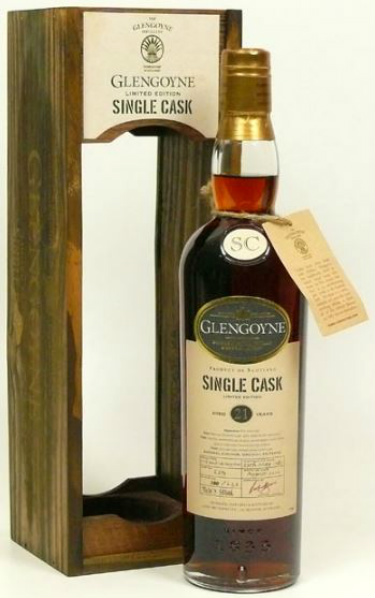
Glengoyne 21yo 1985/2006 (53%, OB, First Fill Sherry Butt #629, 632 bottles)

Two years ago Master Quill had a week specially dedicated to Glengoyne. In that week I reviewed a Glengoyne from 1985 called “Summer” a Limited Release. There also was a Winter (1984 Vintage), a Spring (1972 Vintage) and an obviously an Autumn (1969 Vintage). Essentially all four are Single Cask releases (SC) like the one I’ll be reviewing shortly. This 1985 should be quite interesting since it was drawn from a sister cask of the “Summer”. Summer was drawn from cask #608, and this SC was drawn from cask #629, so that should be interesting.

Glengoyne 21yo 1985/2006 (53%, OB, First Fill Sherry Butt #629, 632 bottles)Color: Mahogany brown.

Nose: Nice Oloroso Sherry nose, with lots of fruits. Fresh and acidic. Wonderful depth. Earthy and dusty, but never dull or heavy. Creamy with hints of vanilla. A very vibrant fruity nose. This probably was a considered a contender for the “Summer” spot. Small hints of warm asphalt. Dusty with some licorice, mocha and licorice. Meringue. Extremely balanced and likeable.

Taste: Cardboard, almonds and quite some licorice again. Warming. Spicy and soft old wood. Creamy and very nice. Fruity vanilla, pudding with warmed up red fruits on top (part fruit, part sauce). Spicy sharpness (hot) because of the alcohol, without that, quite soft and creamy. Slight acidic touch towards the finish, and enough wood. Again, just like the nose. Extremely balanced. Wonderful Oloroso Sherried bottling.

Although a very good Glengoyne Single Cask, I thought the “Summer” was even better. More complexity and even better integrated aroma’s. A bigger body and an even better finish. However, make no mistake. This Butt #629 is no dud, far from it. Hardly any Sherry bottling these days is a good as this is. You know the lonesome tropical Island question, and what to take? If I had to take this one instead of the “Summer” I still would go in a heartbeat!

Points: 89

Tamdhu 23yo 1987/2010 (46%, Mo Òr, Oloroso Sherry Butt #3649, 656 bottles, 500ml)

Earlier I reviewed two young Tamdhu’s, a 2004 and a 2005 bottled by dutch indie bottlers The Ultimate (Van Wees) and both turned out to be pretty good. This time we’ll have a look at a much older 1987 bottling by another dutch outfit, this time Mo Òr (The Whisky Talker). Tamdhu’s are usually pretty good when matured in Oloroso, so I’m guessing this also wil not be too wonky.

Tamdhu 23yo 19872010 (46%, Mo Òr, Oloroso Sherry Butt #3649, 656 bottles, 500ml)Color: Orange gold.

Nose: Lovely creamy Sherry. Nice alcoholic nuttiness. Clay and cask toast. Not too cloying and can be even called fresh, like in a breath of fresh air (carrying a little bit of dust). Licorice mixed with a hint of burnt leaves. Very aromatic, just move it around in your glass and lots of aroma leaps out of the glass. Creamy vanilla and some good oak. Nice balance and highly aromatic. Medium complexity but very appetizing.

Taste: Creamy with licorice and cask toast. Warming, and half-sweet. Clotted cream. However, already from the start this has a “thin” quality to it, which is remarkable since the nose was so aromatic and full. In stead of the creamy and honeyed sweetness, it starts with a sharpish burnt note. Charcoal and in the background a tiny hint of sulphur. The vanilla cream comes later. Smoky toffee. Warming with good creamy sherry and although the start was thin, the finish does linger on a bit.

I’m guessing this was better at cask strength. Very appetizing. good stuff and the kind of Whisky you’ll want to have first when this is in your collection, so easily drinkable. A bottle that will be empty soon, also because it’s only 500ml. Yup, not wonky at all.

Points: 88

Glenrothes 1990/2002 (46%, Wilson & Morgan, Barrel Selection, Sherry Wood)

Time for an “oldie” Wow, I’m now calling a Whisky from 1990 an “oldie”, unbelievable how time flies. Here we have another Glenrothes. For one reason or another I seem to like independently released Glenrothes better than the official bottlings. Maybe the independents release their versions at a higher strength than the 43% ABV the owners themselves do. One thing is sure, besides that it needs to be at a higher strength, it is a distillate that need maturation in a Sherry cask, just like Macallan did. Do you still remember Sherried Macallans? Anyone?

Glenrothes 1990/2002 (46%, Wilson & Morgan, Barrel Selection, Sherry Wood)Color: Copper orange.

Nose: Lots of raisins. Soft creamy wood. Floral and slightly acidic Wine-attack. Linen. Nicely Sherried, waxy with dry powder. Earwax, coal and slightly tarry. Hint of dried out orange skin. Dusty attic (old home) and even a tiny hint of a dry rotting sensation, motor oil and vanilla. Whiffs of old woody Rum.

Taste: Creamy and rounded out. Big Sherried nose, but taste-wise not so heavy. Wood and a fruity acidity I sometimes get from PX-Sherry somehow don’t match perfectly. Does have a burning alcohol and warming sensation and a finish that lingers on for a while (raisins, honey and cask toast), but has no big staying power, medium I would say. It’s nice but it also seems to be telling it didn’t want the water. Maybe this would have been better without reduction, who knows? Nice, not very complex and not the heavy hitter I expected.

Well, this is bottled quite some time ago and in its day this was pretty affordable. Today Sherried bottlings that have no mayor flaws, like sulphur which many aficionado’s do not like, cost a pretty penny. This Glenrothes is big and small at the same time. Yes its heavily Sherried, but no it’s not a heavy hitter. It’s not brown, but orange. I really like the melancholy of it all. It reminds me of summer, dry and dusty, with aroma’s of old wood and furniture. In an attic isolated from sound with whiffs of flowers from outside. It may not be perfect nor very complex, but is it nice and highly drinkable. Has an old feel to it, as opposed to todays (sometimes sulphury) Sherry bottlings. “Lovely” would sum it up nicely.

Points: 86

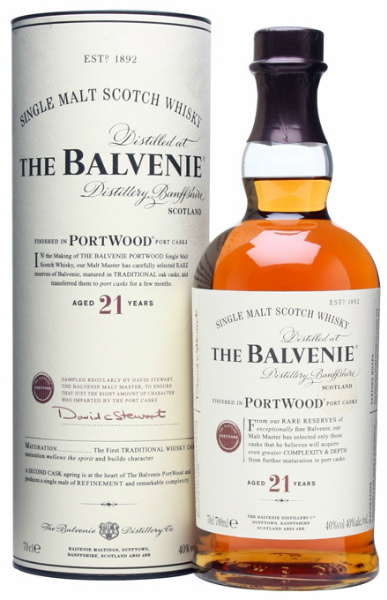
The Balvenie 21yo “Portwood” (40%, OB, Circa 2013)

A long time ago, as I got interested in Single Malt Whisky I always wanted to really like Balvenie. There was some nice variations of Balvenies around, even from independent bottlers like Cadenheads, and the bottles looked so nice. Uniform and beautiful. 10yo Founders Reserve, 12yo Double Wood, 15yo Single Cask, 17yo Islay Cask, 21yo Port Wood and the 25yo Single Cask. I bought the 12yo, the 15yo and the 21yo As often is the case the 12yo “Doublewood” was the first one I opened. I have to admit I never bought any more than those three…

The Balvenie 21yo Port WoodColor: Orange gold.

Nose: Malty, vanilla powder and definitely some winey notes. Lots of cream and vanilla. Next to come through are some vegetable or plant like notes, but also some new wood and tree sap. Elegant wood, in no way overpowering, even at this age. Very organic. Hints of (saw) dust and very light chocolate (milk). Tiniest hints of cask toast and…wait for it…chlorine. Yet over all a nice nose. Balanced but light by reduction?.

Taste: Cardboard and wine. Malty and quite sweet. Very likeable. I like the fact that the Port is definitely there, but again, not overpowering. Mocha, licorice (Port related this time) and Tiramisu. Not bad, but the taste is really to weak. Definitely reduction!

Yes I will get on my horse now. This one is very nice, but almost reduced to death. It is too mild and especially the finish is almost ruined. You’ve probably had the experience of dabbling with water, and one of those times you slipped, and added a little too much. Remember how that tasted like? Remember how the finish got weak? Well that is what happened here. I can’t help but feel this is a money decision and not because they believe this Malt would be at it’s best @40% ABV. In 2002 I bought myself a bottle of this and remember it to be very, very good, also reduced to 40% but way more aroma in that one. This newer 21yo Port Wood doesn’t cut it (as much) for me. I’m planning to open that older version soon and I’ll get back to you on that subject a.s.a.p. Fun fact: I bought this 21yo, ten years ago for 58 Euro’s and I was recently informed, that very soon, the 21yo will cost almost 200 Euro’s. So If you like it, don’t hesitate, get it while you can for around 125 Euro’s.

Points: 85

Laphroaig Week – Day 7: Laphroaig 16yo 1988/2004 (52.5%, Douglas Laing, for The Whisky Shop, 614 bottles)

Laphroaig SignWell, weeks are only seven days so they are bound to be over very quickly over. Today is the seventh day so I hope to finish this Laphroaig Week over with a bang, but you never know. This particular Laphroaig was selected by the Whisky Shop from the stocks of Douglas Laing in the dumpy green bottle, Whisky geeks love so much. In the early days it was a mark of excellent quality, or maybe they just bottled it like this because it was bottled at cask strength. Obviously this Laphroaig is from a cask that once held SHerry, just look at the sheer amount of bottles yielded at cask strength. Great! I love the combination of (extreme) Laphroaig and Sherry…

Laphroaig 16yo 1988/2004 (52.5%, Douglas Laing, for The Whisky Shop, 614 bottles)Color: Copper gold.

Nose: Tar, salty licorice and raisins. Extremely brooding. Thickly clad Sherry, musty and funky. Intertwined some red berries and other aromatic red fruits like ripe little forest strawberries. This kind of Sherry-ness we’ve encountered before in a bottle of Scapa I have. Whiffs of freshly cut oak planks and oriental spices. Cardamom and saffron spring to mind. Nice whiffs of dusty dryness and sawdust from very old dry wood as opposed to fresh sappy oak. White pepper and dried out Marmite with black coal. The tar reminds me of a warm road. It’s not a thick tarry note, but just enough to add to the wonderful complexity of this Malt. The peat shines towards the end. What wonderful stuff this is. One of great complexity and balance.

Taste: Tarry with the typical ashes and licorice I also found in the Laphroaig I reviewed on day 5. Hefty Sherry, big body. Sweet and creamy, but not as fruity as the nose suggested. Noticeable is a slight fruity acidic undercurrent, that is almost hidden away. This is something I usually get from very old bottles, so its more than welcome here. This fruity undercurrent doesn’t show itself after a fresh pour. This needs time to develop, so this Whisky comes with an operating manual. Tar and coal. Steam locomotive. The Sherry plays a big role and gives of some nice subdued fruity notes, but the Laphroaig underneath is doing well too, with some great peat. This comes together nicely!

Laphroaig came through and never disappointed. Some conclusions you might ask? Well all in all Laphroaig is a pretty good Whisky. It is still one of the greats, but not as good as it once was, but which distillery truly is? None of these seven reminded me of the stellar old 10yo’s of yesteryear. Neither the 10yo @ 43% ABV nor the Cask Strength versions, but then again I didn’t review any 10yo in the Laphroaig Week now did I? The 15yo was a great malt from its day, different from the 10yo’s. The 18yo is decent but for me not as good as the 15yo. Simpler I would say. The An Cuan Mòr was is a well crafted surprise, which I can heartily recommend from the modern range of Laphroaigs. The independents did manage to get their hands on some great sherried Laphroaigs, although very good sometimes it is Obvious why some casks did find their way on the open market. Sulphur! Still I liked the Kintra expression. Douglas Laing also were represented here with some nice Sherried versions and an odd one that had all its aces up its sleeve. You had to work for gratification. The Laphroaig Week is over. A sad moment, but I hope to review a lot more Laphroaigs on these pages. Hope you liked it.

Points: 90

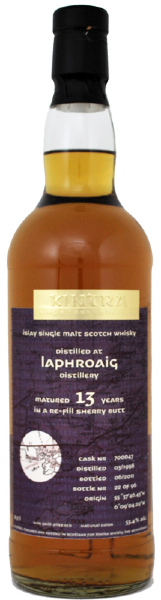
Laphroaig Week – Day 4: Laphroaig 13yo 1998/2011 (53.4%, Kintra, Refill Sherry Butt #700047, 96 bottles)

Laphroaig SignDay four, a.k.a. the middle, or the pivotal point in a week. We’re halfway through. We started out with three distillery bottlings of Laphroaig. An older 15yo, it’s replacement the 18yo, although not in its latest guise, and yesterday we had a look at a travel retail only bottling from last year: An Cuan Mòr. Up untill now Laphroaig hasn’t failed me yet. Today we’ll venture into more unknown territory. The territory of the independent bottler. Today we’ll have a look at a Laphroaig, Erik Molenaar got into his hands a while back. The market is rapidly changing. In 2011 Erik could get (part of a Sherry Butt) for a reasonable price. Today he probably would still be able to source such a Whisky, but unfortunately only at an unreasonable price. So even when this is from 2011, it can still be considered…well you catch my drift. So without further ado…

Color: Gold.

Nose: Funky Sherry. Has someone just farted over here? My word, lots of the S-element is filling the room. Sulphur that is, and it comes from my glass into which I have not farted, nor has anyone else. Fruity and half sweet underneath “the fart”. Enough with the fart already, will ya? Ok, lets move the Sulphur into the realm of fireworks then. Toasted wood, but also toasted bread. Meaty big aroma.

Taste: Sweet and Sherried. Fruity with loads of ashes. Short shock of fruity acidity. Creamy but with a wave of a bitter sulphury edge. The bitterness also could come from the oak. Nevertheless, the bitterness is also kept in check, so it doesn’t hurt the overall taste. The ashes transform into a sweeter form with and acidic edge, and both do not overpower the palate. The sweetness and acidity show themselves and go under again, like the Loch Ness monster. Warming and full body. Cozy. Nice mix of peat and funky Sherry. Sure, it may be flawed but the whole still (fire)works for me. Hints of black fruits and some smoke late in the finish.

Lots of my Whisky-loving friends don’t like sulphury notes too much. Some seem to be even overly sensitive to the stuff, if not allergic. They can go on and on about it and I sure do understand why. We know from the olden days how Sherried malts should taste like. Some of you know the golden days of The Macallan, old heavily Sherried Longmorns from the sixties and seventies, Glen Grants and Strathisla from the sixties. Fruity, full of aroma’s, with steam and coal, the lot! Today that quality can’t be reached anymore, and I don’t have the room here to discuss why. More modern Sherried malts are prone to have sulphury notes, and it’s up to you, if you can stand that or not. If you can (like I do), this is a big and nice, yet sulphury, Laphroaig.

Points:87