Kopke 10 Years Old (Matured in Wood)

Kopke logoAfter Warre’s Warrior this is just the second review of Port on Master Quill, which is quite strange since I do love my Ports. Lots of them have passed on my lectern, and only one has been reviewed op ’till now. So it’s about time to do something about that. On my lectern are a few Ports that haven’t been reviewed yet, so keep an eye out for some more Port on these pages…

Kopke 10 Years Old Port (Matured in Wood)Color: Warm, bleak red (rosé), not yet brown.

Nose: Sweet and lively, hints of acidity and freshness. Lots of red fruits, strawberry, raspberry. Cherry candy. It doesn’t smell its age (it smells younger). In the distance a little bit of wood and mint, but also some licorice. Classy nose. Very sweet with an added bonus. The influence of wood, which adds to the character and it doesn’t let the sweetness dominate (the nose).

Taste: Sweet but also enough acidity to counteract the sweetness. In fact the nose smelled a lot sweeter than this Port actually is. Lots of strawberry and raspberry again, this time with added acidity from currants. This tastes great and very likeable and harmonious. If in anything it shows its age than it is in the finish. The half-long finish is a little bit brittle, the lively fruitiness dissipates quickly, it goes from sweet to sour, to… a memory of Port (not saying it is short).

This isn’t a full-blown red Port anymore, it’s a Tawny that for me has some notes of red Port (youth?). On the taste it shows two sides of itself. Very fruity without being full on sweetness, and then a turning point into something more vague. If only the finish would have held up a bit more. But that’s nit-picking. This is a very good Kopke 10yo. It’s much better than I initially expected. Think strawberries. The Port has an ABV of 20% and was matured in small 250 liter casks. Recommended for Christmas!

Points: 87

Thanks to Richard and Esther for the bottle.

Casa La Teja D.O. La Mancha Tempranillo – Merlot 2009

Next up is this rather cheap Spanish Wine. My mother made us a very good Moussaka with the recipe she used came the advice to combine it with a Tempranillo from the La Mancha region. So looking around on the many shelves in my “cellar” I spotted this Wine. This is a blend of Tempranillo (85%) and Merlot (15%). How unusual. Casa La Teja is a brand owned by Coop. Jesús del Perdón, and when Jesus loves it, who am I to think otherwise.

Casa La Teja 2009When looking for information about this cooperation, I can find that it is located in Manzanares, and I am led to the www.yuntero.com website. On this site I cannot find this Casa La Teja wine, so I don’t have a lot of hope this will turn out to be something good. Let’s have a go then.

Color: Deep ruby red.

Nose: Very fresh and fruity, the Obvious vanilla-like black currants and cherries, but also the smell of fresh apples. Very likeable and light. Easy, young and very pleasing. It gives off a feeling of warm, dusty soil and silence. Fleshy, buttery and bold. After this a little more on the black or rather red fruits and some more acidic freshness start to play a role. When it gets more air from swirling in the glass a more typical and fleshy Tempranillo smell oozes out of my glass. It’s not very complex but very enjoyable nevertheless.

Taste: Again easy, yet very refined. As the smell predicted, this is not very complex, but it has great body and harmony to it. Not very heavy on the acidity and certainly not a lot of tannins (at first). Given some time to breathe and develop a little, same more tannins emerge, but still not a lot. The apples return as well. Dark cherries, sweet cherries, and come to think of it, it is actually sweeter than I expected. Fruit Sugar and syrup with a hint of licorice. Great easy drinker this is. Lots of blackberries in the finish (the sweet and the sour).

Very easy drinkable and will do good with everything. Good birthday wine, because it will do well on its own. As I said before, the first time I had this was with a very tasty Moussaka and it accompanied that well, so this turns out to be a rather unknown wine, of pretty good quality that is very versatile to boot. Buy by the box.

Points: 84

Bodegas Ramón Bilbao Rioja DOCa Edición Limitada 2009

Today, Bodegas Ramón Bilbao is a modern winery with a long history dating back to the beginning of the twentieth century. The property is located in Haro, Rioja Alta, in the heart of the DOC Rioja region, and therefore Ramón Bilbao is considered to be one of the best. The soil is calcareous and loamy. The vineyards are located there, where the warm wind from the dry Sierra de Cantabria collides with the cooler Mediterranean breeze. This makes for modern, fresh and fruity entry-level wines and a classic ripe, vanilla and wood-scented Gran Reservas, and lots in between. Obviously, these Rioja’s are made with the Temperanillo grape variety.

Color: Deep ruby red

Nose: Bourbon vanilla, creamy, chewy, brooding and nice spiciness from the barrel ageing. It has that much vanilla I would say, American oak barrels or maybe the feisty Temperanillo grape variety overpowers the tannins of the French oak that could have been used in stead. Probably both are used at the same time. Dry leather and some dust. Red fruits, cherries, strawberry and raspberry. Lovely stuff.

Taste: Dark wine, dark spices, but with an added spiciness and a killer vanilla finish. Dry blackberry. Perfect woody spiciness comes through, late in the finish with no off notes whatsoever. The only beef one could have with this wine is that the finish is too short. It doesn’t have a short finish, but the wine is so good and the aftertaste is so pleasant as well, it should have gone on forever. Very mild in the tannin-department, which again makes me think that most of the barrels used for ageing is made from American oak.

Highly versatile wine. Is probably good with a lot of foods, but most certainly drinks very well on its own. For me a great Rioja! 14% ABV. Advised not to keep lying around for a long time, but another year or two can’t hurt this. Recommended.

Points: 87

Ogier Caves des Papes Les Caprices d’Antoine Côtes du Rhône 2010

And here is already the last one of our trio of Ogiers. This time a more modern blended Côtes-du-Rhône made as a tribute to Antoine Ogier, the founder of the Ogier Caves des Papes Winery, located in Châteauneuf-du-Pape.

Les Caprices d’Antoine is made of classic Southern Rhone varieties like Grenache and Syrah, supplemented with smaller amounts of Carignan and Mourvèdre, making this a Southern Rhône blend (GSCM). Funny enough these are all to be found in a Châteauneuf-du-Pape wine except for Carignan, which isn’t allowed! Carignan is mostly found in Rioja-wines (in Spain it is called: Mazuelo). Carignan is mostly used to give extra body and a deep color to wines. The wine was aged somewhere between 6 to 8 months in French and American oak barrels. The wine has 14,5% ABV.

Color: Dark ruby-red with a purple and / or violet edge.
Nose: Recognizable nose of a Rhône-wine. Immediate balance and young. Again at first not very heavy. Typical of Ogier. It has vanilla from the American oak, and even a slight sourness like yoghurt. Warm earth, licorice (also from Carignan), spicy wood and lots of red fruits. Red apple skin, with raspberry and hints of strawberry. (I said it was modern didn’t I?)

Taste: Fruity and acidic. Soft tannins that hardly dry the palate. Again a light style Ogier. Licorice stays a wee bit longer on the palate. Medium finish that is quite simple. Definitely a simpler wine than the two I reviewed earlier. Very typical for this wine is the thick licorice note it has, and a slight hint of bitterness that gives the finish some character, but I would have preferred some more fruitiness.

Recommended with meat and cheese, well which red wine isn’t these days. For me it is more a sort of daily drinker type of wine that doesn’t need your attention all the time. It’s good, but nothing extraordinary. I hope Antoine wasn’t like this, although the wine is not bad.

Points: 80

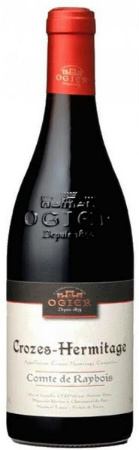
Ogier Caves des Papes Crozes-Hermitage Comte de Raybois 2009

Another red wine, another Ogier. Crozes-Hermitage lies in the northern part of the Rhône wine region and has a continental climate. Nearest town being Tournon-sûr-Rhône, where Châteauneuf-du-Pape is located more to the south near the town of Avignon, which has a mediterranean climate.

Where the previous Ogier was a Châteauneuf-du-Pape made with four grape varieties, this Crozes-Hermitage is a 100% pure Syrah. That in itself is a no-brainer since Syrah is the only red grape allowed for this appellation, or isn’t it? Strange enough two white grape varieties are allowed for use in the red wines (up to 15%). These are: Marsanne and Rousanne. Since this wine is all Syrah and the Châteauneuf-du-Pape is a blended wine of four grape varieties, I expect this wine to be rather different, albeit a Rhône wine. Syrah is a ballsy grape variety, which usually adds black and blue fruit flavors, chocolate and pepper, but knowing Ogier, this example might be lighter in style than its colleagues…

Color: Deep dark, very dark, red.

Nose: Vanilla and clotted cream. Somewhat closed, smells like a cold wine. Smallest hint of fish. (Should I be writing this? Don’t worry it’s inoffensive). After holding it in my hand, swirling it a bit, an explosion of aroma’s. Nice rich typical Syrah, warming. Hot stones. Spicy yet supple (yes still writing about the smell of it, and it smells, well…, supple). A little bit of dry but fresh uncut grass, and field flowers with strawberry jam. Nice dark fruits emerge from the jam. Nice stuff this, quite complex and interesting.

Taste: This has some more tannins than the Châteauneuf-du-Pape I reviewed last. It dries the tongue and it is a bit austere. It has the, by now typical,  Ogier lightness to it. Syrah can be very heavy, but this Syrah just isn’t. I just poured it, it is light with a light finish and a nice acidity counteracted with some butter. With some breathing it should get better. It’s a bit like Metallica played by a Finnish string quartet. After some breathing and even taking big gulps, the wine actually doesn’t get any “heavier” It just is a lighter style of Syrah, which compared to the nose, is quite simple and easy.

No pepper nor chocolate for me, so this one should be aged further in the bottle, to get the pepper out. Syrah without this most probably is young and needs more time. Leave it alone for at least five years again, but in my opinion it should age even longer than that.

Points: 84

Ogier Caves des Papes Châteauneuf-du-Pape Reine Jeanne 2010

Let’s continue with another red wine. This is a Châteauneuf-du-Pape from Ogier Caves des Papes. Not to be confused with the Ogiers from Côtes Roti.

Christophe Ogier had a wine shop established in 1859 called Ogier et Fils. In 1872, his son Etienne took over the company and he passed it over to his grandson Antoine in 1914. In the 1950’s the company joins with Bessac Caves des Papes in Châteauneuf-du-Pape. Their combined estates are all located around Châteauneuf-du-Pape.

This example of Châteauneuf-du-Pape is built around the four well-known grape varieties for the appellation of Châteauneuf-du-Pape. Grenache (versatile, easy to use and adds rich fruit flavors), Syrah (ballsy, adds black and blue fruit flavors, chocolate and pepper), Mourvèdre (spicy, leathery, gives the wine a dark red color) and Cinsault (perfumy and floral). Grenache and Syrah (and Mourvèdre) being the most popular for the region and this type of blended wine. The wine has had some ageing in oak barrels and boasts a hefty 15% ABV.

Color: Dark ruby-red.

Nose: Creamy and very fruity. Red fruits and prunes. Hot butter and warm earth. Vanilla and utterly balanced, otherwise light. It has some sweet-smelling oriental spices, most definitely some ginger and hints of licorice. Small hint of meat(loaf). Great overall perfume.

Taste: Again light, not very tannic, but still a mouth full, and a little bit drying. Licorice. Deep terroir and only slightly acidic. Medium finish with the licorice sustaining. A bit mysterious. Already needs decanting for its full aroma to show, but after some breathing (also in the glass) a very good and aromatic wine.

Very nice and somewhat light Châteauneuf-du-Pape. Today a very inoffensive wine but with a lot of quality to it. Extremely drinkable but not to be taken with heavy foods. Sometimes almost an aperitif wine! I think the wine should be aged further for at least five years. It will improve, but in which way it will develop is hard to predict. Lovely wine, but could have been better with some more body, a little bit more meat on the bone, but the meat this is there is pretty good mind you! Let’s hope it will get more body from the additional ageing. Very nice wine nevertheless.

Points: 87

Thanks Richard for the wine!

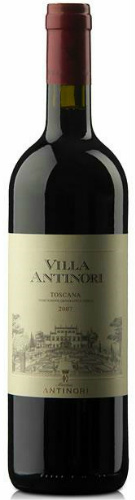
Villa Antinori Toscana IGT 2007

The history of the Antinori family dates af far back as the 12th Century, when Rinuccio di Antinoro produces wine at the Castello di Combiate near Croci di Calenzano, outside of Florence. The particular wine I’m reviewing today, Villa Antinori, was first made in 1928 and at that time it was a Chianti, but a Chianti that could be further aged. Much later, in 2001, Piero Antinori, reworked this wine into a Tuscan IGT. The wine itself is a Super Tuscan blend: with 5% Syrah, 25% Cabernet Sauvignon, 15% Merlot and of course 55% Sangiovese. After the malolactic fermentation the wine was aged in French, Hungarian, and American oak barrels for one year. ABV is 13.5%.

Villa Antinori Toscana IGT 2007Color: Dark ruby-red

Nose: Spicy and fresh, seems young although it does have some ageing under its belt. Some warm very aromatic Tuscan soil, nice! It has its roots firmly in the ground. Warm summer wind late in the evening. Nice red fruits, cherries, blueberries and slightly herbal with a little bit of wood to give it some more character. Nicely balanced wine. Lovely wine with sometimes some whiffs of field flowers.

Taste: Very supple and extremely easily drinkable and delicious. Again some terroir, but not as much as the nose had. Well integrated blend, everything seems to fall in place. Nice depth. Not very tannic, though there is some drying sensation on the tongue and it’s only slightly acidic, but the acidity increases after some more breathing. Breathing also gives the wine something of a bite, bitterness that is, from the wood. The finish is all right and half-long.

This first accompanied food and when that became to spicy, it easily overpowered this wine. The wine itself seems quite light at first, but it did pick up after more breathing. Recommended drinking window for this wine is said untill 2014, so if you have this lying around it’s now probably at it’s best, but I feel still can handle another couple of years…

Points: 83

Warre’s Warrior (Reserve)

And finally a Port emerges on these pages and since it took so long, it might come as a surprise that I really like Port. I normally do not like sweet drinks, but reading back on these pages it should become clear to you, that I do like (overly) sweet Sherries like the PX’s, but also Port. Due to some issues with shelve space I do not have a lot of Sherries and Port’s open, nor should I, since both Sherry and Port shouldn’t be kept open for too long, it’s not Whisky you know.

As with lot’s of Port “houses” it has a long, very long history. Even this Warrior has a long history. Warre themselves claim that: “[Warrior] is the oldest brand of Port in the world, having been shipped continuously since the 1750’s”. The company that became Warre’s was established in 1670, but the first Warre came to the firm in 1729.
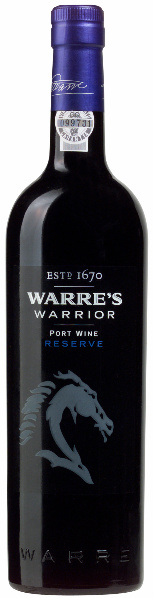
Let’s start of with Warre’s Warrior. I’d like to start with Warre since a long time ago, Warre’s Otima 10 (or 20) was my first bottle of Port ever. Warre’s Warrior comes from Quinta da Cavadinha and Quinta do Retiro Antigo from the Pinhão and Rio Torto valleys, also the home of Warre’s Vintage Port.

Color: Deep red and thick.

Nose: Very sweet and raisiny. It definitely smells like a Port to be had as a dessert, or with a dessert. For me it smells like a warm summer, mellow and toned down. I can imagine drinking this in summer, slightly chilled. It smells nice, but lacks complexity, it isn’t very pretentious, but easily drinkable.

Taste: Ahhh, very fruity and aromatic, much more of a flavor explosion than the nose suggested. Various red fruits. Sweet raspberry mostly. The nose suggested an extremely sweet Port, heavy sweetness and raisins, but on the contrary. Even though it shows long legs and smells of raisins, it doesn’t taste like that. This Warrior is fruity! Half-sweet and has a very nice balance with its (sometimes sharp, but refreshing) acidity. A little bit of oil from orange skins. Tannins play a role too, they’re drying the tongue. Last but not least, the finish, it’s short. Slightly woody too. If the finish was longer and a little bit sweeter, this would really be perfect, but as it is, it still is a steal.

Thick Ruby Port that sticks to the glass. Even though it has a lot of balance, the nose and the taste seem to be two different wines in one (ain’t that a contradiction!). It’s a surprise, but treat it as a present, since we’re getting two types of Port for the price of one, and it’s dirt cheap to boot. Due to a lot of regulation and control from the Port Institute, only Ports with a decent quality are released. This Warrior is definitely worth looking into for an inexpensive daily drinker. ABV is 20%.

Points: 83

Santa Cristina Umbria IGT 2011

Somehow this is the end of some sort of trilogy. Earlier I reviewed a rosé and a red by Santa Cristina, and now here is a white, or Bianco. Way back in time I was told that Santa Cristina has a pretty good red in the shops, so I started buying some different vintages and was actually never disappointed. Much later I got hold of a rose wine by Santa Cristina and that one I didn’t like that much. Now here we have a chance to have a look at a white wine by Santa Cristina. By the way, this white wine is made with the Grechetto and Procanico grape varieties.

Color: Light White Wine.

Nose: Sweet and fresh, with hints of creamy and sugared apricots, but also hints of flowers. After the sweet apricot yoghurt I’m a bit struggling to get any more from this nose. The nose of this wine is appealing like a lemonade is, so probably a summery wine.

Taste: Very light, and not as sweet as I initially thought.Very anonymous. Slightly acidic and austere. Almost metallic. Actually this lacks a bit of sweetness to round the flavour out. Not very complex, which is no problem for a summery wine, but also lacks in the balance department, if you ask me.

For a light summery wine this could have been more appealing with some added sweetness. One-dimensional. Extremely simple wine. It does taste like a wine with an ABV of 12%, but when drunk like a lemonade, you will get a kick in the head, especially in the sun. Altogether not very interesting.

As said before, I was tipped some time ago about Santa Cristina wines (the reds). Now that I have tasted all three colours of Santa Cristina, I’m sticking to the reds. Santa Cristina red is good for pizza!

Points: 72

Antonin Rodet Chablis 2011

Two months ago I reviewed the first Chablis on these pages, and here is already the second one. Already, considering I mainly review Single Malt Whiskies that is.

Chablis is the northernmost part of the Burgundy Wine region. Chablis lies some 15 to 20 kilometres to the east of Auxerre. The Grand Crus all lie on one southwest facing slope just north of Chablis. The ‘terroir’ is clay with outcrops of the same chalk layer that runs from Sancerre to the White Cliffs of Dover. Chablis is made with Chardonnay Grapes and is famous for its clean, acidic, flinty and dry White Wines. Chablis Wines are more acidic due to the cool climate, compared to other Chardonnay growing regions. Not a lot of ageing in wood is done in Chablis, and this example I’m about to review has no wood ageing whatsoever.

The Chablis by Louis Moreau was pretty good, so let’s have a look, what Antonin Rodet did with his Chardonnay grapes.

Color: White Wine.

Nose: Sweet and fruity. Lychees and hints of peaches. Very fresh and lively. Wow, I always get happy smelling a white wine with a nose like this. It smells sweet and flinty. Chalk even. Also some floral notes like geraniums and it promises a nice acidity. Nice balance too. Very nice and typical Chablis nose. I like my Chardonnay. This nose, compared to the one by Louis Moreau, is cleaner, more elegant and lovely.

Taste: Zesty and acidic (Vitamin C). Very clean, fresh and likeable. I get the chalk from the nose again, but not a lot more. Not very complex, maybe even simple, but also without faults. Appetizing and easy drinkable.

As said above. The nose of Antonin Rodet is better than the one by Louis Moreau, but beauty is in the eye of the beholder, so it may depend on your mood, which one to choose. Taste wise I guess the Louis Moreau offering was a tad more interesting and had a finish with more meat on its bones, making that one slightly better in my opinion, but still, differences are small and I liked the Antonin Rodet Chablis a lot too. By the way the ABV is 12%.

Points: 84