Cockspur 12 (40%, Circa 2008, Barbados)

Well, that didn’t do the trick. For some strange reason or another, I picked a white Rum for sipping purposes, when white Rums are usually made for mixing. However I heard Plantation make a very good white Rum, I just had to have a go at it. Quite nice, but as I said before, it didn’t do the trick for me, and I still need a sip of a good Rum. This time I’ll try a brown one, and my eye fell on this Cockspur 12, a handcrafted Bajan Rum. Cockspur 12 is made from both column still and pot still Rums. Careful readers have seen that the 12 in the title is not really an age statement. The 12, means that the Rum is blended as to seem to be 12 years old. In fact the Rums in this blend can be even 17 years old but also as young as 4 years old. Although this is Bajan Rum, the bottle itself comes from Scotland with an UK distributor, so I’m guessing this Rum came as bulk to europe, where it also was bottled.
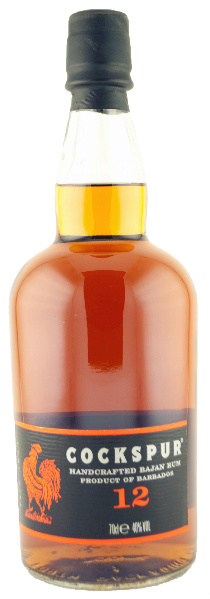
Cockspur 12Color: Copper gold or dark amber.

Nose: Well this is something else. This does smells of age. Wood, but also fresh. Sweet yes, but with nice touches of fruity acidity. Nice. Elegant polished wood, reminding me of some good Bourbons. Give the glass a whirl to release some more aroma’s from it and the deep brooding slightly tarry notes allow you to smell this is actually a Rum. Fatty and sweet milk chocolate of reasonable quality. Give it some time and you still believe this to be an older kind of Bourbon. Honey and wood and warm freshly roasted nuts and peanuts.

Taste: Well definitely no Bourbon now. In part it may well have been. but the syrupy quality most definitely isn’t. Toffee, wood and caramel. Thank god for the wood in this one. It gives it character and gives the sweetness a run for its money. Not an overly sweet rum this is, but think away the wood it probably would. Vanilla and a creamy note. Pudding.

Very easily drinkable. This really lies very close to Bourbon, albeit a sweet one. So a mashbill with lots of corn. It definitely smells of an (older) Bourbon, but the taste is Rum. Still some traits of Bourbon, but definitely a Rum. Taste wise quite a simple Rum, but one with great balance and great drinkability. Personally I think this could have done with some more oomph. 43 or 46% would have been nice. Recommended.

Points: 83

Plantation 3 Stars (41.2%, Jamaica, Barbados & Trinidad)

Although maybe 90% of my reviews are about Whisky, essentially this is a drinks blog. I do prefer Whisky, but not all the time. There is more great stuff around, and mine is a constant journey in finding the best quality stuff to have around and enjoying my life with. I was on quite a roll of mostly nice Whiskies lately, but today I had a real craving for one step beyond the usual realm of Single Malt Whisky. Two days ago we had some guests over for an evening of Wines and Cheese, but already then I had an intermezzo of three Grappa’s. Today I’m getting off the road usually chosen and take a detour with a Rum. Long time since I reviewed Rum, which is also a fantastic and global distillate. This three stars Rum, blended by Cognac Ferrand, is made with Rums from three distinct places. Jamaica (partly an unaged Rum and a small portion of 12yo Rum), Barbados (unaged Rum) and Trinidad (a filtered 3yo Rum). So quite the blend. This may prove to be one of the best White rums around, at least on paper…

Plantation 3 Stars (41.2%, Jamaica, Barbados & Trinidad)Color: Colorless, ever so slightly green.

Nose: A bit alcoholic and vegetal. Very green, with unripe banana, and ripe tangerine skin. It also shows a lot of potential. Initial smell is very appetizing. For a white rum it smells like something to sip and not let go to “waste” in a coke or cocktail. Mind you, I do enjoy them very much, and this Rum is designed for usage in cocktails. Tea and lots of spices and a tiny hint of wood. Sprite or 7-up, so citrus and brown sugar and cane juice, but in a very appealing way. Nosing it more deeply, even some cola seems to have found its way into the blend. Tiny hints of wood related mint. Wonderful stuff.

Taste: Sweet, green tea with too much sugar in it. Citrus again. Lemon and lime with refined sugar. Don’t get me wrong, this doesn’t make the rum too sweet. Very smooth and seems a lot lower in ABV than it actually is. Definitely good enough to sip, although it is obvious from the start this was meant to be used in another way. Very young and light, and without a real finish.

Nope, I wouldn’t sip this. It’s good, but there are so many golden and brown Rums around, that are way better and much more complex to sip than this three stars Rum. And that’s no shame. This was never meant to be sipped on the beach or around a fire-place. It was meant for cocktails and give you the chance to make the best cocktail you can make with this. Well made stuff and tasty too.

Points: 73

Glenallachie 7yo 2007/2014 (50%, Dewar Rattray, The Specialists’ Choice, Sherry Butt #900168, 350 bottles)

Glenallachie, just like Braeval, is one of the fairly new distilleries originating in the sixties. Glenallachie was founded in 1967. (Remember Sgt. Pepper’s ?) Glenallachie is located in Banffshire in a region that we particularly know as Speyside. Built by Scottish and Newcastle Breweries and sold to Invergordon Distillers in 1985. S&N ran it for two years and thus closed it down in 1987 and subsequently sold it to Pernod Ricard. Those of you who have read my recent reviews of Glenlivet, Strathisla and Braeval, know that Pernod Ricard are putting a lot of effort into marketing their big brands Aberlour and especially The Glenlivet, but don’t do a lot, if anything, with their other distilleries Strathisla and Braeval, but also Glenallachie, Glenburgie, Glentauchers, Miltonduff, Scapa and Tormore don’t get a lot of “Airplay”.

Glenallachie 7yo 2007/2014 (50%, Dewar Rattray, The Specialists' Choice, Sherry Butt #900168, 350 bottles)Those distilleries are viewed as production capacity for numerous blends owned by Chivas Brothers, like the well-known Chivas Regal. As said before, I would like to see those marketed as Single Malts by their owners! For the time being we’ll have a look at this independent version of a quite young and Sherried Glenallachie.
Color: Copper gold.

Nose: Nice half-stale meaty Sherry, with lots of wood, sawdust and pencil shavings and some nice woody spices. All of this wood after only seven years! Chocolate with a breath of fresh air. Lavas and other leafy spices. Remember cleaning out the gutter, when the heap of leaves aren’t completely dried out? After that chocolate combined with toffee, so it is most certainly interesting. Cold gravy.

Taste: Wood with chocolate and a hint of cherry liqueur. Forget about Ferrero Rocher, now we have this! Dark chocolate again and all the woody notes I mentioned above apart from the cedary pencil shavings. The wood brings some bitterness and a kind of acidity, The Whisky really doesn’t need. This sour note would probably disappear after some more ageing, so for me it shows its youth. Wood and leaves is what stays behind towards the finish.

Although initially very interesting, the nose is pretty nice and starting to sip this, yes, nice again, but along the way parts of the taste doesn’t seem to match the rest of it. Somewhere it’s pretty unbalanced and pretty young. A bit mono dimensional. It’s ok and without mayor flaws, but also not a lot to rattle my boat as well.

Points: 83

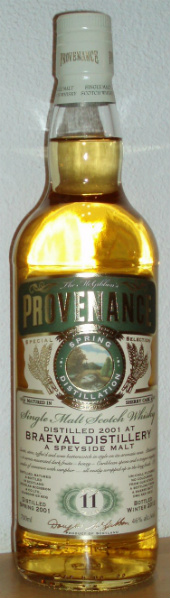
Braeval 11yo 2001/2012 (46%, Douglas McGibbon, Provenance, Spring/Winter, Sherry Cask, DMG 9312)

You don’t have to polish your glasses. So soon after the other Braeval and Braes of Glenlivet Whiskies I reviewed, yet another Braeval graces these pages. Yes, another independent bottling of Braeval. This should come as no surprise since the owners Pernod Ricard (Chivas Brothers) don’t do a lot with this brand either. More or less the same situation as Strathisla, which is owned by the same company. It seems to me all their energy flows into The Glenlivet and Aberlour and not a lot of faith exists in marketing Single Malts from these lesser known distilleries. Bacardi (John Dewar & Sons) which owns Aberfeldy, Craigellachie, Aultmore, Macduff, and Royal Brackla, have recently decided to market the Whiskies of all their distilleries with an age statement. Lets hope Pernod Ricard will follow suit.

Braeval 11yo 2001/2012 (46%, Douglas McGibbon, Provenance, Sherry Cask, DMG 9312)Color: White wine. Not too pale.

Nose: Sweet, Bourbony and malty. Sweetish and pretty clean. Vanilla and pleasant oak. Spicy and leafy. Whiffs of latex paint and even slightly perfumy. Sometimes even vanilla ice-cream and Cappuccino. Becoming grassy over time, combined with a breath of fresh air. Not very outspoken though. 46% ABV is a decent strength, and since all aroma’s aren’t that outspoken I guess this didn’t benefit from reduction. Still a very agreeable nose.

Taste: Spicy and slightly (new) woody. Sweetish and lots of vanilla. American oak Sherry cask? Good balance. Good strength, but I’m sure this would be better undiluted, maybe that way it was too hot or just to plain strong for some. After some time the new wood and leafy note stays and combines with a little bit of barley with vanilla, mocha and vanilla ice-cream. Fresh forest after a rain shower, including the wet forest floor and mushrooms. Nice, innocent and anonymous.

Unlike both other examples of this distillery I reviewed before, this one has been reduced to 46% ABV. This example is also from this very decade and a bit younger than both others, so what does that do for this distillery? Well hard to tell actually since this isn’t a very complex malt. As all other Braevals, this is pretty good, yet this example is a bit anonymous. Reduction places it into the path of maybe less experienced drinkers, who still are a bit cautious with cask strength Whisky.

Points: 82

Strathisla 12yo (40%, OB, 2013)

Old Strathisla 12yoStrathisla is famous for producing one of the best Sherried Single Malt Whiskies ever. Just have a go with some nice examples from an independent bottler with distillates from the sixties and seventies. Gordon & MacPhail have a huge range of Strathisla’s from those days that have long gone by, but also a lot of other independent bottlers have similar Sherried bottlings. Those Strathisla’s can easily compete with the best Longmorns and Macallans from the same era. Nevertheless, the owners of Strathisla themselves have never done a lot with the brand. In fact, only a 12yo has been readily available and the occasional 25yo. When visiting the distillery and additional 16yo can be bought, but that it! For a long time Strathisla was bottled in a flat dark brown, screen printed bottle, but since 2013, a new dumpy bottle was released. Now we would like to know if the Whisky has changed as well, since the ABV has been lowered to 40%. We also would like to know if the range will finally be expanded. Chivas Brothers (Pernod Ricard) are the current owners of Strathisla and they could do lots more with Strathisla like they are doing with two of their other brands like The Glenlivet and Aberlour.

Strathisla 12yo (40%, OB, 2013)Color: Light orange gold

Nose: leafy, malty and dirty. Putty and highly aromatic. Hints of orange skin and vanilla. Creamy Whisky. Fresh cut grass and damp potting soil. Tiny hints of wood and tar and bitter-sweet chocolate. Smells of caramel coloring. Very funky altogether if you ask me.

Taste: Not really thin, but tastes watered down. Still warming though. Licorice. Sugar water sweetness and a distant hint of Sherry, killed by water and (burnt) sugar (coloring). Tree sap and bitter wood. Toasted wood. Hidden toffee-like sweetness. Again lots of notes I can only imagine coming from caramel coloring. A short warming boost in my throat, then a finish with not much staying power.

In essence this is the only official Strathisla on the market. It replaces another Strathisla 12yo, that was around for a long time. It is brought down to 40% ABV, and is still the only version released by the owners. Why not let it stand out more? Why water it down even more, and kill it with E150? Strathisla can be such a great brand, and there is so much you can do with it, so why even bother releasing this 12yo, which is pretty anonymous at best? Fire some managers for incompetence and take a look around and see what is already achieved by Bacardi with Craigellachie, Aultmore and Aberfeldy, with even two more in the pipelines. If that’s no inspiration, what about the achievements of Gordon & MacPhail with Benromach? Just do it people!

Points: 76 (I liked the screen printed bottle better)

Spey 12yo (40%, OB, Selected Edition, Virgin Oak Finish, 8.000 bottles)

When the Speyside distillery was sold to Harvey’s of Edinburgh in 2012, the new owner changed the name of the Whisky to “Spey” and by 2014 released three new versions: Tenné, this 12yo and finally a 18yo. I wasn’t very enthusiastic about the Tenné. Let’s see if this 12yo is any better. The Tenné is a rather young Whisky, finished in Port pipes. The 12yo is…well, 12 years old and was given a finish in new wood. Strange enough this older Whisky was given a lower ABV than it’s younger sister Tenné. 40% ABV compared to 46% ABV. For me that is usually not a good way to start…

Spey 12yo (40%, OB, Selected Edition, Virgin Oak Finish, 8.000 bottles)Color: White wine, much less color than pictured here.
Nose: Fresh, citrussy with hints of smoke (probably from toasted wood). Fresh oak and toasted fresh oak. Clean but also a dirty edge to it. Mocha and milk chocolate. Powdered sugar. Maybe simple but well-balanced. Leafy and dry grass. No off notes whatsoever. Shows a lot of potential, but, it’s already 12yo and it smells much younger. Young but without the typical smell or even hints of new make spirit. Hints of pencil. Not only shavings of the wood, but the whole pencil with the painted wood and the lead. Very interesting and surprising compared to the Tenné. Seems to let aroma’s pass in layers.

Taste: Sweet and barley. Sugary sweetness, which matches the powdered sugar from the nose. Malted barley. These two notes make up the taste. Again this seems very young without even hinting at new make spirit. (I recently reviewed The Glenlivet Founder’s Reserve, thát has the notes of new make spirit). Clean and grainy spirit. Sweet and vegetal. Has some staying power. Virgin oak and tree sap, reminiscent of ripping a branch of a shrub or tree. Although low in ABV, this Whisky doesn’t seem to suffer from it. Hints of sweet apple juice, freshly pressed at home, and a flowery note, Jasmin.

I can’t put my finger on it, but I like this. The sugar levels are just in check. It is no high-flying Whisky, but it has some lovely aroma’s to it. This time, I won’t even ramble on about the low ABV. This does nicely at 40%. Fruity and likeable. Surprising stuff. Who would have thought this about a Whisky from a young distillery, which found it necessary to finish its aged Whisky in new oak. Interesting. Almost ten points more than the younger offering called Tenné.

Points: 82

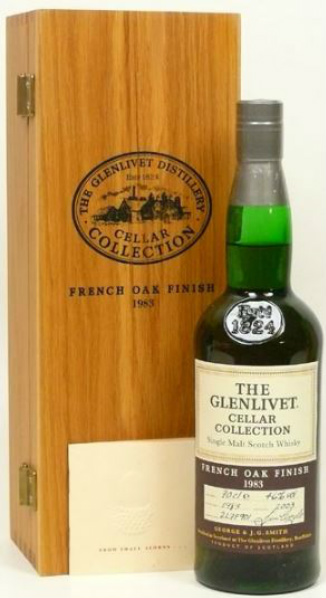
The Glenlivet 1983/2003 (46%, OB, Cellar Collection, French Oak Finish, 2L7F901)

The Glenlivet “Founder’s Reserve” I just reviewed, was actually quite simple and a bit disappointing. It is a very, very young Whisky, which in my opinion doesn’t show how good a Glenlivet can be. I rummaged a bit through my personal archive and unearthed another Glenlivet to review. So lets forget about the new one for a moment and let’s see how an old Glenlivet will do. Here we have a Glenlivet that has some 20 years behind its belt. 17 years in Bourbon and Sherry casks and a further 3 years in lightly toasted French Limousin oak casks. Not all casks were used for this bottling (quality control), so only 8.000 bottles were produced. A true limited edition! This review will probably show that this was 20 years well spent, time nobody seems to have these days since demand skyrocketed. We are told not to judge a bottle by its NAS, but in the old days the same people told us we hád to judge the Whisky by its AS (Age Statement) or Vintage. So without further ado, I give you a Glenlivet from their Cellar Collection, a 1983 French Oak Finish bottled in 2003, when age was still a benchmark.

The Glenlivet 1983/2003 (46%, OB, Cellar Collection, French Oak Finish, 2L7F901)Color: Amber gold.

Nose: Surprisingly fresh but also Sherried and certainly dusty. Elegant with silky wood notes, and some added depth of toasted wood and (partly burnt) caramel and slightly too sweet toffee. Lots of aroma. Flour. Funny enough, and I’m most probably not objective here, there is a silky wood note that seems to lie on top of the nose, not as much integrated as the deeper woody notes. Very nice to nose a Whisky that has several kinds of different wood aroma’s. With the toast comes candied fruits, adding to the depth of the Whisky. Vanilla and Ice-cream notes from American oak, so most definitely a mixture of Bourbon and Sherry casks.

Taste: Creamy Sherry and yes, lots of vanilla. Distant sweet Moscatel Wine. Very smooth. Even though this has seen two or three kinds of wood it is not overpowered by it. Sometimes the wood is hardy noticeable. In the back of your mouth some nice and sweet aroma’s form, but only if the Whisky is tasted with big gulps. Dusty on the palate as well, and alas, alas, a rather short finish.

I’m not sure what the French oak finish brings to the blend of Bourbon and Sherry casked Whisky. Sometimes you do get an un-integrated silky wooden note that lies on top. So maybe it is obvious what the finish did for this Whisky. I’m amazed this turns out to be 46% ABV. It seems more like 40 or 43% ABV. Maybe this should have been bottled with a higher ABV? Good stuff nevertheless. On paper one of the more complex Glenlivet’s from the Cellar Collection, but my mouth tells me otherwise. The aroma’s of this bottling are silky and deep and for some may lack a bit of fruity zest. Highly drinkable though and something you can enjoy properly.

For reasons only science can wholly explain, I followed the Glenlivet up with the Blackadder Lochside I reviewed earlier, and although the Glenlivet is also good, the Lochside blows it right out of the water, so when spending money at auctions I would know what to do!

Points: 86

The Glenlivet “Founder’s Reserve” (40%, OB, 2015)

Just like the Berlin wall, old, well-known Whiskies that have been around for ages are coming down. We already see the manifestation of NAS Whiskies, you know the ones without the pretty numbers on the label: 10yo, 12 yo et cetera. It has recently been announced, by Pernod Ricard, that not only the Glenlivet 12yo will be discontinued, but also Aberlour 10yo. George Smith Founder of GlenlivetThis is moving in the wrong direction people! The Glenlivet 12yo has already been replaced with the new Founder’s Reserve, a highly original name taken from the old 10yo expression of The Balvenie. The Glenlivet already dropped the age statement for their highly popular Nadurra range, and are wooing the consumer to stay with Nadurra, by adding new versions. Bourbon, Oloroso and the next step will probably be a peated version. Other recent experiments were the NAS Alpha, and the NAS Guardian’s Chapter. We all know where this is going, don’t we. Lot’s of distillate will be put out as young NAS Whiskies, and the rest will be aged a prolonged amount of time to be bottled as (highly expensive) Whiskies which will still have an age statement. Yes, we should judge a Whisky by its taste and we will, and not by its age statement. Still, the super premium Whiskies will have an age statement, because age sells, people. Another experiment done by The Glenlivet is the release of an 11yo single cask for 300 Euro’s in the Netherlands, called Bochel (Hill). How far can you go? Let’s get back to the beginning, shall we? I already reviewed The Glenlivet 12yo, so we have a clue what that was all about. Now let’s have a look at its replacement. The NAS Founder’s Reserve…

The Glenlivet Founders ReserveColor: Light citrus gold.

Nose: Barley and aged spirit. Raw and yeasty. A big part of the beginning of the nose is made up of new make spirit. Apart from…new make spirit, I have never come across a Whisky that is so upfront and young. Obviously young. The new make note disperses and makes room for plain white oak. Does have some traits of Bourbon casks, but also of virgin oak casks. I hope this is still aged in casks, could be stainless steel with bits of wood thrown in. Sweet barley, yeast and oak. That’s more or less it with this Glenlivet. On top salty and estery. Well this is your wormhole that offers a peek of NAS Whisky. I guess a lot of entry-level, inexpensive Whisky of the future (and you know, the future starts now), will be like this. Perfumy and floral, latex paint with hints of mocha and still a promise of sweetness.

Taste: Sweet water. Sugary. Very, very, un-complex. Not even a lot of wood now. More (oak and pencil) wood in the nose. This is sweet balanced sugar-water with vanilla pudding and…yes, what else? Weak green, vegetal notes. In the background again the specific taste of new make spirit. This is an aged Poiteen! Short finish (obviously) and in my opinion too young, but still interesting…well, not really actually.

A long time ago, this would have been used internally to give the marketing people an insight into production methods and especially how Whisky ages. Who would have thought that today something like this would be actually bottled, and better even, replace the standard 12yo. Do I mean The Founder’s Reserve is bad? No, not at all. I love Single Malt Whisky and this is still is well made modern Single Malt Whisky. It’s just so obviously young and simple. They should have named it Baby Glenlivet. Benromach actually have replaced one of their NAS Whiskies with one with an age statement and calls it their 5yo. I’m curious how that one will compare to this one. I’m curious how these will compare to old 5yo’s (Tomatin, black label) and 8yo (Aberlour, cube bottle), but I’m also curious to see how the public will choose between NAS Whiskies and Whiskies with a low age statement. Interesting times ahead!

Points: 75

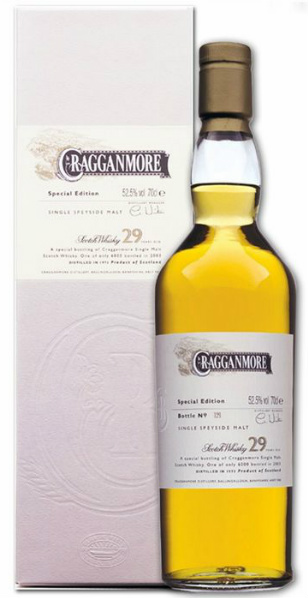
Cragganmore 29yo 1973/2003 “Special Edition” (52.5%, OB, 6000 bottles)

Cragganmore, and an old Cragganmore it is. Last year Diageo released a 25yo Special Release from 1988. That one costs a pretty penny, and is almost sold out by now. Nevertheless these days people throw themselves at anything that looks or feels like a super-duper premium bottling. However, the short row of special editions of Cragganmore was started back in 2003, by this 29yo from 1973. Yes a distillate from the seventies, and distillates from the seventies are usually even harder to come by. Nevertheless, this 1973 Cragganmore is still not very hard to get ánd even at a lower price than the aforementioned 1988 special release. What is happening here? Is the 1988 way better or has everybody simply forgotten about the 1973?

Cragganmore 29yo 1973/2003 Special Edition (52.5%, OB, 6000 bottles)Color: Gold.

Nose: Waxy and floral but rather closed. Quite light, delicate and vibrant. Old smoke and toast. Distant yellow fruits with a hint of tar. Nice combination. Steam age Whisky. Hints of barley and (floral) soap, but also hints of wood (old furniture) and even a tiny hint of pencil shavings. Hints of soft white pepper and some discernible sweetness. Dusty, fruity and slightly waxy, but I have to say it again, very closed.

Taste: Tropical fruits and quite sweet, like other bottlings from the seventies. Just remember Caperdonich and Tomatin. Cannabis and dish-water. Old papers and slightly cardboardy, which in this case isn’t a bad thing. Nice combination of cream and tired oak. It definitely tastes better than it smells. Don’t get me wrong, it smells good (albeit closed), but it tastes better. The finish is announced by some oaky bitterness, which fits the fruity waxiness perfectly. And old gent of a dram. Old and brittle but lots of stories to tell. You never know with old stuff like this, but to me, this seems to be exclusively from old Bourbon casks.

I am not Mr. Water. I hardly use water when tasting Malt prefer movement. Just let it move around in my glass, airing, oxidizing of you prefer, maybe warming it up in my hand a bit. That does the trick for me. However, if I encounter a closed Malt, then, and only then, water can be a nice experiment. I’m such an anorak, that I don’t even use a pipette, but I use a syringe. (Smaller droplets giving me more control). I know it’s sad, but I do have a life, so don’t worry about me. Well after some droplets and some more droplets, water didn’t open up the nose a lot. I did get more floral and toasty. It did do wonders for the taste. It got better, with more cannabis, more pencil shavings and more yellow sugared fruits. The toasty bit crept in here too. Lovely stuff, a bit brittle (apart from the body), so be carefull. So in this case, do try some water. Yes it needs some work, but it’s also quite an experience.

I haven’t tried all of the other special releases of Cragganmore but I can’t imagine them to be better than this one. Sure, age doesn’t matter (or so they say) and distillates of the seventies don’t have to be better than more recent distillates. However, this 1973 does come across as a very old Whisky, meaning it does smell and taste like something that can’t be made like this anymore. To “prove” or “un-prove” my point here is a review of a more modern Cragganmore, that did manage to fetch a higher score…

Points: 87

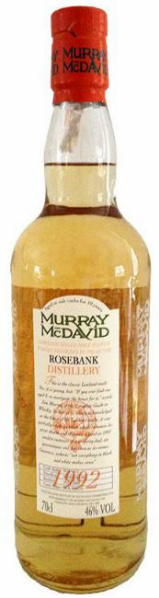
Rosebank 10yo 1992/2002 (46%, Murray McDavid, Bourbon Cask, MM1413)

Long time no Rosebank. It has been a long time since I reviewed a 1990 Rosebank, bottled by indie giants Gordon & MacPhail. That one was pretty good, it scored a healthy 88 points. Time for another go at Rosebank. This time a 1992 from Murray McDavid, remember them? By the way Murray McDavid bottled two different Rosebanks, both registered as MM1413. (The other one is a 1989, called Mission V). This 1992 is something of a farewell dram since Diageo decided, in it infinite wisdom, to mothball the distillery in 1993, never to work again…

Rosebank was founded in 1798, although some sources mention other years like 1840 and 1773. In the end, Rosebank was sadly mothballed in 1993 by Diageo which preferred Glenkinchie for its Classic Malts portfolio. And why not, nothing wrong with Glenkinchie I say. I’ve tried some very good Glenkinchies, and even reviewed a very good one, a 1987 bottled by Signatory. But why did Rosebank have to go? From an anoraks point of view, bad move since Rosebank distilled some pretty good spirit that turned into some pretty good Whisky if you ask me. Eternal shame.

Rosebank 10yo 1992/2002 (46%, Murray McDavid, Bourbon Cask, MM1413)Color: White wine.

Nose: Softly buttery and citrussy. Full aroma and nicely fresh. Nice acidity and sure some barley. Quite clean. If this isn’t your typical Lowland style, than nothing will be. Highly aromatic with soft wood and a nice grassy feel to it. Good spirit and even though the cask seems not that active (due to the lack of color), the spirit is decent and gentile, and the cask did enough to preserve that, and adding some vanilla and cold creamy butter to it. Lurking in the distance is actually some hints of new make spirit. Nice elegant (cedar) wood with milk chocolate and coffee with creamy notes (or coffee pudding).  Nice vegetal notes as well. Easily recognizable as a triple distilled lowlander. The big aroma is Rosebank from a good cask. Just compare this to the 1979 Rare Malts version (which I know is much higher in strength, but that would be missing the point).

Taste: Slightly toasted wood and creamy again. This starts with a bitterish and sappy oak attack (with some cardboard and malted barley), but that dissipates quite quickly to show it’s even more malty and grassy side. Also coffee and milk chocolate return here. A tad drier than expected and the body is more about new make spirit than the nose. Still not much though. And yes on the palate we can find the vegetal side. The bitterness of the wood stays on throughout. The whole is very nice, and don’t forget about the refreshing citrussy note!

Classic lowland and even though a fairly young Rosebank from a Bourbon Cask, this is clean and such a typical example of Lowland and Rosebank especially. Even this simple Rosebank shows what a mistake it must have been (looking at quality) to close this distillery down. Thank you very much. This particular expression reminds me of some Bladnochs, so I hope that distillery will be saved before it’s too late and someone turns it into their summer home of some sorts.

Points: 86