Springbank 10yo (46%, OB, 10/342)

Why not try another Springbank. This one does have an age statement. It’s 10 years old. Just like the “CV” I reviewed earlier, this one was bottled (late) in 2010.

Springbank 10yo (46%, OB)Color: Pale orange gold.

Nose: Clay and spicy. Fruity, creamy and nutty, almonds. Toasted wood. Smallest hint of coal and old dried orange peel. Compared with the CV this definitely has seen some ex-Sherry casks. Nice nose with lots more balance than the CV. Here we also have a papery note. Not only fruity, but also floral, more of everything and a lot extra. Floral part smells a bit like soap, and after that the fruitiness shines through. Lovely.

Taste: Clay, balanced and pretty sweet, with a small woody bite. Nutty again and definitely some peat. Good stuff this is, maybe a bit too heavy on the sugared fruits. Definitely sweeter than I expected. Toffee and cream, and where the nose and the CV have some rough edges, this 10yo if far more polished. Velvety. Good stuff, but I would have liked this even better if the taste matched the nose a bit more. Hints of petrol, we’re moving in the right direction again. Sweet and sweat. Lovely.

Unique stuff and there is nothing like Springbank. Yes this may not be for everybody, so if you are the regular hotel bar drinker or are only into Glenlivet, Glenfiddich, Glenmorangie and Balvenie, this may not be for you. You might not like this, but if you aren’t, this is something special. You must try Springbank. Maybe not the best expression, but for this price and with this heritage you can’t go wrong. Probably one of the best 10yo around (with the Benromach 10yo).

Points: 85

Springbank “CV” (46%, OB, 10/12)

What does 10/12 mean, you might ask? Well, usually there are codes printed on the back of the front label, which you can read it through the glass. I was told the digits before the “/” depict the year of bottling, and the digits after the “/” is an operation number for that year, which in this case is a bottling run. Here 10/12 stands for the 12th operation of 2010, probably in January. In this case a bottling run. But also a marriage of casks or re-racking of casks get an operation number, so it’s not only bottling runs that get an operation number. There was at least one other bottling done of the Springbank CV in 2010 and it’s code is 10/123, probably somewhere from march through may of 2010.

Springbank CV (46%, OB)Color: Pale gold

Nose: Funky, raw and oily with added citrus notes. Reminds me of Kilkerran. Clay and yellow fruits. When concentrated, peppermint. Nice fresh oak, tree sap. Lemon curd and overall very intense and young aroma’s. Hint of unripe pineapple with vanilla and distant smoke. The wood also gives a nice spiciness to it, given some time to breathe. Good nose.

Taste: Less oily and seems peaty. Young, not completely balanced yet. peppery, paprika attack. Again this reminds me of Kilkerran. Oily and hidden sweetness. Traces of cardboard and oaky bitterness. It’s youth comes through in the simpleness of the dram, meaning that it’s not very complex and I was quite surprised by the weakish finish.

The initial mouthfeel is nice, so is the body. The nose shows a nice potential. Good Whisky just too young. Whisky like this needs some age to make it to the finish. I like Springbank and even here a lot is working for me, just the finish, thin, paper and watery, and that from a Whisky that was bottled at 46% ABV. Quality stuff, just bottled to early.

Points: 84

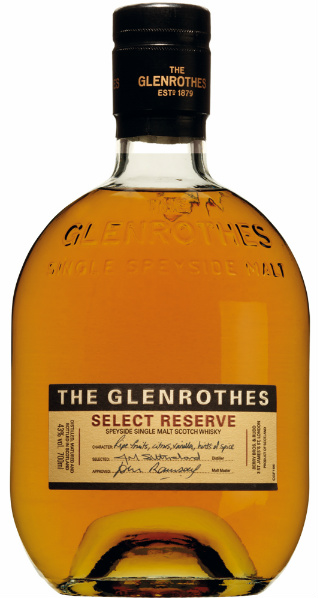
Glenrothes “Select Reserve” (43%, OB, Old Label, Circa 2011)

Yes another cannon ball bottle with Glenrothes Whisky in it. This time no vintage, but yes, we do have another new Whisky without an age statement. Probably young stuff, also since the Whisky isn’t very expensive. Nope not expensive at all. The bottle still has a cork in it albeit a plastic one. Nothing wrong with NAS Whiskies, just have a look at any Kilkerran for example, and the plastic cork is far better suitable for its job than a natural cork, with all is problems, like breaking whilst opening the bottle. I just hope the solvents in the soft plastic of the cork don’t mess with the taste of your Whisky. I just hear the industry whispering in the wind that Whisky wasn’t meant to be kept at home for a long time. Ha!

This Whisky costs about the same as The Glenlivet French Oak I reviewed last. That Whisky does have an age statement: 15 years old! Lets keep that one in kind whilst reviewing this Glenrothes.

Glenrothes Select Reserve (43%, OB, Old Label, Circa 2011)Color: Light gold

Nose: Malty and lots of vanilla and cream. Marshmallows. Dusty, slightly grassy (dry) and in the distance a wee bit of white pepper. It’s also fruity but I can’t get my finger on it, what kind of fruit is actually here. You know it’s fruity, but it seems to borrow fruity elements of loads of different kinds of fruit. Hints of dry paint and Macchiato Coffee.

Taste: Light, fruity and thin. Sweet. This one is quickly gone, yet the finish is warming and the fruit part of it is pleasant. Sweetish and creamy. Little bit of banana and lemon pudding. Definitely malty. I would have never guessed this is 43% ABV.

For a middle-of-the-road dram, I liked the nose of the Glenlivet 15yo French oak better. On the palate this Glenrothes is less interesting and a bit soft. The finish is too short too. Comparing this with the Glenlivet 15yo French Oak Reserve, even though that one is less fruity, it was more exciting due to the backbone the oak gave it. This Glenrothes is softer and fruitier but even though it is all that, it isn’t more pleasant. It is slightly less balanced and a wee bit weaker (also in the finish), so I score this a point below the Glenlivet French Oak Reserve.

Points: 81

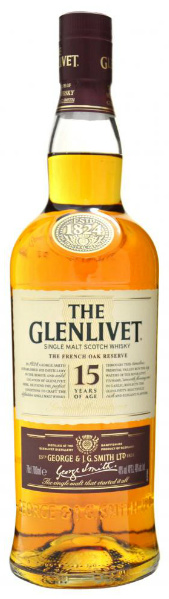
The Glenlivet 15yo “French Oak Reserve” (40%, OB, 09.11.2009)

After the oldie from 1975 and the two recent “special” releases, Alpha and Guardians Chapter, here we look into a more “normal” release by The Glenlivet. This is a 15yo standard release Glenlivet, where the tipple came in contact with some French oak. French oak is known for impairing a slightly more tannic flavour to Whisky, whereas American oak usually gives off a more Vanilla or Toffee note. I expect a very easy drinkable Whisky with maybe a little “bite”.

Glenlivet 15yo "French Oak Reserve" (40%, OB)Color: (Light) gold, slightly pink?

Nose: Altogether light and slightly malty. Nice hints of wood. A little bit of toffee, vanilla and sweet apple. Very middle of the road, but also decent and pleasant. It smells like a good daily drinker. A little bit of dust on wood and nuttiness. Picture dust floating in the air in the sunlight in a room with unpolished wooden furniture. Also a touch of oil from tangerine-skins. Nothing out of the ordinary for a decent Single Malt Whisky, yet nice nevertheless.

Taste: Sweet, creamy with toffee and vanilla. A little tannic bite from the wood. Otherwise again very pleasant and very middle of the road. Slighty malty and nutty. Daily drinker written on its forehead. Slightly bitter on the finish, like licking walnut skin for a moment. Obviously from this particular type of oak, French you know.

A very reasonably priced 15yo, which offers a middle-of-the-road experience, with a little bite from the French oak. Pleasant but hardly entertaining, good but nothing special. Especially since it has aged for 15 years, in a time where all Whiskies are released without an age statement. It probably sells a lot, and why not. There is nothing wrong with it and it isn’t a bad Whisky either. Bang-for-your buck material, or a starters Whisky at 40% ABV  if you are interested in the effect tannins can have from French oak. Good but a bit boring (for me).

Points: 82

Agostón Garnacha & Syrah 2013

Bodegas Virgen del Aguila, Paniza Agoston-Jabali lies at the foot of Iberico mountain range in Carinena (a DO), in north-east Spain. The Ibérico mountain range has a wide variety of landscapes and eco-systems. Half is used for vines, the other half is still forest or rocky mountain slopes

Agostón was first made in 2008. The maker calls it “daring, young, fruity & loved by everybody” All wines in this series are blends of two grape varieties. Here we’ll review the “yellow” one that is made with Garnacha and Syrah. The “red” one is made with Tempranillo and Cabernet Sauvignon. Both red wines are true 50/50 blends. The “green” one (a white Wine) is a blend of Viura and Chardonnay and last but not least a rosé Wine that has an orange label is made with Garnacha and Cabernet Sauvignon. As can be seen, all are blends of a “typical” Spanish grape and an International grape. Very daring and modern…

Agostón Garnacha & Syrah 2013Color: Deep red with purple.

Nose: Fruity and jammy. Very modern and accessible. Not very complex. Extremely likeable, like one likes a lemonade. Bold fruit, cherries, with cream and vanilla. A little bit of dairy, at first some acidity but after moving the wine around a bit in the glass, some typical notes from Syrah emerge. Obviously grapes that have seen a lot of sun. Warm but not dry or dusty. The red and black fruits are pretty aromatic.

Taste: Again very fruity and jammy but here the thick fruits are helped along with some nice acidity. Hardly any tannins to be found. I can’t imagine this has seen wood, although a little bitterness is there, also some vanillin seems present. Although very easily drinkable it will hold the fort when combined with cheeses and meats. Will do nicely too on its own.

Actually a very likeable and very nice wine, that has won some prizes along the way. Still I feel it is a very modern wine. Taylor-made for the modern, fast-forward and demanding market. No fuss, just grab-n’-buy, or buy-n’-drink or drink-n’-forget. Very fruity and just needs the drinker to sit back and enjoy himself/herself. It will not terrorize your conversation or hinder you while apping away on your phone. Nothing overly complex, no talk about tannins or how long you should put it in your cellar. Nice stuff though and not too expensive to boot. Good pick for bars and restaurants. Hip!

Points: 81

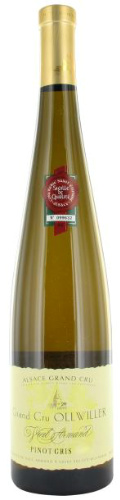
La Cave Du Vieil Armand Grand Cru Ollwiller Pinot Gris 2007

Ollwiller, which is a Grand Cru since 1983, lies in the municipality of Wuenheim (Close to the famous Grand Cru of Rangen near Thann), is named after the Château d’Ollwiller that was built in the 12th century A.D. The Ollwiller castle is the former estate of the Bishop of Strasbourg, who was behind the development of the vine in the thirteenth century A.D. The castle is now owned by the Gros family since 1825, cowinemakers and co-founders of the Cave of the Old-Armand.

The vines are situated in a dry microclimate with only 450 mm of rain per annum. The vines are sheltered from the wind by the Hartmannswillerkopf a.k.a. Old-Armand where some heavy fighting in World War I took place, which also destroyed all the vineyards. Its slopes face south-east, with maximum sunshine on an altitude between 260 and 330 m. The soil is composed of conglomerates (loosely cemented heterogeneous material) and marl, reddish sandy clay and gravel.      

La Cave Du Vieil Armand Grand Cru Ollwiller Pinot Gris 2007Color: Light gold with a slight pink touch

Nose: Full on everything, overwhelmingly aromatic. Expect nice sweetness, acidity, fruit, white grapes and also something flinty a trace of sulphur, although it isn’t in the terroir. Marl is. Yellow fruits like white peach (lighter and more elegant compared to the more “common” peach) and dried apricots and pear. Also tighter fruits like white grapes. All of this is in the background adding to the complex nose. This is so much more than just a fruity wine. Unbelievable how well the sweet and the acidity blend together, and don’t forget this is just the nose we’re talking about.

Taste: Thick and syrupy, but not very sweet. Again just like the nose, very good balance and all tastes blend well together. Hints of peach yoghurt, but also a well-defined depth of dried apricots. Fantastic stuff this is. Not as mineral as I’ve expected, but great acidity to keep it in check. Don’t get me wrong it’s not very sweet nor is it acidic, it’s just perfect, although I have to say that the taste is less complex than the nose is.

This gem will do with a lot of foods, yes, we can mention de usual suspects like salads and fish, coquilles etc. But this one is excellent on its own. Sitting back with a nicely chilled “Old Armand” is the way to enjoy it for me. This should only be sold in Magnum sized bottles. Wonderful, This is again an example, why I love Alsatian wines so much.

Points: 90

This review is dedicated to Yvonne and Joost. If you can read dutch please check out their website about Alsatian Wines.

Macduff 32yo 1980/2012 (50.0%, The House of MacDuff, The Golden Cask, Cask CM 180, 155 bottles)

Macduff 32yo 1980/2012 (50.0%, The House of MacDuff, The Golden Cask, Cask CM 180, 155 bottles)Third Macduff on these pages and just like the other two, this is again an oldie. The oldest one was from the sixties, 1967 to be precise, just their fifth year of distillation. The second one came from the seventies, 1972, now we have one from the eighties (1980). So will the next one be from the nineties? At the rate (and prices) old Whisky is selling these days it probably will…

Color: Gold

Nose: Waxy and very fruity. Powdered yet not dusty. Slight hint of pepper with lots of vanilla in the mix. Some yellow fruits, white grapes, apricots and peach. Next some mocha, toffee and caramel are in there, giving balance. Later on, in the nose emerges a slight whiff of wood with dry roadside plants. Overall fruity and sweet-smelling. Good balance and very appetizing.

Taste: Strong and fatty. Cardboard and the taste is also pretty fruity. Vanilla with some sugary sweetness. Licorice and slightly bitter, the wood plays its part. Pretty hefty stuff. Not as complex as I would have hoped, but still pretty decent stuff altogether. The Whisky has a good start and a very nice body, the finish has a lot of staying power (toffee) and is quite warm.

This is a pretty good Whisky. It has a pair of balls and some nice sweet yellow fruits throughout. The finish is also decent, but for such and old Whisky I would have expected some more complexity.

Points: 87

Thanks Erik for the sample!

Bunnahabhain “Moine” 5yo 2008/2013 (46%, The Ultimate, Peated, Bourbon Barrel #800011, 341 bottles)

Just the other day, Jan from Best Shot Whisky Reviews reviewed a nice 5yo Islay peated whisky, so why shouldn’t we do just the same. Why? Because we can! Next up a Moine. A Moine say you, yes a Moine, the peated Bunnahabhain. This is bottled by dutch indie bottlers Van Wees under their Ultimate Label. Unchillfiltered and uncolored. Van Wees already bottled quite a few of these Moines, and if you are interested, get one quick since the latest expression bottled in 2014 costs a tenner (in Euro’s) more than the earlier bottlings…

Bunnahabhain Moine 5yo 2008/2013 (46%, The Ultimate, Peated, Bourbon Barrel #800011, 341 bottles)Color: Very pale straw yellow and/or greenish. Almost colorless.
Nose: Fat and fruity peat. I certainly have smelled this before. Than more peat and after that even more peat. Although this has lots of peat, I wouldn’t call this “heavy”. It has some smoke obviously, but you never know, they don’t always come together. The smoke part is light, as is the wood and toast. The fruit plays a big role in this Whisky as does its youth. Sweet licorice and spice. Black tea leaves and green plants. Given some time, it becomes less fatty and gets more floral even (and soapy) and the peat gets more meaty. Little bit of bonfire and coal dust. Not bad, not bad at all.

Taste: Sweet with delicate smoke and peat. Cardboard, plywood and sugar. It’s an almost lovely peated whisky lemonade. Extremely appetizing. Fern and tree sap. After several sips, you get the (thin) sweet watery feel, with tasty peat, but it is highly un-complex. Finishes on citrussy peat and a little bit of bonfire with ashes.

These Ultimate Moines are dirt cheap and sell well, but are not very highly regarded. Yes, at first it is peat peat peat and it looks like a vodka that has aged for a week in stainless steel with a blade of grass thrown in for color. But just forget about your typical peated Islay Whisky. It’s not a heavy peated Whisky, with sea spray and Iodine. Nope, it’s a more easily drinkable, fruity and sometimes floral, modern Islay Whisky. It fits right in with the newer easy drinkable and easy accessible expressions of the big boys like Laphroaig Select, Bowmore Small Batch and many Caol Ila’s. Those are easy drinkable too, but this has more peat to it and still is like a peated lemonade. Don’t expect a lot of complexity. It didn’t do a lot in the cask except for marrying its flavours, and its only 5 years old. But who cares, this is to drink and lie back, it’s about enjoying life. Peat reinvented and very easy drinkable. No high marks here, but still I enjoyed it a lot, and isn’t that the most important?

Points: 82

For fun, I did a head to head of this Moine with the Kilchoman Spring 2010, and found the Kilchoman at 3yo to be more balanced, smokier, less sweet yet more interesting and funkier (the Oloroso Sherry finish probably did that). More happening, more flavor. It’s more of everything actually.

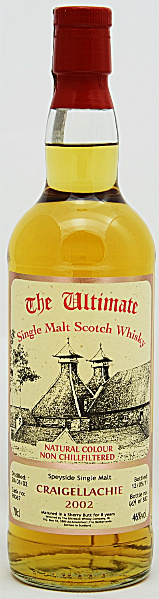
Craigellachie 8yo 2002/2011 (46%, The Ultimate, Sherry Butt #90067, 882 bottles)

Craigellachie was founded in 1891 and designed by Charles Doig. The first spirit is distilled not earlier than in 1898. Smooth sailing from there, with some minor changes in ownership. In 1964 the distillery is hauled over and the stills are doubled taking them from two to four. In 1998 Craigellachie, Aberfeldy, Aultmore and Royal Brackla are sold by UDV (now Diageo) to Bacardi (Martini). Its closest neighbour is The Macallan.

More than two years ago I reviewed one of my own bottles a Craigellachie that was distilled in 1982. Today we’ll have another go at Craigellachie and this time one that was distilled 20 odd years later. The Craigellachie at hand is a mere 8 years old, and was matured in a Sherry Butt.

Craigellachie 8yo 2002/2011 (46%, The Ultimate, Sherry Butt #90067, 882 bottles)Color: Light gold

Nose: Malty and quite sweet-smelling. Hot sugar solution. Toffee, caramel and most definitely some vanilla (American oak?). Also a hint of mint and some elegant (old) oak. Next to that some fresh air and herbal traits. Dried grass. The wood changes a little into the smell you get when you are sharpening a pencil, but also cask toast. Probably a Refill Butt that once held Fino Sherry. The sweetness that was there in the beginning dissipates a bit to let those woody and drier notes to display themselves some more. After a while a hint of licorice and lemon curd.

Taste: Malty again, and somehow it doesn’t taste ready, not as balanced as the nose is. It is underway yet not finished. Small bitterness and also some paint notes. The maltiness and oak hide the sweetness that is absolutely there. Butter cake and a touch of honey. Given some time the sweetness emerges better but the whole gets more balanced by a creamy note and milk chocolate. The finish is quite long and adds a bitter burnt note that wasn’t there before. It adds to the character and balances the (late) sweetness. Interesting.

I usually wine that a Whisky was reduced too much. This one yielded almost 900 bottles, so this must have been a Whisky that was high in alcohol. It was reduced to 46% ABV, yet it still carries a nice punch and I’m guessing the flavours are better displayed at this strength than it would have been at Cask Strength. Lovely and honest Whisky, easily drinkable and a nice addition to a lot of official bottlings you might own in the same price-range.

Points: 84

Bowmore Small Batch (40%, OB, 30.000 bottles, 2014)

Benefitting from the success of the Tempest (Small Batch) series and especially from the instant hit The Devils Cask (Small Batch) was. Here comes a new Small Batch release from Bowmore. One without an age statement and considering the usage of first fill and second fill casks, this should be very akin to the tempest series. This Small Batch however, is reduced to 40%, has no age statement and costs next to nothing, so what to expect from this new-born release?

I’m still expecting quite a lot since I really like how the newer 12yo’s are turning out to be. The only beef I have with that one is the reduction to 40%, whereas I believe 43% or maybe 46% would have made this already great Whisky into something more stunning. However, the 12yo is very nice and this Small Batch fits nicely besides the 12yo and several other expressions from Bowmore in the group of entry-level Islay malts without overpowering peat. They leave that to Ardbeg, Laphroaig and Lagavulin, although I feel even some of these are churning out more and more, less hefty Whiskies too…

Bowmore Small BatchColor: Light gold

Nose: Fatty, vanilla, citrus fresh. Barley foremost, but also some forest plants like fern and warm earth. Forrest floor again without the wetness or mushroom components, yes a bit dusty. Smoke and hidden (behind the smoke) peat. Vanilla again, with tree sap and soft fresh-cut wood. Also yellow fruits play a big role in this whisky, like dried apricot. Smells nice and all components of the nose fit nicely together. Well crafted again, as I’ve come to expect from Bowmore’s Rachel.

Taste: Sweet, and some prickly smoke. Fresh wood. Did I mention it was sweet? Licorice and again forest plants. Black and white powder (licorice) and sugar-water. Absolutely not complex, but extremely nice to drink, too easy maybe, and well made. Shortish finish, with nothing in particular to mention, just take another sip. Keep in mind when you are buying a bottle of this, you’re probably going to finish it quickly. This one can stay as it is, but like the 12yo, I wouldn’t have minded this being some points higher in alcohol.

Easy, lovely, well made Whisky, not stong in any way and not your typical Islay Whisky too. Dirt cheap, often on sale and lots of quality to boot. Probably sells well so now its time for the new Big Batch series!

Points 84

Thanks go out (yet again) to Laura!