 Let’s see if this rings a bell. Are you one of those people who own some whisky books? Do you have one of those coffee table books that cover everything? Isn’t it true that almost every time you pick up the book, you skip the first part that’s about the whisky history? Usually dry and boring stuff about which you already know everything that’s written down there and in every book like this, the same things are mentioned. You know of Uisge Beatha, you know who friar John Cor was and you know everything about the collapse of Pattison Elder & Company (in 1899). If I asked you: “how many bolls of malt…?” Wouldn’t you know the answer?
 Well that’s all ancient history and well covered in almost every whisky book. But where is the modern whisky history? Where is the picking of the brains of people who made the whisky that’s in the oldest bottle you have at home? Here Gavin comes in. He talked with those people, he asked them interesting questions and writes down the answers which are even more interesting. Gavin is also the man who gathered the pictures of those times, and was brave enough to issue them in a reasonably priced book.
 I’ll come back later to review the book about the whisky memoires, where the really interesting history is (Wort, Worms and Washbacks, 1999), but first the book with the pictorial history. In fact both books work well together. Just read the one and keep the second one at hand, to get a feel for what you’re reading.
The first thing that you’ll see in ‘Scotch Whisky’ are pictures obviously, many, many pictures (all black and white). Second, there is no story told in the classic way. There is almost no flowing text throughout the book. Just every chapter is briefly introduced across a page or two. So are we looking at the Scottish distilling picture book then? No, nothing like that. It’s a picture book wich tells its story through the captions written below every picture. this way it’s also easy to start anywhere in the book. You can pick which piece of history you want to look at first. You can look at different centuries, or have a look at different regions. The book has a great, logical structure.
 I really like this book and I would have Gavin sign my books if I had the opportunity. I’m a fan of Gavin’s because he’s great, easy to read, has humor and is able to write a different kind of whisky book. Recommended!
Catch Gavin on-line at whisky-pages.
Gavin D. Smith, Scotch Whisky, 1999, 160 pages, Sutton Publishing Limited, ISBN 0-7509-2116-1
By the way, it was EIGHT bolls of malt.
 Now we move on to Inchgower, since it’s Inchgower that’s inside of the bottle. If you want to see how Raymonds operation looks like, and how this particular Inchgower was bottled, here is a
  Another fine day to have a quiet smoke on the porch. This time it wasn’t so easy to pick a cigar from one of my humidors. In the end I settled for something that I always call the “Almost Robusto”.
 Mind you, Robustos are nothing like a Behike, which looks like a tree trunk and makes you over stretch your jaws. Cigars are supposed not to be altogether healthy for you, but nobody thought it would break your jaw physically.
 After 2,5 cm the ash fell of and immediately the draw was good again and the smoke returned. The ash cone worked like a plug. No pine anymore, return of the oak and spice, but still rather linear. I smoked this with a Lavazza doppio espresso and again with some sparkling water. It was OK with the coffee, and it was just OK with the water, but nothing special. I didn’t try it with something else since probably nothing would go very well with it, but of course I could be wrong.
 Color: White wine.
 After a month, we had some sunshine with good temperatures again so I could have a relaxing moment outside. Since I don’t smoke in the house, I just will have to wait for those beautiful moments. When I opened my humidor this gold banded cigar just shouted at me; “pick me, me, me” and so I did. Boy was I in for a (floral) surprise…
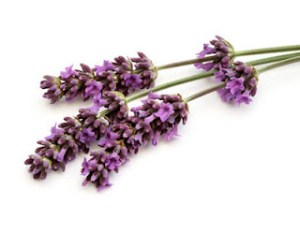 Ash alternates between gray and white streaks. Core is brown ash. Although it doesn’t seen heavy, my strong espresso tastes mild now. Almost even burn that continues throughout. No need for correction with a torch. Strangely the smoke on the outside of the cigar (wrapper) doesn’t have the lavender part. Somebody sitting next to you will not detect the lavender, but you, the smoker, most definitively will! It’s just there, lavender, soap, grandma’s clothes. Luckily this old smell is not overpowering, but just. After 3 cm the first ash falls off by itself. So maybe not so packed as I thought. The cigar by itself is not heavy, there isn’t a heavy taste that stays in your mouth for a day or so. It’s great with espresso but
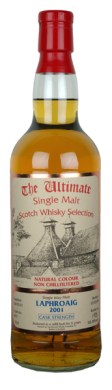
  I feel it needs a counterpart from Scotland, something salty and sweet from Islay. I poured myself a Laphroaig 2001/2009 (57%, The Ultimate, Hogshead #2927, 324 bottles). Well I was right, this type of whisky goes very well with garandma’s lavender scented knickers. It pulls out more deep spices into the equation to balance the lavender even more. Wow even this cask strength Laphroaig tastes mild with this Por Larrañaga. near the end, the thin wrapper let go, so it was time to let it rest.
 Again a wine I had with dinner yesterday. This time a copious swiss cheese fondue in classic style. Into the fondue went a very nice Alsatian Vorburger Pinot Gris 2008. The Vorburger is a biological wine with a great combination of acidity (needed for the fondue) and sweetness.
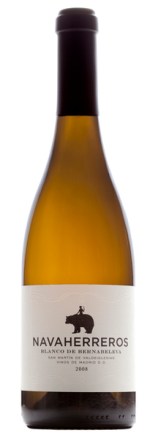 Since it seems I’m starting to review almost everything I put in my mouth, why not one little piece about a wine I enjoyed yesterday. This one accompanied a nice and light fish dinner and boy did this go well with that.
 Color: Full Gold with a hint of copper.
 Color: Light Gold
 Not much to say about Vegueros really. The brand surfaced worldwide in 1997 and was made in the Pinar del Rio region since 1961 for local consumption. These cigars are linked with the cuban cigarette production, and I feel that in Cuba this is probably the lowest quality tobacco around, so I don’t have high hopes for this one. Also the fact that the whole brand was discontinued this year is rather foreboding.
 After this it gets only worse, very sharp and woody. This lacks quality. Nothing round, creamy or even likeable. Near the end a surprising toffee note emerges, finally something happened. Menthol just before putting it down. I would say this is the Jack Daniels of cigars.
 Master Quill