Here is another vintage Glenrothes. After the 1992, the 1989 and the 1979, this 1987 is the fourth of these vintage bottlings on Master Quill. All were nice, but never scoring very high. All were nice, with enough difference to warrant buying more than one, but also none of them blew me out of the water. Just look at both other Glenrothes I reviewed earlier. One bottled by Wilson & Morgan and one by Douglas Laing. Both managed to score higher than the official bottlings. By now I can say that I expect this one to be nice, but again I don’t think it will blow me out of the water.
 Color: Gold.
Nose: Dusty, definitely Sherried. Spicy and tickles the nose. Also some burnt elements. Next some aroma’s you get from an old (dry) cellar or attic. Funky but not the funky damp notes you sometimes get from cellars. More like the odours of stored old stuff. Old paper, old cardboard and old wood. Old, worn out vanilla pods. Later a breath of rural fresh air, coming to you over water. Let it breathe some more, and it becomes more like a “normal” Whisky. Vanilla, wood, fruity Sherry notes and spicy oak and cask toast. Hints of butter and dry grass (not hay), and even some toffee.
Taste: Short attack of (fresh) oak and a more waxy note, quickly succeeded by cherries and sugared yellow fruits. Fruity sweet toffee, alas a bit diluted. Über-fruity sugar-water. Warming. Apart from the initial wood, this is quite a fruity expression of Glenrothes. Hints of soap and paper from the nose and a growing aroma of burnt wood. At best a medium finish with a note of Beer and burnt wood. Yes, a bit bitter, which adds to the character of the Whisky after the initial sweetness and fruitiness. The aftertaste matches the nose exactly.
Although the nose isn’t one of the most balanced expressions of Glenrothes, the taste is way better that way, helped along by the sweetness it has. It’s all right this one. It may be a bit simple, diluted and lacking complexity. It does some across as balanced and tastes nice. Maybe it’s time to up the strength a bit?
Points: 83
 Color: Orange gold.
 Penultimate day of Master Quill’s Laphroaig week and just as yesterday, another Douglas Laing Laphroaig. Seeing a pattern here? So which one will finish this series off tomorrow?
 Color: Copper brown
 Color: Light gold, almost white wine.
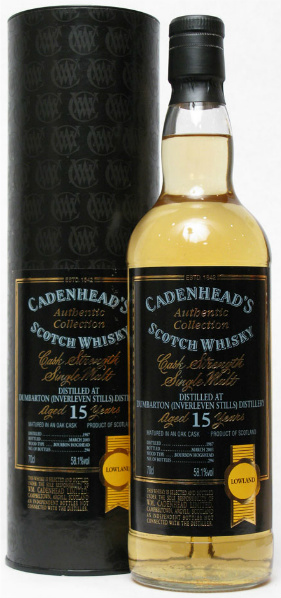
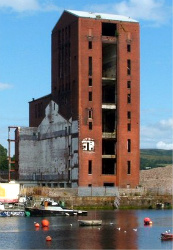 And here is another Cadenhead’s, from the same kind of cask, from the same year 1987, with three years more ageing. Cadenheads call this Distilled at Dumbarton, made with Inverleven stills. Everybody else calls this whisky just Inverleven. To clear things up. The Single malt whisky that was made this way, was called Inverleven. Inverleven was made untill 1991. This was made with the ‘normal’ type stills. In the same building was also a Lomond type still that was installed in 1959 at the Dumbarton distillery and ran untill 1985 (With the malt being called “Lomond”, not Loch Lomond). Loch Lomond lies close by to the north. Only a few kilometres away, still Loch Lomond is a Highland Whisky, and Inverleven a Lowlander. To wrap things up. The Dumbarton Distillery was the spiritual home of the Ballantine’s Blend.
 Color: Light gold. (Darker than the 15yo Cadenhead).
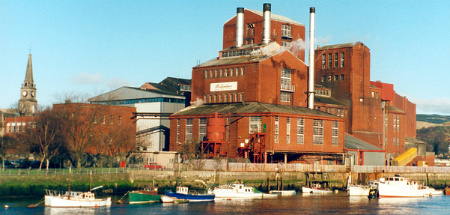 I ended the last post about Gordon & MacPhail’s Inverleven with the hope that they wouldn’t reduce the next issue (so much). Frolicking around in my stash of samples I unearthed this unreduced Inverleven bottled by Cadenhead’s. It’s from another year, so this may have a different profile, but still worth checking out. Dumbarton was foremost a Grain Distillery. The distillery was built in 1938. In 2002 the distillery was closed and demolition commenced in 2005. I’ve added a picture here, because I have always liked the big red brick industrial complex on the river. By the way, after stopping the production of the Inverleven malt, the Stills went on to Islay to produce Port Charlotte at Bruichladdich.
 Color: White wine.
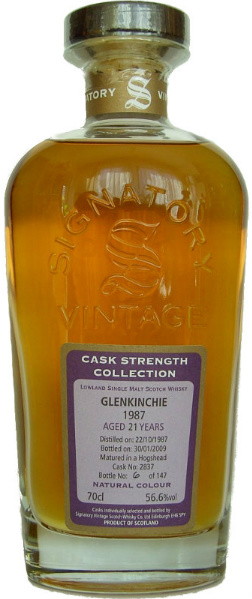 Glenkinchie, a rarely seen Lowland distillery within the ranges of independent bottlers. Founded in 1837, Glenkinchie is foremost known for the closure of Rosebank. When Diageo set up their range of classic malts they chose Glenkinchie over Rosebank. As you might know, Rosebank is known to have a huge following, so this decision wasn’t welcomed at all. Now Rosebank is no more, we’ll have to see if this Glenkinchie is worth your money. Instead of a regular Diageo bottling, let’s try an independent one.
 Master Quill