J.M 11yo 2002/2014 Vieux Rhum Agricole “Millésime 2002” (46.3%, Bourbon Cask Matured, Martinique)

Reviewing the dirt cheap La Mauny “1749” already opened my eyes to Rhum Agricole from Martinique, but especially after reviewing the J.M XO, I started to really like the stuff. Followed quickly by the La Mauny XO. There is a difference in ABV though, the La Mauny is bottled at 40% ABV, and suffers from it, the J.M XO is bottled at 45% ABV, which seems to be a much better strength. Apart from the difference in ABV, I somehow clicked more with the taste of the J.M. Soon after, I went out and bought this 11yo J.M Millésime 2002. (Two of them actually, since I had high hopes for this one, and I got a pretty good deal on them as well). Aged in Jim Beam Bourbon casks, just like the XO, but almost twice the age. Having already tried the 2002, this time it’s not about comparing it to the XO, because both earn a place in any drinking collection. You know, a collection of bottles destined to be drunk, bottles that will be actually opened to be enjoyed. The XO is younger, has less depth but is also a high quality Rhum Agricole. Having said all that, I have to warn some people. A lot of (sweet) Rum drinkers are a bit put off when starting with Rhum Agricole. Its different. Just like heavily peated Whiskies differ from Bourbons and so on. Proceed with caution, acquire the taste, and if you put some effort into it, you’ll be rewarded with some great Rhums (If you choose wisely).

J.M 11yo Vieux Rhum Agricole Millésime 2002 (46.3%, Bourbon Cask Matured, Martinique)Color: Full gold.

Nose: Fresh, half sweet and industrial. Wax. Red fruit sweetness and acidity. Cherries, dust and toffee. Soft wood and old leather. With some air more fresh leather combined with a little bit of clear glue. Ground roasted coffee that has been around for a while. Pecan nuts with a hint of cola, brown sugar and cane juice. Hints of menthol which leaves a long minty feel in your nose and throat (already after smelling, I haven’t tasted it yet). Hints of good oak aged Calvados.

Taste: Brown sugar and slightly burnt sugar and maybe even some cask toast. Starts with a small amount of sugary sweetness, but it quickly becomes more dry. Warm apple juice and Calvados (de Querville, the older ones). Leather and more notes of apple. Hints of licorice towards the end. Although this wasn’t reduced, the ABV is natural cask strength, this doesn’t have a very long finish. Medium finish which concentrates around the burnt sugar note combined with some bitter wood. Although the Rhum as a whole is very good, the finish lets it down a bit.

Wonderful Rhum with lots of complexity which releases layer upon layer. It great, but even better if you are patient with it, since it develops a lot in the glass. Great balance too. I have to say that the way I perceive the bitterness of the finish, has also a lot to do with me and the moment when I drink it. It’s more a digestif than an aperitif. The bitterness is less obvious in the evening, than it is in the morning, so don’t let this put you off, since the bitterness is in no way overpowering.

Points: 87

Cragganmore 1988/2002 “Distillers Edition” (40%, OB, Double Matured in Ruby Port Wood, CggD-6553)

As could have been expected by reading the last review here is the Cragganmore Distillers Edition, and just like the 12yo this particular bottle, was also bottled in 2002. Cragganmore is seen by many as a top Whisky. Blenders see it that way, and especially Diageo see it that way too. Although it has been part of the original Classic Malts range from 1988, it never was the most popular of the six. I don’t have to spell them out for you don’t I? Well OK, the original six were: Lagavulin (Islay), Talisker (Skye: Islands), Oban (marketed as West-Highlands), Glenkinchie (Lowlands, which many thought it would be Rosebank, but economics decided otherwise), Dalwhinnie (Highlands) and Cragganmore (Speyside). Still some aficionado’s are very keen on Cragganmore because Cragganmore is said to be a complex malt by using hard water and have stills with flat tops. History also teaches us that Cragganmore used a lot of Sherry casks.

Cragganmore 1988/2002 "Distillers Edition" (40%, OB, Double Matured in Ruby Port Wood, CggD-6553)Color: Copper gold.

Nose: Creamy and waxy, this time with a winey note, which makes it instantaneously more interesting than the 12yo. Fresh air with licorice and black and white powder. The yellow fruits from the original 12yo have been replaced by the red (berry) fruits from the Port finish. Tiny hint of Calvados. Red apple skin. Creamy vanilla is still here though. Hints of Sinaspril (a children’s headache medicine I remember from the seventies). Fruity candy powder (synthetic).

Taste: Seems spicier, but still a bit too light. Watered down Ice-cream. Quite sweet. Sugar water with a tiny amount of forest fruit syrup. If this would have been cask strength, the harshness you get from Ruby Port finishes probably would have been easily noticeable. Instead, the reduction and the sweetness are able to keep the Ruby Port in check. Just like the 12yo I reviewed last, this has a pretty weak again and it has a finish with some cask toast thrown in for good measure, but it helps. Up untill the body, the Whisky has quite some good aroma, and then the finish comes which has the length of a snuffed out candle. It’s alight for one moment and gone the next. This really needs to be slightly higher in strength, as well as the 12yo. If 46% ABV is too much, at least adopt 43% as a minimum strength for Single Malt Whisky. Sure in the olden days a lot of Malts were 40% and held their ground, but today’s yield driven more modern Malts seem to need a higher strength than that…

Personally I find the choice for Ruby Port always very tricky. Whereas Tawny Port is easier to use and gives usually better results, because Ruby Port finishes can be very harsh and are easily overdone. Luckily here the finish seems to be OK. The 12yo was quite simple, fruity and sweet, but for me this Distillers Edition has something more to say, especially on the nose. Concerning the taste, the Port is not always good match for the sweetness of the Cragganmore Malt. The first time I tried it, it didn’t work, the next day I liked it, but maybe that’s saying more about me than the Malt. It still is an easy peasy Malt, not all that complex. It is quite interesting and I do quite like it. I prefer it over the 12yo.

Points: 84

Isle Of Jura 13yo 1989/2002 (46%, Murray McDavid, MM 1564)

Here is the third and final bottle in our trilogy of Murray McDavid bottlings. Don’t worry there will be more. After the Rhoshu and the Glendullan, this time we will have a look at a (Isle of) Jura. Both of its fellow Murray McDavid bottlings have proven themselves to be reasonable Whiskies and not so long ago I reviewed a very good Jura as well. So we’ll start this review with high hopes…

Isle Of Jura 13yo 1989/2002 (46%, Murray McDavid, MM 1564)Color: Light gold.

Nose: Sweet malts, but also lightly spicy, frankincense, with lots of vegetal and waxy notes. Highly fruity. Sugared apples, with even some licorice and cinnamon, and some sweet red berries. Reminds me a bit of Calvados. This is a very appetizing nose. Vanilla and dusty, yet not dry. Full of aroma, and warm sugar-water. When smelled to vigorously, a note of paper emerges as well as a tiny hint of old, worn out jasmine soap, a bar you find in the back of granny’s closet, amongst the over sized… well, you know what I’m talking about. Actually this does smell like a Whisky not from these times, but more from the era of black coal. Granny’s era. Sweet and lively. Fruity without a lot of wood. Nice complexity and ditto balance. Lovely.

Taste: Sweet, thin apple water and bitter apple skins. Here the wood does show itself with quite the wood and bitter sap notes. With hints of charred oak. A bitterness we are quite familiar with, reminding me of some nuts. Remember the thin brown skins on walnuts and hazelnuts? If you can get past the bitterness there is a fruity lightness behind it. Malts again and some hay on a summer’s day. Lacks the complexity of the nose though. The finish is another of its weak points. Too short and a bit mono-dimensional. Lacks development from the body, well into the finish. The aftertaste makes you wonder if you haven’t drunk an I.P.A. earlier, for its slight hoppy bitterness left behind in your mouth.

Not a highly drinkable dram, it’s simple, and a wee bit too bitter for a daily drinker. The nose makes you a promise of something special. The nose is actually pretty stunning, and I’m really, really sorry, I can’t say the same for its taste.

Points: 82

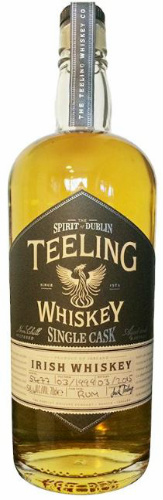
Teeling 13yo 2002/2015 (55.5%, OB, Single Madeira Cask #935, 311 bottles)

In 2012 Jack Teeling sold his Connemara distillery for €71 million to Beam Inc. and everybody, especially Jack himself, thought that would be his end in the Whiskey business. Back to buildings and properties or so it seemed. But Jack wouldn’t be Jack and Whiskey wouldn’t be Whiskey, so Jack hatched a new plan for a new brand and a new distillery that has just been opened this month in Dublin. Up ’till now, the standard range consists of a Small Batch release, finished in Rum, a Single Grain, finished in Red Wine casks and a Single Malt Whiskey that is surprisingly not finished! (At least it doesn’t say so on the label). Also three super premium Whiskies are released. A 21yo (Silver, Sauternes finish), a 26yo (Gold, White Burgundy Wine finish) and finally a 30yo (Platinum, like the Single Malt, unfinished). These three don’t come cheap. This year Teeling started to release Single Cask bottlings in Germany, Belgium and this release for the Netherlands for the Specialists’ Choice. All again finished in different casks: Port, Rum, Carcavelos and today’s special: Madeira. By the way the picture on the left is from another Single Cask release, since I don’t have a picture of the new release just yet…

Teeling Single CaskColor: Reddish orange gold.

Nose: fresh air, new wood, not necessarily only oak and definitely notes of a sweet wine. Milk chocolate, mocha and luke warm coffee with lots of milk. Slightly oxidative, spicy and creamy. Paper towel with a tiny hint of soap. Young, spicy and vibrant. With young I don’t mean that it reeks of new make spirit. I mean vibrant, lively. Very appetizing. Lovely nose. It reminds me a bit of Single Malt Whisky, when it was new to me. Barley, sappy oak, grassy, creamy vanilla, some mint, red lemonade and a fresh pot of coffee.

Taste: First is a hot mixture of oak and sweet white wine, biting each other a bit. Its sweet and has notes of acidic oak, but also spicy oak and paper. Another layer contains hints of hard to get red and black fruits, something not quite uncommon to other Irish Whiskey’s like Jamesons 18yo and Redbreast 15yo. It seems a bit disjointed, especially when the sweetness is pulsating and the wine turns from a sweet entry into something a little bit more sharp. But you can’t not like it. It’s really an enfant terrible, but it still charms you into liking it and forgiving it. When it’s faulty it’s a lovely fault. Slightly bitter in the finish soon overpowered by different shades of wood, spicy and acidic, add to that the contributions of the Madeira and you have something you can’t put down, but is not entirely easy.

For me this is an example why Whiskies like this should be cask strength. The aroma’s seem enhanced by the higher strength and a Whiskey like this should bite you back a bit. It’s not your simple entry-level Whiskey. Are you experienced?

Points: 85

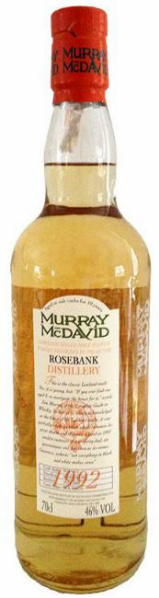
Rosebank 10yo 1992/2002 (46%, Murray McDavid, Bourbon Cask, MM1413)

Long time no Rosebank. It has been a long time since I reviewed a 1990 Rosebank, bottled by indie giants Gordon & MacPhail. That one was pretty good, it scored a healthy 88 points. Time for another go at Rosebank. This time a 1992 from Murray McDavid, remember them? By the way Murray McDavid bottled two different Rosebanks, both registered as MM1413. (The other one is a 1989, called Mission V). This 1992 is something of a farewell dram since Diageo decided, in it infinite wisdom, to mothball the distillery in 1993, never to work again…

Rosebank was founded in 1798, although some sources mention other years like 1840 and 1773. In the end, Rosebank was sadly mothballed in 1993 by Diageo which preferred Glenkinchie for its Classic Malts portfolio. And why not, nothing wrong with Glenkinchie I say. I’ve tried some very good Glenkinchies, and even reviewed a very good one, a 1987 bottled by Signatory. But why did Rosebank have to go? From an anoraks point of view, bad move since Rosebank distilled some pretty good spirit that turned into some pretty good Whisky if you ask me. Eternal shame.

Rosebank 10yo 1992/2002 (46%, Murray McDavid, Bourbon Cask, MM1413)Color: White wine.

Nose: Softly buttery and citrussy. Full aroma and nicely fresh. Nice acidity and sure some barley. Quite clean. If this isn’t your typical Lowland style, than nothing will be. Highly aromatic with soft wood and a nice grassy feel to it. Good spirit and even though the cask seems not that active (due to the lack of color), the spirit is decent and gentile, and the cask did enough to preserve that, and adding some vanilla and cold creamy butter to it. Lurking in the distance is actually some hints of new make spirit. Nice elegant (cedar) wood with milk chocolate and coffee with creamy notes (or coffee pudding).  Nice vegetal notes as well. Easily recognizable as a triple distilled lowlander. The big aroma is Rosebank from a good cask. Just compare this to the 1979 Rare Malts version (which I know is much higher in strength, but that would be missing the point).

Taste: Slightly toasted wood and creamy again. This starts with a bitterish and sappy oak attack (with some cardboard and malted barley), but that dissipates quite quickly to show it’s even more malty and grassy side. Also coffee and milk chocolate return here. A tad drier than expected and the body is more about new make spirit than the nose. Still not much though. And yes on the palate we can find the vegetal side. The bitterness of the wood stays on throughout. The whole is very nice, and don’t forget about the refreshing citrussy note!

Classic lowland and even though a fairly young Rosebank from a Bourbon Cask, this is clean and such a typical example of Lowland and Rosebank especially. Even this simple Rosebank shows what a mistake it must have been (looking at quality) to close this distillery down. Thank you very much. This particular expression reminds me of some Bladnochs, so I hope that distillery will be saved before it’s too late and someone turns it into their summer home of some sorts.

Points: 86

Caol Ila 21yo 1981/2002 (58.2%, Signatory Vintage, Cask #465, 364 bottles)

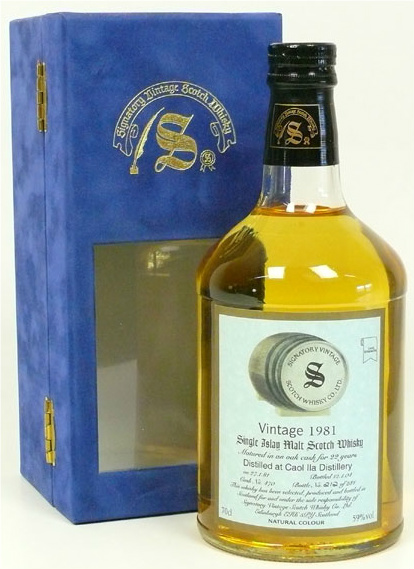
Just recently I reviewed a 21yo Caol Ila from Signatory Vintage Cask #467. When rummaging through some sample bottles I collected over the years one of its sister casks popped up. This time it is Cask #465. How’s that for luck. And as luck would have it, I still have a wee bit of cask #467 left, so a comparison can’t be avoided. Again no picture available for this particular cask, seems to me this is very obscure stuff. I’ll use the ol’ picture of cask #470 again. So without further ado…

Caol Ila 22yo 1981/2004 (59.0%, Signatory Vintage, Cask #470, 281 bottles)Color: Light gold. The color of this one is ever so slightly lighter than cask #467.

Nose: Grassy and vegetal. Citrussy. Fresh and actually young smelling. Even the wood smells sappy. Powdery. Hints of soft, fatty, and creamy smoke. Appetizing. Milk chocolate (with sugared citrus in it) and a tiny hint of latte. All very friendly smelling, and although this is not a heavily peated Caol Ila it is very attractive. Good balance.

Taste: Sweet and fruity. prickly smoke with some late development in the licorice department. Light licorice. also a tiny hint of cannabis, so probably a lot was allocated to the Netherlands. Alcohol and again a small hint of coffee and fern. Milk chocolate again. Small amount of woody bitterness starts the finish and lingers on the back of my tongue. Not the most expressive of Caol Ila’s but quite nice in its own way. Not a very long finish. The high strength is obvious on the tongue, but not a lot of aroma is left in my throat. It’s not what you would expect from a Caol Ila like this, but when you let that go, it’s pretty rewarding.

Comparing the two, the noses of the two are obviously pretty similar. Cask #465 has the better nose, more balance to it. Aroma’s seem to fit together better and has more depth and complexity. Still the difference is not great. The taste is very similar too. Cask #467 seems to be somewhat more raw at first, and less balanced.After a while it is also softer and sweeter in the finish. Cask #465 is for me the better pick of the two, with even a slightly better finish, so overall it performs better. Still they are really twins and the differences are in the details and easier to pick up on when doing a H2H.

Points: 86

Thanks go out to my mate Michel for providing this sample (a long time ago).

Glenrothes 1990/2002 (46%, Wilson & Morgan, Barrel Selection, Sherry Wood)

Time for an “oldie” Wow, I’m now calling a Whisky from 1990 an “oldie”, unbelievable how time flies. Here we have another Glenrothes. For one reason or another I seem to like independently released Glenrothes better than the official bottlings. Maybe the independents release their versions at a higher strength than the 43% ABV the owners themselves do. One thing is sure, besides that it needs to be at a higher strength, it is a distillate that need maturation in a Sherry cask, just like Macallan did. Do you still remember Sherried Macallans? Anyone?

Glenrothes 1990/2002 (46%, Wilson & Morgan, Barrel Selection, Sherry Wood)Color: Copper orange.

Nose: Lots of raisins. Soft creamy wood. Floral and slightly acidic Wine-attack. Linen. Nicely Sherried, waxy with dry powder. Earwax, coal and slightly tarry. Hint of dried out orange skin. Dusty attic (old home) and even a tiny hint of a dry rotting sensation, motor oil and vanilla. Whiffs of old woody Rum.

Taste: Creamy and rounded out. Big Sherried nose, but taste-wise not so heavy. Wood and a fruity acidity I sometimes get from PX-Sherry somehow don’t match perfectly. Does have a burning alcohol and warming sensation and a finish that lingers on for a while (raisins, honey and cask toast), but has no big staying power, medium I would say. It’s nice but it also seems to be telling it didn’t want the water. Maybe this would have been better without reduction, who knows? Nice, not very complex and not the heavy hitter I expected.

Well, this is bottled quite some time ago and in its day this was pretty affordable. Today Sherried bottlings that have no mayor flaws, like sulphur which many aficionado’s do not like, cost a pretty penny. This Glenrothes is big and small at the same time. Yes its heavily Sherried, but no it’s not a heavy hitter. It’s not brown, but orange. I really like the melancholy of it all. It reminds me of summer, dry and dusty, with aroma’s of old wood and furniture. In an attic isolated from sound with whiffs of flowers from outside. It may not be perfect nor very complex, but is it nice and highly drinkable. Has an old feel to it, as opposed to todays (sometimes sulphury) Sherry bottlings. “Lovely” would sum it up nicely.

Points: 86

Caol Ila 21yo 1981/2002 (58.2%, Signatory Vintage, Cask #467, 361 bottles)

Ahhh, a dumpy Signatory Vintage bottle, nice! Maybe not thát long ago that this was bottled, but an oldy in today’s market nevertheless. This is Whisky I grew up with. Can you imagine, shops full of bottles like this. Today a fairly rare site. I couldn’t find a picture though of the reviewed bottle (cask #467). Pictured here is a similar bottle drawn from cask #470. The right bottle should look similar, maybe the box had a different colour.

Caol Ila 22yo 1981/2004 (59.0%, Signatory Vintage, Cask #470, 281 bottles)Color: Light gold.

Nose: Nice fatty old peat. Toned down, laid back and elegant. Quite light. Notes of fern and dry grass. This doesn’t leap out of the glass as your regular Sauvignon Blanc. One to savor right from the start though. Typical Caol Ila coffee I always tend to smell in late 70’s early 80’s Caol Ila distillates. No heavy peat, no heavy smoke. Quite an a-typical Islay Whisky.

Taste: Sweet, herbal and grassy. Short fresh attack, clean at first but not for long. After a few seconds a wave of licorice root and primarily loads of ashes. Crushed beetle. Not so much peaty yet. Extremely warming. This is what you want in your hip flask standing on the beach in a storm. (Apart from a young and feisty Islay Whisky that is).

For a 1981 Caol Ila it ís lacking a bit of complexity. I know examples which had some more fatty and funky peat in them. Good but not as good as Caol Ila from these days can be.

Points: 85

Thanks go out to my mate André for providing this sample.

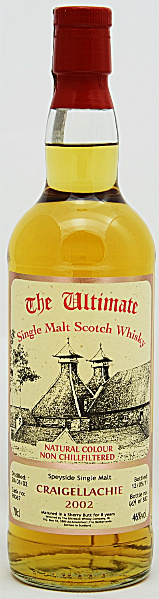
Craigellachie 8yo 2002/2011 (46%, The Ultimate, Sherry Butt #90067, 882 bottles)

Craigellachie was founded in 1891 and designed by Charles Doig. The first spirit is distilled not earlier than in 1898. Smooth sailing from there, with some minor changes in ownership. In 1964 the distillery is hauled over and the stills are doubled taking them from two to four. In 1998 Craigellachie, Aberfeldy, Aultmore and Royal Brackla are sold by UDV (now Diageo) to Bacardi (Martini). Its closest neighbour is The Macallan.

More than two years ago I reviewed one of my own bottles a Craigellachie that was distilled in 1982. Today we’ll have another go at Craigellachie and this time one that was distilled 20 odd years later. The Craigellachie at hand is a mere 8 years old, and was matured in a Sherry Butt.

Craigellachie 8yo 2002/2011 (46%, The Ultimate, Sherry Butt #90067, 882 bottles)Color: Light gold

Nose: Malty and quite sweet-smelling. Hot sugar solution. Toffee, caramel and most definitely some vanilla (American oak?). Also a hint of mint and some elegant (old) oak. Next to that some fresh air and herbal traits. Dried grass. The wood changes a little into the smell you get when you are sharpening a pencil, but also cask toast. Probably a Refill Butt that once held Fino Sherry. The sweetness that was there in the beginning dissipates a bit to let those woody and drier notes to display themselves some more. After a while a hint of licorice and lemon curd.

Taste: Malty again, and somehow it doesn’t taste ready, not as balanced as the nose is. It is underway yet not finished. Small bitterness and also some paint notes. The maltiness and oak hide the sweetness that is absolutely there. Butter cake and a touch of honey. Given some time the sweetness emerges better but the whole gets more balanced by a creamy note and milk chocolate. The finish is quite long and adds a bitter burnt note that wasn’t there before. It adds to the character and balances the (late) sweetness. Interesting.

I usually wine that a Whisky was reduced too much. This one yielded almost 900 bottles, so this must have been a Whisky that was high in alcohol. It was reduced to 46% ABV, yet it still carries a nice punch and I’m guessing the flavours are better displayed at this strength than it would have been at Cask Strength. Lovely and honest Whisky, easily drinkable and a nice addition to a lot of official bottlings you might own in the same price-range.

Points: 84

Warre’s Colheita 2002 (2013)

A Colheita port is, like a Vintage Port, from a single vintage year ​​with the big difference that these ports are matured in oak barrels and filtered before bottling. Maturation takes place for at least eight years, but often longer, which makes it a Tawny Port. Usually the year of bottling is mentioned on the label, as is the vintage year. Because Colheita’s are filtered, not a lot of further ageing happens in the bottle, but still a lot of Colheita’s can be laid down for a while. No decanting necessary.

Warre Colheita 2002Color: Deep ruby-red which just started to fade a bit. High viscosity.

Nose: Sweet candy. Slightly winey, but foremost syrupy and very fruity. A little bit of soap. Lots of cherries and other sweet red fruits like ripe and succulent strawberry. After some breathing some spiciness and a slight hint of wood emerge. It smells young at first and fresh (acidic?). The whole seems to be crafted from the aromas of red wine, sweetness and some barrel ageing. The color is ruby-red too, so not your typical brownish tawny Port. Yes, it does smell very nice and perfumy though. I swear, when I nose this a lot I get some fresh mown grass and warm butter in there too. Easily accessible and definitely a quality wine. Do I detect a little bit of sulphur in the nose after a while in the glass?

Taste: It’s candy! Luckily not overly sweet and in the taste some nice acidity shines through. Good balance, but not very complex. Lacking depth at first. Again, not your typical tawny. It’s very nice, but it plays in another division. Very fruity and oozes summer. It sometime drinks like 5% ABV, but it still packs 20% ABV, which can be tasted in the finish. The finish itself is long, warming and very pleasant, and adds a lot to the complexity of the whole. It has the smallest hint of wood and fresh nuts, walnuts without the bitterness and hazelnuts. A little bit of tannins on the tongue. Very drinkable.

I can imagine drinking this slightly chilled, sitting outside in the sun. Very refreshing due to its toned down sweetness, nice acidity and accessible fruitiness. Although a little bit different, it did remind me of Kopke Special Reserve Tawny (150th Anniversary in Holland), although that one was even more summery, fresh and light, this Warre has more body and a heavier finish.

Points: 84