Domaine Dupont-Fahn Chardonnay 2011 Vin de Pays d’Oc Languedoc

While we’re at it, why not try another gem (hopefully) by Michel Dupont-Fahn. This time his Chardonnay from…Languedoc! For those of you who are alarmed, don’t worry, this Chardonnay is well made into the Burgundy style (whatever that is).

Chardonnay is a relatively easy grape variety. It doesn’t need a lot of care, and it does well in a lot of places and terroirs. Therefore the Chardonnay grape can be found all over the world. The wines made with the Chardonnay grape, can be utterly different, just compare Chablis to a Montrachet. Yes both from Burgundy, where Chardonnay is BIG.

The Chardonnay grapes are manually harvested. After pressing and fermentation the wine stays for six to ten months in oak casks. 80% of them are used casks and 20% are newly made casks. This Dupont-Fahn Chardonnay is 13.5% ABV.
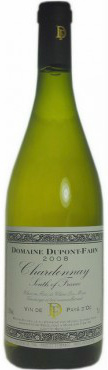
Color: White wine

Nose: Light and acidic. Grassy with lime. Small hint of peach. Actually the nose is not very outspoken, yet very fresh. Small hint of new wood. Good balance. Light and flowery. It becomes fruity and slightly vegetal, when it warms up a little bit. Lovely nose.

Taste: Definitely sweeter than expected. Again good balance and the sweetness counterparts the (lemony) acidity very well. Lovely light aperitif wine that also will do pretty well with fish. The fruity sweetness is a bit syrupy, as if a drop of PX Sherry somehow found its way into this wine. Very fresh and lively, and not a lot of wood influence. A little bit of new wood, but nothing bitter.

Easy drinkable and not overly complex. This is a quality wine. Drink young and preferably outside in warm weather. Thoroughly enjoyable. Lovely light quality wine from Languedoc, made by a Burgundy winemaker. Recommended (just like the Dupont-Fahn Cuvée Rosée reviewed earlier).

Points: 84

Thanks again Richard for the wine.

Domaine Dupont-Fahn Auxey-Duresses 2011 Cuvée Rosée Bourgogne

Michel Dupont-Fahn is a wine producer from Burgundy. He makes modern wines like ​​Meursault, Puligny-Montrachet and some other wines. Michel makes modern wines that are meant to drink young.

As rumour has it, some ten years ago, Michel used part of the Pinot Noir harvest to make this Rosé Wine. Dad was not happy! Obviously red Burgundy Wine fetches more money than a Rosé would.

The grapes are harvested manually and quite late, pressed lightly and fermented in oak barrels that previously held, for ten months, Michel’s Meursault.

Color: Pink salmon, grapefruit.

Nose: Fresh, half acidic, citrus fruits, but also a brooding darker meaty element, that funnily enough, makes the whole very elegant. This smells the business! Perfect fruit-perfume nose (strawberries and blood oranges) and some most. There is actually a lot happening here. Fantastic balance.

Taste: Slightly more acidic at first sip, but that quickly is counteracted by some sweetness (not a lot) and a hint of wood. Taste wise it’s more in the vicinity of a red wine (Pinot Noir) than other Rosé wines. It still keeps its refreshing traits (without the tannins). No off notes whatsoever. The sweetness of the Wine that emerges near the finish is of a deep maple syrup nature, very classy! Great as an aperitif, with fish and salads. This goes down nicely, bring on the sun, I say!

I have to admit, I never was a big fan of Rosé wines, probably that so much of these wines are tampered with, or just not good enough. It’s treated as a sort of B-product after red’s and whites. This one however ticks all of my boxes. Maybe from the tasting notes it is not quite clear why I like this one so much, but I find this a real find! At this time by far my favorite Rosé. I know it’s a bit more expensive than the usual suspects, but in my opinion well worth the money. Recommended! By the way, the ABV on this one is 13%.

Points: 86

Thanks to Richard for the Wine!

Château Les Tresquots Médoc 2003

Very typical Bordeaux blend. This one comprises of 70% Merlot and 30% Cabernet Sauvignon. The ABV is 13.5%. The grapes were harvested by hand and the wine was put on oak casks for one year.  The grapes that grow on vines are 30 to 40 years old. grow in the heart of the Médoc region near Bégadan, where the D3 crosses the D103 (for those who were there). Saint Estèphe is just up river.

For what I read, people weren’t too happy about this one when is was younger, so it was no problem to let this lie for a couple of years. I left it for almost 10 years, but now it was time to have a look how it is doing.
2003 was a very special year for the region. The 2002 harvest was very dry and the winter that followed was cool and wet. In march it was already warm (and dry) so growth started early. The following period stayed dry which means low yields. The summer, well, heat wave! So in June, July and August, the grapes got roasted.

Color: Very dark, with deep sparkling red. Almost doesn’t let light through.

Nose: It might be heavy, according to the text above, but for me this is quite lively. Grape skin, hot earth, dry but with a lot of depth. Elderberries with some acidity. Yeast and a little hint of sterile wood. Altogether very balanced. I might be biased by now, but this oozes hot weather.

Taste: Deep, this has some tannins. Thick grape skins and plums. Lots of ripe cherries. Not the red ones but the sweetish black ones. It’s not bitter nor woody, but it does dry the mouth quite a bit. The fun is to be had taking big gulps and the effect this has on the palate. Finish is quite short and a bit anonymous. This is very much recommended with food (meat).

In the end not very complex, but with a lovely nose. And I like the shift toward the black cherries. Especially the taste is ‘simple’ but it doesn’t overpower you, nor does it have any other flaws, apart from the tannins that dry your mouth extensively. Considering early report about this wine, I can say that ageing this is a good idea.

Points: 81

Heim Riesling Grand Cru Praelatenberg 2006

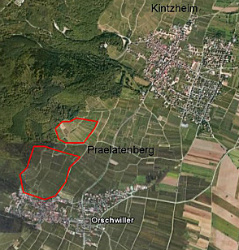
Christmas time is here again, and I needed a decent bottle of wine for Christmas dinner as a companion to sauerkraut and fish. I do like Alsace, so this time I pulled out a Grand Cru Riesling from Praelatenberg. Praelatenberg is one of 51 Alsatian Grand Crus, that got this status in the big expansion of 17 December 1992. It is located between Kintzheim and Orschwiller, and is the most southerly of the Grand Cru sites of the Bas-Rhin.

PraelatenbergAbove Praeatenberg towers the Koenigsbourg castle, built in the 12th century. The altitude of Praelatenberg slopes ranges from 250 to 350 metres and has an east-south-east orientation with a size of 18.7 Ha. The granite bedrock that underlies all Alsace vineyards is very close to the surface. The soil is heavy, covered with loose schist, and is rich with silicium. Dotted with stones rich with iron, quartz and other minerals. This helps the warming of the ground and lets water through easily.

Heim is now owned by Bestheim, a cooperation that was founded in 2000 by the merger of two smaller cooperations from the villages of Bennwihr & Westhalten, together with the house of Heim.

Color: Straw Yellow.

Nose: Very clean and citrussy. Lemon. Through the freshness and the acidity there is another layer, that at first seems sweet, but also has a creamy peachy element to it. A sort of light non-fat whipped cream of lemon and peach. Very nice. Sweet as in coffee-caramel sweets we know over here as Haagsche Hopjes. Also a slightly meaty sensation.

Taste: It starts with a nice fresh and not overly acidic lemon and chalk. Do you know those little vitamin C pills by Roter? Well, that too. Again a tiny hint of peach. Really subdued and elegant. The finish comes quick and is soon gone, what really is a shame. Always there, is that little bit of acidity that makes your mouth water, and lest not forget that added creaminess. Not very complex.

The taste maybe a bit too simple, in the nose maybe a little bit too. Still it’s a nice wine. It does have a nice balance, but overall it could have done with some added depth and complexity. Easy to drink, and should hold well when aged. ABV is 12%.

Points: 82

Picture is for the Riesling Reserve. Our Grand Cru looks similar (brown glass).

Chateau Saint-Paul 2005 Haut-Médoc

I used to drink a lot of reds and for the last six years or so I love to drink a lot of whites. Alsace was probably what set that off. But as you might have guessed, being the frequent reader you are, I drink foremost Scottish Single Malts nowadays. But it’s not all Scotch that lights our world, so I’ll definitely have to try some different things here too. This time the first red wine on Master Quill.

Haut-Médoc is the large southern part of the Médoc district of Bordeaux in the south-west of France. The famous wines from this region are Margaux, Pauillac, Saint-Estephe and Saint-Julien. You might have heard of those.
The wine of choice for today is Chateau Saint-Paul of the 2005 vintage. Saint-Paul is a Cru Bourgeois from the Haut-Médoc (St. Seurin de Cadourne). 2005 was a good year for Haut-Médoc, as it was for the whole of the Bordeaux region. The soil is mostly gravel, chalk and clay. The wine is made of 50% Cabernet Sauvignon, 48% Merlot and 5% Cabernet Franc. ABV is 13%.

Color: Ruby red.

Nose: Meaty and sour. Red and dark fruits, berries, black currants and blackberries. Plums maybe? Dust and moist dirt. Floral. In fact it tasted quite thick and sweet (raisins), which it probably is not, still it reminds me a bit of sniffing a ruby port.

Taste: It has depth and is a little sour and powdery. Definitely some wood in here too. Wet leaves, but not earthy. Elderberries, but not bitter. Good tannins which do not take over the wine, still you’ll know from your tongue. It isn’t overly complex, but is has good balance and is a very nice wine to drink. Medium body and medium to long finish.

This one is at it’s best decanted for an hour or so, maybe two. When I tasted this from the just opened bottle, it was quite closed, but a few hours later it showed a lot more. So age this maybe a little longer, decant it properly, then this will be at it’s best.

Points: 85

Short Stories: Kuentz-Bas Pinot Gris Tradition 2007

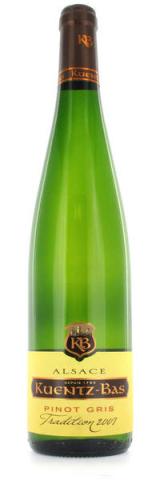
Kuentz-Bas Pinot Gris Tradition 2007, ABV 13%, Husseren Les Châteaux, Alsace
Color: Light White Wine.

Nose: Already a balance between sweet and sour. A bit flinty maybe, and a hint of Galia melon. Very fresh and light. Perfumy.

Taste: Well, not very sweet at first. Dryish and simple. Not overly acidic, so there is balance. I would have thought that some yellow fruit would stick out, but none of that. It has a fuller body for a second or two, and dissipates in a very light and slightly warming and short finish. After some time, there is some more sweetness to it. The perfumy note that was there in the end of the nose, seems to creep into the finish too. Easy drinkable.

Definitively better with fish than meat.

Have a look at: http://www.kuentz-bas.fr/index_en.html

Points: 79

Short Stories: Klug Gewurztraminer 2009

Caves Klug Gewurztraminer 2009, ABV 13%, Bennwhir, Alsace

Color: White Wine.

Nose: Lychee, thin exotic Gewurztraminer nose, citrussy, all very subdued.

Taste: Very thin, some lychee and dried apricots, typical Gewurztraminer yet very light. Don’t give it to children it still is 13%! Decent lemonade for in the summer, not with food. Even boiled rice would overpower it.

Won a gold medal at the 2010 grand concours des vins d’Alsace in Colmar. Well that’s possible. But it must have been in the el cheapo category. It’s definitively ok, but very very simple. Get a chilled bottle, put a straw in it and take five minutes on a park bench in the sun. So it does have a purpose, and hey, it still brings me back to the region. Flammenkuchen anyone?

Points: 71