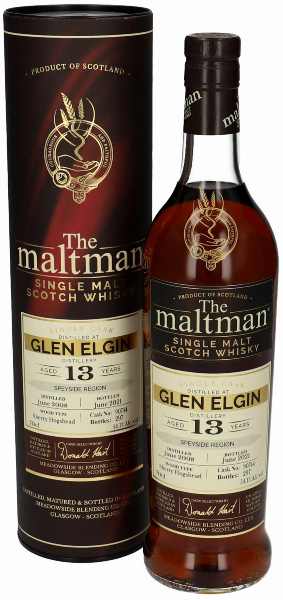
Glen Elgin 13yo 2008/2021 (54.1%, Meadowside Blending, The Maltman, Sherry Hogshead #90744, 297 bottles)

Seven years between the first review of Glen Elgin and the second one. That has to change, so what about two weeks between the second and the third review? Now, that’s a lot better now, isn’t it? Third review and again it is an offering by an independent bottler. The company’s name is Meadowside Blending, based in Glasgow, and specializing in Single Malt Whiskies, and run by the Hart Family. I don’t know why, but initially I thought this was a German outfit, probably because a lot of their bottlings are imported into Germany. My bad. This is a Scottish firm and they have several ranges on the market. Foremost is the range called The Maltman. These are all single cask releases. Next interesting range is The Grainman. Yes, you guessed it, all single cask, Single Grains. Other brands carried by the firm are The Granary (Blended Grain) and Royal Thistle. The bottle at hand, and this is no surprise if you are a regular on these pages, comes from The Maltman, yes a single cask, Single Malt Whisky from Glen Elgin. And yes imported into Germany by Alba Import, not sure if all of it went to the German market though…
Color: Orange gold.

Nose: Spicy sherry. Wood-spice and rather fresh and appealing, yet also some black coal with tar and right after that a more sharp and acidic fresh note. I have to say, all fits together quite well, so nothing wrong in the balance department. Lovely oak. The nose as a whole is thus rather appealing, fruity with half ripe sour cherries and maybe somewhere in there a more yellow fruit-note (indistinct). Breaths of fresh air run through the Sherry bits as well as some gravy? This is not a Sherry monster in the style you now often get with all these 10yo first fill Oloroso Sherry monsters. No, this is way more refined and still has quite a lot of colour to it. Tiniest hint of sulphur which I don’t even pick up on every time I nose this. Right after that some honey and maybe even some cigarette smoke. Warming and actually helping the whole of the nose. This has some fresh wood right from the start, but it’s not overpowering and actually very nice. Reminds me a bit of being outside near a sweet water lake on a nice and sunny day. Fresh winds, and the sherry bit could almost be some nice floral aromas blooming in nature. I guess this will not be a bad weather Whisky.

Taste: Half sweet yet also spicy (wood). Runny caramel or warm toffee. The coal, the tar and the wood are present right from the beginning. Sweetness seems building already. Quite some toffee now. All of this right before some fruit sets in. Warm apple compote? Nutty (yet different than in other Sherry bottlings), soft and supple leather. Leather as in belts and trousers, not thick saddle leather. Aftertaste is toffee and caramel again. Hints of plastic and warm wood. Again well balanced. I wouldn’t call the nose better than the taste of the other way around. No, this is one nice complete package indeed. Yet if I had to… yeah the nose is slightly better.

This one differs obviously from the Bourbon hogshead one by the Sherry influence. Apart from that, the Sherry influence didn’t actually overpower the traits of Glen Elgin, so there is still a family resemblance to be noticed between the two. I have to say, I like both Glen Elgins a lot, and both have their own moments. This one scores slightly higher (one point), because it is just a little bit more appealing and definitely better suited for a larger audience than the Bourbon hogshead one, which is more of an anorak-y Whisky. This one is also a little bit lower in ABV, which helps the drinkability. I like this one a lot, and would definitely it pick up again if I weren’t that adventurous and prefer to see what else is out there!

Points: 87

Glen Elgin 11yo 2009/2021 (58.8%, Elixir Distillers, The Single Malts of Scotland, Hogshead #807777, 238 bottles)

Actually, Glen Elgin is one of my favourite lesser known Whiskies. Being somewhat partial to the stuff, mostly from independent bottlers, I’m actually amazed this is only the second review on these pages. The only other review of Glen Elgin I did, was in 2017, being a 19yo Signatory Vintage bottling, that wasn’t as special as I expected, especially for its age. Hmmmm, never mind, I still stand with what I just said. Building started in 1898 just months before the Pattison Crash and it was also the last Distillery designed by Charles Doig (the foremost distillery architect of the time).

After the Pattison Crash, Whisky found itself in a sort of 50 year long slump, that more or less ended in around 1949 when William Delme Evans built the first distillery after Glen Elgin: Tullibardine. Fast forward a bit and cutting this history lesson short; Glen Elgin is now owned by Diageo and mainly used for its White Horse blend and currently is investing heavily in it by rejuvenating it. Back to the Whisky at hand, since this time around we have a bottling from Sukhinder’s outfit Elixir Distillers. Being a independent bottler foremost, I wonder what they actually distil. Elixir distillers is mostly known for their Single Malts of Scotland range of independent bottlings but also for their Port Askaig bottlings of undisclosed Islay bottlings (often Caol Ila).

Color: Pale White Wine.

Nose: Barley and biscuity. Cereal, crackers and bread. Dusty with hints of cardboard. Starts big and in your face. Good and honest Whisky, no frills, no funny business. The next wave is more fruity (dry citrus skins), with the tiniest hint of cask toast and pencil shavings. Warm wind in summer, slightly grassy and vegetal. Hints of rainwater. The third wave adds a more perfumy note as well as grandma’s old soap note, never losing sight of the fruits though. Quite fresh overall due to a slight minty and green nose. Well balanced and straightforward. A very effective and highly drinkable Glen Elgin. It may be somewhat simple, but don’t be fooled by this, since there is quite a lot happening in this one, and as said earlier, its also quite big. It’s layered, so it might be even more complex than I initially thought. I always liked Glen Elgin and this is definitely an example why. The fruity note becomes sweeter, not only ripe fruit sweetness yet also a more honey-like aroma. I know sweetness is something for the palate to discern, but I hope you know what I mean here. In the end this is quite a nice (not modern) nose. I like it a lot.

Taste: On entry half-sweet but easily overpowered by a spicy and woody note. Prickly oak, only ever so slightly bitter and soapy. Maybe an odd red chilli pepper found its way into the cask? Nah. Warming going down. After the first sip, the soapy note on the nose becomes more like cold dishwater. Second sip shows a more complex sweetness, fruity and honeyed. (The nose is now more old-skool and melancholic). Less syrupy than expected. Some peach emerges as well, retaining the relative hotness from the first sip. Lots of paper and cardboard comes next which does get in the way a bit of the fruity notes. Where this is a miss on the palate, the nose, even now, keeps developing further still. Hold on now, after a while it does become slightly more bitter and slightly acidic as well, which in the case of the paper and cardboard do less for the palate than it sometimes can do. It also shows some new make spirit notes now (that fit the colour of this Whisky well if I might say so). Next some sun-tan lotion, you didn’t see that one coming now didn’t you? Although not a biggy, this part of the palate is not the best. By the way, I get some cheese on the nose now, how is that? This turns out to be quite a surprising Glen Elgin. Definitely not boring this one. Still, this one has much nice things going for it, so the score is warranted. Peach yoghurt in the finish as well as a peppery note, some might call hot. The finish as a whole is of medium length and especially the minty bit seems to have some staying power here. It’s alright, it’s good, but the nose was better.

Yes the Mortlach I reviewed just before scores slightly higher, but in comparison this Glen Elgin is slightly more drinkable. Even though this one has a very diverse, unusual and layered nose it is even more accessible than the Mortlach. Mortlach has always been a more anorak-y kind of Whisky anyway. Still, I wouldn’t recommend this one either if you are a novice, just like the 19yo Glen Elgin I reviewed in 2017.

Points: 86

Glen Elgin 19yo 1991/2010 (53.9%, Signatory Vintage, Cask Strength Collection, Refill Sherry Butt #2324, 412 bottles)

After the amazement of the Glendronach I recently reviewed, here is another shock (at least for me it is). I’m actually baffled I didn’t throw in Glen Elgin earlier on these pages, since it is one of my secret loves. Every Single Malt aficionado knows which Malts are just the best, but one always has a secondary, more personal, list of Single Malts. Everybody just loves Brora, or at least knows its one of the best around. However, not a lot of people would pick f.i. Teaninch as such, which is one of my other favorites. Usually it is a Malt with a less “easy” profile that somehow manages to tickle one’s fancy. It’s personal.

Glen Elgin. I love it. Many times it just floats my boat, and this one is no different. I brought it with me as a favorite to my Whiskyclubs gathering in Hamburg, where it failed to get the applause, I thought, it deserves. Yes, again, my opinion. The same club presented me a while back with a sister cask of this one, bottled something around the 61% ABV mark, and since then, I was looking out for a bottle of my own. This cask #2324, in Hamburg, was deemed too extreme and hot by many, but after a 1990 Family Cask of Glenfarclas, the Elgin was retried and deemed more accessible and creamy. So, remember, when tasting a lot of Malts in short succession, it is important where it is placed in the line-up, what you had to eat, how tired you are, and understand how your palate works. It all depends…

Color: Copper orange.

Nose: Sherry, nutty, creamy with lots of soft vanilla notes. Soft wood fiber, but right from the start, not the usual oak aromas. I get hints of Rhum Agricole. Storm by the waterfront. Waterfront organics. Reed. Old air-dried oak (the outside of the cask). Vanilla, cream and wood, but not very fruity yet. Spicy and slightly grassy (wet). Sometimes hints of licorice (wood). Otherwise thick and syrupy with the sugar smell you get from a freshly opened sugar packet. The Rhum Agricole notes stay around, rendering the smell more dry. Add to this another layer of an acidic red berry smell (and some gravy) for complexity. Greek yoghurt? Only hints of sugared and dried yellow fruits now, but I couldn’t tell you which ones (dried papaya and pineapple come to mind).

Taste: Short attack. Big. Starts with some vanilla sweetness mixed with paper or cardboard. Wood, nuts and fruit. Fresh almonds (chewed). Creamy and dusty. Nutty and a medium wax aroma. Altogether a medium and very pleasurable body. The big start soon gets smaller. Fruity acidity on top, from red fruits. Berries. The acidity is quite unexpected and doesn’t fit the nose all that well, or the Whisky as a whole for that matter. Hints of Beer. Finishes (long) on the fruity acidity adding some light bitterness for the first time. The bitterness makes up the aftertaste as well.

I have to be honest. I don’t like it as much now as I did in the beginning. It is definitely one you have to work with, but you also need to forgive some minor flaws (like the acidic top note). I also fear this suffers a bit from oxidation. This is a bottle I often grab when I want a few cask strength Sherry expressions, so it is already 2/3 down, lots of air to play with.

Points: 85

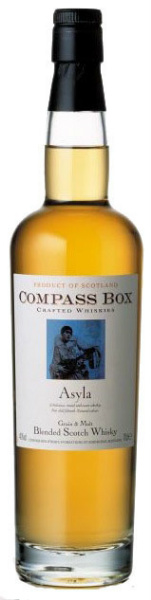
Compass Box “Asyla” (40%, OB, Circa 2006)

After the Chivas Regal 12yo, a Blended Whisky from a big company, let’s see what the little, more independent, guy can do. A guy with a passion for blending. Obviously I’m talking about John Glaser, and his Compass Box Whisky Company. A company that all Single Malt aficionado’s seem to love. We’ll have a look at an early “Asyla” here. Asyla is part of Compass Box’s signature range, or core range for us normal folks. A quick look at the website of Compass Box learns us that Asyla is the lightest of the signature range, calling it delicate and sweet.

Only Whiskies from first fill used American oak casks were used, for vanilla purposes obviously. The Malt’s used are Linkwood (30%), Glen Elgin (10%) and Teaninich (10%) and the Grain comes from Cameronbridge (50%). Sometimes Longmorn is also named as an “ingredient” for this blend, because the Compass Box website mentions that the Malts for this blend hail from the towns of Longmorn and Alness. Looking at the map you can say that Linkwood and Glen Elgin come form the town of Longmorn, so I’m not sure that there is any Longmorn in this blend. Since Asyla is around for quite some time, maybe the Malts that go into this blend differ from time to time. For now I’ll stick to Linkwood, Glen Elgin and Teaninich though. Before I forget, the other four offerings from the signature range are: “Oak Cross”, “The Spice Tree”, “The Peat Monster” and “Hedonism”. Of course outside of the signature range, a plethora of other bottlings exist.

Compass Box AsylaColor: Light gold.

Nose: Grainy, light, yet perfumed. Floral at first but also fruity, with a tiny hint of pineapple and green sour apple skin. Sometimes I even get a trace of lavas. Heaps of vanilla shoveled on top, and given some time even some spicy wood. More than a hint of Calvados, an Apple Cider distillate from Normandy or Brittany. Dry and powdery. Sweetness is mentioned by Compass Box themselves, but for me the nose doesn’t carry a promise of sweetness, in any way or form. Elegant and light, but alas also a bit thin and anonymous.

Taste: Paper and grain come first, after that a blend of sweetness and (virgin) oak, although no virgin oak was used for this one. The vanilla presents itself after the paper and grain, and a slight bitter note, fade out. Not a lot of development going on, and you’re probably not surprised this doesn’t have a long finish as well. The finish itself seems to be a bit unbalanced, due to some acidity from the oak. The oak seems a bit fresh, as in not used for a long time when it contained Bourbon (or Tennessee Whiskey).

To be honest other bottlings of Compass Box made me expect more from this. Something in the order of a variant of Delilah’s. It should have been more creamy and even more towards the vanilla note so vehemently advertised.

Sure. Whisky is the product of spirit and wood (amongst others), but the bitterness it could do without, and as I said, it should have been more creamy. If you can find it, get a Delilah’s by the same bottler, and you’ll know what I mean.

I do like a lot of Compass Box Whiskies, but this one is not entirely for me, and that’s a surprise, because I expected this would be better than the Chivas Regal 12yo. Maybe age does matter?

Score: 72