After all those fairly recent distillates, I guess its time to look at something older. This time we’ll have a look at a 37 year old expression of Glenallachie bottled by the Dutch Whisky Investors: The Whisky Talker. The Mo Òr line of Single Malt Whiskies was thought of as an investment, or as a luxury gift for business people. Sometimes you can even encounter a bottle like this in a super-duper hotel bar. Yes, Whisky is the new Swiss Watch or a premium golf-set. Glenallachie though, is one of the workhorses of Pernod Ricard, a laborer, meant for the Clan Campbell blend, not really a luxury brand isn’t it? But if you are worrying about the size of your next yacht, who cares? Ignorance is bliss. Let’s see if this old Glenallachie is any good.
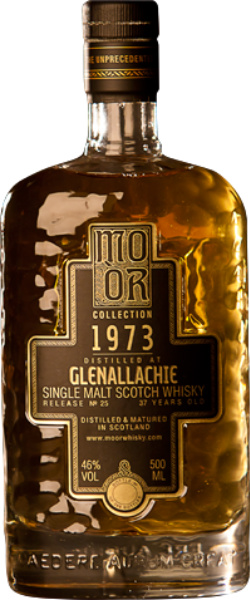 Color: Almost gold.
Nose: Soft and fruity. Next, some old bottle effect and great Speyside seventies fruity wax. Anoraks know this from Caperdonichs from 1972 and Tomatin’s from 1976, to name but a few. Vanilla plays a nice part in keeping the whole together. Definitely a (second) refill Hogshead. The cask wasn’t very active, but over almost 40 years, the wood did play it’s part in ageing this Whisky. Just let this breathe and it gets even better and better. Hints of old soft (sugared) mint in the background. Almond cookies with a bit of dust on them. Old wooden floor and a very distant smoky touch. The mint holds its ground and keeps accompanying the rest of the aroma’s from the nose. Great old malt, but it has its limitations. Lacks a bit of development compared to some of the (non-Sherried) greats from that era, but the whole is still fantastic and a treat to nose. Don’t get me wrong. Maybe this one shouldn’t have been reduced, although at 46% it’s still no dud.
Taste: Quite light and fruity. Sure, Speyside peach from old American wood. Hints of paper. Slightly sweet black tea with raspberry flavour. Especially here tasting it, the reduction shows itself. Making the whole a bit thin and shortening the finish. Also the cask seems to have been a bit tired. Hints of wood and sawdust and a hint of white wine. Sweaty high quality Sauvignon Blanc from the Loire. The wood shows a more soft mocha note now. Sawdust and pencil shavings. The mint from the nose stays behind in the back of my throat.
Whisky from a great time, but not the best expression from that time though. Probably a bit too tired a cask, and certainly should have not been reduced. It may have been already a bit frail and reducing it may have dulled it down. However, it still is an example of aged Speyside Whisky from the era, with this wonderful fruitiness and lighter style. I don’t know why, but this screams for some Roxy music from 1973. “The Bogus Man” sounds just right.
Points: 87
Followed this up with the 1976 Benromach. Both are 46% ABV, and both score 87 points, but the The Glenallachie is lighter, and smells more like a Whisky from another time. I would prefer the Glenallachie, especially for its nose.
 Color: Orange gold.
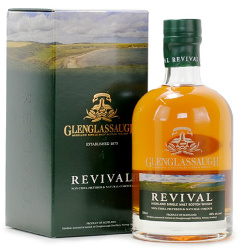
 It’s been a while since a bottling of Dutch indie bottlers Mo Òr graced these pages, but it certainly is the first Glenglassaugh. Last MoÒr was an old
  So any distillery that reasonably could be reopened is reopened, the rest is demolished, stripped bare, or otherwise made unusuable. I wouldn’t be surprised anymore if Diageo decides to cash in on the name, and reopen Brora! Besides this, more and more new distilleries are popping out of the ground like mushrooms on a forest floor…
 Color: Copper Brown.
 Color: Full gold
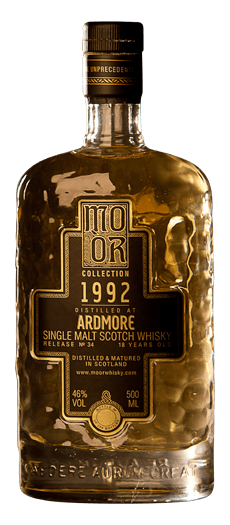 Color: White wine.
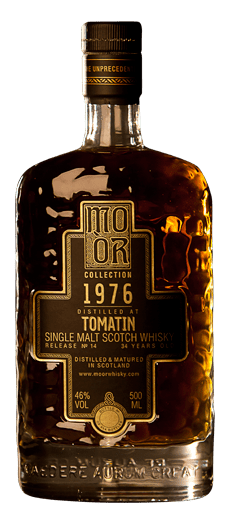 Color: Copper Gold.
 Next up Glen Scotia, also a first on these pages. Glen Scotia hails from Campbeltown, once a big place for whisky with regional status (again). Try to imagine a place that has almost 30 distilleries working at one time in the 19th Century. Not so long ago this Glen Scotia was the ‘other one’ from Campbeltown after the well-known Springbank. Today Springbank makes also Longrow and Hazelburn. And from the same owners the recent ‘addition’ that is Glengyle Distillery (Kilkerran). Let’s say that Glen Scotia is the only Campbeltown distillery not owned by the people of Springbank. Owner today is Loch Lomond Distillery Co. and the place is fairly run down. When the distillery was mothballed in 1994, the staff of Springbank restarted intermittent production in 1999, not to lose the regional status of Campbeltown. A status lost eventually, but eventually reinstated.
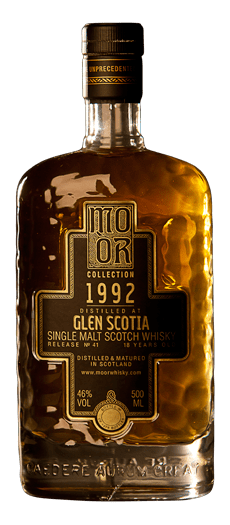 The distillery was founded in 1832 by the Galbraith family. For one reason or another the label on the bottles state 1835. Lots of changes of ownership during the years and even some closures in 1928 and 1984. Since 2000 Loch Lomond has taken over Glen Scotia and runs the distillery with its own staff.
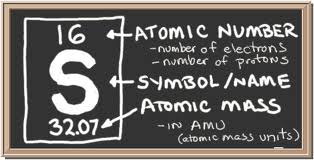 I was asked to keep an eye out for sulphur in this one. It’s there slightly on the nose (as a burning match). But it is more pronounced on the palate (the bite here comes not only from the wood, but also from the sulphur. Usually there is some sulphur in Sherried Glen Scotia’s. Lots of it in a 1991 Cadenheads offering if I remember correctly. It’s there on the palate and even more so in the finish (late). Is it ruining the balance or the palate? Does it disturb me? No, it’s some kind of good sulphur. it’s somewhat hidden. It’s there but not in the usual obvious way. That happens sometime, that’s why I called it good sulphur. Still, overall there isn’t a lot of sulphur in this one, so don’t worry. And hey, sulphur is good for the skin!
 Why not try another Balmenach. Earlier I tried a
  Color: Light Gold
 Color: Gold
 Master Quill