Irish Whiskey Week – Day 4: The Wild Geese Single Malt (43%, OB)

Irish CloverDay four already of the Irish Whiskey Week, so we are more than halfway! Today we’ll have a look at The Wild Geese Single Malt Irish Whiskey. There is no age statement on the bottle. To be frank, I never heard about this one before even though they have managed to win a lot of awards and even claiming that it was voted Best Irish Whiskey. That in itself is always a statement I find pretty suspicious, especially since it is not clear at first who voted it the best Irish Whiskey around. Nobody asked me!

After some research it were the Wine & Spirits Wholesalers of America (WSWA) that voted it the best Irish Whiskey in 2010. The results of 2010 were impossible to find, but I did find the results of 2014. This year there wasn’t a best Irish Whiskey, since no Irish Whiskey was submitted. What was submitted were five Scottish Whiskies. Benriach Horizons (Double Gold and voted best Scottish Whisky), Glenrothes (unclear which expression, Gold) and three Whiskies from the Lost Distillery Company: Auchnagie, Stratheden and Gerston (all three won Silver). Well excuse me, for not taking the claim all too seriously! Oops now I don’t have any room left to tell you about The Wild Geese themselves. Oh well…

The Wild Geese Single MaltColor: Light citrussy gold, pale

Nose: Floral, light and fresh nose. Fruity too. Very fresh with citrus notes on top, lemon, lime, lemon curd, all that sort of thing. Underneath that a promise of sweetness, with lots of vanilla and a tiny hint of sappy new wood. leaps out of the glass giving at lot from the start.

Taste: Here the sappy wood is up front, hazelnuts and quickly a shot of sweetness and vanilla, then acidity and fruit, with the floral part pushed more towards the finish, again moving into the realm of washing the dishes. The citrussy-vanilla work well together, but the wood somehow is less of a good balanced component. That could have been better. The finish is warm, toffee like and has some staying power. Funny enough it seems to have a sort of gritty texture.

In the end it is light, it is Irish, therefore easily drinkable. It is nice, it is young and fresh. Not extremely expensive and well worth a go if you have a substantial collection of open bottles. It also will do a good job for novices exploring the Irish. It’s not the best Irish I have tried. I still like Redbreast 15yo (especially the L5 batch) best, but I may have mentioned that before…

Points: 79

Irish Whiskey Week – Day 1: The Tyrconnell (40%, OB, Circa 2008)

Irish CloverTime for another of Master Quill’s “Weeks”. This time we’ll be doing the Irish Whiskey Week. Irish Whiskey is something I would love to love. Ireland is a beautiful country with lovely people, and in Whisk(e)y they have become something of an underdog. I already have on my lectern a very good Redbreast 15yo that was bottled in 2005, and that bottling especially, turns out to be somewhat of a cult Whiskey, but I like to have some more excellent Irish Whiskey on there, so the search starts here…

The Tyrconnell (a racehorse) was once the biggest brand of the Watt distillery which dates back to 1762. Still on the label is the year 1762 as is the name of Andrew A. Watt & Co. The modern Tyrconnell was revived by the Cooley distillery, which today is part of Beam Suntory. Cooley also revived the Kilbeggan brand name, and Beam Suntory today calls the company Kilbeggan Distilling Co., with Cooley and The Tyrconnell to be two of its brands. There are two more brands you might have heard of: Greenore (a Single Grain) and of course Kilbeggan itself. As could be read earlier Jack Teeling sold Cooley to this group and started fresh with Teeling Whiskey.

The TyrconnellLets have a look at two Tyrconnell’s, first the standard The Tyrconnell at 40% ABV with no age statement (NAS), and the next review will be about another Tyrconnell Single Malt Whiskey.
Color: Light gold

Nose: Petrol (as you can have in a good Riesling) and malt. Fruity, as in apples and pears. Dry grass and toned down lemon sherbet. Machine oil and honey. Dusty toffee. Sweet, but more from fruit sugars and honey, than from sugar itself. Very nice and also interesting nose with a little bit of pepper and toasted wood. Industrial, but I very much like that.

Taste: Sweet and malty. Some of the Industrial warm oil notes return in the taste. Petrol is here too. Malty and sugary sweet, with some air it develops into honey sweetness. It is young, yet not vibrant, slightly under-developed and for my taste a tad too sweet. Entry into the mouth is nice and oily, sweet, than a nice body shows itself, but quickly hides. Towards the end everything seems to turn into water. Extremely short finish with some woody bitterness.

Very interesting Whisky with a nice, but light, industrial revolution profile. The old owners issued quite some single cask bottlings of The Tyrconnell and I hope the new owners will do the same, hopefully at cask strength. For a NAS bottling it is quite nice, and sure shows some potential. Tweak the stuff with some older ex-Bourbon cask Whiskey (for a longer finish) and maybe up the strength a bit and in my opinion you may have a winner!

Points: 74

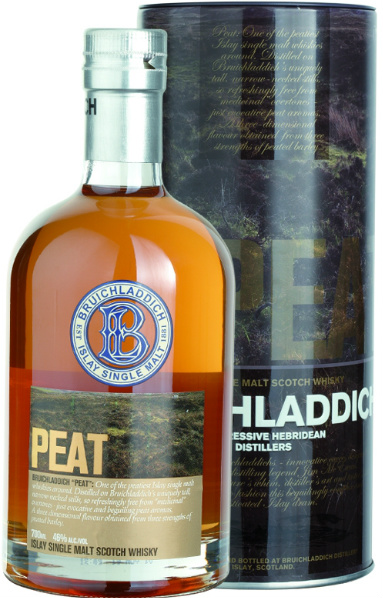
Bruichladdich “Peat” (46%, OB, Bourbon Casks, 2008)

Suddenly I had a craving. Lets try something with peat, so I picked this fairly new, but already discontinued Bruichladdich “Peat”. In everyday life, Whiskies released under the “Bruichladdich” brand name are unpeated. Bruichladdich has other brands for their peated Whiskies, like Port Charlotte and Octomore. This Bruichladdich “Peat” was peated up to a phenol level of 35 ppm, which compared to Octomore is pretty “light”. “Peat” bares no age statement, and will probably be young, but there are several other young Bruichladdichs around that are pretty good. Islay Barley (2006, 2007 come to mind)…

Bruichladdich Peat (46%, OB, Bourbon Casks, 2008)Color: Gold

Nose: Slightly peaty, with dust, elegant wood and vanilla. Very “friendly” smelling. Smoke on top. Young and likeable. Fruity. Distant pear, banana, Galia melon and other (sugared and/or dried) yellow fruits (trail mix). Fruitiness is not upfront. Slightly meaty. I suddenly have a craving for bacon! Nice.

Taste: Young, light and malty. Lots of licorice (in many guises) and some wax combined with old wood. Sugary sweet alcohol. Very toned down and laid back. Nice hints of oak and dry barley. Lots of licorice in the finish, with hints of Marmite in the finish too. Although maybe young and generic, I found it to be a nice addition to the peat-universe. Elegant and relaxed. Salty lips. I like it a lot actually. Imagine this with more complexity and sophistication, now that would be stellar!

Maybe its simple yet it is also very delicious. A nice companion to heavy hitting 10.000 ppm peat bombs. This has 35 ppm and is a very friendly Whisky, that also used to be very friendly on the olde wallet.

Points: 84

Arran “Amarone Cask Finish” (50%, OB, Violet label, Circa 2012)

Here is the second Arran on these pages. Earlier I reviewed a pretty good 16yo and usually Single cask bottlings at Cask Strength are very good to. When they start to fiddle a bit with their Whiskies I tend to not like Arran that much any more. So I don’t have high hopes for this funky colored Amarone finished Arran…

Arran Amarone Cask Finish (50%, OB, Violet label, Circa 2012)Color: Salmon (Somewhere between orange, bronze, light red and pink). Very strange.

Nose: Malty and very winey. Wine gums. We know its Amarone wine, but it smells more like a less fruity, Ruby Port. Fruity and dusty, woody and vegetal. This is hardly Whisky, but it isn’t wine either. Very simple and the wine overpowers everything. It’s hard to discern anything. No sense in nosing this any further.

Taste: Sweet, milk chocolate mousse, hard fruity candy, but not wine gums. Pretty harsh. To sweet for my taste and its a bit anonymous. What is it actually? The finish has staying power, but is a bit, ehhh, unpleasant for my taste. Funky, but not terrible. Don’t get me wrong.

Yet not uncommon, this is more or less one of the strangest colored Whiskies of late You don’t expect to have Whisky in your glass as long as you don’t smell it. Actually the smell isn’t quite characteristic for a Single Malt either. The Amarone wine dominates the color, but not the nose and for the taste, well, you be the judge. I would recommended this to a bartender, because to me it seems an excellent spirit for a summery cocktail. Something has to be done with this…

Points: 74

Springbank “CV” (46%, OB, 10/12)

What does 10/12 mean, you might ask? Well, usually there are codes printed on the back of the front label, which you can read it through the glass. I was told the digits before the “/” depict the year of bottling, and the digits after the “/” is an operation number for that year, which in this case is a bottling run. Here 10/12 stands for the 12th operation of 2010, probably in January. In this case a bottling run. But also a marriage of casks or re-racking of casks get an operation number, so it’s not only bottling runs that get an operation number. There was at least one other bottling done of the Springbank CV in 2010 and it’s code is 10/123, probably somewhere from march through may of 2010.

Springbank CV (46%, OB)Color: Pale gold

Nose: Funky, raw and oily with added citrus notes. Reminds me of Kilkerran. Clay and yellow fruits. When concentrated, peppermint. Nice fresh oak, tree sap. Lemon curd and overall very intense and young aroma’s. Hint of unripe pineapple with vanilla and distant smoke. The wood also gives a nice spiciness to it, given some time to breathe. Good nose.

Taste: Less oily and seems peaty. Young, not completely balanced yet. peppery, paprika attack. Again this reminds me of Kilkerran. Oily and hidden sweetness. Traces of cardboard and oaky bitterness. It’s youth comes through in the simpleness of the dram, meaning that it’s not very complex and I was quite surprised by the weakish finish.

The initial mouthfeel is nice, so is the body. The nose shows a nice potential. Good Whisky just too young. Whisky like this needs some age to make it to the finish. I like Springbank and even here a lot is working for me, just the finish, thin, paper and watery, and that from a Whisky that was bottled at 46% ABV. Quality stuff, just bottled to early.

Points: 84

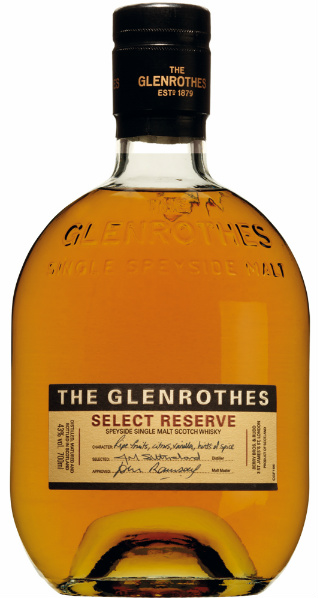
Glenrothes “Select Reserve” (43%, OB, Old Label, Circa 2011)

Yes another cannon ball bottle with Glenrothes Whisky in it. This time no vintage, but yes, we do have another new Whisky without an age statement. Probably young stuff, also since the Whisky isn’t very expensive. Nope not expensive at all. The bottle still has a cork in it albeit a plastic one. Nothing wrong with NAS Whiskies, just have a look at any Kilkerran for example, and the plastic cork is far better suitable for its job than a natural cork, with all is problems, like breaking whilst opening the bottle. I just hope the solvents in the soft plastic of the cork don’t mess with the taste of your Whisky. I just hear the industry whispering in the wind that Whisky wasn’t meant to be kept at home for a long time. Ha!

This Whisky costs about the same as The Glenlivet French Oak I reviewed last. That Whisky does have an age statement: 15 years old! Lets keep that one in kind whilst reviewing this Glenrothes.

Glenrothes Select Reserve (43%, OB, Old Label, Circa 2011)Color: Light gold

Nose: Malty and lots of vanilla and cream. Marshmallows. Dusty, slightly grassy (dry) and in the distance a wee bit of white pepper. It’s also fruity but I can’t get my finger on it, what kind of fruit is actually here. You know it’s fruity, but it seems to borrow fruity elements of loads of different kinds of fruit. Hints of dry paint and Macchiato Coffee.

Taste: Light, fruity and thin. Sweet. This one is quickly gone, yet the finish is warming and the fruit part of it is pleasant. Sweetish and creamy. Little bit of banana and lemon pudding. Definitely malty. I would have never guessed this is 43% ABV.

For a middle-of-the-road dram, I liked the nose of the Glenlivet 15yo French oak better. On the palate this Glenrothes is less interesting and a bit soft. The finish is too short too. Comparing this with the Glenlivet 15yo French Oak Reserve, even though that one is less fruity, it was more exciting due to the backbone the oak gave it. This Glenrothes is softer and fruitier but even though it is all that, it isn’t more pleasant. It is slightly less balanced and a wee bit weaker (also in the finish), so I score this a point below the Glenlivet French Oak Reserve.

Points: 81

Bowmore Small Batch (40%, OB, 30.000 bottles, 2014)

Benefitting from the success of the Tempest (Small Batch) series and especially from the instant hit The Devils Cask (Small Batch) was. Here comes a new Small Batch release from Bowmore. One without an age statement and considering the usage of first fill and second fill casks, this should be very akin to the tempest series. This Small Batch however, is reduced to 40%, has no age statement and costs next to nothing, so what to expect from this new-born release?

I’m still expecting quite a lot since I really like how the newer 12yo’s are turning out to be. The only beef I have with that one is the reduction to 40%, whereas I believe 43% or maybe 46% would have made this already great Whisky into something more stunning. However, the 12yo is very nice and this Small Batch fits nicely besides the 12yo and several other expressions from Bowmore in the group of entry-level Islay malts without overpowering peat. They leave that to Ardbeg, Laphroaig and Lagavulin, although I feel even some of these are churning out more and more, less hefty Whiskies too…

Bowmore Small BatchColor: Light gold

Nose: Fatty, vanilla, citrus fresh. Barley foremost, but also some forest plants like fern and warm earth. Forrest floor again without the wetness or mushroom components, yes a bit dusty. Smoke and hidden (behind the smoke) peat. Vanilla again, with tree sap and soft fresh-cut wood. Also yellow fruits play a big role in this whisky, like dried apricot. Smells nice and all components of the nose fit nicely together. Well crafted again, as I’ve come to expect from Bowmore’s Rachel.

Taste: Sweet, and some prickly smoke. Fresh wood. Did I mention it was sweet? Licorice and again forest plants. Black and white powder (licorice) and sugar-water. Absolutely not complex, but extremely nice to drink, too easy maybe, and well made. Shortish finish, with nothing in particular to mention, just take another sip. Keep in mind when you are buying a bottle of this, you’re probably going to finish it quickly. This one can stay as it is, but like the 12yo, I wouldn’t have minded this being some points higher in alcohol.

Easy, lovely, well made Whisky, not stong in any way and not your typical Islay Whisky too. Dirt cheap, often on sale and lots of quality to boot. Probably sells well so now its time for the new Big Batch series!

Points 84

Thanks go out (yet again) to Laura!

The Glenlivet Guardians Chapter (48.7%, OB)

Once upon a timea few teams were sent out around the world by The Glenlivet Distillery with three potions made by Whisky wizard Alan Winchester. Wizard Alan wanted to know the taste of the world, or should I say, the tastes of the four corners world. Thus three potions were concocted and named as follows:

  • Revival, Exotic & ClassicClassic: The quality of timelessness and enduring excellence,

  • Exotic: The quality of rich diversity and enigmatic depth,
  • Revival: A regard and passion for past styles, reinterpreted with a contemporary twist.

With lots of patience the teams set out and traveled many, many miles to visit groups of Whisky geeks all ’round the world. I use the term “geek” lightly, because I’m a Whisky geek myself and probably a geek in many other respects too, but I digress…

37 countries were visited, and many different countries showed many different results. Some liked the Classic potion best and some liked the exotic potion better, but the next country liked the revival potion the best. Valuable information in its own right, since different places have different tastes. Alan WinchesterAs luck would have it Mr. Al-Kindi, an Iraqi mathematician from the ninth century A.D., planted a seed that would eventually become statistics, and with this statistical knowledge one of the potions was voted the best by all members of all countries that had the opportunity to try all of the potions. The expression called “Exotic” was chosen by 39% of the tasters. Which brings us to today. The exotic-expression mentioned above is now bottled as The Guardians Chapter, and here are my findings…
Color: Orange Gold

Nose: Lots of Sherry upfront with creamy butter. Very full and bold. Whiffs of citric acidity. This Whisky really wants to leap out of the glass, to be snorted up first, to asses its merits and make you want to take a sip, but lets not indulge ourselves just yet. Very heavy on the Sherry actually, thick and cloying and very sweet. A bit heavy and aromatic. It was first called “Exotic”, but the Alpha I reviewed earlier, was more exotic that this. Lots of sugared fruits come next. Apricots, lime, hints of banana, and finally also some oak comes to the front. All in all a very bold expression, no subtleties here. After the oak a breath of fresh air emerges from my glass. Well crafted and modern Whisky. It smells a bit ‘designed’. Bold aromas of fruit and sweetness. Perfect for a young public that wants to be introduced to Whisky. Extremely drinkable and I guess a bottle like this will be finished quite quickly. More citrus now, toned down orange skin. The wood gives off whiffs like it has some virgin oak in the mix.

The Glenlivet Guardians Chapter

Taste: Sweet yes, caramel and toffee first (American wood). Very syrupy, with some elegant wood and wax polish. A little bit of (Sherry) cask toast (with tannins) and tar (European wood). A vegetable and dry grassy note. Warming and a nice finish. Good balance. It’s all here, a new oak twist with thick cloying Sherry notes and nice clean Ex-Bourbon cask in the mix.

Just like the Alpha, a nicely crafted Whisky. Very likeable and drinkable. A modern and very bold NAS Whisky that wants you to know it’s here. I guess this is somehow aimed at a young public, but I can imagine this sitting in my collection of open bottles, this will be empty soon. Compared to Alpha, this is definitely bolder, heavier and more up front. This is a loud whisky where Alpha was more fresh and elegant. For me the Alpha was even more of an exotic whisky. Nice to see how different these two limited releases of The Glenlivet are, and they are finally moving into the 21th century.

Points: 85

Thanks go out to JJ “The Marathon man”, for again, this rather large sample.


Amrut Intermediate Sherry (57.1%, OB)

Amrut (अमृत) means something in between elixir of life and nectar of the gods. Amrut Single Malt Whisky is made by Amrut Distilleries which was founded in 1948, but just as with Paul John, it took them some time (untill 2004) to release their first Single Malt Whisky, with that, they were the first indian distillery to do so. In 2004 Amrut released its first Single Malt Whisky in Glasgow Scotland, (in the lion’s den you might say). Today and that isn’t even a decade later, Amrut already released a lot of different Single Malt Whiskies. Peated and non-peated, matured in Bourbon, Sherry, Brandy, Cognac, Port and all sorts of different casks. Amrut have even released in one bottle, Whisky matured in India and in Europe, or using malts from different continents. Lots of thinking out-of-the-box.
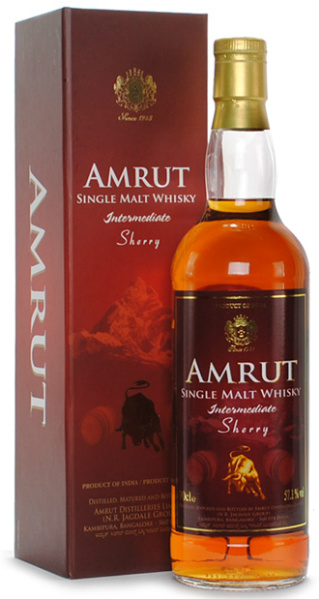
Amrut Intermediate SherryColor: Full ocher gold.

Nose: Sweet, buttery and creamy at first. Hints of malt and yoghurt. Even smaller hints of licorice and tar. Big bold fruity Whisky. Extremely likeable nose. I’m guessing this particular Sherry cask did some good work. But there is more, it also has a flowery element mixed in with the vanilla. Quite sweet and has a little smoky bite. Nice and complex, well balanced nose. Sometimes vegetal and smells of a little piece of lit cedar (to light a cigar with). Pencil shavings. The floral part gives of whiffs of floral soap, which adds to the complexity without making the Whisky soapy. The nose gives away the Indian origin.

Taste: Sweet, sherried, fruity and has a bite given by the high ABV, but I still won’t water this down, far too nice already. Fruity and cookie dough. The sweetness dissipates and gets more drying towards the oak. Sherried and toffee. Cask toast. Good long fruity finish, with a slight hint of bitter wood, which fits perfectly to the initial sweetness this Whisky has. A little bit less balanced, so it could have been even better than it already is!

Again a perfect example of the level the Indians got to. The Paul John Edited is already a great Whisky, and shows how a relative newcomer can make good Whisky. So I’m guessing the still is a lot of room for improvement there. Amrut is at it for a longer time, but as a Single Malt Whisky producer not even 10 years. Amrut are showing with this Sherried Intermediate that they already are giving a lot of Scottish Whiskies a run for their money. I consider this one is a must buy, I already secured myself a bottle. Great Whisky. I’m expecting great things from this distillery (as well as from John Paul). Way to go India!

Points: 87

Thanks Ashok Chokalingham for the sample, unfortunately I only had one sample bottle with me…

Paul John “Edited” (46%, OB, Batch 1, 2013)

Being a big fan of the Scottish tipple, I somehow ignored the products made in other countries for a long time. OK, I started out with Whiskey from the United States and very early on, some stuff from Ireland and Canada made its way onto my lectern, but that’s about it. If I tasted something else, I didn’t like it very much back then. Yes, back in the day the Whiskies from other countries, just weren’t all that good. More than a decade has passed now, and visiting the odd Whisky Show, I’m more and more exposed to whiskies from those “other countries” and guess what, they actually became pretty good! As we all have read earlier, Cyril Yates made some pretty good Whisky in New Zealand and here we have a Whisky from India. Whisky is getting really global!

Paul John Single Malt Whisky is made at the John Distillery in Goa, India. The distillery only started in 1992 and in just 20+ years became a big player on the Indian Whisky market. Paul John Single Malt Whisky is a more recent addition (presented to the world on the 4th of October 2012 in London, England) to the portfolio that also contains the regional brand Original Choice, which sells 10.000.000 cases annually. The company also sells another brand of Whisky, but also Brandy and Wine. According to the distillery they only have one thing in mind doing business, to make the best product possible…

The core range of Paul John Single Malt Whiskies consists of the unpeated “Brilliance”, this lightly peated “Edited” and up untill now three Single Casks. The peat for the Whisky I’m reviewing here was sourced from Aberdeen and Islay, and I guess there is no better island to source one’s peat from than Islay! 25 to 30% of the Whisky in this vatting is peated to a level of 35 ppm (parts per million) of phenols, resulting in a Whisky that is has a peating level of 8 to 10 ppm. Yes, that’s lightly peated alright. The Whisky has matured for 4 to 5 years in first fill American oak. If you are expecting a (heavily) peated Indian Whisky than this is not for you. If you’re open to a peated whisky where the peat is not about…in-your-face peat, then you’re in for a treat, if you let it.

Paul John EditedColor: Light ocher gold.

Nose: Malty and the slightest hint of peat. Perfumy and needs the warmth of your hand holding the glass. Hints of oily sowing machines. Powdery. Hints of citrus and vanilla ice-cream. A wee bit of drying wood, but when it gets to the right temperature is shows great balance. The powdery element is connected to some late fruitiness, that reminds me of vanilla yoghurt with apricots and mango. Mellow.

Taste: Malty again, and here the perfect sweetness does show up with toffee, mocha and vanilla. It was less sweet on the nose. This is nice! Extremely drinkable and 46% seems perfect for the profile. The ABV delivers a nice bite, but not alcoholic. Again a little bit of wood, but not typical oak, more like cedar or even plywood. I know this does sound horrible here, but it absolutely isn’t. The wood is in a curious way spicy and it delivers another type of bite or character, that sets it apart from most Scottish Whiskies. In the (medium) finish a little bit of paper and smoke appears (not peat).

Elegant stuff with a lot of potential. It is already a great start for Paul John, but I have a feeling they will make this even better over time. It’s time for the Scottish to wake up. The days of extreme pricing might soon be over and the consumer will wise up and turn to other whiskies, like Paul John and Amrut from India, amongst many, many others.

Points: 84