Longmorn 1967/2003 (52.2%, Scott’s Selection, Speyside Importing Company, Duxbury MA USA, 750 ml)

Longmorn is a distillery with a huge reputation with Whisky aficionados. If you encounter a person who identifies as a Whisky aficionado and you start talking about Longmorn from 1971, chances are quite big that a person like that will start talking enthusiastically, not stopping for at least half an hour. Reason for this is that there are a lot of really, really good Longmorns from 1971. Actually, there are lots of really, really good Longmorns from the sixties and the seventies. The highlight of the Longmorn-era, although some feel that Longmorn still is very good. Sure, there are a lot of good Longmorns in more recent decades as well, yet those from the sixties and seventies are in a class of their own. Really, really good. Focusing now on Scott’s Selection, there are two dark sherry bottlings from 1971 bottled by Scott’s Selection that are amazing. One bottled @ 58.6% and the other one @ 57.8%. Both bottled in 1999, but there are two (?) others, one bottled in 2000 bottled @ 52.3% (one that I have never ever seen in the wild, no clue is this another dark one or not and if it actually exists to boot). In 2004 one was bottled for the US market, this one is definitely not dark. In 2003 and 2004 several more, “lighter”, Longmorns from 1967 and 1968 have been bottled for the US-market. Let’s have a look and a taste one of those, the 1967 Longmorn bottled in 2003.

Color: Full Gold.

Nose: Waxy (almond wax, if that exists) and super fruity. Soft warm fruit and candied fruit both mixed with a little bit of sweat. Old style. Old style is often riddled with funky organic aroma’s, which might be quite negative to read for some, like sweat for instance, yet those funky aroma’s are always very nice in an old style Whisky. Old clothes cabinet. Old, time-worn, smelling wood. Great complexity. Chewy with hints of black coal. Nope they don’t make them like this anymore. Soft, wet wood. Not spicy nor harsh. More wax mixed in with the wood. Old style dust and lots of old style yellow fruits. Deep and brooding. Hints of white chalk and white latex wall-paint. Old bottle effect combined with a minty note. Hints of peach, dried apricots and ripe, yet not overpowering, banana. Cherries on syrup. I don’t pick up on the banana every time I smell this though. Steam, also with hints of latex. Well balanced. Vegetal and green, especially after some time of breathing. Late to the mix: pencil shavings as well as some cold dish water. Maybe even a tiny hint of smoke, but this also can be the toasted bit from the cask-char. The whole nose has this promise of a sweet Whisky. The colored bits of Licorice Allsorts. If you leave the (not empty) glass standing around for a bit, notes of honey emerge (as well as some plastic). The empty glass the next day has even more of this plastic aroma. However, needless to say, but the whole is very nice, very nice indeed.

Taste: Starts powerful and spicy. Very fruity and a lot more wood-influence than expected form the nose. Where the nose finished on Licorice Allsorts, here on the palate it starts with it. Candied anise seeds. So yes it starts out sweet, but not overly so, especially when the wood kicks in. Slightly soapy. Green again with half-bitter hops and some cannabis. Waxed nuts and waxed wood with a decent amount of bitterness. Just enough for the whole taste of it. This has a beer-like quality to it. Half-sweet and very fruity again. Not only yellow fruits, but some red fruits as well. Sweetish strawberry and cherry juice combined with hints of vanilla. The minty bit comes through here as well as again the slightly soapy bit. Just like the bitterness, the minty taste comes from the wood. This is a Whisky that grows even more complex on the nose when you finally start sipping it. You’ll probably take a while taking in the complexity of the nose anyway. Finish shows some more cask toast and retains the soapy taste, which strange enough works well this time. Very fruity with a slightly bitter aftertaste from the woody backbone, especially if it got time to breathe. Great dram, just not as good, but also very different, as the darker 1971’s.

Hard to say really in what kind of cask this was matured in. First guess would be a Bourbon hogshead, not a barrel and also not a first fill. (Second) refill Sherry, could be.

Points: 91

Deanston 24yo 1996/2020 (50%, Hunter Laing, Old Malt Cask, Sherry Butt HL 17661, 452 bottles)

Deanston is not a Whisky or distillery I was interested in for a long time, no Deanston came much later. I obviously knew Deanston existed, but I felt it didn’t get much love, and you hardly read about Deanston back in the day, so I didn’t bother even to buy it and others didn’t bring it to tastings I attended. So it flew a long time under everybody’s radar until… In 2015 Deanston released their 20yo matured in Oloroso casks. All of a sudden Deanston found itself on the Whisky map, and people started to like it. Today Deanston is seen as distillery that puts out great honest stuff, a bit of a go-to Malt if your local watering hole hasn’t much stock of Springbank, a distillery with a similar “feel”. I liked the 20yo as well (someone brought it to a tasting), but never got to buy one, instead I went for several expressions of their Organic Whiskies. I suspected these might be maybe a bit of their take on a similar series from Bruichladdich, only those are much younger, or even the recent Springbank Local Barley’s. However the first bottle I opened and reviewed here was a Bordeaux Finish I probably got a great deal on, since I am usually very careful with Wine finished Whiskies. This Independently bottled Deanston is only the second review of a Deanston on these pages, but certainly not the last, since Deanston turned on their transponder and Deanston is now on everybody’s radar.

Color: Orange Gold.

Nose: Elegant with nice clean oak notes. Fresh smelling, almost floral even, but at the same time also old and distinguished. A deep fruity, partly waxy and well aged smell (that’s the old style). This also might have to do with the glass and the Whisky warming up when holding the glass in my hand. Creamy vanilla dust with sweet barley. Excellent balance. The Sherry adds some red fruit, but not a lot, also a fresh sense of acidity pops up, next to a paper-note (paper without ink). Bigger role than expected is played by a sweet and minty aroma. I may have mentioned Menthos before. But it’s like eating those. Hints of citrussy dishwater liquid cut through the waxy fruitiness. Next more freshly shaven American oak, mixed in with some toffee and/or caramel. On occasion it smells slightly too dry, because of the fresh oak notes, to be a true dessert Whisky. Now it’s closer to an aperitif because of the lack of “bigness”, or is it? Remarkable nose, it seems like it phases in and out of different aromas and notes, phasing out and phasing back in again over time. It smells complex, but also like it won’t be big on the palate. We’ll see. Nice smell of red fruits like a good old Sherry cask would impair back in the day. Herbal and vegetal as well. Licorice with horseradish. Can’t really put my finger on it now, what this herbal bit precisely is, although there is some lavas in there, but wait there is more. Cumin with gravy, yet still more. I remember the smell of this wood from casks that held Red Wines. Creamy, so American oak ones. This Deanston has a lovely depth to it. Smell it with a low flow of air, but smell it for a longer while (in one go, without passing out that is) to unlock all the underlying beauty this nose has. More of this minty acidity, which seems to be not fully integrated. Its definitely there, this slight unbalance, but on the nose its a minor gripe. The back of the smell feels like rain on earth on a dull day.

Taste: On entry, fruity, less sweet than I thought. Nutty toffee with hints of cannabis, and yes a bit thin, but also very tasty, well balanced stuff. Quite waxy and fruity, again old style and warming. Watered down toffee. Good balance, especially if you let it breathe for a while. Definitely let it breathe! The start is very tasty indeed. It matches the nose. Wood has a soft, yet big presence, but not only. There is a sense of fresh oak as well. Somewhat prickly and spicy, wet wood yet also toasted cask, giving it structure. More than in other Whiskies, the wood plays quite a big role in this one. A lot of shades of wood are passing by, and most surprisingly, woody bitterness isn’t one of them. A lot of great stuff is going on. Pecan ice cream, with a tad of warm honey and the taste of perfumed wood. This Whisky would make for a fantastic ice cream flavour. A kind of wet bitterness to the wood. Toffee here as well. This is a very, very interesting Whisky, tasty as well, not for novices though, since you need to be somewhat experienced and open minded to fully “get” it and it would be a waste of money if you’re not there yet. It’s not cheap, nor is it an easy Whisky as well. Again one that works well now when analyzing, yet somewhat less so when casually sipping. I like it better now than when I try it when watching a movie.

This one you have to work a bit, most of the nice bits aren’t well noticed when casually sipped. This really needs your full attention. A few years back I tried a wonderful 25yo Deanston from Hunter Laing that was much easier (Thanks Paul!), Bigger, right out of the gate, and one that did not need work from the taster at all. I might have expected more of the same buying this one, but its different, is it worse? No probably not, this one is beautiful as well, maybe even more complex, it only needs your attention some more. To sum this one up: toffee, (red) fruit, and wood. By the way, this one definitely needs a lot of air, the second half of the bottle was most definitely better than the first.

Points: 89.

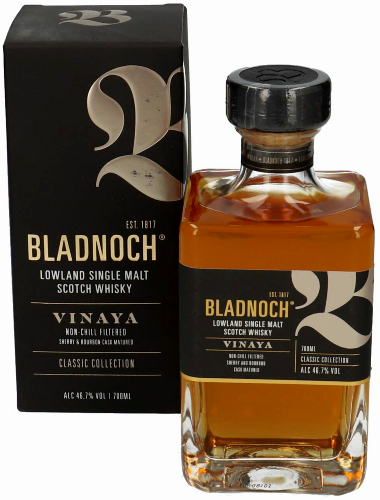
Bladnoch Vinaya (46.7%, OB, Classic Collection, 1st Fill Sherry & 1st Fill Bourbon casks, 2021)

Only the third review of a Bladnoch on these pages, I actually thought there would be more. I guess the first review of the 8yo Beltie Label was a true learning experience to get to know Bladnoch. Bladnoch had a bit of a reputation and that particular bottle when freshly opened just confirmed this reputation. If I’m not mistaken the 8yo fully came out of the production when Raymond Armstrong was the owner. He produced mostly between 2000 and 2009. However, the more I tried it and the more air went into the bottle, that’s when the magic started happening.

Fast forward all these years (since 2012) and now Bladnoch is one of those “obscure” Malts that I really like. Between that review and the next, Bladnoch Distillery changed hands, and the second review (in 2021) was the official 10yo bottled in 2018 by the new owner David Prior. David’s Bladnoch started production in 2017. Comparing both reviews you can clearly see I warmed up completely to Bladnoch. When I finished the 10yo I replaced it with the Vinaya, which is a NAS Bladnoch, again from the new owners, to see how I would feel about another young Bladnoch like the 8yo, now that I’ve become fond of Bladnoch. Would the Vinaya have a similar false start like the 8yo Beltie, or is it more like a NAS version of the 10yo I mentioned earlier. First of all the difference, apart from the age statement, is that Vinaya has in part matured in Oloroso Sherry casks, where the 10yo matured solely in Bourbon casks. Vinaya uses older casks from Raymond’s Bladnoch blended together with (probably 4yo) Whisky from David’s Bladnoch.

Color: Gold.

Nose: Malty, pleasant, with slight notes of diluted Red Wine, which is also noticeable as an added acidic note. Also candied lemon seems present. Fruity overall. Fruit syrup. Since we know that this has some young Whisky in the fold, I’m happy to report that there is no sign of new make spirit or anything that resembles that. Creamy notes from American oak also some notes of toasted oak. It has a slight “bite” to it, which is very nice in combination with the thick fruity aromas. Yet again a big smelling Lowland style Malt from Bladnoch. Lowlanders are often grassy and hay like (and so they should, its their heritage), yet Bladnoch in general are pretty creamy and Vanilla-like, and all of this in a big way. Maybe that’s why I always liked St. Magdalene (Closed) en thus Bladnoch (Very much alive again). So the nose is big, big on the traits of a Whisky matured in Bourbon casks. Bourbon definitely plays a larger part in the profile of this Whisky than the Sherry does. Quite surprising, since the Sherry casks are first fill as well. Candied pineapple, (yellow) fruity aroma’s emerge. Hints of paper as well as traces of burning paper, Wine again and warm butter. Dust and the wood of an old dried out cask. Pretty mature smelling for a NAS-Whisky. Very good nose this NAS-er has. Hints of old style Malt, which is a surprise considering the composition of this NAS. I foresee great potential in Bladnoch’s new production, which as mentioned above, started just in 2017.

Taste: Just like the nose this starts Malty. Warm super-ripe fruit mixed in with a lot of cardboard (Malt) and some young wood. Here the wood provides a “bite”. Warm apple compote in a soggy cardboard box. Yes, definitely a fruity Malt, just with this wood/cardboard edge to it, probably from the Malt of the younger production. Next sip, more of the cream and vanilla, as well as some sweetness, astringent wood and distant nuttiness. In a way dull, in a sort of basic Malt kind of way that is. Simple, without a lot of development (by the way, the nose does develop more than you would expect). Present also, luckily, this acidic note from the nose, only less so. The whole is definitely a lot simpler than the nose promised. Not very expressive to be honest, yet what you do get is nice. Dull is a fitting word, not to be confused with boring, although I can imagine some of you aficionados that are not (yet) into “back-to-basics” (again) would call this boring. Still, it is fatty, creamy. Not entirely sure this Whisky is 100% balanced though. I get the Sherry influence, but it doesn’t seem to be perfectly integrated. Medium to short finish (hey, it’s a NAS), again with this slight unbalance to it, somewhat paper-like. The aftertaste is slightly creamy with wood and warming, with something new: hints of gout de petrol. I wonder how much of the new production is in this and how it is on its own. By the way, don’t let this sit in your glass for too long, a fresh pour tastes the best.

An excellent nose for an NAS-Whisky, yet somewhat less thrilling to taste. It’s good, yet not spectacular. But hey, it isn’t very expensive now isn’t it? Definitely worth a go, I would say. Daily drinker kind of stuff. Personally I’m not a daily drinker, far from it, but if I would be, this will definitely be on the list, especially amongst others with a different profile. Sometimes one doesn’t feel like getting a peated Whisky or a Sherry-bomb, but something like this (lets call this a Bourbon+ profile, “+” for the added Sherry influence), is always good. I never grow tired of this back-to basics profile. I’m not sure the 10yo and 11yo Bourbon versions still are available, but I would recommend both over this one. The score might not reflect it entirely, but this is a fun Whisky nevertheless, so no regrets, worth the price of admission for sure.

Points: 84

“An Islay Distillery” 9yo 2008/2018 (54.9%, Cadenhead’s, Small Batch, One Bourbon Barrel & One Sherry Hogshead, 330 bottles)

Let’s kick in the open door: this is a Lagavulin (supposedly). It’s not on the label, but I have been assured this is a Lagavulin. However, we still can’t be a 100% certain now can we! Lagavulin used to be, and probably still is, my highest overall scoring Distillery from Scotland. There were hardly any bad or mediocre Lagavulins around. Even the affordable standard 16yo (The White Horse version) was stellar, the newer “Port Ellen version” is still very good. When the 12yo returned as an annual special release at cask strength, again very, very good. Right about the time, lets say 2021, maybe even earlier, signaled a noticeable downfall in quality. Picking up notes of a milky almost new-make spirit. Around 2019 with the release of the 10yo, the 9yo Game of Thrones and the 11yo Offerman Edition came the time that made me look elsewhere. Especially because of the 10yo (and the 8yo, come to think of it). The 9yo and the 11yo were still decent. So, in come the independents! Thank god for them! An indispensable lot. Diageo protects the Lagavulin name with their life, so that’s why companies like Cadenhead’s can’t put the Lagavulin name on the label without being shot, or worse. Hence “An Islay Distillery”. Some others at least think of a resounding name from which the public might or might not guess that it is a Lagavulin, or leave some subtle hits on the front and/or back label. I am buying some of these anonymous Lagavulins just to see if all these younger Lagavulins have the same milky taste I dislike like the 10yo and the latest batches of the 12yo’s have. I hope not. Here is an example from Cadenhead’s, but there will be more in due course.

Color: Orange Gold.

Nose: As expected, peaty and smoky, not even all that heavy, even though there is a lot to take in right from the start. This leaps out of my glass. Some nice wood, although quite masked. Menthos with floral vanilla and quite dusty. Perfumy kippers, salty and smoky. More notes of fresh oak. Vegetal wood, mature and appetizing, so not sappy wood which is more fresh. Hints of textile, melting plastic and wet dog. Silent yet deep dark peat. Smouldering (I love that word, have to use it more often if applicable) embers. Funky organics. There is quite a lot going on, that’s for sure. Something does remind me of matches a bit, but to be honest, I don’t really pick up on any sulfur right now. It has a fresh feel to it as well, like walking in the woods on a sunny and somewhat cool day. A temperature just right for walking. Next a sweeter, yet organic note, like smelling the left over stones from eating really ripe cherries (just before they go soft). Combine this with some light beech wood smoke and maybe a more smoked meat note. This smells entirely different from an officially released Lagavulin 9yo (The Game of Thrones version). The nose keeps developing in my glass showing more traits of red and black ripe fruits and vanilla in a thin coat of peat. Maybe I do pick up on some sulfur now (a fart?). Still in a minute quantity then. Some Iodine, now that’s detectable. Sea-spray? Nevermind. Bonfire on a good day. Big nose, slightly creamy and sweet if you let it breathe. I do like it quite a bit and can’t stop smelling it for the layers it shows.

Taste: Yes, holy moly. Big peat but also big on the warm plastic I also found in the nose. Just enough wood, nice. Also sweeter than expected. Licorice. Definitely not a weak Whisky like the 10yo, much bigger and bolder. The 10yo seems unfinished, milky, nothing of that here. This is 9 years old and it is done and dusted, it’s ready. Very big for a Lagavulin. Iodine and warming. You can think of Lagavulin as an elegant Islay Whisky in general, but mainly because of the 16yo, this 9yo is not, it is raw and unpolished, a different take if you will. You can even see some resemblance to the boldness of the 16yo, at least the 16yo from a while back. The Whisky is so big that the plastic bit, that usually is a big off note, killing even, only plays its part in the whole. It is in no way overpowering nor bad. Still the whole is in your face! Sweet, (burnt) wood, toast, peat, licorice and warm plastic. That’s it, those are the main markers. Luckily more is happening in this one, especially on the nose. You can pick up on the American oak, I’m pretty sure both casks are American oak. The sherry bit is similar to the Sherry you get from a good batch of the 16yo. Cow dung in the finish. Aftertaste is sweet, peaty and plastic-y and very low on bitterness, lets say soft tannins.

Well, this is a small batch and in this case combining two casks, a Bourbon barrel and a Sherry hogshead, together normally good for some 600 bottles at cask strength. However only 330 bottles have been bottled, why is that? Not all has been bottled, leaky casks? I wonder…

I took this bottle to Nico, who seemed to really dislike it, claiming it was too much and over the top. For him this was just wrong, so be warned, this might not be for everyone. Of the two, I am definitely the one who likes extremes more. I’m still actually amazed he feels this strongly about this Whisky he claims is wrong, since I do really like it. I wonder, is my palate shot? Luckily no, since most other Whiskies we both still tend to score pretty similarly, but sometimes something like this happens. For instance, I really like the Palo Cortado Springbank 10yo, I also got pretty enthusiastic about it on a Springbank society tasting (in public). Nico did not (he didn’t even order it). In the end, I feel this 9yo is some sort of a 16yo on steroids and after that even some more steroids. It also seems to have some off notes the 16yo doesn’t have, which in this case works for me just fine, but it might not work for you, as it did for Nico. It is definitely a big Whisky, I’ll say that, very big.

Points: 87

Ailsa Bay Release 1.2 Sweet Smoke (48.9%, OB, 022 PPPM, 019 SPPM, 2018)

“No other Malt is made with this much science” as said by Stuart Watts, Distillery Manager. Well that’s a first. Single Malt Whisky used to surround itself with romanticism, traditionality and age statements, with people making the stuff, oozing with skills passed on from generation to generation to generation. In the old days it was all handy work and thus skill, so if a Whisky was good it was really excellent, yet also some absolute misses occurred. Today, all seems to be computer controlled and science driven. Good for overall quality, and obviously not forgetting about getting the highest yield from the barley as possible. It also seems that the highs of yesteryear aren’t really there anymore, and I haven’t really encountered any terrible misses as well. So, we now live in a different, flattened out, era, or so it seems.

Ailsa Bay opened with 8 stills in 2007 and is owned by William Grant & Sons, a company we better know as the owners of Glenfiddich and The Balvenie, as well as Kininvie and the Girvan grain distillery. Already in 2013 the distillery was expanded greatly with another 8 stills, all 16 stills similar to that of The Balvenie. The condensers of one pair of stills are made of stainless steel, to make it possible to have more sulfur in the spirit. Usually distillers want to avoid sulfur, that’s why copper is used. Just like Kininvie before it, Ailsa Bay was needed to provide Single Malt Whisky for the many Blends of William Grant & Sons, since the output of Glenfiddich and especially The Balvenie is more and more used for Single Malt alone. Hence commissioning stills in the style of The Balvenie. In 2016 the original Ailsa Bay was released as a Single Malt (021 PPPM and 011 SPPM) and the one we are about to review was the second release from 2018 and that’s more or less it, nothing more has been released as Ailsa Bay. Sure William Grant & Sons also released Ailsa Bay Whisky as Aerstone in 2018 (a land cask version and a sea cask version), dirt cheap and bottled at 40%. Not particularly in a hurry to buy those though, and there are also a few independents that have some Ailsa Bay, often tea-spooned, hence some fantasy names as Ardmillan, Dalrymple and Drumblade. Maybe not entirely fantasy, probably names of hill, water sources etc. etc.

Color: Light Gold.

Nose: Sweet, funky, perfumy, vegetal peat. Wood fire in winter. Cozy and appetizing peat combined with an acidic (almost fruity) note. Quite some smoke as well. Tiny hint of lemon dishwater liquid. This is a good and rather modern smelling peat smell due to the combination of peat with wood fire. Very clean and of medium sharpness, due to the smoky bit. For me peat is usually a more rounded out and earthy smell, and smoke is usually a bit sharper. Nice fresh oak and sandalwood smell come next, as well as a more fire-like a garden bonfire. More vegetal and on the nose definitely more about peat and smoke than it is sweet. If you smell this one carefully, there is also a floral bit (and in my mind also a salty bit), yet not like fresh flowers, more like flowers in peat, if this was possible obviously, without them rotting away to be a part of peat. This is the first Ailsa Bay I’ve had, but based on the nose alone, I’m impressed. It feels like A.I. managed to produce this Whisky, a feeling based on the “science” statement on the label. After a while the peat is still here, softer and more earthy, and the slight sharpness of the smoke dissipated to leave room for a more, sweeter apple compote-like smell as well as some dry, salty and smoked meat. Hints of plastic anyone? Yes even though peaty, this is an elegant and well made Whisky, at least the nose is great, lets have a taste to confirm my suspicion.

Taste: It starts sweet and chewy, but the sweetness, combined right out of the gate with peat, and definitely also with some smoke and acidic fruit. Not apples though as on the nose. Chewy at first (toffee and caramel, check), yet also turning a bit thin. Warming going down. Sappy woody bitterness, wood and smoke. However the perception of this bitterness depends on the moment, and the taster. The second time around, tasting this for this review, I wasn’t picking up as much bitterness as I did the first time. Alas we people are faulty, subjective. I expected the sweetness to be more fruit-like, but it resembled sugar diluted in warm water more. That one wasn’t all that complex as well, but it did show great balance. Hints of mint. Some diluted citrussy and pear-like aromas emerge, hindered a bit by these bitter notes on the side of my tongue. From the wood maybe, but more likely from the peat. F.i. Laphroaig is underneath the peat actually quite a sweet Whisky, but I don’t feel this Ailsa Bay is all that sweet underneath, so 019 SPPM is probably a low number for sweetness. 022 PPPM seems about right for peat, although the whole feel is more peaty than that 022. Peat is definitely what this Whisky is all about. Finally, the taste of this Ailsa Bay is somewhat simpler than the nose, yet I still had a lot of fun with this one. A welcome addition to my lectern. This one most definitely gets a recommendation from me.

So, altogether, this is a true peated Whisky, and a nice one at that to boot. I wonder how this will turn out with some more age to it, when the peat is more sophisticated, leaving more room for the 019-sweetness. Since nothing happened since 2018 I guess William Grant & Sons aren’t really into Ailsa Bay as a Single Malt anymore, probably focusing more on their main brands Glenfiddich and The Balvenie. A shame really, since this is a very nice peated Single Malt as well. I hope there will be a release 1.3 someday, with maybe even more SPPM and maybe slightly less PPPM. The 48.9% ABV works well for me.

Next day, the empty glass feels fatty and slippery (glycerol?), and smells even more peaty than the nose. Still clean and very appetizing though.

Points: 85

Edradour 9yo 2010/2020 (58.6%, Van Wees, The Ultimate, 1st Fill Sherry Butt #393, 614 bottles)

Seems to be some sort of a recurring theme on these pages to review a Whisky from a distillery I haven’t reviewed for a looooong time. This time around a Whisky from Edradour, which was last featured here in 2015. Edradour is a bit of a difficult Whisky. You don’t hear very often that someone calls it their favorite Whisky. Edradour is a picturesque distillery. As mentioned before, Edradour is owned by Andrew Symington, of Signatory Vintage Fame, since 2002. The distillery itself was founded by farmers in 1825 and who called it Glenforres. In 1837 the name Edradour is used for the first time. The distillery changed hands quite a few times. In a more recent history, 1982, the distillery is bought by Campbell Distilleries (Pernod Ricard), before being bought by Mr. Symington. Since Andrew is used to bottle quite a lot of Whiskies, quite a lot of Edradour Single Malts have been released since.

In 2018 Andrew commissioned a second distillery on site, So essentially Edradour isn’t just one distillery anymore. Interesting, interesting indeed. The Independent bottling at hand has been released by Van Wees of the Netherlands in their Ultimate range. Han van Wees himself has been a Whisky-icon since the sixties. The Ultimate range consists of Whiskies sourced from…yes you might have guessed it, from Signatory Vintage. The ultimate is bottled with almost always the same label, almost never in a box to keep prices reasonable. Because of this, (and the quality obviously), The Ultimate is a very popular range in The Netherlands. What did they always say about the Dutch, and the Scottish as well for that matter?…

Color: Orange brown.

Nose: Lets start by saying that initially this smells a bit metallic, a somewhat similar feel you get when tasting blood. Lots of warm, herbal and sometimes soapy wood. Dusty, dry dead leaves in the sun. Definitely somewhat vegetal, with sawdust and leather. Some raisins, honey and some indistinct red fruit aromas. Sometimes some whiffs of berry-like acidity are apparent. Coffee candy and mocha. Hints of water-based paint with some dish water, complete with some lemon-aroma. Sawdust again. Overall not really fruity, or it is masked by other stronger aromas. Some smoke and some rubber (orange air hose). Lots of fresh oak. Not really complex and not a lot of development over time, not in the bottle, nor in my glass. Overall pretty nice smelling though. For some maybe a bit to harsh, but the balance is unmistakably good.

Taste: Lots of wood, shrinking my oral cavity (a drying sensation). Right from the start, unbalanced and quite harsh. Sawdust from plywood. The nose left a way better first impression. Wood first and foremost, getting spicy and waxy with some licorice and tar next. It’s a bit punishing, but some of us like that. It’s like a Yorkie biting you in the ankles. It still hurts but you love it anyway, unless it’s not yours. Every sip starts very nice, but than the muscle comes in. A bit of a Jekyll and Hyde affair. The middle of the body fits the nose better, which is probably its true identity, yet the finish can be strangely acidic. Strange stuff this sometimes is. I’m actually amazed that for the amount of wood this shows, it isn’t bitter. The aftertaste is not the best part of the experience, yet acceptable and at times depending on the taster, it can be quite nice. Could have fooled me this is not molasses based, which obviously it isn’t.

Another difficult Edradour, which is definitely not for everybody. Works really well though right after robusto coffee. After a strong black coffee, the start is sweeter (toffee, caramel), more fruity (ripe red fruits), more tarry. Still an emphasis on wood, fresh oak, making for a very dry Whisky, somewhat peculiar after the initial sweetness.

Points: 84

The bottle was gifted to me by Auke, who thought it was just too much and is not a coffee drinker.

Glen Elgin 13yo 2008/2021 (54.1%, Meadowside Blending, The Maltman, Sherry Hogshead #90744, 297 bottles)

Seven years between the first review of Glen Elgin and the second one. That has to change, so what about two weeks between the second and the third review? Now, that’s a lot better now, isn’t it? Third review and again it is an offering by an independent bottler. The company’s name is Meadowside Blending, based in Glasgow, and specializing in Single Malt Whiskies, and run by the Hart Family. I don’t know why, but initially I thought this was a German outfit, probably because a lot of their bottlings are imported into Germany. My bad. This is a Scottish firm and they have several ranges on the market. Foremost is the range called The Maltman. These are all single cask releases. Next interesting range is The Grainman. Yes, you guessed it, all single cask, Single Grains. Other brands carried by the firm are The Granary (Blended Grain) and Royal Thistle. The bottle at hand, and this is no surprise if you are a regular on these pages, comes from The Maltman, yes a single cask, Single Malt Whisky from Glen Elgin. And yes imported into Germany by Alba Import, not sure if all of it went to the German market though…

Color: Orange gold.

Nose: Spicy sherry. Wood-spice and rather fresh and appealing, yet also some black coal with tar and right after that a more sharp and acidic fresh note. I have to say, all fits together quite well, so nothing wrong in the balance department. Lovely oak. The nose as a whole is thus rather appealing, fruity with half ripe sour cherries and maybe somewhere in there a more yellow fruit-note (indistinct). Breaths of fresh air run through the Sherry bits as well as some gravy? This is not a Sherry monster in the style you now often get with all these 10yo first fill Oloroso Sherry monsters. No, this is way more refined and still has quite a lot of colour to it. Tiniest hint of sulphur which I don’t even pick up on every time I nose this. Right after that some honey and maybe even some cigarette smoke. Warming and actually helping the whole of the nose. This has some fresh wood right from the start, but it’s not overpowering and actually very nice. Reminds me a bit of being outside near a sweet water lake on a nice and sunny day. Fresh winds, and the sherry bit could almost be some nice floral aromas blooming in nature. I guess this will not be a bad weather Whisky.

Taste: Half sweet yet also spicy (wood). Runny caramel or warm toffee. The coal, the tar and the wood are present right from the beginning. Sweetness seems building already. Quite some toffee now. All of this right before some fruit sets in. Warm apple compote? Nutty (yet different than in other Sherry bottlings), soft and supple leather. Leather as in belts and trousers, not thick saddle leather. Aftertaste is toffee and caramel again. Hints of plastic and warm wood. Again well balanced. I wouldn’t call the nose better than the taste of the other way around. No, this is one nice complete package indeed. Yet if I had to… yeah the nose is slightly better.

This one differs obviously from the Bourbon hogshead one by the Sherry influence. Apart from that, the Sherry influence didn’t actually overpower the traits of Glen Elgin, so there is still a family resemblance to be noticed between the two. I have to say, I like both Glen Elgins a lot, and both have their own moments. This one scores slightly higher (one point), because it is just a little bit more appealing and definitely better suited for a larger audience than the Bourbon hogshead one, which is more of an anorak-y Whisky. This one is also a little bit lower in ABV, which helps the drinkability. I like this one a lot, and would definitely it pick up again if I weren’t that adventurous and prefer to see what else is out there!

Points: 87

Glen Elgin 11yo 2009/2021 (58.8%, Elixir Distillers, The Single Malts of Scotland, Hogshead #807777, 238 bottles)

Actually, Glen Elgin is one of my favourite lesser known Whiskies. Being somewhat partial to the stuff, mostly from independent bottlers, I’m actually amazed this is only the second review on these pages. The only other review of Glen Elgin I did, was in 2017, being a 19yo Signatory Vintage bottling, that wasn’t as special as I expected, especially for its age. Hmmmm, never mind, I still stand with what I just said. Building started in 1898 just months before the Pattison Crash and it was also the last Distillery designed by Charles Doig (the foremost distillery architect of the time).

After the Pattison Crash, Whisky found itself in a sort of 50 year long slump, that more or less ended in around 1949 when William Delme Evans built the first distillery after Glen Elgin: Tullibardine. Fast forward a bit and cutting this history lesson short; Glen Elgin is now owned by Diageo and mainly used for its White Horse blend and currently is investing heavily in it by rejuvenating it. Back to the Whisky at hand, since this time around we have a bottling from Sukhinder’s outfit Elixir Distillers. Being a independent bottler foremost, I wonder what they actually distil. Elixir distillers is mostly known for their Single Malts of Scotland range of independent bottlings but also for their Port Askaig bottlings of undisclosed Islay bottlings (often Caol Ila).

Color: Pale White Wine.

Nose: Barley and biscuity. Cereal, crackers and bread. Dusty with hints of cardboard. Starts big and in your face. Good and honest Whisky, no frills, no funny business. The next wave is more fruity (dry citrus skins), with the tiniest hint of cask toast and pencil shavings. Warm wind in summer, slightly grassy and vegetal. Hints of rainwater. The third wave adds a more perfumy note as well as grandma’s old soap note, never losing sight of the fruits though. Quite fresh overall due to a slight minty and green nose. Well balanced and straightforward. A very effective and highly drinkable Glen Elgin. It may be somewhat simple, but don’t be fooled by this, since there is quite a lot happening in this one, and as said earlier, its also quite big. It’s layered, so it might be even more complex than I initially thought. I always liked Glen Elgin and this is definitely an example why. The fruity note becomes sweeter, not only ripe fruit sweetness yet also a more honey-like aroma. I know sweetness is something for the palate to discern, but I hope you know what I mean here. In the end this is quite a nice (not modern) nose. I like it a lot.

Taste: On entry half-sweet but easily overpowered by a spicy and woody note. Prickly oak, only ever so slightly bitter and soapy. Maybe an odd red chilli pepper found its way into the cask? Nah. Warming going down. After the first sip, the soapy note on the nose becomes more like cold dishwater. Second sip shows a more complex sweetness, fruity and honeyed. (The nose is now more old-skool and melancholic). Less syrupy than expected. Some peach emerges as well, retaining the relative hotness from the first sip. Lots of paper and cardboard comes next which does get in the way a bit of the fruity notes. Where this is a miss on the palate, the nose, even now, keeps developing further still. Hold on now, after a while it does become slightly more bitter and slightly acidic as well, which in the case of the paper and cardboard do less for the palate than it sometimes can do. It also shows some new make spirit notes now (that fit the colour of this Whisky well if I might say so). Next some sun-tan lotion, you didn’t see that one coming now didn’t you? Although not a biggy, this part of the palate is not the best. By the way, I get some cheese on the nose now, how is that? This turns out to be quite a surprising Glen Elgin. Definitely not boring this one. Still, this one has much nice things going for it, so the score is warranted. Peach yoghurt in the finish as well as a peppery note, some might call hot. The finish as a whole is of medium length and especially the minty bit seems to have some staying power here. It’s alright, it’s good, but the nose was better.

Yes the Mortlach I reviewed just before scores slightly higher, but in comparison this Glen Elgin is slightly more drinkable. Even though this one has a very diverse, unusual and layered nose it is even more accessible than the Mortlach. Mortlach has always been a more anorak-y kind of Whisky anyway. Still, I wouldn’t recommend this one either if you are a novice, just like the 19yo Glen Elgin I reviewed in 2017.

Points: 86

Mortlach 10yo 2011/2021 (57.3%, Signatory Vintage, Finished in 2nd fill Sherry Butt #3, A Farewell Dram bottled for Walter Schoberts Final Tastings, 527 bottles)

What can I say, Mortlach is a special distillate with a special profile. First of all, Mortlach is known for its unique distilling regime where the spirit has been distilled 2.6 times. Mortlach is also known for its big and meaty Sherry profile, like the 16yo Flora & Fauna bottling or this 10yo Wilson & Morgan bottling. But even the lighter (ex-Bourbon) versions of Mortlach always bring something special to the table, like this 11yo Provenance bottling, not a high scorer, yet very interesting indeed, or this small batch 12yo Signatory bottling from 3 Bourbon Barrels. This time around however, we’ll have a look at a Mortlach that has its initial maturation in, most likely, American oak Bourbon casks and a finish in a second fill Sherry butt. As usual, no info about the type of Sherry, and we all know there are a lot of different types of Sherry around. Oloroso is no Palo Cortado, ain’t it! Nevertheless, this Whisky seems to be more on the light side, so at this point I don’t expect a meaty Sherry expression.

Color: Light gold.

Nose: Nice entry. This immediately reminds me of good Whiskies I tried in the early noughties (if you let it breathe for a minute or so), definitely brings back memories. A slightly mineral and somewhat Sherried barley note. Wow, really old-skool nose. Quite organic at first with hints of sugary sweetness, cardboard and white bread. Slightly biscuity. Fresh and vibrant nevertheless, since bread is not a vibrant aroma. Very classy and well balanced for a 10 year old dram. Some fruity notes emerge next. Initially some unripe cherries. More fruits in general, more syrupy yellow fruits actually. Peach syrup and candied pineapple. Sweet peachy yoghurt. Together with this a fresh and warm barley wind bringing a Gin-like freshness. Warm old wood in the sun. Slightly dusty and powdery. Not floral at all although it is slightly perfumy. It has quite a lot of different aroma’s going for it. For me personally Mortlach often has this meaty quality to it (especially when aged in a Sherry cask), but I’m struggling to find that here. It is definitely more fruity than meaty. Don’t think the fruit is masking it, I feel the meatiness just isn’t here. The longer this breathes, the fruitier and sweeter it becomes. Very appetizing fruity fresh and vibrant Mortlach this time. After some time a more soapy note emerges as well as some more freshness. Not in a bad way though. Definitely a quality nose. Maybe a little bit light, and this might have been ruined (a bit) if it would have been reduced. All in all definitely a quality and classy nose.

Taste: Nutty first, almonds, hazelnuts and fruity second yet not far behind. Big, sweetish and balanced. Did I mention that its nutty? Notes of burnt or toasted oak, and some cold dishwater to be honest. Big aroma initially which quickly becomes somewhat thinner. Definitely a fruity Whisky with lots of ripe yellow fruits and some red berry acidity. After the layered and complex nose, the taste is simpler and more straightforward. Notes of a yellow fruity beer and ever so slightly soapy. Even though the nose is way more complex, the nose and the taste of this Whisky are well balanced and suit each other well. Since this was finished in a Sherry butt, I guess this initially aged in probably two or three ex-Bourbon casks (barrels and/or hogsheads), and where I struggled to pick up on the Mortlach meatiness, I also struggle to pick up on vanillin from the American oak, so, probably not first fill. A vanilla note or ice-cream note, yeah, maybe, gets lost a bit in the slight thin-ness of the body. And maybe somewhat overpowered by the fruity acidity. Let’s say this is a summer expression of Mortlach. The aroma’s are transported well, so 57.3% ABV, yes indeed, but it doesn’t really show this much alcohol. More woody towards the finish, warming, with a bonfire like toastiness, as well as some paper and cardboard notes. Dirty and fruity, yet not meaty.

A Good summery Mortlach. The nose is really good. Sometimes the taste seems thin, but that also depends a bit on you yourself. For this review I tasted it twice on different days, and the second time around it wasn’t as thin as the first time. Very good Mortlach again, and this particular expression has some similarities to Bimber that has matured in Bourbon casks, Like this cask #194.

Points: 87

P.S:(I). This one is very nice after a cup of coffee…

P.S:(II). In case you are not German and you want to know who Walter Schobert is:

Walter Schobert (* 1943 in Erlangen) is a German museum director and author. Schobert studied Protestant theology and theatre studies. He then worked as a priest and as a film speaker for three years each. From 1974 to 1985 he was chairman of the working group for community film work. From 1979 to 2003 he was the founding director of the German Film Museum in Frankfurt am Main. He is the author and editor of numerous writings on film and film history and has taught film history at various universities. Since 1994 he has been an honorary professor at the Institute for European Art History at the University of Heidelberg. In 1995 he was awarded an honorary doctorate from the University of Edinburgh. In addition to his work on film history, he has published numerous publications on the subject of Scottish whiskey and regularly conducts tastings. He is a member of the “Keepers of the Quaich”, an association that looks after the whisky culture in Scotland [Source: Wikipedia].

Amrut Double Cask 5yo 2012/2017 (46%, OB, Bourbon Cask #3189, Port Pipe #2716, Scottish Peated Barley, 1050 bottles)

Amrut Double Cask. In this case, Amrut just married two different casks together and reduced them to 46% ABV. In 2010 the first Double cask was released, marrying two Bourbon casks together, ehhhh, where is the fun in that? Later in 2016 and 2017 two more batches (both in two expressions) were released that seem to be a lot more exciting: batch 2, marrying Bourbon with PX (using unpeated Indian barley) and batch 3, marrying Bourbon with Port (using peated Scottish barley, most likely of the Aberdeen kind.), so I expect both later batches to differ quite a bit. I’m quite sad actually, because Double Cask seems to be a concept with many possible permutations, and I thought there would be a lot more batches than only these three. For completists here are the three batches/five expressions of Amrut Double Cask:

  • Batch 1 (2010-02-27): 2002-07-25 (Bourbon #2273) / 2003-02-27 (Bourbon #2874),
    The original Double Cask (7yo), 306 bottles
  • Batch 2 (2016, August): 2009, June (Bourbon #3451) / 2010, May (PX #3802),
    Unpeated Indian Barley (6yo), ??? bottles
  • Batch 2 (2016, August): 2009, June (Bourbon #3452) / 2010, May (PX #3803),
    Unpeated Indian Barley (6yo), 800 bottles
  • Batch 3 (2017, June): 2012, May (Bourbon #3189) / 2012, March (Port Pipe #2716),
    Scottish Peated Barley (5yo), 1050 bottles
  • Batch 3 (2017, June): 2012, May (Bourbon #3190) / 2012, March (Port Pipe #2717),
    Scottish Peated Barley (5yo), 900 bottles

Color: Dark orange brown.

Nose: Starts with peat and iodine. Very big and definitely bold. Animalesk, the acidic note of crushed beetle (don’t ask) and miscellaneous organics. Cola. Maybe too early to say, but I don’t think reduction to 46% ABV hurt this Whisky at all. Clean and tight. Port yes, but very much playing second fiddle behind the peat, adding a dimension and not really upfront or overpowering. Otherwise, as said, very fresh and tight. Definitely a winter type of affair. Because of the lack of Indian Six-row barley, this Amrut really misses its exoticness. If this was done with Indian barley, it would be highly unlikely this Whisky would come across as a winter-Whisky. So in that respect quite an unusual affair (for an Indian Whisky). I guess the other version, the 2016 one, that has been done with PX and unpeated Indian barley will be entirely different, probably back into the exotic realm. Next up some fatty clay and smoke. Scottish autumn at the bank of a river (with clay). Chocolate powder (Droste or Dutch Windmill) and warm plastic. Mocha and the tiniest hint of vanilla. Yeah, but all in all, this is yet another great smelling Amrut. As often with Whiskies that came into contact with Port casks, the nose is somewhat less complex. After the peat subsides a bit over time in my glass, the Port is able to show the fruitiness it is able to give to this Whisky. Good stuff. After a day or two, the empty glass smells of a lot of peat and a wee bit of polyester. I have smelled that before, but not in an Indian Whisky.

Taste: Starts thin. Where the nose was thick, bold and big, this thin texture comes a bit as a surprise, making me wonder how the unreduced Whisky would have been. Starts with berry like fruits, ripe red fruit and a lot of almonds. Nice. Its like eating unsalted roasted almonds with sweet dried cranberries. The almonds also have a lot of staying-power, and linger for a long time in my mouth. With the fruit comes also a nice sweetness. Just like the nose, not very complex. Cola here again. The cola, the fruits and the almonds put together, remind me of Cherry Coke. Needless to say this tastes highly drinkable. Haagsche Hopjes, a Dutch hard coffee candy. Well isn’t this turning into a treat? Very nice. With a taste like this, who needs complexity? In the end, this one is on the palate still a wee bit too thin. Could have done with slightly more points on the ABV-scale, 50% seems about right, but this is just a minor gripe. I haven’t tasted this at 50%, so I really don’t know if it would have been better. The finish and the aftertaste retain quite a lot of fruity sweetness. To be hones it could have done with slightly less of it. Highly drinkable every time, but not one keep pouring one after the other. If your glass is empty refill it with another Amrut. I’ll finish this like I started, really sad there aren’t any more Amrut Double-casks around. Please Amrut do some more, surprise us. I’ll even forgive you if you keep them at 46% ABV, for continuity purposes.

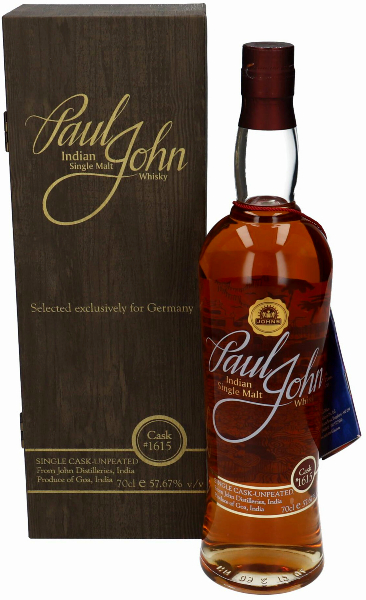
Well, well, well, Scottish Peated Barley. For me the strength of an Indian Whisky lies in the specialness, the “exoticness” of Indian six row barley, setting it apart from other Whiskies and carving more than only a niche for itself. A type of Whisky I really do like myself, if I may say so. There are already a lot of Amruts and Paul Johns on these pages, and also Indri is knocking at the Indian Whisky door with quite the drum-roll. Up ’till now I tried three expressions of Indri, and all are winners in my book. With this Amrut Double Cask however, don’t expect an Indian Whisky because the whole comes closer to a Scottish peated Whisky than any Indian Whisky. So in fact, what we have here is a Whisky with a bit of an identity crisis, and from now on, don’t underestimate the power and the character of Indian six-row barley.

Points: 86