 Returning from my vacation, a blank white box was waiting for me. Inside this rather large sample (70cl !), wrapped in a black velvety cloth, of the new Glenlivet Alpha or α (being the first letter of the greek alphabet). Alpha is also used as a synonym for first (of a series) or simply meaning “the beginning”. If this Glenlivet is the first of a series, then there are 23 more letters in the greek alphabet. Bring on The Glenlivet Iota and Omega! (The 9th and the 24th letter of the greek alphabet).
One thing is clear though, the (Single Malt) Whisky world is rapidly changing. For starters new Whisky countries (like Brazil, Russia, India, China and South Africa) are quickly becoming a sort of black hole for Whisky. Not a lot went there before and demand is now soaring, so anything still available is flowing there. Most older whiskies are therefore quickly sold out or offered at a premium price, and maybe there are not enough casks lying around to meet the demand.  It therefore has become more common practice to bottle Whisky without an age statement (or NAS), and give it a name. Just have a look at a lot of recent Ardbeg’s or some of the newest Macallan’s, but also Tomatin Legacy and Talisker Storm to name but a few, almost all with extensive add-campaigns to explain what kind of Whisky it is and what’s inside the bottle.
Now The Glenlivet have their own NAS bottling and an even more elaborate marketing campaign to boot! Al lot is happening on the internet with extensive use of social media to promote this new α. Just have a look at the “Master your Senses” campaign on Facebook, Twitter and Youtube, all to help you decide for yourself what Alpha really is. Well, aficionado’s already know that blind tasting is fun, and sometimes pretty revealing about our (or the tasters) abilities. We have to wait for June 6th when all will be revealed. By then I fear that all bottles will be long gone. It’s already almost sold out, and prices are getting higher and higher already on Ebay. I guess we can already call this one a success. It looks great and it got people to part with quite some hard-earned money, without even knowing what’s inside. How about that!
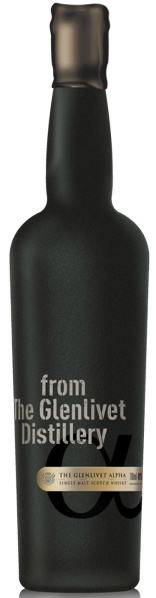
So what dó we know? Already we know that it has distillates from at least two different kinds of casks. First fill Bourbon casks and second fill new wood casks were used. But what is second fill new wood? If it has been filled a second time, is it still new wood? What has been in there the first time around then? How old are the different components of the Whisky? Questions, questions, questions, but is that all? Maybe besides the two different kinds of casks, a subtle finish was done? Well, again the campaign works, after all this, who isn’t curious what will be revealed on june the 6th! The most important question of them all cán be answered right now: Is it any good?
Color: Light gold with tiny hints of sediment.
Nose: Fresh and soft dusty wood. Grass from Grasse, malt, hay and small hints of green apple skin at first, but quickly turns into something more like sweet vanilla ice-cream, more toffee than caramel and hints of “Haagsche Hopjes” (Dutch sweet coffee bon-bon). Sweet vanilla. Definitely (in part) “new” wood was used, due to the light wooded or sawdusty smell. Also some kitchen herbs (basil) and anise (from the wood) were thrown in. Smallest hint of toast, licorice and moss. Fruity it is, but all in small amounts, all the things mentioned above is where it’s about. Hints of unripe pear skins, banana and pineapple can be found. The nose is very nice and quite complex.
Taste: Sweet and fruity. Slightly tarry and slightly bitter (new and/or toasted)wood. Quite a full body. Again with some toast. Sweet like burned sugar, sweet with an edge. Also quite floral. Mocha and caramel. In part some young alcohol. For me the finish is slightly unbalanced (less sweet, more woody), the best part for me is the more sweeter full body (and the nose). The taste is definitely less complex and more youthful than the nose.
Although up untill now only Bourbon and New wood casks were mentioned, I have a feeling there maybe more happening than only this. Still I guess some older or boulder Bourbon casks were used and the second fill new wood are there to give the Whisky an edge and might be younger (or the other way around). Not sure if any finish was used though. If any, it was done sparsely.
Thanks go out to Jacob-Jan for providing the rather large sample!
Points: 86
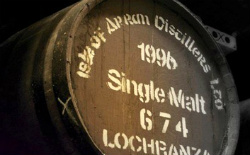 Linkwood is another example. Luckily this also happens the other way around. For most people Teaninich is nothing out of the ordinary, but I really do like my Teaninichs…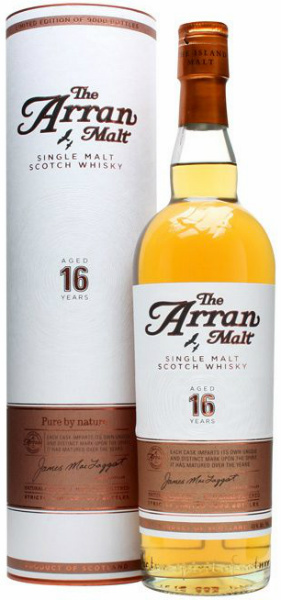
 Not so long ago, this was the new-look entry-level malt from Tomatin, but in the quickly changing Whisky-world and especially the trend of releasing Whiskies without an Age Statement (NAS), Tomatin issued
 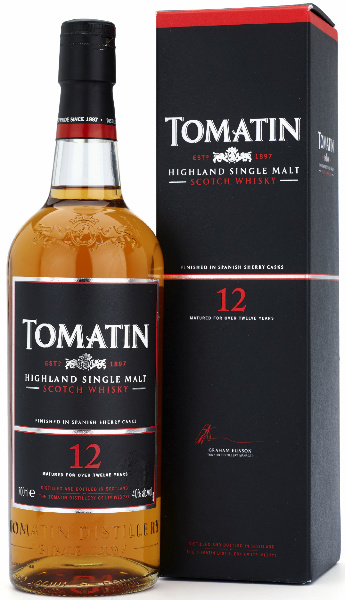 Color: Ochreous gold (Chewbacca golden hairdo).
 Color: Full gold
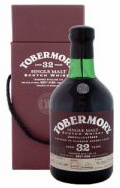
 This is the first Tobermory on these pages and the Whisky itself comes from the Island of Mull. This distillery was founded already in 1798 and was originally called Tobermory. Tobermory closed in 1930 and was turned into a power station. It stayed closed as a distillery, untill it reopened in 1972, but this time as Ledaig. Ledaig’s history, from its reopening was a rocky one, with a lot of buying and selling of the distillery with production stops to match. The current owner is Burn Stewart (which itself is/was owned by an insurance company (since 2002), that again was rescued by the government of Trinidad & Tobago in 2010. You don’t want to know…)
 Back to Tobermory (or Ledaig). Ledaig was sold to Burn Stewart in 1993, and they decided to give back its original name: Tobermory. In 2005 Tobermory issued three 32yo from 1972. These were Oloroso Sherry finished Whiskies. One with a black label, one with a red label and this green label reviewed here. Purists mention an additional brown labeled version for sale at the distillery. Also 32yo and 1972, but “put on bottle” in 2010, so it must have been kept in stainless steel tanks of on glass from 2005 to 2010 to stop further ageing. Not a lot is known about this bottle…
 Color: Brown
 sometimes seems thinner than the other two.
 Here are a few firsts, and on paper a quite interesting one to boot. This is the first Ben Nevis on these pages. It’s also the first time I’m reviewing a Whisky that was bottled by
  Color: Pinkish gold
 goes a bit wrong in the finish. Slightly acidic and the vegetal part (fern) starts to play a larger role. Also, but very late, comes in some bitterness from the wood. Fern with the sweetness, and the slight bitterness, is maybe a strange combination, but hey it’s only part of the finish, so don’t worry.
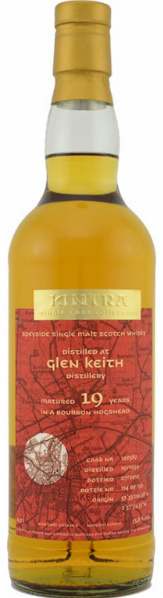 Color: Gold
 Second thing i noticed is that it’s 43% ABV, making the 12yo the only one in the standard range this is 40% ABV. The rest is higher with 43% and 46%. Having said that, Tomatin placed this Legacy before the 12yo, simply by making it cheaper. Pretty neat.
 Color: Light gold.
 Looking back, I see that two of the last four posts are old Clynelishes. One from
 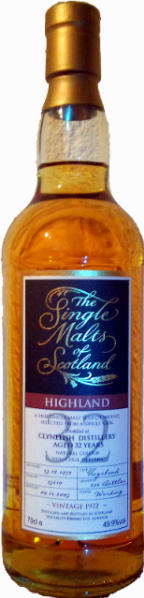 But that’s Brora, here we have a 1972 Clynelish, so it’s distillate from the then newly built distillery next to Brora…
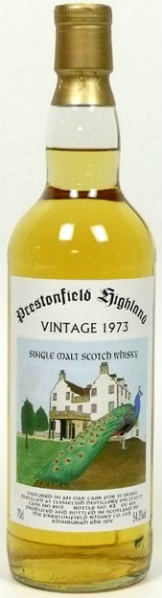 This Clynelish was distilled July 23rd 1973, a year Brora was still open but not very active, if active at all. As we all know, 1972 was Brora’s finest year, or so it seems. Time to find out what they did one year later at Clynelish…
