Spey 12yo (40%, OB, Selected Edition, Virgin Oak Finish, 8.000 bottles)

When the Speyside distillery was sold to Harvey’s of Edinburgh in 2012, the new owner changed the name of the Whisky to “Spey” and by 2014 released three new versions: Tenné, this 12yo and finally a 18yo. I wasn’t very enthusiastic about the Tenné. Let’s see if this 12yo is any better. The Tenné is a rather young Whisky, finished in Port pipes. The 12yo is…well, 12 years old and was given a finish in new wood. Strange enough this older Whisky was given a lower ABV than it’s younger sister Tenné. 40% ABV compared to 46% ABV. For me that is usually not a good way to start…

Spey 12yo (40%, OB, Selected Edition, Virgin Oak Finish, 8.000 bottles)Color: White wine, much less color than pictured here.

Nose: Fresh, citrussy with hints of smoke (probably from toasted wood). Fresh oak and toasted fresh oak. Clean but also a dirty edge to it. Mocha and milk chocolate. Powdered sugar. Maybe simple but well-balanced. Leafy and dry grass. No off notes whatsoever. Shows a lot of potential, but, it’s already 12yo and it smells much younger. Young but without the typical smell or even hints of new make spirit. Hints of pencil. Not only shavings of the wood, but the whole pencil with the painted wood and the lead. Very interesting and surprising compared to the Tenné. Seems to let aroma’s pass in layers.

Taste: Sweet and barley. Sugary sweetness, which matches the powdered sugar from the nose. Malted barley. These two notes make up the taste. Again this seems very young without even hinting at new make spirit. (I recently reviewed The Glenlivet Founder’s Reserve, thát has the notes of new make spirit). Clean and grainy spirit. Sweet and vegetal. Has some staying power. Virgin oak and tree sap, reminiscent of ripping a branch of a shrub or tree. Although low in ABV, this Whisky doesn’t seem to suffer from it. Hints of sweet apple juice, freshly pressed at home, and a flowery note, Jasmin.

I can’t put my finger on it, but I like this. The sugar levels are just in check. It is no high-flying Whisky, but it has some lovely aroma’s to it. This time, I won’t even ramble on about the low ABV. This does nicely at 40%. Fruity and likeable. Surprising stuff. Who would have thought this about a Whisky from a young distillery, which found it necessary to finish its aged Whisky in new oak. Interesting. Almost ten points more than the younger offering called Tenné.

Points: 82
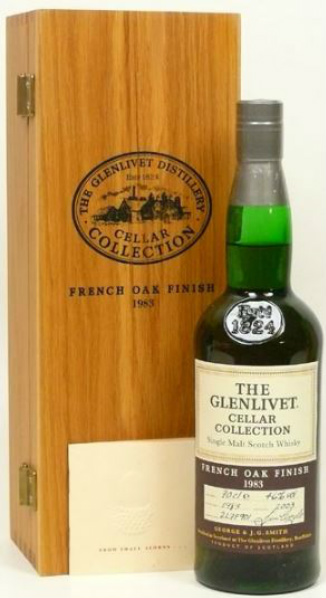
The Glenlivet 1983/2003 (46%, OB, Cellar Collection, French Oak Finish, 2L7F901)

The Glenlivet “Founder’s Reserve” I just reviewed, was actually quite simple and a bit disappointing. It is a very, very young Whisky, which in my opinion doesn’t show how good a Glenlivet can be. I rummaged a bit through my personal archive and unearthed another Glenlivet to review. So lets forget about the new one for a moment and let’s see how an old Glenlivet will do. Here we have a Glenlivet that has some 20 years behind its belt. 17 years in Bourbon and Sherry casks and a further 3 years in lightly toasted French Limousin oak casks. Not all casks were used for this bottling (quality control), so only 8.000 bottles were produced. A true limited edition! This review will probably show that this was 20 years well spent, time nobody seems to have these days since demand skyrocketed. We are told not to judge a bottle by its NAS, but in the old days the same people told us we hád to judge the Whisky by its AS (Age Statement) or Vintage. So without further ado, I give you a Glenlivet from their Cellar Collection, a 1983 French Oak Finish bottled in 2003, when age was still a benchmark.

The Glenlivet 1983/2003 (46%, OB, Cellar Collection, French Oak Finish, 2L7F901)Color: Amber gold.

Nose: Surprisingly fresh but also Sherried and certainly dusty. Elegant with silky wood notes, and some added depth of toasted wood and (partly burnt) caramel and slightly too sweet toffee. Lots of aroma. Flour. Funny enough, and I’m most probably not objective here, there is a silky wood note that seems to lie on top of the nose, not as much integrated as the deeper woody notes. Very nice to nose a Whisky that has several kinds of different wood aroma’s. With the toast comes candied fruits, adding to the depth of the Whisky. Vanilla and Ice-cream notes from American oak, so most definitely a mixture of Bourbon and Sherry casks.

Taste: Creamy Sherry and yes, lots of vanilla. Distant sweet Moscatel Wine. Very smooth. Even though this has seen two or three kinds of wood it is not overpowered by it. Sometimes the wood is hardy noticeable. In the back of your mouth some nice and sweet aroma’s form, but only if the Whisky is tasted with big gulps. Dusty on the palate as well, and alas, alas, a rather short finish.

I’m not sure what the French oak finish brings to the blend of Bourbon and Sherry casked Whisky. Sometimes you do get an un-integrated silky wooden note that lies on top. So maybe it is obvious what the finish did for this Whisky. I’m amazed this turns out to be 46% ABV. It seems more like 40 or 43% ABV. Maybe this should have been bottled with a higher ABV? Good stuff nevertheless. On paper one of the more complex Glenlivet’s from the Cellar Collection, but my mouth tells me otherwise. The aroma’s of this bottling are silky and deep and for some may lack a bit of fruity zest. Highly drinkable though and something you can enjoy properly.

For reasons only science can wholly explain, I followed the Glenlivet up with the Blackadder Lochside I reviewed earlier, and although the Glenlivet is also good, the Lochside blows it right out of the water, so when spending money at auctions I would know what to do!

Points: 86

The Glenlivet “Founder’s Reserve” (40%, OB, 2015)

Just like the Berlin wall, old, well-known Whiskies that have been around for ages are coming down. We already see the manifestation of NAS Whiskies, you know the ones without the pretty numbers on the label: 10yo, 12 yo et cetera. It has recently been announced, by Pernod Ricard, that not only the Glenlivet 12yo will be discontinued, but also Aberlour 10yo. George Smith Founder of GlenlivetThis is moving in the wrong direction people! The Glenlivet 12yo has already been replaced with the new Founder’s Reserve, a highly original name taken from the old 10yo expression of The Balvenie. The Glenlivet already dropped the age statement for their highly popular Nadurra range, and are wooing the consumer to stay with Nadurra, by adding new versions. Bourbon, Oloroso and the next step will probably be a peated version. Other recent experiments were the NAS Alpha, and the NAS Guardian’s Chapter. We all know where this is going, don’t we. Lot’s of distillate will be put out as young NAS Whiskies, and the rest will be aged a prolonged amount of time to be bottled as (highly expensive) Whiskies which will still have an age statement. Yes, we should judge a Whisky by its taste and we will, and not by its age statement. Still, the super premium Whiskies will have an age statement, because age sells, people. Another experiment done by The Glenlivet is the release of an 11yo single cask for 300 Euro’s in the Netherlands, called Bochel (Hill). How far can you go? Let’s get back to the beginning, shall we? I already reviewed The Glenlivet 12yo, so we have a clue what that was all about. Now let’s have a look at its replacement. The NAS Founder’s Reserve…

The Glenlivet Founders ReserveColor: Light citrus gold.

Nose: Barley and aged spirit. Raw and yeasty. A big part of the beginning of the nose is made up of new make spirit. Apart from…new make spirit, I have never come across a Whisky that is so upfront and young. Obviously young. The new make note disperses and makes room for plain white oak. Does have some traits of Bourbon casks, but also of virgin oak casks. I hope this is still aged in casks, could be stainless steel with bits of wood thrown in. Sweet barley, yeast and oak. That’s more or less it with this Glenlivet. On top salty and estery. Well this is your wormhole that offers a peek of NAS Whisky. I guess a lot of entry-level, inexpensive Whisky of the future (and you know, the future starts now), will be like this. Perfumy and floral, latex paint with hints of mocha and still a promise of sweetness.

Taste: Sweet water. Sugary. Very, very, un-complex. Not even a lot of wood now. More (oak and pencil) wood in the nose. This is sweet balanced sugar-water with vanilla pudding and…yes, what else? Weak green, vegetal notes. In the background again the specific taste of new make spirit. This is an aged Poiteen! Short finish (obviously) and in my opinion too young, but still interesting…well, not really actually.

A long time ago, this would have been used internally to give the marketing people an insight into production methods and especially how Whisky ages. Who would have thought that today something like this would be actually bottled, and better even, replace the standard 12yo. Do I mean The Founder’s Reserve is bad? No, not at all. I love Single Malt Whisky and this is still is well made modern Single Malt Whisky. It’s just so obviously young and simple. They should have named it Baby Glenlivet. Benromach actually have replaced one of their NAS Whiskies with one with an age statement and calls it their 5yo. I’m curious how that one will compare to this one. I’m curious how these will compare to old 5yo’s (Tomatin, black label) and 8yo (Aberlour, cube bottle), but I’m also curious to see how the public will choose between NAS Whiskies and Whiskies with a low age statement. Interesting times ahead!

Points: 75

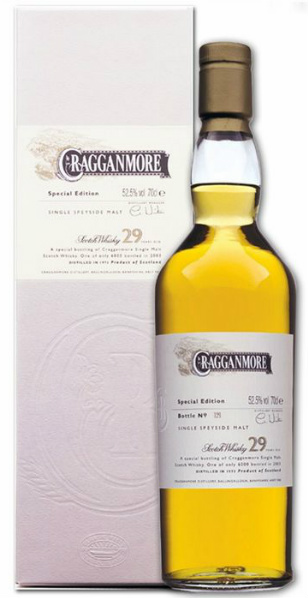
Cragganmore 29yo 1973/2003 “Special Edition” (52.5%, OB, 6000 bottles)

Cragganmore, and an old Cragganmore it is. Last year Diageo released a 25yo Special Release from 1988. That one costs a pretty penny, and is almost sold out by now. Nevertheless these days people throw themselves at anything that looks or feels like a super-duper premium bottling. However, the short row of special editions of Cragganmore was started back in 2003, by this 29yo from 1973. Yes a distillate from the seventies, and distillates from the seventies are usually even harder to come by. Nevertheless, this 1973 Cragganmore is still not very hard to get ánd even at a lower price than the aforementioned 1988 special release. What is happening here? Is the 1988 way better or has everybody simply forgotten about the 1973?

Cragganmore 29yo 1973/2003 Special Edition (52.5%, OB, 6000 bottles)Color: Gold.

Nose: Waxy and floral but rather closed. Quite light, delicate and vibrant. Old smoke and toast. Distant yellow fruits with a hint of tar. Nice combination. Steam age Whisky. Hints of barley and (floral) soap, but also hints of wood (old furniture) and even a tiny hint of pencil shavings. Hints of soft white pepper and some discernible sweetness. Dusty, fruity and slightly waxy, but I have to say it again, very closed.

Taste: Tropical fruits and quite sweet, like other bottlings from the seventies. Just remember Caperdonich and Tomatin. Cannabis and dish-water. Old papers and slightly cardboardy, which in this case isn’t a bad thing. Nice combination of cream and tired oak. It definitely tastes better than it smells. Don’t get me wrong, it smells good (albeit closed), but it tastes better. The finish is announced by some oaky bitterness, which fits the fruity waxiness perfectly. And old gent of a dram. Old and brittle but lots of stories to tell. You never know with old stuff like this, but to me, this seems to be exclusively from old Bourbon casks.

I am not Mr. Water. I hardly use water when tasting Malt prefer movement. Just let it move around in my glass, airing, oxidizing of you prefer, maybe warming it up in my hand a bit. That does the trick for me. However, if I encounter a closed Malt, then, and only then, water can be a nice experiment. I’m such an anorak, that I don’t even use a pipette, but I use a syringe. (Smaller droplets giving me more control). I know it’s sad, but I do have a life, so don’t worry about me. Well after some droplets and some more droplets, water didn’t open up the nose a lot. I did get more floral and toasty. It did do wonders for the taste. It got better, with more cannabis, more pencil shavings and more yellow sugared fruits. The toasty bit crept in here too. Lovely stuff, a bit brittle (apart from the body), so be carefull. So in this case, do try some water. Yes it needs some work, but it’s also quite an experience.

I haven’t tried all of the other special releases of Cragganmore but I can’t imagine them to be better than this one. Sure, age doesn’t matter (or so they say) and distillates of the seventies don’t have to be better than more recent distillates. However, this 1973 does come across as a very old Whisky, meaning it does smell and taste like something that can’t be made like this anymore. To “prove” or “un-prove” my point here is a review of a more modern Cragganmore, that did manage to fetch a higher score…

Points: 87

Aberlour 16yo (43%, OB, Double Cask Matured, Circa 2003)

Here is another oldie from the archives. This time another big well-known brand with one of their succesful numbers. This bottling still exists, although it went through a few newly designed labels. As far as I know this was the first edition of this particular bottling. Double cask matured. Slap Double Wood on the label and you have a law-suit on your hands, but essentially it’s the same thing. Bourbon cask matured Single Malt Whisky with a finish in Sherry casks. Aberlour are well-known for heavy usage of Oloroso Sherry casks, but we already know from the 1988 bottling, that other Sherry casks are also used, and since this isn’t a highly priced expression I do suspect other than Oloroso casks may have been used with this one too. And why not?

Aberlour 16yo (43%, OB, Double Cask Matured, Circa 2003)Color: Copper gold

Nose: Sweet Sherry, and vanilla, which would already suggest maturation in Sherry and American oak casks. Sweet and slightly winey. Some hints of powder and dust and hardly any (tannic) wood, so definitely longer maturation in American oak than European oak. Just smell those vanilla and pudding notes. After a while more floral notes emerge. I’m not very good with flowers so I can’t tell you which flowers yet, but believe me it is floral right now. Together with the floral bit, elegant polished wood comes to the fore with some bad breath too. The Sherry part is getting less and less pronounced, so most definitely a finished Whisky all right.

Taste:  Sweet and again a combination of vanilla, pudding and a more winey note than a typical Oloroso Sherry note. Sweet and simple would sum this up just nicely. Creamy with a hint of bitter plain white oak, so at least the sweet vanilla body is given some backbone with wood. Slightly cardboardy finish as well as waxed milk chocolate. You know the shiny stuff. Leaving this in the glass even longer, a more candied fruit note emerges. Dried apricots and some honeyed almonds. It picks up more of a bite too. Not a very complex malt yet very likeable. Highly drinkable, but it wouldn’t be my first pick for a daily drinker, since it lacks some complexity and the finish seems to be not as well-integrated as should. Having said that, giving this some air to let it settle some more, does do wonders for this Malt and adds some nutty bitterness too.

In effect this does remind me of Bourbon matured Aberlours I’ve tasted in the past, but also the 1988 I reviewed earlier. When I come to think of it, it does also remind me a bit of Highland Park 12yo. Quite good, but also quite simple with a less than perfect finish. I haven’t tried them yet, but I expect later batches of this Whisky to be better in this respect, with hopefully more Oloroso casks used for finishing, but also a slightly longer finish in those casks will help it along as well.

Points: 85

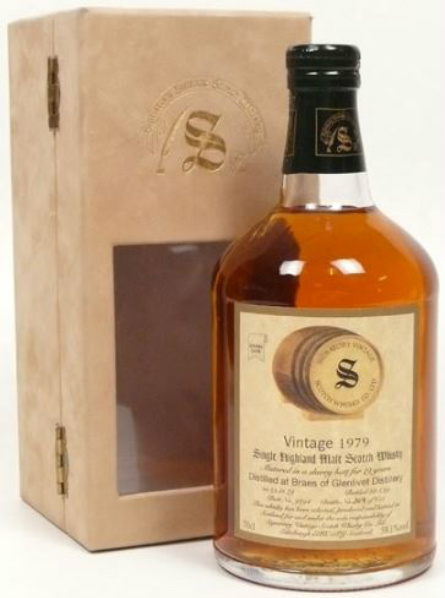
Braes of Glenlivet 19yo 1979/1999 (58.1%, Signatory Vintage, Sherry Butt #9294, 658 bottles)

The day before yesterday I reviewed the first Braeval on Masterquill.com, the domain I was finally able to acquire. Today we’ll have another first, this time the first Braes of Glenlivet. Well not really since both are one and the same distillery.

Braes of Glenlivet was founded just in 1973, so it’s not thát old. At that time Seagram’s was a company with only two distilleries: Strathisla (I love Sherried Strathisla’s from the 60’s and 70’s) and Glen Keith (equally so). Both distilleries are next to one another by the way. Chivas needed more capacity, due to huge demand of the Chivas Regal 12yo blend in the States and was looking for a distillery to take over. When that didn’t work, plans were made to “build” five distilleries in the same amount of time. Braes of Glenlivet was the first in 1973 and Allt-a-Bhainne the second a year later. The next three distilleries were brought into the portfolio by acquisition in 1978: Glenlivet, Longmorn and Glen Grant (now owned by Campari since 2006). Other noteworthy facts are that the name of Braes of Glenlivet changed to Braeval in 1994 (to allow Glenlivet to be The Glenlivet, as in “there can be only one”). Breaval was mothballed between 2002 and 2008 and is the highest situated distillery in Scotland. 1665 feet.

Braes of Glenlivet 19yo 1979/1999 (58.1%, Signatory Vintage, Sherry Butt #9294, 658 bottles)Color: Copper Gold.

Nose: Musty and a high quality Sherry note. Not a big heavily Sherried nose (hence the color). But dry and meaty. Slightly smoky (char) and vegetal (fern). Nicely oaky but also pencil shavings, which usually isn’t oak but cedar. Perfumy. This needs some air to balance itself out. Again the wood is playing a big role in this Braes/Braeval, just like the one I reviewed before. The vegetal part is developing into what I can only guess is a Japanese tea kind of note. Not floral, so it’s not the perfumy part of the nose, but very deep, profound, but also elegant and light. Having said that, next up is a hint of Velpon or Uhu (clear glue). Great herbal and earthy complexity (surely not only from the wood?), with a tiny hint of new make spirit. This is a very nice one to take deep breaths of. Stuff for connoisseurs I guess, so maybe not everybody’s cup of tea.

Taste: Strong, sweet and dry at the same time. Very nice. Lot’s of Beer and Hops, and not really Sherried for me. The hops doesn’t make this all that bitter. Quite some masked sweetness and again quite woody too. The bitterness is really a hoppy one. Interesting. Just like it’s younger brother, it’s coming undone a bit in the finish. The alcohol is really prominent, so most definitely a force to deal with. Finish with tea and wood, a hint of soap and rather drying. Beer and soap who would have guessed? The complexity of the nose isn’t really here in the taste. And I really miss the high quality Sherry I smelled initially. Beer and Sherry who would have guessed?

What really caught me by surprise were the similarities between the 1991 Braeval bottled by The Whisky Mercenary and this particular expression from 1979. Especially on the nose. One was distilled in 1991 and this one in 1979. Both have a similar full on smell and a woody part that plays a big role in the bigger picture. This Signatory has a more pronounced Sherry derived full and sweetish body, whereas the 1991 was more fruity.

Points: 85

Braeval 21yo 1991/2013 (47.7%, The Whisky Mercenary)

Some of you may have already noticed, but as of yesterday I finally managed to get MASTERQUILL.COM. Not long after I started publishing my tasting notes, someone was very quick to snap up this domain. Once I had a look around, what buying this domain would cost, but I thought the $1.800 was a bit too steep, I’d rather buy me some Whisky for that, thank you very much. Yesterday I had another look around and it was available! This time I was quick to snap it up myself, and anyone of you who have registered their own domain (that is available), know that this doesn’t break the bank. Great! Back to Whisky now, and back to Jürgen…

Time for a Whisky that hasn’t been featured before on these pages. A new name on my new domain so to speak. Braeval as it is called today, Braes of Glenlivet was its old name. Not an old distillery though, but more on that next time…

Braeval 21yoColor: Gold.

Nose: Clean buttery vanilla, caramel and lots of toffee. Promises a lot of sweetness. Dry vegetal notes. Nutty but also slightly perfumy. Sinaspril (a Paracetamol tablet for children, with a powdery orange flavour). This reminds me a lot of Sinaspril from the seventies. Somehow I don’t use it a lot today anymore. Got older you know, need veterinary strength Paracetamol now. Let’s get back to the Braeval shall we. Very creamy and dry, but not a lot of wood yet. Definitely some laid back fruity notes and cookie dough and almond paste. Orange obviously, just not the freshly pressed kind, but also succulent and with hints of over ripe kiwi. Yes that’s a first. Behind the fruits also a meaty component is present. In the end it’s all about fruit and cream. Quite complex, there seems to be happening more that I have mentioned. For instance, it takes the wood quite a long time to assert itself.

Taste: Sweet and again very fruity. Thinner than I thought with an ABV of 47.7%. Very fruity (cherry bon-bon) and nutty and yes, quite sweet, but also a nice touch of acidity to prevent this one from being overly sweet or cloying. Creamy vanilla and cheap milk chocolate is present. Definitely a woody backbone now. Unpolished edges of oak. Watch out for splinters! Oaky sourness in the finish, and speaking of the finish, the big body this Whisky has, does fall apart a bit in the finish, where the oak starts to dominate. A shorter finish than expected, so you want your next sip quite soon after the previous one, but you wouldn’t mind because you already developed a craving for the great fruitiness of this malt. Prominent oak though.

Actually this could have been better, because towards the finish the oak plays and ever-growing role. You do need to like your oak with this one. Luckily this Breaval has a nice nose and a body full of thick toffee and fruit. In the end, this is a very enjoyable dram and thus rightly picked by Mr. V. Not the best of the bunch though.

Points: 84

The Glenlivet 18yo (43%, OB, Circa 2003)

When thinking of the middle of the Whisky road, for me, two distilleries somehow stick out. Glenfiddich as the daddy of Single Malt and Glenlivet. There may be others. Both have a big reputation, huge sales and lots and lots of versions. Most encounters with Malts from the standard range of these distilleries will be in hotel bars and such. Here we’ll have a look at (The) Glenlivet 18yo. This is already the fifth Glenlivet bottled by Glenlivet themselves on these pages, but only the third from the standard range. Earlier we had a look at the 12yo and the 15yo “French Oak Reserve”. The 18yo is another step up from both predecessors. By the way, just recently it was announced that Glenlivet are discontinuing the highly popular sales hit: the 12yo. A decision Diageo say they could’t make when everybody is fearing the discontinuation of their Talisker 10yo. Diageo think that would be stupid…

The Glenlivet 18Color: Amber gold.

Nose: Waxy and fruity. Quite nice, but also pretty simple. Can’t imagine the recent version of this 18yo smelling this “old”. Burnt paper and a slight hint of Sherry. Some vanilla mixed with a more organic note. Quite dusty, but it somehow seems to be a sweet dust. Fruity Sherry with hints of meaty Sherry. Also some hints of Bourbon casks, especially the vanillin and creamy pudding.

Taste: Quite sweet, but when that dissipates more fruity notes appear. Also the slightest hint of tar and a burnt note similar, but not the same as the burning paper note I got in the nose. Sweet Sherry and cookie dough. Very likeable and highly drinkable. Great fruitiness. I even have some cooked banana in here but also some maracuja and dried apricot.

This tastes way nicer than the Macallan 1986 Sherry I reviewed last. This tastes more like an old Whisky, with a bigger body and kind of sweetness that is acceptable due to its balancing with the burnt notes. Quite nice, but slightly too sweet to be a daily drinker, although maybe it is. Good standard bottling from a decade ago. Now I’m curious how a more recent 18yo will taste.

Points: 85

The Macallan 18yo 1986 “Sherry” (43%, OB, 2004)

Macallan 1986 18yo (old)In 2004 Macallan officially released two Sherried 18yo’s. The one on the right, we know very well, that was the one with the old labels that have been used for decades. (For reasons science cannot wholly explain…). Around 2004 Macallan also started to release a new bottle design we all know from the Fine Oak series and later bottlings. Here we’ll review the 2004 18yo with the new design. The label states that this is Whisky distilled in 1986 and earlier years. We know the “other 18yo” to be very good, now lets see if this is any better or maybe it’s the same stuff…

Macallan 18yo 1986 Sherry (43%, OB, 2004)Color: Orange gold.

Nose: Pretty laid back and toned down nose. Sweetish Sherry. Hints of wood, dust and cardboard. Not a full on sherry we know from the other 18yo’s. Very floral and even some orange fruitiness. Some whiffs of this even smell like someones bad breath. Strange hints of cooked vegetables. So bad breath, cooked vegetables, but a moment later also a breath of fresh air emerges. Very strange indeed.

Taste: Sweetish (sugar water) and thin. Fruity and slightly waxy, but the wax comes through as fruity and it’s only a hint. So definitely and older cask found its way into this. Hints of sweet apples and pears come through, which makes me think this is not from Olroso Butts. Fino maybe? This also lacks complexity, and the sweetness somehow stays on top. I expected more development from this. Well, it’s nice, pretty simple and easily drinkable, but this is not a Macallan as we knew it. This could have been anything.

This bottling really marks the end of an era. The era that was dominated by the Sherried Macallans with the old labels. I Always thought the beginning of the end for Macallan was with the release of the Fine Oak series, but would I have tasted this one back then, this would be it. Who would have known that almost never again we would get a Macallan like we used to. In hindsight the Fine oak’s may have not been that bad, since after that the likes of Macallan Gold, Amber, Sienna and Ruby, to name but a few, were released. Costs a lot of money these days. bit tastes like a good standard bottling that you can get for 40 or 50 euro’s…

Points: 81

Aberlour ‘A’bunadh’ (59.8%, OB, Batch No. 13, 2005)

By now, batch no. 50 is the latest A’Bunadh released and when you are reading this, the number will be even higher. Saying that the A’Bunadh is a pretty popular bottling. Whisky always was intended to age in Oloroso Sherry butts. Today however, in general, there seem to be more Sherry butts available than the consumption of Sherry seems to warrant. Saying? There are some nice NAS Sherried Whiskies around, Glendronach, Benromach, The new Tomatin, but none of those are so heavy as this powerhouse from Aberlour. On average around 4 batches of A’Bunadh are released every year. Furthermore what makes A’Bunadh exiting, from my anoraks point of view, is the batch variation. Most batches are great and definitely worth the money. Sometimes something less interesting pops up like the notorious batch no. 40 from 2012. A few others from the 40’s range, were slightly less than perfect. I hope that’s not a trend. To be sure not to encounter another dud, let’s try an older version of A’Bunadh, with this lucky batch no. 13.

Aberlour ‘A’bunadh’ (59.8%, OB, Batch No. 13, 2005)Color: Copper gold. Not extremely dark.

Nose: Creamy raisins and vanilla. Creamy with a little backbone provided by toasted oak and maybe from the Sherry. Some more wood, typical oak, and some dust. A lot friendlier than I remember batch no. 33 was. pencil shavings. This is a tale about wood, just without the rawness of batch no. 33 (which actually came from the Sherry, not the wood). Creamy, raisiny and sweetish. With wood. That’s it. Not a lot of complexity, but also lacking some red fruits, Oloroso butts can give off. Nevertheless a very nice smelling dram.

Taste: Chocolate, Ferrero Rocher cherries, than wood, fresh oak and pencil shavings (cedar) and some hints of coal. Quite hot (not raw) when sliding down my throat. A classic combination of aroma’s from soft Oloroso. (It lacks the meatiness batch no. 33 had). Nice hints of mocha and whipped cream. Tiny hint of bitterness gives the finish some oomph.

I haven’t tried it myself yet, but I understand this takes water very well. That is an indication of a high quality cask (and Sherry it held), since more recent bottlings can get very hot, very hot indeed when water is added.

OK, why not. With water the whole softens up a bit, and brings the aroma’s closer together. The wood seems to stick out a bit more, which isn’t a problem. It momentarily also enhances the fruity part, and the bitterness of the finish. Toffee, caramel and oak.

Points: 88