 This is the first Tobermory on these pages and the Whisky itself comes from the Island of Mull. This distillery was founded already in 1798 and was originally called Tobermory. Tobermory closed in 1930 and was turned into a power station. It stayed closed as a distillery, untill it reopened in 1972, but this time as Ledaig. Ledaig’s history, from its reopening was a rocky one, with a lot of buying and selling of the distillery with production stops to match. The current owner is Burn Stewart (which itself is/was owned by an insurance company (since 2002), that again was rescued by the government of Trinidad & Tobago in 2010. You don’t want to know…)
 Back to Tobermory (or Ledaig). Ledaig was sold to Burn Stewart in 1993, and they decided to give back its original name: Tobermory. In 2005 Tobermory issued three 32yo from 1972. These were Oloroso Sherry finished Whiskies. One with a black label, one with a red label and this green label reviewed here. Purists mention an additional brown labeled version for sale at the distillery. Also 32yo and 1972, but “put on bottle” in 2010, so it must have been kept in stainless steel tanks of on glass from 2005 to 2010 to stop further ageing. Not a lot is known about this bottle…
 Color: Brown
Nose: Tarry with lots of red and black fruits. Peat, asphalt and lemonade. Honey. Very appetizing. Coal smoke and steam. This is a true vintage steam locomotive. A little bit of plum with a lot of burned sugar. Toasted wood, burned wood (when turned cold again) and burned paper. Cookie dough. Later it gets dryer and more dusty. Incense. There are a lot of associations with burned stuff, but still, all that doesn’t overpower the whisky. The fruityness makes for great balance. This is truly one of these malts that oozes the days of yesteryear and really they don’t make them like this anymore…
Taste: Strong and again steam locomotive. The taste matches the nose perfectly. Thick sherry with some licorice. It’s fruity, red fruit and the fruit part is fresh and lively. Over this fruit steam and coal again. Hard (red) candied fruit. Quite nice is that the finish is only a little bit bitter. Warming. Wood and tar. The only beef I have with this Green label as opposed to the other two is that the taste is not that balanced and coherent. It doesn’t gel completely and with time it 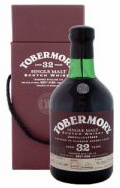 sometimes seems thinner than the other two.
Of the three, this is the least interesting one. In my humble opinion, the Red label Tobermory 32yo is the best, but the black follows in its footsteps quite well. Between the two it’s a matter of taste. Still, if the other ones aren’t available, do get this one in stead, because you’re up for a nice journey, and this one is pretty good by itself! All three of these whiskies may not be perfect, but they are classics in their own right and they do deserve a place in the Whisky hall of Fame!
Points: 88
 Here are a few firsts, and on paper a quite interesting one to boot. This is the first Ben Nevis on these pages. It’s also the first time I’m reviewing a Whisky that was bottled by
  Color: Pinkish gold
 goes a bit wrong in the finish. Slightly acidic and the vegetal part (fern) starts to play a larger role. Also, but very late, comes in some bitterness from the wood. Fern with the sweetness, and the slight bitterness, is maybe a strange combination, but hey it’s only part of the finish, so don’t worry.
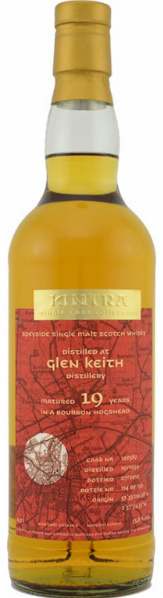 Color: Gold
 Second thing i noticed is that it’s 43% ABV, making the 12yo the only one in the standard range this is 40% ABV. The rest is higher with 43% and 46%. Having said that, Tomatin placed this Legacy before the 12yo, simply by making it cheaper. Pretty neat.
 Color: Light gold.
 Returning from my vacation, a blank white box was waiting for me. Inside this rather large sample (70cl !), wrapped in a black velvety cloth, of the new Glenlivet Alpha or α (being the first letter of the greek alphabet). Alpha is also used as a synonym for first (of a series) or simply meaning “the beginning”. If this Glenlivet is the first of a series, then there are 23 more letters in the greek alphabet. Bring on The Glenlivet Iota and Omega! (The 9th and the 24th letter of the greek alphabet).
 It therefore has become more common practice to bottle Whisky without an age statement (or NAS), and give it a name. Just have a look at a lot of recent Ardbeg’s or some of the newest Macallan’s, but also Tomatin Legacy and Talisker Storm to name but a few, almost all with extensive add-campaigns to explain what kind of Whisky it is and what’s inside the bottle.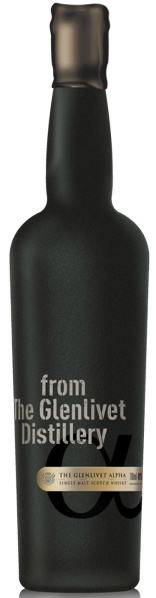
 Looking back, I see that two of the last four posts are old Clynelishes. One from
 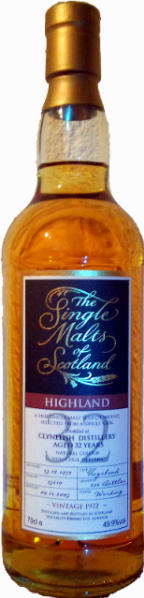 But that’s Brora, here we have a 1972 Clynelish, so it’s distillate from the then newly built distillery next to Brora…
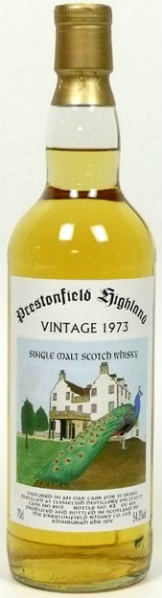 This Clynelish was distilled July 23rd 1973, a year Brora was still open but not very active, if active at all. As we all know, 1972 was Brora’s finest year, or so it seems. Time to find out what they did one year later at Clynelish…
 Color: Copper Gold
 After the
  Color: Gold
 Yet again we have one of the many 1991 Lochsides, and one of the many that were issued as a Gordon & MacPhail Reserve. This one was picked by Dutch retailer Van Wees. Gordon & MacPhail code for this one is JI/ACAC. The spirit was distilled on September 18th, 1991 and eventually bottled on October 15th, 2009. Picked by Van Wees in July 2009. Those of you that meticulously read this blog probably had a Deja Vu experience. We know this bottle, we know this lay-out. Well yes and no. February 4th 2013, I published a review of quite a similar Lochside, opened by Master Quill’s Apprentice (like this one). That was
  Color: Gold (ever so slightly fuller in color)
