 Day four, a.k.a. the middle, or the pivotal point in a week. We’re halfway through. We started out with three distillery bottlings of Laphroaig. An older 15yo, it’s replacement the 18yo, although not in its latest guise, and yesterday we had a look at a travel retail only bottling from last year: An Cuan Mòr. Up untill now Laphroaig hasn’t failed me yet. Today we’ll venture into more unknown territory. The territory of the independent bottler. Today we’ll have a look at a Laphroaig, Erik Molenaar got into his hands a while back. The market is rapidly changing. In 2011 Erik could get (part of a Sherry Butt) for a reasonable price. Today he probably would still be able to source such a Whisky, but unfortunately only at an unreasonable price. So even when this is from 2011, it can still be considered…well you catch my drift. So without further ado…
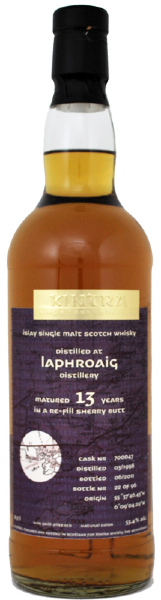 Color: Gold.
Nose: Funky Sherry. Has someone just farted over here? My word, lots of the S-element is filling the room. Sulphur that is, and it comes from my glass into which I have not farted, nor has anyone else. Fruity and half sweet underneath “the fart”. Enough with the fart already, will ya? Ok, lets move the Sulphur into the realm of fireworks then. Toasted wood, but also toasted bread. Meaty big aroma.
Taste: Sweet and Sherried. Fruity with loads of ashes. Short shock of fruity acidity. Creamy but with a wave of a bitter sulphury edge. The bitterness also could come from the oak. Nevertheless, the bitterness is also kept in check, so it doesn’t hurt the overall taste. The ashes transform into a sweeter form with and acidic edge, and both do not overpower the palate. The sweetness and acidity show themselves and go under again, like the Loch Ness monster. Warming and full body. Cozy. Nice mix of peat and funky Sherry. Sure, it may be flawed but the whole still (fire)works for me. Hints of black fruits and some smoke late in the finish.
Lots of my Whisky-loving friends don’t like sulphury notes too much. Some seem to be even overly sensitive to the stuff, if not allergic. They can go on and on about it and I sure do understand why. We know from the olden days how Sherried malts should taste like. Some of you know the golden days of The Macallan, old heavily Sherried Longmorns from the sixties and seventies, Glen Grants and Strathisla from the sixties. Fruity, full of aroma’s, with steam and coal, the lot! Today that quality can’t be reached anymore, and I don’t have the room here to discuss why. More modern Sherried malts are prone to have sulphury notes, and it’s up to you, if you can stand that or not. If you can (like I do), this is a big and nice, yet sulphury, Laphroaig.
Points:87
 Color: Orange brown gold.
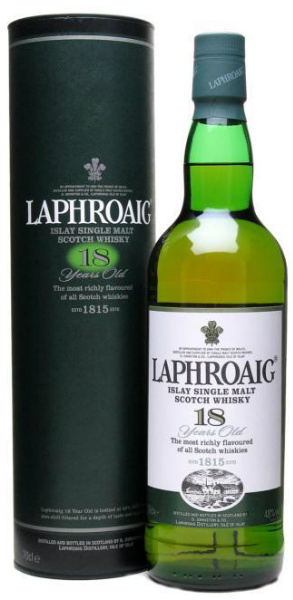 Color: Light gold.
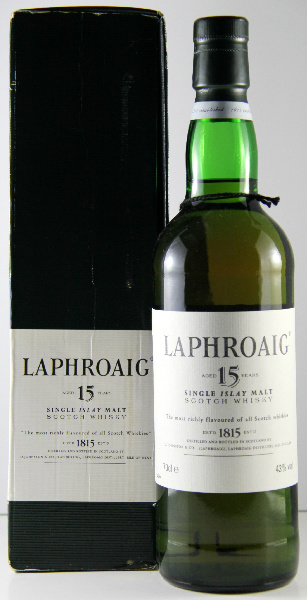 Color: Ocher gold. Nose: Ahhh great fruity peat. Yellow and red fruits. Black coal. Coal dust and ever so slightly tarry. Small hints of vanilla ice-cream. A truly fantastic nose. Just the nose alone shows you that Whiskies like this can’t be made anymore. Maybe this is an older expression of the 15yo (bottled before 2005)? Slightly burnt wire and steam. Hints of cooked vegetables emerge over time. Taste: Sweet, clay and fruity again. Not very peaty and the taste is much simpler than the nose was. Hints of almond shavings and a kind of delayed warming sensation. Elegant and pretty old tasting peat. Part of this Whisky must come from older casks. Crushed beetle, and cask toast in the finish. Burnt wood. Almonds ánd Amaretto combined with some sugared yellow fruits. Cancel my remark about (the lack of) complexity. Not true. It needed some time to develop. Given even some more time the fruitiness develops more and more into Amaretto and the peat develops into a wonderful kind of peat, ashes and a little bit of smoke. Top notch! Extremely different from my first love from around that time, the 10yo at export strength (43% ABV). Remember the 20cl hip-flask bottle? This 15yo is a lot more elegant and nicely crafted. Utterly complex and a wonderful companion to that 10yo. I haven’t even mentioned the cask strength version of the 10yo from that time. What a trio that was. Life was good back then! By the way, Laphroaig will be releasing several one-off special bottling commemorating their 200th anniversary and supposedly one of them will be a 15yo. Hope it is anything like this boxed 15yo.
 Color: Full gold
 Franschhoek Valley is a broad valley in the south-east corner of Paarl, Western Cape. Franschhoek is warm and produces robust red wines (and fruity whites). The surrounding mountains (Wemmershoek to the north and Groot Drakenstein & Franschhoek to the south) cast shadows which help reducing the temperature and hours of sun the grapes get. They also reduce the influence from the sea. On the other hand, the mountains also hold the cooler winds from the south. Terroir is alluvial sandstone (doesn’t hold water well) and in the north some granite (in the mountains). On the hillsides there is some clay to be found.
 Color: Dark gold.
 Color: Light gold with a pinkish hue. Sherry all right.
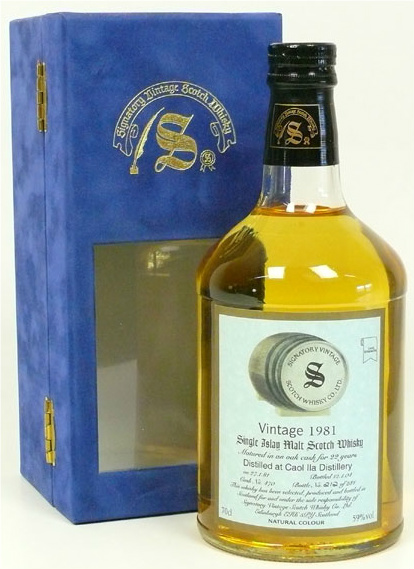 Color: Light gold.
 Color: Full gold.
