Master Quill’s Second Anniversary!

2 yearsAnother year has passed. One year ago I wrote that the first year of writing this blog passed very quickly. This year I almost missed the opportunity to write something for the occasion of the second anniversary! I was smiling away at birthday messages on Facebook, congratulating Master Quill. Smiling since March 4th isn’t my actual birthday, but the day this blog started.

So what did we do in the past year? The most exciting pieces to write are just like in the first year the “Weeks”. In the second year of Master Quill, only two more weeks saw the light of day, that’s a bit of a surprise to me! First we had a Glengoyne week and second a Bowmore week, all Single Malts, I know, but it’s sort of a core business here! Luckily one boasts to be the unpeated Malt and the second wouldn’t be the same without peat, so at least some diversity!

But that’s not all! The first year focused mostly on Single Malts, Wine, Cigars and Rum. As mentioned before Single Malts are most important to me. Wine was expanded, but this past year was a “bad” year for Cigars. Not a lot of good weather, and I have to smoke outside. Not as much Rum as I expected to write about, but I’ll make up for that in Master Quills third year.

The drinks categories got some new entries this second year around, with articles about Port and Sherry, both fortified Wines and with Whiskies from “other” countries like India and New Zealand. Quite exciting times since those countries produce some excellent examples. I can’t wait for another taste outside of Scotland.

Well the second year finished a bit slow, you might have noticed, with almost no activity (by me, the readers however keep coming back in large numbers even when temporarily not a lot of new content is being added). By the end of January I got a little bit sick. Something in between a big flu, a heavy cold or even pneumonia. I’m on antibiotics right now, so I’m guessing I can write a new review pretty soon…

Last but not least. I’m one of those people who a living the dream and found a job in the what I clearly love best. I’ve joined the Booze-Workforce! Maybe time for a Master Quill Inc. someday? Well to celebrate let’s open up a nice Longmorn from 1971!

Cheers, hope you like the posts and will continue to enjoy these pages. Enjoy Life!

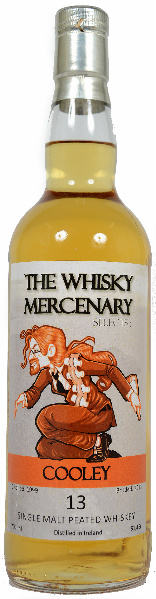
Cooley 13yo 1999/2013 (51.4%, The Whisky Mercenary)

Cooley! How cool is that! As the label states, this is peated Cooley so probably spirit that was made to become a Connemara. But what is Cooley?
In 1985, Jack Teeling bought a former state potato alcohol distillery and two years later converted it into an independent Irish Whiskey distillery with a column still and two pot stills, located on the Cooley Peninsula in County Louth, hence the name. Cooley is known for distilling only twice, where other Irish distillers distill three times.

25 years later Mr. Teeling sold his distillery for €71 million to Beam Inc. On January 13th 2014 however, Japan’s Suntory Holdings sort of bought Beam Inc. for about €10.2 billion, making Cooley part of Suntory now. In the same deal our beloved Laphroaig, will enter the Japanese outfit wich already contains Bowmore.

Cooley 13yo 1999/2013 (51.4%, The Whisky Mercenary)After selling Cooley to Beam Inc. Teeling bought Diageo’s recently closed Great Northern Brewery in Dundalk with a group of investors and is converting it into a distillery. Great Northern made Harp Lager, Smithwicks, and Carlsberg (for the Irish market) and Diageo moved the production of these beers to their Guinness St. James Gate brewery in Dublin. Production of Teeling Whiskey should commence after the summer of this year. Today Teeling Whiskey is already on the market, obviously sourced from another distillery.
Color: White Wine.

Nose: Sweetish, light, lemony and young. Very fresh, lightly smoky, dusty and fatty peat. A long time ago, I had a tall bottle of cask strength Connemara (59% ABV), and this smells very similar. Grassy and lemongrass. Alcohol, chocolate and a bit fatty. Hints of wood. Lemon again which pushes the peat and smoke to the background. The smoke returns after some breathing. Bonfire. The wood and fire notes are really great. Small hints of toffee, cardboard and strangely enough some perfume. Empty glass has a lot of smoke and toffee notes.

Taste: Smoky sweet and quite a lot more peat than in the nose. Wood, ashes. Bonfire again. A little bit of bitterness from the peat (and the wood). Quickly turns dry and fatty. Soot, ashes and a lot of dust. Animalesk (there is that word again), with lemons. Quite some balls for an Irish Whisky. Cloying toffee with nice depth. Lacks some zest, or freshness, to be a proper Irish Whiskey if you ask me. Salty lips. Finish is half-long and somewhat introvert.

On the nose, quite a nice Cooley. Taste wise it’s also nice, but not very complex. WYTIWYG (What You Taste Is What You Get). Definitely a nice Cooley, but I have to say there are some more outspoken examples around. Great nose though.

Points: 83

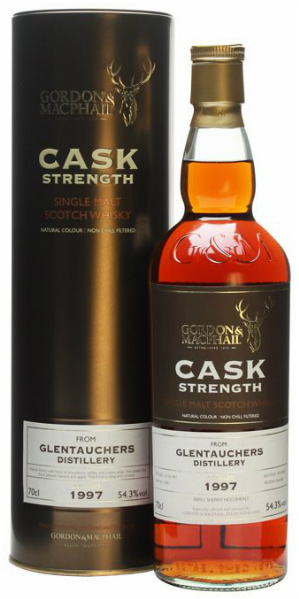
Glentauchers 16yo 1997/2013 (54.3%, Gordon & MacPhail, Cask Strength, for The Whisky Exchange, Refill Sherry Cask #5580)

Yes, another first on these pages. Glentauchers. A favorite amongst connoisseurs! Independently of each other, I hear a lot of people who work in the Whisky-business, that this is somewhat of a guilty pleasure for them, so worth to check one out. I got a chance to try this Glentauchers bottled by Gordon & MacPhail just before it was bottled, and although it was bottled some months ago, finally it is now officially released.

Glentauchers 16yo 1997/2013 (54.3%, Gordon & MacPhail, Cask Strength, for The Whisky Exchange, Refill Sherry Cask #5580)Color: Copper Brown.

Nose: Raisins, butter and pretty winey. Quite floral. Fresh Sherry. Ashy and great wood. Bourbon honey and perfectly creamy. Looking deeper, it’s more leafy and paper-like, more dry. This doesn’t seem very complex at first. The distillery character is still there underneath and the Sherry is like a blanket on top. Smallest hint of salty smoke and even less of dried fish. Little bit of licorice and citrussy acidity. Bonfire (but not the smoke of it, more the presence, does that make any sense?). Nice balance.

Taste: Ha! great stuff. Full on Sherry, not to sweet, not too dry. Creamy and chewy with spicy wood. Wow. The middle drops quite a bit, but picks up near the end. Warming caramel and sweet and woody finish, with some bitterness. Licorice and a little bit of soap even, the floral bit returns. Again nicely balanced stuff. Bit of a rollercoaster. Salty lips.

This new Glentauchers just goes to show that the route taken by Gordon & MacPhail is the best way of doing business. Most other independent bottlers fish out of the same pond, and mind you the pond is drying out, like the Aral sea. Less and less (good) aged casks are finding their way onto the market, and with that also the quality drops. In the end a lot of independent bottlers will have to fold. Gordon & MacPhail have a strategy of clever cask management. They send their privately owned high quality casks up to the distillery, have them filled, and store them at their own humongous warehouse facility. This way they have good casks, and by that, control over quality.

Points: 88

Many thanks go out to Stan Reid for pulling this one out from under the counter.

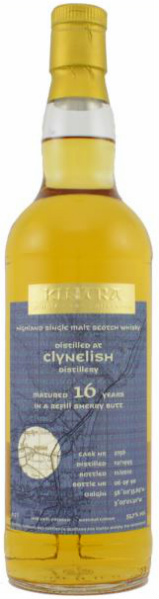
Clynelish 16yo 1995/2012 (53.7%, Kintra, Refill Sherry Butt #2156, 90 bottles)

It’s funny how a big company like Diageo works. For instance, There are almost no independent bottlings available by Diageo owned Lagavulin whereas the is a vast amount available from fellow Diageo and Islay distillery Caol Ila. There are almost no independent bottlings available from Oban, but a huge amount from fellow Diageo Distillery Clynelish. Here is another independently released Clynelish from the massively popular 1995 vintage. Although vintages belong more to Wine, vintages also became popular in Whisky.

Clynelish 16yo (Kintra)This Clynelish, of which only 90 bottles were released (a Butt shared with others, and Butts are large casks), is marketed by Kintra from the Netherlands. A small outfit, but from a nice guy and with good looks (both the bottle and the guy). As the label states, this is from a Refill Sherry Butt, but even if its from a Fino cask, is doesn’t have a lot of colour. A somewhat inactive Butt?

Color: White wine.

Nose: Somewhat acidic malt. Vegetal. Drying. Does fit the Fino Sherry profile, it’s smells like flor. Herbal and dusty. Milk chocolate with distant hints of vanilla. A little bit dry grass and freshly cut, sappy oak. Freshly peeled almonds. Typical Fino Sherry Butt.

Taste: Again very malty and very Fino Sherry. Wood upfront, and after that some glue and toned down vanilla. There is some sugary sweetness in this Whisky, but that is “hidden” by the Fino and the active wood. No wax! Salty lips. Malt returns in the finish. Otherwise a little bit hot, and spicy.

This is absolutely a pre dinner dram. Tasting this I want to eat! Typical Fino Sherry Butt, playing with wood and grassy, nutty tones. Not as waxy as we are used to from Clynelish. Don’t let the colour fool you, the Sherry did its job here, as did the wood, without being dominant. If you like your whiskies Fino, than this will be no disappointment.

Points: 85

Get well soon Erik.

Glengoyne 36yo 1969/2006 (45.9%, OB, Single Cask, Refill Hogshead #3691, 174 bottles)

300!Time to take a moment and celebrate. Not just to celebrate that the first winter month of 2014 is already over and we are one month closer to summer, (at least over here we are), but also since this is the 300th post on Master Quill, I’ll take a look at this Glengoyne from “my” year: 1969. Enjoy!
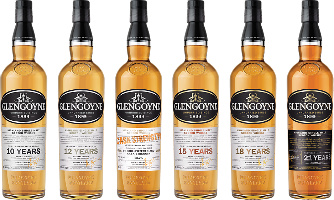
Last April Master Quill hosted the Glengoyne Week and here is already the next oldie from Glengoyne. Old as in a 36yo Whisky, old as in a 1969 distillate and old since, Glengoyne is an old distillery. Founded in 1833! Nineteenth century distillery folks! When it started it was named Burnfoot, now you know why there is a Glengoyne Burnfoot in the shops. Burnfoot started out with one pair of stills. As we all know Burnfoot it isn’t today so a change of name should have been made. In 1876 the name of the distillery was changed to…Glenguin, well almost there. In 1905 the spelling was changed to Glengoyne. In 1965 a third still was added to the distillery. In 2003 Ian MacLeod Distillers (You know of the Chieftain’s and the Dun Bheagan’s) bought the distillery from the previous owner Edrington (Macallan and Highland Park amongst others), and are doing well with the distillery. So happy with this purchase, in 2011 they also bought Tamdhu from the Edrington group. One year later (2012) they revamped their standard range. Just have a look here for a review of the newest 12yo.

Color: Orange gold (slightly cloudy).

Nose: Oh yes! Yes! Nice waxyness that can only be found in old bottles. fresh cookie dough. Visions of Caperdonich. Fruit bomb, but also apple-cake soaked with alcoholic cherry fruit syrup. Smells very sweet (marzipan) and fruity, faded orange skin. Old mahogany furniture (without the wax and without the wood, it just the oldness). The soaked cake I mentioned above has some raisins in light rum. Also a honeyed note that resembles the honey from some Bourbons or Rye Whiskies (so only the honey). Great dusty and perfumy stuff, and sometimes murky whiffs pass by.

Taste: Sweet and syrupy and again very fruity. Yellow (apricots) and red (sweet cherries) fruit. Vanilla Ice-cream with raisins. The body is not very strong, nor does it have the longest of finishes. It also has an exotic side that reminds me a bit of a sweet yet very high-class Gewürztraminer.

Very nice stuff I can thoroughly enjoy, just a bit weaker second half. But who cares. Close your eyes and listen to some good music in the dark with this in your glass, life doesn’t get much better than that!

Points: 90

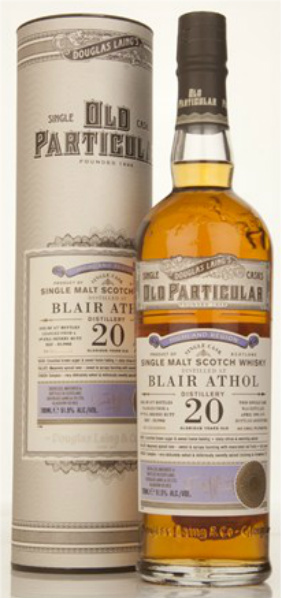
Blair Athol 20yo 1993/2013 (51.5%, Douglas Laing, Old Particular, First Fill Sherry Butt, DL REF 9908, 477 bottles)

The Glenglassaugh I reviewed recently was a first on these pages, but so is this Blair Athol. Blair Athol puts more than 90% of its new make into Bourbon Barrels and/or Hogsheads, and most of those are used for the Bells Blended Whisky. Less than 10% of the new make winds up in Sherry Casks and eventually most of those are used for the 16yo Flora and Fauna expression. Official expressions of Blair Athol are scarce. A long time ago there were a 8yo and a 12yo, and more recently a version of Blair Athol found its way into the Rare Malts series (a 27yo with distillate from 1975), and in the Managers Choice series (a 13yo with distillate from 1995).

When visiting the stand of Douglas Laing last year at the London Whisky Show, Chris Birthday Boy Leggat, gave me a sample of this and told me he was very curious what I would think of it, so let’s have a look…

Blair Athol 20yo 1993/2013 (51.5%, Douglas Laing, Old Particular, Sherry Butt, DL REF 9908, 477 bottles)Color: Golden nectar with the slightest red hue.

Nose: Malty and full. Dusty and sweet. Sweet wine. Hints of cookie dough and warm apple pie. Hard to detect the fruitiness through the dough and the pie (and the apparent sweetness). Funky (in a Bootsy Collins kind of way) with the occasional whiff of fresh air. Aroma’s here are from the low-end of the spectrum, heavy and sweet, as opposed to acidic and fresh citrus fruits. With some breathing the oak finally emerges.

Taste: Sweet with pie again, but lots more wood than the nose suggested. The wood gives it character and hardly any bitterness. Very creamy, more like clotted cream than plain vanilla. There is however a little strange hint of acidity that affects the balance a bit, this acidity continues into the finish. It is strong enough to get in between of the sweetness and the cookie dough and cream. If you ask me more a kind of acidity from the wood, than the Sherry. With extensive breathing more wood emerges, just as in the nose, as does the smallest hint of fresh cola. The balance picks up with breathing, so don’t be too quick drinking this. Salty lips.

I’m guessing from a Fino Sherry Butt (or maybe even Manzanilla, which also seems a bit salty). Blair Athol isn’t one of those distilleries with a huge following and almost never is truly great. This one is as good as Blair Athol can be. Nice.

Points: 85

Glenglassaugh 26yo 1983/2009 (50.4%, Mo Òr, Oloroso Sherry Butt #171, 885 bottles, 500ml)

Glenglassaugh LogoIt’s been a while since a bottling of Dutch indie bottlers Mo Òr graced these pages, but it certainly is the first Glenglassaugh. Last MoÒr was an old Aultmore that turned out to be very good. This time we’ll have a look at an example of Glenglassaugh, an ex-closed distillery. The demand for Whisky is so great these days, that the industry resurrected every distillery that still could be reopened. Even when cold economics suggested more money could be made, distilleries only got demolished to make way for an even bigger more modern (read: efficient) distillery (Imperial). Only recently Diageo announced they are going to hugely expand Mortlach, and it ptobably won’t be the last one.
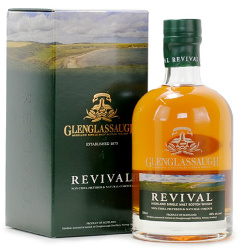
A new bottling by the reopened Glenglassaugh: The Glenglassaugh RevivalSo any distillery that reasonably could be reopened is reopened, the rest is demolished, stripped bare, or otherwise made unusuable. I wouldn’t be surprised anymore if Diageo decides to cash in on the name, and reopen Brora! Besides this, more and more new distilleries are popping out of the ground like mushrooms on a forest floor…

Back to Glenglassaugh. Glenglassaugh itself was founded in 1875 but was closed already in 1908, and fell silent for a whopping 23 years! It reopened in 1931 just to be closed again 5 years later, in 1936. This time the distillery wasn’t working for 24 years. Reopened in 1960, the distillery was fitted with new stills, but still it didn’t manage to stay open permanently, because it was closed again in 1986. It was reopened (again) in 2008, after an extensive 22 years of silence. Since then the distillery has already changed hands. What a rocky past!

Glenglassaugh 26yo 1983/2009 (50.4%, Mo Òr, Oloroso Sherry Butt #171, 885 bottles, 500ml)Color: Copper Brown.

Nose: Hmmmm, very nice and classic Oloroso! The smell seems chewy! Nice woody spices emerge, but in this case, the whole smell is fantastic. With some air, the Sherry becomes even more funky which only adds to its likeability and complexity. The smell is dry and dusty, but not meaty. The wood plays an important role, it’s an integral part of it, without overpowering it. After some time, more heavy elements are coming out, hints of dates, coal and tar and toasted cask (and some violet soap, but it suits the Whisky).

Taste: Toffee and caramel, initially sweeter than expected, but quickly turning dry. What a bomb of aroma! Just put a few drops in your mouth and you know exactly how this tastes. It seems condensed! Laurel and hints of licorice on the back of my tongue. Dark fruits are in the mix too, blackberries mostly and blueberries are present in the finish. The finish itself is fantastic. It’s great that this Whisky retained a little bit of sweetness, which matches the dryness and the spiciness of the wood. I guess this was bottled at its peak. Well done!

Guys, thank you for not reducing it. I already thought your reduced Tomatin and the Caperdonich were fantastic, both at 91 points, but this cask strength Glenglassaugh blows them hands down! Excellent!

Points: 93

The Balvenie 1989/2003 “Portwood” (40%, OB)

It’s almost a year ago I review my last Balvenie, and since there are lot’s of them around, why not have another look at a product from this distillery. Up untill now I reviewed some Balvenies with an age statement, this time I’m going to have a look at a Balvenie from a vintage, 1989 to be precise.

Those of you who know Balvenie, know that one of the best Balvenies around is the 21yo Portwood. yet in 2003, a vintage Portwood saw the light of day, this 1989 but also a 1991 exists. Two years later, in 2006, a 1993 vintage was released. I haven’t tried this 1993 yet, but earlier the 1991 was rather disappointing, still it fetched 78 points. Let’s have a look if this 1989 is any better, maybe even as good as the famous 21yo!

Balvenie 1989/2004 Portwood (40%, OB)Color: Pinkish gold.

Nose: Buttery, and creamy. Sweet cookie dough, but also a slight woody and winey note is present. The more this breathes, the more a spicy woody note comes to the fore. Red fruit hard candy. Quite dusty after a while. Vanilla and dough again. Also some candied sweet tangerine skins.

Taste: A sweet candy note, malty and quite dull at first. The Port even though is not heavy, dominates the palate, still it dominates in a transparent way, since it lets through the malty distillery character of Balvenie. All in all a funky battle between winey wood, (with a slight bitter edge to it),  and it’s sweetness. Definitely some citrus in here, Tangerine or sugared orange skins.

Again a very nice and never misbehaving Balvenie. Nothing wrong with it, but it also doesn’t stick out either. This Balvenie will also never drive to fast or smoke a cigarette where it isn’t allowed. It obeys. It isn’t bad either, but for me a little bit boring. Still it’s a Portwood, and it isn’t harsh as some whiskies that came in contact with Port pipes can be. The aroma’s fit well together, so it has good balance. A bit weak with its 40% ABV, but it offers yet another variation on the Balvenie theme, again with a lot of reduction.

Points: 83

Kopke Special Reserve Tawny (150th Anniversary in Holland)

And finally the third and last of the trilogy of Kopke Ports I had open on my lectern (not counting the Moscatel that is). The Trilogy started off with Kopke 10 Years Old Port (Matured in Wood), continued with Kopke Christmas Port (Reserve Ruby) and now finishes off with this Kopke Special Reserve Tawny (150th Anniversary in Holland), which just like the 10yo matured in wood Port is a Tawny Port.

Tawny Port is named for its tanned color, which occurs when Port matures (oxidizes) in barrels for several years. Tawny Port mostly consists of Port wines from different vintages blended together. Cheaper examples are made by blending Ruby and White Ports, a method which surpasses the time the Port would need to age to become a Tawny port, and as we all know time = money. Having said that, even by blending Ruby and White Port together, nice results can be achieved. Blending isn’t necessarily a bad thing you know!

Kopke Special Reserve Tawny (150th Anniversary in Holland)There is a little back label on this bottle that explains why this Port is “special”: We specially selected this Kopke aged tawny Port to express the pleasant cooperation between Kopke and our eldest client, the Dutch importer J. van Ouwerkerk, founded in 1860. 1860 -2010, 150 years in the wine trade.

Color: Sparkling light red with a brown hue, actually more pinkish red than tawny. Long legs in my glass.

Nose: Smells extremely sweet, not very different from (the sweetness of) a PX Sherry sweetness. Very fruity, sugary and it has a lot of red wine notes. Smells fresh (young) and full on summer. A kind of happy Port. It also shows a little depth with a balanced woody and vanilla (ice-cream) note. Do I detect some sort of minty freshness? Nice and not too complicated Tawny.

Taste: Thick lemonade, due to its youthful fruityness. Small hints of chocolate and licorice. Not heavily sweet and the half-sweetness it has, is nicely counteracted by good acidity. Good balance but with a short finish though. A light Port.

A decent and fruity, happy Port. Actually not very Tawny If you ask me. I can imagine drinking this with ice cubes on a terrace in the summer. Especially since it has lemonade written all over it! Don’t analyze this one, just enjoy. This Tawny has an ABV of 20%.

Points: 84

Short Stories: Chateau de Mendis Premiéres Côtes de Bordeaux 2003

Hey another short story. So no introduction, no research (or nothing to research), just a short (tasting) note about something (in most cases, a wine I had with dinner), so without further ado…

Chateau de Mendis 2003Color: Extremely dark ruby-red

Nose: Nicely spicy and warming. Oozes hot earth. Spicy and somewhat woody. Nose is nicely balanced. Again lots of earth, dusty, meaty and with deep red fruits, mainly cherries. Very pleasant nose. I don’t know why, but smelling this, I have a craving for Pizza.

Taste: The mouthfeel is a bit thinner than I expected from the nose. It still is warming and has quite the body. Fruity again with some added acidity (but not much). This most definitely is a wine that needs to breathe. It was aged for quite a bit and has developed well. I imagine this wine wasn’t made for keeping. The soft tannins are there, on the tongue, but not as much in the taste. Again a bit meaty, but in no way unforgiving. Will do well with most foods. Meat and cheese and anything in between.

Mostly Cabernet Sauvignon, but blended with a little bit of Cabernet Franc and Merlot. 12.5% ABV.

Points: 84