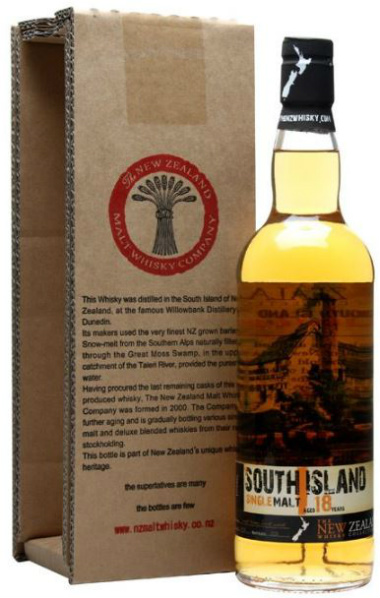
South Island 18yo (40%, The New Zealand Whisky Company)

Earlier I reviewed the DoubleWood blend of the New Zealand Whisky Company (NZWC). Please have a look at that review for some more history of the NZWC. Here we’ll move on to the first single malt of the NZWC on these pages. They call it the South Island 18yo, because it’s made in the Willowbank distillery in Dunedin on the South Island and its age is no less than 18yo. The Whisky was originally intended to be Lammerlaw single malt. But a new owner stepped in and there is no Lammerlaw in the collection anymore, but what is?

First of all the NZWC has some blends. The DoubleWood 10yo we know, but there also is a DoubleWood 15yo. Both blends had some extensive finishing in New Zealand wine casks. The Water of Leith is another blend by the NZWC, that one is 70% Single Malt, and 30% Grain Whisky.
Another speciality is Diggers and Ditch which they call a ‘Double Malt’ Whisky. Once we all called something like this a Vatted Malt and nowadays we should call this a Blended Single Malt or something if it were Scottish, which it isn’t so Double Malt it is! Diggers and Ditch is a vatting of NZ Single Malt and Tasmanian Single Malt.

Next in the collection is the Milford Range. Here we have a 10yo, a 15yo, a 18yo and a 20yo. All bottled at 43% ABV.Only two series left. First the South Island range of Whiskies. Here we have a 18yo, a 21yo and a 25yo. The 18yo and the 21yo are bottled at 40% ABV. and the 25yo is bottled at 46% ABV. Hurray!

Last but not least the Cask Strength collection. Finally some examples of single casks that are bottled like it sits in the warehouse, at natural strength. For the time being the following Single Cask bottlings are released (the list may not be complete):

  • 1988: 23 year old (casks #70 and #72)
  • 1989: 22 year old (casks #58 and #148)
  • 1990: 21 year old (cask #90)
  • 1993: 18 year old (casks #21 and #32)

Color: Light gold.

Nose: Fresh, lively and fruity. Hints of cream butter, toffee, flower and cookie dough. Very rustic, light, sunny and fruity. Apple compote. Tiny hints of creamy wood. It smells like a summer’s day in the country, where a warm wind moves the curtains, and a freshly baked apple pie sits on the window sill.

Taste: Light, fresh and fruity again. Chalk and the slightest hint of malt. Apples in all its guises. Apple skins, apple compote, warm apple pie. The sugary sweetness tastes a bit watered down, but the nice fruity acidity keeps the whole fresh. The apples taste fantastic in the finish. A happy Whisky!

I wasn’t a firm believer of the “summer dram”, but if they exist, this is one of them! Extremely happy I bought myself a bottle of this 🙂 This gets the same score as the DoubleWood but it is a completely different Whisky.

Points: 84

Ogier Caves des Papes Les Caprices d’Antoine Côtes du Rhône 2010

And here is already the last one of our trio of Ogiers. This time a more modern blended Côtes-du-Rhône made as a tribute to Antoine Ogier, the founder of the Ogier Caves des Papes Winery, located in Châteauneuf-du-Pape.

Les Caprices d’Antoine is made of classic Southern Rhone varieties like Grenache and Syrah, supplemented with smaller amounts of Carignan and Mourvèdre, making this a Southern Rhône blend (GSCM). Funny enough these are all to be found in a Châteauneuf-du-Pape wine except for Carignan, which isn’t allowed! Carignan is mostly found in Rioja-wines (in Spain it is called: Mazuelo). Carignan is mostly used to give extra body and a deep color to wines. The wine was aged somewhere between 6 to 8 months in French and American oak barrels. The wine has 14,5% ABV.

Color: Dark ruby-red with a purple and / or violet edge.
Nose: Recognizable nose of a Rhône-wine. Immediate balance and young. Again at first not very heavy. Typical of Ogier. It has vanilla from the American oak, and even a slight sourness like yoghurt. Warm earth, licorice (also from Carignan), spicy wood and lots of red fruits. Red apple skin, with raspberry and hints of strawberry. (I said it was modern didn’t I?)

Taste: Fruity and acidic. Soft tannins that hardly dry the palate. Again a light style Ogier. Licorice stays a wee bit longer on the palate. Medium finish that is quite simple. Definitely a simpler wine than the two I reviewed earlier. Very typical for this wine is the thick licorice note it has, and a slight hint of bitterness that gives the finish some character, but I would have preferred some more fruitiness.

Recommended with meat and cheese, well which red wine isn’t these days. For me it is more a sort of daily drinker type of wine that doesn’t need your attention all the time. It’s good, but nothing extraordinary. I hope Antoine wasn’t like this, although the wine is not bad.

Points: 80

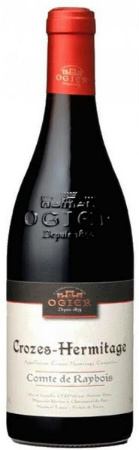
Ogier Caves des Papes Crozes-Hermitage Comte de Raybois 2009

Another red wine, another Ogier. Crozes-Hermitage lies in the northern part of the Rhône wine region and has a continental climate. Nearest town being Tournon-sûr-Rhône, where Châteauneuf-du-Pape is located more to the south near the town of Avignon, which has a mediterranean climate.

Where the previous Ogier was a Châteauneuf-du-Pape made with four grape varieties, this Crozes-Hermitage is a 100% pure Syrah. That in itself is a no-brainer since Syrah is the only red grape allowed for this appellation, or isn’t it? Strange enough two white grape varieties are allowed for use in the red wines (up to 15%). These are: Marsanne and Rousanne. Since this wine is all Syrah and the Châteauneuf-du-Pape is a blended wine of four grape varieties, I expect this wine to be rather different, albeit a Rhône wine. Syrah is a ballsy grape variety, which usually adds black and blue fruit flavors, chocolate and pepper, but knowing Ogier, this example might be lighter in style than its colleagues…

Color: Deep dark, very dark, red.

Nose: Vanilla and clotted cream. Somewhat closed, smells like a cold wine. Smallest hint of fish. (Should I be writing this? Don’t worry it’s inoffensive). After holding it in my hand, swirling it a bit, an explosion of aroma’s. Nice rich typical Syrah, warming. Hot stones. Spicy yet supple (yes still writing about the smell of it, and it smells, well…, supple). A little bit of dry but fresh uncut grass, and field flowers with strawberry jam. Nice dark fruits emerge from the jam. Nice stuff this, quite complex and interesting.

Taste: This has some more tannins than the Châteauneuf-du-Pape I reviewed last. It dries the tongue and it is a bit austere. It has the, by now typical,  Ogier lightness to it. Syrah can be very heavy, but this Syrah just isn’t. I just poured it, it is light with a light finish and a nice acidity counteracted with some butter. With some breathing it should get better. It’s a bit like Metallica played by a Finnish string quartet. After some breathing and even taking big gulps, the wine actually doesn’t get any “heavier” It just is a lighter style of Syrah, which compared to the nose, is quite simple and easy.

No pepper nor chocolate for me, so this one should be aged further in the bottle, to get the pepper out. Syrah without this most probably is young and needs more time. Leave it alone for at least five years again, but in my opinion it should age even longer than that.

Points: 84

Ogier Caves des Papes Châteauneuf-du-Pape Reine Jeanne 2010

Let’s continue with another red wine. This is a Châteauneuf-du-Pape from Ogier Caves des Papes. Not to be confused with the Ogiers from Côtes Roti.

Christophe Ogier had a wine shop established in 1859 called Ogier et Fils. In 1872, his son Etienne took over the company and he passed it over to his grandson Antoine in 1914. In the 1950’s the company joins with Bessac Caves des Papes in Châteauneuf-du-Pape. Their combined estates are all located around Châteauneuf-du-Pape.

This example of Châteauneuf-du-Pape is built around the four well-known grape varieties for the appellation of Châteauneuf-du-Pape. Grenache (versatile, easy to use and adds rich fruit flavors), Syrah (ballsy, adds black and blue fruit flavors, chocolate and pepper), Mourvèdre (spicy, leathery, gives the wine a dark red color) and Cinsault (perfumy and floral). Grenache and Syrah (and Mourvèdre) being the most popular for the region and this type of blended wine. The wine has had some ageing in oak barrels and boasts a hefty 15% ABV.

Color: Dark ruby-red.

Nose: Creamy and very fruity. Red fruits and prunes. Hot butter and warm earth. Vanilla and utterly balanced, otherwise light. It has some sweet-smelling oriental spices, most definitely some ginger and hints of licorice. Small hint of meat(loaf). Great overall perfume.

Taste: Again light, not very tannic, but still a mouth full, and a little bit drying. Licorice. Deep terroir and only slightly acidic. Medium finish with the licorice sustaining. A bit mysterious. Already needs decanting for its full aroma to show, but after some breathing (also in the glass) a very good and aromatic wine.

Very nice and somewhat light Châteauneuf-du-Pape. Today a very inoffensive wine but with a lot of quality to it. Extremely drinkable but not to be taken with heavy foods. Sometimes almost an aperitif wine! I think the wine should be aged further for at least five years. It will improve, but in which way it will develop is hard to predict. Lovely wine, but could have been better with some more body, a little bit more meat on the bone, but the meat this is there is pretty good mind you! Let’s hope it will get more body from the additional ageing. Very nice wine nevertheless.

Points: 87

Thanks Richard for the wine!

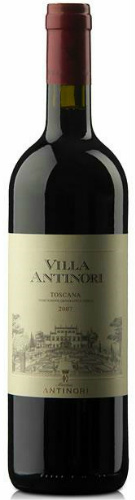
Villa Antinori Toscana IGT 2007

The history of the Antinori family dates af far back as the 12th Century, when Rinuccio di Antinoro produces wine at the Castello di Combiate near Croci di Calenzano, outside of Florence. The particular wine I’m reviewing today, Villa Antinori, was first made in 1928 and at that time it was a Chianti, but a Chianti that could be further aged. Much later, in 2001, Piero Antinori, reworked this wine into a Tuscan IGT. The wine itself is a Super Tuscan blend: with 5% Syrah, 25% Cabernet Sauvignon, 15% Merlot and of course 55% Sangiovese. After the malolactic fermentation the wine was aged in French, Hungarian, and American oak barrels for one year. ABV is 13.5%.

Villa Antinori Toscana IGT 2007Color: Dark ruby-red

Nose: Spicy and fresh, seems young although it does have some ageing under its belt. Some warm very aromatic Tuscan soil, nice! It has its roots firmly in the ground. Warm summer wind late in the evening. Nice red fruits, cherries, blueberries and slightly herbal with a little bit of wood to give it some more character. Nicely balanced wine. Lovely wine with sometimes some whiffs of field flowers.

Taste: Very supple and extremely easily drinkable and delicious. Again some terroir, but not as much as the nose had. Well integrated blend, everything seems to fall in place. Nice depth. Not very tannic, though there is some drying sensation on the tongue and it’s only slightly acidic, but the acidity increases after some more breathing. Breathing also gives the wine something of a bite, bitterness that is, from the wood. The finish is all right and half-long.

This first accompanied food and when that became to spicy, it easily overpowered this wine. The wine itself seems quite light at first, but it did pick up after more breathing. Recommended drinking window for this wine is said untill 2014, so if you have this lying around it’s now probably at it’s best, but I feel still can handle another couple of years…

Points: 83

Bruichladdich 32yo 1970/2002 (44.2%, OB, First Fill American Oak Casks, 4200 bottles)

Let’s step things up a bit with this legendary Bruichladdich. Bruichladdich was founded in 1881, and the distillery was built by Barnett Harvey with money the family got from an inheritance from his brother. It is not the Barnett family’s first distillery though. In 1881 they also own the well-known distilleries: Yoker and Dundashill. Between 1929 and 1936 the distillery is closed. Much later in 1983 the distillery was closed as many others were, but fortunately it was saved (in the same year) and didn’t get demolished. Next the distillery was again closed between 1995 and 2000. In 2000 the distillery was bought for £6.5 million, by a group of investors. Quite a good investment since this group sold the distillery again for £58 million in 2012. The new owner being Rémy Cointreau.

Color: Full gold.

Nose: Old bottle. Waxy and very full and heaps of character. Vanilla with some nice acidity. There is also a fantastic woody note. Smells a lot like a 1972 Caperdonich (from a Bourbon cask), but fresher, less heavy, but don’t make the mistake thinking this is a light nose. Very drying nose, dusty and powdery and full of fresh air. All written here isn’t released by the Whisky in one go, it is released in layers. This nose alone would score sky-high. Absolutely stunning.

Taste: Fruity vanilla which is transported by a fabulous bed of wood. Sugared yellow fruits, again apricots (I get that a lot lately), but also a nutty part, almonds, but nothing bitter. A hint of toasted cask (sweet wood). Perfect big bold body with a mouthfeel to match. Good finish, it leaves a taste in your mouth that should have gone on forever.

This is a Whisky that fetches a pretty penny at auctions today. I should have bought this when it got out. In today’s market, Whiskies like this would be put in some sort of crystal decanter or another polished over the top packaging and would go for 1000 or 2000  Euro’s easily. Having said that, it’s probably worth the 500 Euro’s it costs today. Go and get it, I’ll vouch for it. I had this at 91 up untill now, but that was a grave error on my part. The new score is…

Points: 92

Glenlochy 1977/1994 (40%, Gordon & MacPhail , Connoisseurs Choice, Old Map Label, ID/AHD)

And here is the first Glenlochy on these pages, and only the second Glenlochy I ever tasted. (Amateur!). Glenlochy was founded in 1898 (some say 1897), during the Whisky-boom, but only started distilling in 1901. Glenlochy was closed in 1983 when a lake of Whisky was forming. Many others like Brora, Banff and Saint Magdalene, to name but a few, were closed during that year. In 1992 most of the Distillery was demolished. Now only Ben Nevis survives in the region (Fort William).

Glenlochy 1977/1994 (40%, Gordon & MacPhail , Connoisseurs Choice, Old Map Label, ID/AHD)Color: Gold.

Nose: Fresh, citrus and wax. Hints of smoked kippers and old stale water. Old damp storage room from the 19th century. Clay, some smoke and alas quickly fading at first, but getting better after some breathing. Some menthol (light) and heavy esters. A little bit of latex paint and the most minute traces of bitterness. From the wood obviously, but also connected to the waxy part.

Taste: Old wood, and some clay. Very fruity and also due to its low ABV, very drinkable. Vanilla and toffee. Wet leaves. Actually this takes me by surprise. After some extensive breathing inside the glass, it gets better and better. Probably a nice candidate to try in a big balloon glass. I quite like it, more than anticipated.

I would have loved it, to be able to taste this undiluted, because it oozes potential quality. The quality is here too, but a bit watered down. Very interesting dram this is, but it also shows why I didn’t buy a lot of Connoisseurs Choice bottlings in the past. I know, I know, there are a lot of stunners in this range, but I feel a lot were done some harm when diluted to 40% ABV. By the way, again this is a Whisky that needs a lot of air to open up. needs a bit of work, to show all of its beauty.

Points: 86

The Macallan ‘Fine Oak – Whisky Maker’s Selection’ (42.8%, OB, 1 Litre, Circa 2006)

I come from the times when The Macallan may have been the best Sherried Speysiders around. Almost all Macallans were made of Oloroso Sherry cask, well controlled by the distillery. Who doesn’t know the old back label with the famous last words: “FOR REASONS NOT EVEN SCIENCE CAN WHOLLY EXPLAIN, whisky has always matured best on oak casks that have contained sherry.” or the famous last two words on this very back label: “the tumbler” Well I for one was very disappointed tasting the very first Fine Oak range back in the day, having expected something like the quality of the old Macallans. For me the Fine Oaks had to be of the higher ages to get a high rating. Also the pricing has put me off back then. Some time has passed, some ten years, and here is finally another Fine Oak. Let’s give it another chance…

Color: Honey gold.

Nose: Fresh wood and fresh overall. A bit like a nice Fino Sherry. Waxy (ear wax) and slightly soapy. Apricot and bitter orange marmalade. Heather and a lot of toffee. Quite syrupy smelling and promises of a full body. Seems young with some added depth from some older casks.

Taste: A bit thin at first, but highly drinkable. Again some heather and maybe even a little bit of honey. I can’t shed the feeling this actually is a full bodied Highland Park with lots of Fino Sherry. Hidden bitterness surrounded by fruity sweetness and custard. Towards the end of the body and into the finish it gets drier with more wood and it’s bitterness. Even the toasted cask is here in minute amounts.

This reminds me of the old wide neck Highland Park 12yo, with even the same sort of bitterness in the finish. In fact, if I would have tasted this blind I most definitely would have said this was a Highland Park, who knows, same owner 😉

Points: 85

Ardbeg 10yo 1993/2004 (57.3%, Cadenhead, Refill Bourbon Hogshead, 252 bottles)

Wow, unbelievable, this is just my second Ardbeg review on these pages! I have this distillery up there with the greats, so what happened? This is an Ardbeg from 1993 bottled by independent bottlers Cadenhead’s. This is most definitely not the first Cadenhead’s on these pages, no it’s actually already the tenth, so for more information about Cadenhead’s, please have a look at all the other reviews of Cadenhead’s bottlings.

Color: White wine.

Nose: Sweet and mellow peat. Smells older than it actually is. Very nice, refined and balanced. Vegetal. Lemon sherbet. Fatty and smoky. Definitely citrus fruits this one, and some tropical fruits too. Not an in-your-face Islay monster, but with a lot of Islay character. Freshly cut peat. After a wee bit of breathing, some butter emerges, and it picks up a bit in oomph. More oily and smoky, ans even the citrus (lemon) is more dominant. The peat on the other hand recedes even more. Breathing adds something fishy and some vanilla to the mix. Somewhat more sea influence.

Taste: Sweet, sweet and light young peat. The smoke comes later. Nice effect. Hardly any wood. Whereas the nose showed me some light (old) peat, on the palate this Whisky does show its youth. Just as in the nose, very restrained lively and fruity Ardbeg, again not a kick in the head. With some air and time, it even gets a wee bit floral and ashy and slightly more pungent.

The offset and the body are nice and full, or round, if you prefer. The tastes fit together and show a more elegant side of Ardbeg. Towards the finish it does start to break down a bit. I said a bit. For an Ardbeg the finish is rather short and again light at first, but breathing lengthens the finish (and adds a little woody bitterness, finally). Typical Islay, not typical Ardbeg is you ask me. Probably not a very active cask, since there isn’t any wood detectable, nor has it picked up a lot op color.  It reminds me of an Ardbeg Bond Reserve I still have, so I’ll review that shortly (also from Cadenhead’s).

Summa summarum, nice Ardbeg that needs to breathe!

Points: 86

Clynelish 15yo 1997/2013 (52.2%, The Whisky Mercenary, for Beproefd.be, 65 bottles)

This Clynelish caught me completely by surprise, since Jürgen didn’t tell me he was sending this, and getting free Whisky in the post is, niiiice 🙂 We all know Jürgen from his series of Whiskies he picks out and releases under his Whisky Mercenary moniker, but he also writes the odd stuff about Whisky including some notes on beproefd.be. I’m guessing Jürgen doesn’t need an introduction, but for those of you who do, here is review of Jürgens Tormore. Now let’s have a look at this Clynelish…

Color: Light gold.

Nose: Clean, fresh and fruity, meaty and salty smoke, bacon? Waxy with vanilla, paper and nice hints of wood. A plethora of yellow sugared fruits. The Obvious apricot, but also some pineapple. Excellent modern and clean nose. Warm butter and gravy, so a little bit musty. Easily recognizable as a Clynelish.

Taste: Fatty, waxy and fruity. Warm toffee and mellow oak. A little bit of woodsmoke. Quite sugary sweet, but not overly sweet. Vanilla ice-cream. Nice warming spiciness. Lemons and some orange skins. Dry black tea. The nice fruits mingle perfectly with a nice touch of wood. Extremely drinkable. Nice full body with a medium finish. Low 50’s is a perfect strength too. Lovely and with great balance.

Well Jürgen is known for having a good nose and palate, so his picks are always interesing to have a look at. And Jürgen delivered again. This is again a very good Whisky. I found this one to be even better after some breathing. With air it achieves even better balance and the body gets even more full. Reccomended!

Points: 87