 A week ago “Het Genietschap” had its first ever tasting at my house. I’ve been a member for quite some time, but it took a while to get my ‘location’ added to the agenda. Well finally it was my turn. The organizer gets to choose a ‘theme’, and mine was “Talisker”. When I sent out the E-mail I got a lot of Talisker 10’s as entries, and even some replies implying that there wasn’t a Talisker in the house. Well that got me worried for a moment. My guest of the evening, Erik, asked if he could bring his Port Ellen 29yo 1982/2012 (55.5%, Old Bothwell, Cask #2041), and so the Port Ellen aftertasting was born. My entries for the event were the Talisker 10yo (45.8%, OB, Circa 2002, Map Label), Talisker 1988/2001 “Distillers Edition” (45.8%, OB, TD-S: 5CO), Talisker 25yo (56.9%, OB, Refill Casks, 2006, 4.860 bottles), and the ‘Tactical’ I’ll be reviewing now. For the aftertasting I entered my Port Ellen 25yo 1982/2008 (50%, DL OMC, Refill Butt DL REF 4112, 589 bottles).
 Best bottle in the tasting was a young Port Ellen 15yo bottled by Cadenheads in 1996, Stunning! It was just a tiny bit better, or better: different, than the also stunning Talisker 20yo 1981/2002 (62%, OB, Sherry, 9000 bottles). Also the pre Classic Malts Talisker 10yo was fabulous. Even today’s 10yo is pretty good, but can’t be compared to the taste of the old bottle. This ‘Tactical’ wasn’t bad either…
Color: White wine.
Nose: Creamy and clean. Seems sweet. Some wood spice. Mocha. Later more dusty and dry. A dry stack of logs. More meaty than peaty, I would say. Young. Not a typical Talisker. When aired a bit, some great notes come forward. Bonfire, outdoor life in general, accompanied by a tad of lemon. Nice. Let this breathe (for the nose).
Taste: Spicy and sweet, toffee with some liquorice and banana’s. The start is great. Lots of liquorice and a bit like a good Belgian beer. Nice peppery bite in the middle, so it’s a real Talisker. Towards the finish, when the pepper dissipates, some sour wood takes over and makes the finish thin and the balance a bit off. Actually a short finish. With wood, ash and paper. Funny how the initial taste is so different from the finish.
It’s a Talisker all right. The pepper attack is there. Still the whole isn’t typical Talisker. It smells clean, it tastes round and big bodied, but it has a ‘small’ finish, which is unlike Talisker.
Points: 87

 Allt-a-Bhainne is a new distillery, now owned by Pernod Ricard (through Chivas Brothers Ltd.). It was founded in 1975 to be used for the Chivas blends. Pernod Ricard bought Chivas from Seagram in 2001. The distillery was shortly mothballed between October 2002 and May 2005. Just two years before the foundation of Allt-a-Bhainne, Chivas also founded Braes of Glenlivet (Braeval) for the same purpose, and therefore is considered it’s sister distillery.
 Well living in the low-countries and doing a Auchentoshan review without pointing at the site of the A toshan man is impossible. So
  For now I will do a short intro to Auchentoshan. officially the first word of Auchentoshan is in 1823 when a guy named Thorne got a licence. But there is reason to believe that Auchentoshan started in 1800 named Duntocher. In the past the Germans didn’t like Auchentoshan too much and bombed the place already in 1941. Smart as the Scottish are they waited for the end of the war, rebuilding Auchentoshan. Just to be sure, they started rebuilding in 1948. In 1984 Stanley P. Morrison buys the place and sells his own company to Suntory ten years later. In 2008 Morrison Bowmore starts with the new packaging we know today. But first this expression by indie bottlers The Cooper’s Choice (actually The Vintage Malt Whisky Co. Ltd.) The people behind Finlaggan.
 The Fino used for this finish is commonly a clean, vibrant, straw-colored wine. It has a complex and subtle nose. Delicate notes of predominantly yeast and almonds. Sometimes also tobacco and liquorice. The taste is dry, bitter, smooth and lingering. Also very nice olive oil comes from here.
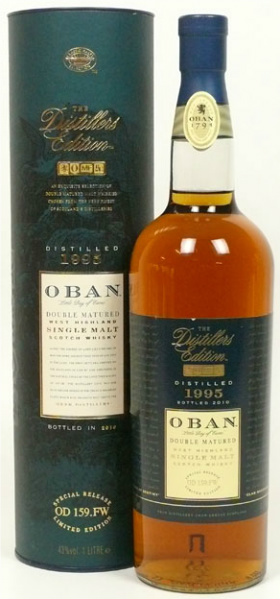 Color: Orange gold.
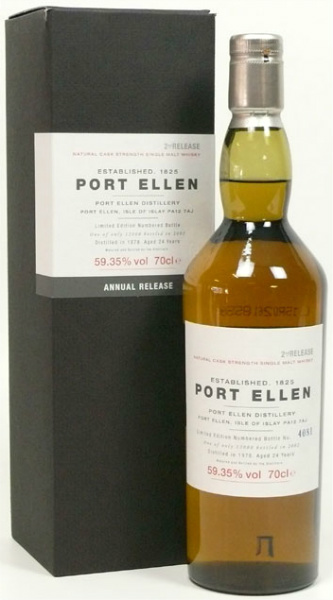 How nice it is to have another Port Ellen on these pages. This one in particular plays a strange role in the Port Ellen annual release series. First of al this strange ABV. 59,35%. New Japanese measuring equipment on loan? No it’s not that. This one is known to be a little closed. Very closed in fact. I had the chance to try this expression when it was freshly opened and it was really hard to taste this. Very hard to tell what is in there. It was nice, but nothing you’ve come to expect from such a Port Ellen. This time around the bottle is open for a while and less than half full. Is this, one of those whiskies that has to be put on the shelf without its cork, to maximize its breathing? Lets see…
 Well it does demand of you that you’ll work on it since it doesn’t give away its treasures easily, especially on the nose. Probably not the best from the series, but still it oozes Port Ellenness. It is an experience. Freshly opened bottle scored 87 Points, but after extensive breathing I’ll score this:
 Earlier I reviewed a
  Why not try another Balmenach. Earlier I tried a
  I used to drink a lot of reds and for the last six years or so I love to drink a lot of whites. Alsace was probably what set that off. But as you might have guessed, being the frequent reader you are, I drink foremost Scottish Single Malts nowadays. But it’s not all Scotch that lights our world, so I’ll definitely have to try some different things here too. This time the first red wine on Master Quill.
 Haut-Médoc is the large southern part of the Médoc district of Bordeaux in the south-west of France. The famous wines from this region are Margaux, Pauillac, Saint-Estephe and Saint-Julien. You might have heard of those.
 Here’s an appeal to all. Start drinking Sherry. NOW! Because it may be too late already. Let’s face it people. We love our whisky and we particularly love it when it’s from a good Sherry Cask. But as can be seen, prices are soaring when a nice sherry casked whisky is released these days. I’ll be reviewing some Pedro Ximenez (PX) Sherries the following days, but there is a lot more out there. You might want to try a nice Oloroso (maybe the best performing casks for whisky).
 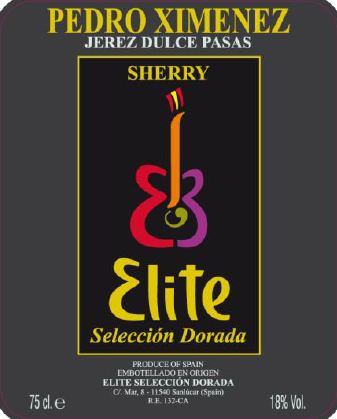 Some of you might like a dry Fino. But there is a lot out there, and a lot of differences in quality too. One thing is sure, when trying out some nice Sherries you won’t break the bank.
 Burned creamy sugar as in the top layer of Creme Brulée. The acidity is a very nice addition to the taste of this PX. It doesn’t seem to be as sweet as the competition, and it is certainly not as thick. The finish therefore, is not the longest in the business.
 Hello November! Looking outside, this month seems to bring us damn close to winter. Here we have a bottle of Brora 1981 bottled by indie bottlers Ian Macleod in their Dun Bheagan range. Ian MacLeod have a few other brands you might know. The Chieftains Range or “As we get it” for instance. The company is also the owner of the Glengoyne distillery, which is one of my favourites. Go!
 Color: Orangey Gold
