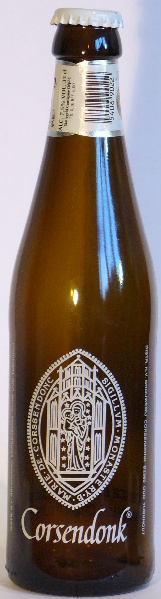
 Let’s try another Tripel. Yesterday I was a bit harsh for a beer from one of my favorite categories, The Tripel. So let’s try another Tripel, but this time from Corsendonk. Corsendonk Agnus – Tripel ís an Abbey beer. The Abbey brewed beer themselves in the 17th century. Today the Corsendonk beers are brewed under license elsewhere. The Agnus is brewed by Du Bocq in Purnode Belgium.
 As you know life is hard. For this review I had to drink three bottles of the Corsendonk Agnus. I bought a couple of bottles a long time ago that were brewed in august 2006. I tried one of those earlier when it was around three years old, and this time I’m trying two, of the same batch, that are now six years old. Yes you can drink Tripels well past their dont-drink-or-you’ll-die-of-food-poisoning-date. Finally I also bought a new one that was brewed in february 2012. Following notes are for the aged ones:
Color: Orange. Gold with Copper
Nose: Fresh and refreshing. Peaches and lemons. Apricots, very fruity and estery. Lateron spicy and very balanced. Yeast and somewhat perfumed.
Taste: Fruity. Slightly bitter and hoppy. Velvety texture, very smooth. Very drinkable! Elegant, warming alcohol with peels from orange and red grapefruit.
The new bottle was full gold with nice cream foam. A lot of bubbles are surfacing, and no yeast visible. It’s fresher and more appetizing. Fruits are more in the range of apples, lemons, and hints of orange skin, than the estery peach and apricots in the aged bottles. Obviously the new one is far less complex and ‘lighter’ in style. Typical ‘beer’ finish, and aftertaste. Too young!
 Well first of all, after the prolonged ageing period, the beer turned a lot darker, than the same batch at a younger age. Originally it was radiant gold, now it turned a lot more copper. The meaty part on the nose disappeared, but it gained a lot of fruity esters. With this it gained a lot of complexity. The three-year old one was more refreshing (more lemon), but this still is refreshing. It gained more depth, but it didn’t even change that much, tastewise. It is easily recognizable as a Corsendonk Tripel. Personally, I find six years of ageing a bit too long. I think it is at it’s best, around three years old. The new batch was, in comparison, very light and really easy to drink, with an aftertaste you only know of your standard beers. After seeing it’s potential I would recommend ageing your bottles for three years. But if you’re interested, longer can be quite fun too. Drinking this right after you bought it is a waste of your money. Put it in your cellar and be patient!
Points: 83
P.S. The cheese from Corsendonk is lovely too!

 After the fabulous
  It’s all right. An example of a typical Tripel. I prefer other Tripels, which will be reviewed eventually. After the Pale Ale this is a bit disappointing. Maybe I had too high expectations for this? It reminds me a bit of a Duvel, but Duvel is better (for me). Don’t get me wrong, this still is a pretty decent beer, but for me it doesn’t add anything to the world of the Tripel. Actually, maybe this isn’t even an Abbey-style Tripel. But a heavy Blond Ale with a third fermentation in the bottle (which a lot of people call a Tripel). It just has to decide which one of the two it really is.
 …some sunshine, and another chance to finally review another cigar that is with me for quite some time, and thus had the chance to age properly.
 The soapyness gets more and more “there” and is something you’ll want to “away”. Fortunately since this didn’t go well with coffee, it goes well with carbonized water. (This time I had some de-ironed mineral water from France). I won’t be running out to buy a new box of these. There isn’t a lot happening, but what’s there is nice. The build is very good and the draw turned out to be very easy. It didn’t weigh a lot and therefore it burned pretty quick. The black band was glued to the cigar and can’t be removed without ruining the cigar. Unfortunately this band sat quite high, so the end came even sooner. Short spicy, woody and alas soapy smoke.
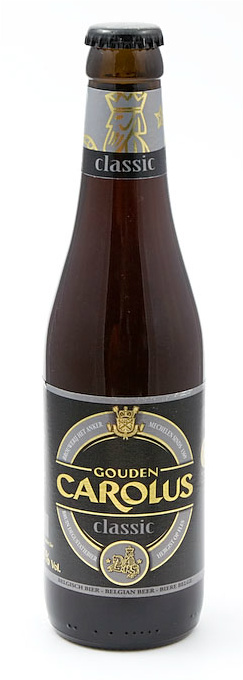 Gouden Carolus, once, only one beer, but since then a lot more versions of Gouden Caroli hit the market. Actually there was an emperor’s beer before 1960, but this is the year the name Gouden Carolus was given to it.
 emperor Charles V on it, who spent his childhood in Mechelen. This beer is also from Mechelen, what a coincidence! It is even a protected regional product from Mechelen.
 Springbank, the strongest survivor of Campbeltown, and one of the few family owned distilleries. Once a great center for whisky, and once a region of its own, it still is, but barely.
 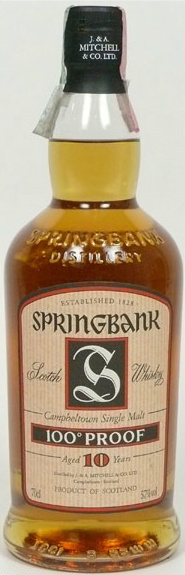 The people behind Springbank do their utmost best to let Campbeltown survive as a region. Glen Scotia is intermittently operated by the crew of Springbank, and of course Springbank themselves are responsible for Longrow, Hazelburn and Kilkerran (Glengyle Distillery). All names from a distant Campbeltown past. Founded in 1828 by the Reid family, who were married into the Mitchells. In 1837 the Mitchell’s bought the distillery. In 1897 J. & A. Mitchell Company Ltd. is founded, the company that is still on the label today. Since 1969 J. & A. Mitchell is also owner of Cadenhead’s. Between 1979 and 1987, Springbank was closed. And since 1989, production is again as it should be. Almost nobody malts themselves these days, but Springbank take the remarkable step to reopen the maltings in 1992. Springbank is a cult malt has a great following, and is by far the most popular malt on Wall Street.
 Yes it’s “Snickers” in a bottle. Slightly unbalanced by the soury woody, and peaty, finish. The finish also leaves a minty sensation on the tongue. Sweet mint as in “After Eight”.
 It’s Islay time! oops, maybe that was from Ardbeg. Well Bowmore is also from Islay and both are in the same time-zone. I see it’s the first Bowmore here, so I choose a potentially good one. Obviously not from a single cask, since no Bourbon Cask (Barrel or Hogshead) can yield 708 bottles.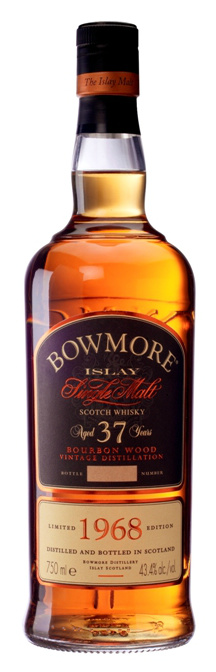
 Clynelish is a very popular dram. There are several reasons why. First of all it’s a sister of Brora, which maybe the best malt of all. Second. Clynelish has a unique waxy personality and it’s spirit is always of high quality. It’s very hard to find one that is not up to par.
 Taste: Spicy and definitively from a sherry cask. Wood, beer and spice again. Sweet and tarry. Shortbread and gingerlike. Turkish delight and has some traits of a Riesling wine. Full bodied. Slight sour wood and licorice on the finish.
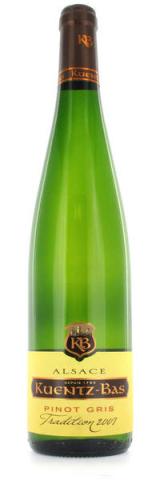 Kuentz-Bas Pinot Gris Tradition 2007, ABV 13%, Husseren Les Châteaux, Alsace
 Glengoyne then. Glengoyne got my interest because they were one of the first to specifically state, ‘unpeated malt’ on their labels. Also, I like the looks of the bottle ánd for still using Golden Promise amongst other barley’s of course. Golden Promise is somewhat of the holy grail of grains, because it is supposed to be very flavoursome. But the yield is not so good, compared to the favorites of today (which make all whiskies taste the same, to come out bluntly). So lets see if this one, and remember this is a fairly priced bottle, makes a golden promise.
 Taste: Toasted wood, but still a lot of yeast. Can’t shake the Sherry here. High proof, so it makes an impression. Although this has bold flavours, the quality of the spirit shines through. Very Ahorn syrupy sweet, and corn sweetness, that’s totally different from the Ahorn. It almost tastes like a wheater! This could be a Weller, with some sherry musty and creamy yeastyness. It’s a picture with thick broad strokes. It is thick.
 Convalmore is one of those distilleries that is no more. Thinking of closed distilleries I alway think about Monty Pythons dead parrot sketch: It’s not pinin’! It’s passed on! This distillery is no more! It has ceased to be! It’s expired and gone to meet ‘its maker! It’s a stiff! Bereft of life, it rests in peace! If you hadn’t nailed it to the perch it’d be pushing up the daisies! ‘Its chemical processes are now ‘istory! It’s off the twig! It’s kicked the bucket, it’s shuffled off its mortal coil, run down the curtain and joined the bleedin’ choir invisibile!!
  Convalmore was founded in 1893. A large part of the distillery was destroyed in a fire in 1909. It was rebuilt with an added continuous still to make whisky at a lower cost. This didn’t work so the stills were discontinued in 1916. In 1962 the stills were heated indirectly with steam. Convalmore was mothballed in 1985 and the buildings were sold to William Grant & Sons in 1990, who use them for storing their own malts.
 The beer returns, with the wood, in the finish. Well its safe to say that this one is all about the wood. you don’t hear me say that it’s too much of overpowering. No. it is a woody whisky, but it is one of those that really should be woody. Wood is its strength. The rest of the body is firm enough to counterpart the wood. Again very interesting, but no easy dram. I hate the word, but this may be for connoisseurs only.
