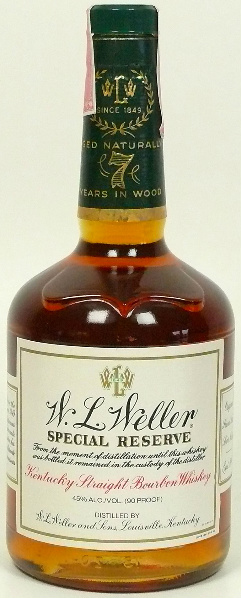
W.L. Weller 7yo Special Reserve (45%, OB, Circa 2007)

Just like the Old Fitzgerald, W.L. Weller is a Wheated Bourbon that used to be made at Stitzel-Weller Distillery.  When that closed down, the Old Fitzgerald brand was sold to Heaven Hill and W.L. Weller was sold to Sazerac, owners of Buffalo Trace. The W.L. Weller 7yo “Special Reserve” is no more. After this one, a similar looking bottle was released, but without the 7yo age statement. Later the look was altered altogether. It’s still called “Special Reserve” and it still lacks an age statement. Other Wellers that are still around are the W.L. Weller “Antique” bottled at 53.5% ABV. and a 12yo, which is bottled at 45% ABV, just like our 7yo. Finally there is a William Larue Weller that is part of the Buffalo Trace Antique Collection (BTAC), which is bottled annually at barrel strength, something in between 65 and 70% ABV.

W.L. Weller 7yo Special Reserve (45%, OB, Buffalo Trace)Color: Medium orange brown.

Nose: Lots of cream and toffee, very appetizing. Honey, vanilla and wood, nutty and dusty. Again toffee and warm runny caramel. Nice spicy wood in the distance even reminiscent of a dry (salty) meaty aroma, beef jerky or polish kabanosy. Sappy charred oak. Savvy and supple. Sawdust, perfumed caramel and chocolate bonbons. A hint of sweet corn and charred cask, and dare I say it, minute amounts of smoke and ashes, probably from the toasted cask. This smells like it owns it. Very well made, interesting and nice. Love how this smells.

Taste: Sweetish, nutty, fresh and well-balanced. Quite some wood influence as well as paper. Sawdust I would say. Bassetts Liquorice Allsorts and lots of vanilla ice-cream with caramel sauce on top. Small hint of dry bitter wood trailed by some, but not much, vanilla sugar sweetness. This works well and gives the Bourbon some backbone. Again, this is a very appetizing Wheated Bourbon. This is a perfect example where all the aroma’s come together nicely, but having said that, this doesn’t seem to be your most complex Wheated Bourbon. It’s very tasty in an almost simple kind of way, but I don’t consider this a daily drinker. It pack a wee bit too much for that and it deserves to be savoured.

Who said that Wheated Bourbons are light and dull? After this one I’m curious if the new “Special Reserve” comes near this one, because this 7yo is quite the winner for me. I like it a lot. I compared it to the Old Fitzgerald 12yo I reviewed earlier, but that one almost seems soapy compared to this one.

Points: 86

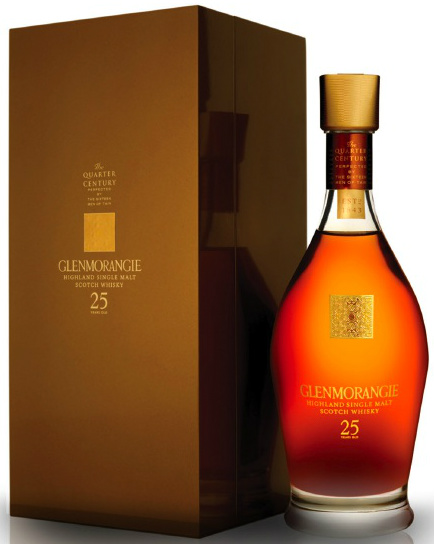
Glenmorangie 25yo “Quarter Century” (43%, OB, Circa 2012)

And here is another entry-level malt. Anyhow, it is when you give your wife a Luis Vuitton bag very month. If you’re more middle class, or like me, no class at all, you might want to get the 18yo “Extremely Rare” which isn’t actually extremely rare but compared to this 25yo is extremely affordable and quite nice. The 18yo scored a quite nice 87 Points. The 18yo has spent all of it’s time in Bourbon casks, save for 30% of the Whisky which was transferred into Oloroso Butts (or Puncheons) after 15 years, to get a three-year Oloroso finish. This 25yo is a blend of Whisky from Bourbon and Oloroso casks, but also contains Whisky from casks that once held Burgundy Wine. Pinot Noir (red) and/or Chardonnay (white). It is unclear if the Burgundy part is a full maturation or only a finish, well the same goes for the Oloroso Sherry as well.

Glenmorangie 25yoColor: Orange gold.

Nose: Waxy, dusty with old wood. Old bottle. Well if anything, this does show its age.  A sharpish winey note. Burnt oak and a distinct sweetish toffee note. Very creamy mocha and milk chocolate with hints of creamy latex paint. Duo Penotti. Hints of oak, cigarette smoke and wine acidity. paper dust. The aroma’s seem to weaken with time. Fragile.

Taste: Strong sweet entry. Red sweet and sugared cherries, so quite some wine influence. Toffee is in here too. Liquid candy. Light, slightly too low in ABV if you ask me. Similar burnt note to the nose. Old wood. Easily recognizable is the American oak ageing. Creamy vanilla and mocha coffee. Slight hint of oaken bitterness. Easily drinkable. Seems simpler that I initially thought and the finish has medium length.

This proves is for me. If you want a Glenmorangie from the current range, I prefer the ones with an age statement, the older ones that is, over the ones that are named after Hyundai cars. The secret here is that the 18yo is maybe a better and definitely much affordable Whisky than this 25yo. Sure, this 25yo is a great piece of work and compared to the 18yo is slightly more complex, but the 18yo seems to be the better balanced Whisky of the two. Did I mention the humongous price difference between the two?

Points: 86

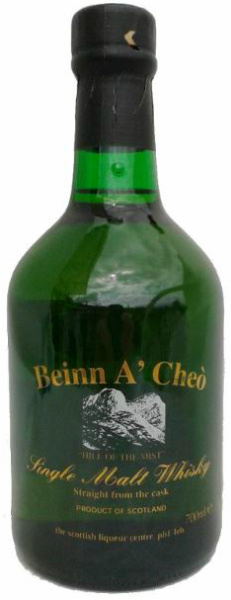
Glenallachie 11yo 1995/2007 (59.4%, The Scottish Liqueur Centre, Beinn a’Cheò, Bourbon Hogshead #33, 273 bottles)

And here is already the third Glenallachie of 2015. Earlier contenders for the Glenallachie award were a 2007 distillate of Dewar Rattray (83 Points), and not so long ago an 1995 offering from Kintra (82 Points), so both scoring low 80’s, which makes them nice, but not great in my book. This time around we’ll have a look at a Glenallachie bottled by The Scottish Liqueur Centre. Yes I know, they are not the most widely known independent bottlers around. The Scottish Liqueur Centre is owned by Morrison & Mackay. Still no bells ringing? What about one of their other brands: Carn Mor, surely you have heard about that! More recent bottlings of Beinn a’Cheo (mountain of mist) no longer have The Scottish Liqueur Centre on their labels, making Beinn a’Cheo a true brand of Morrison & Mackay, just like Carn Mor is.

Glenallachie 11yo 1995/2007 (59.4%, The Scottish Liqueur Centre, Beinn A'Cheò, Cask #33)Color: White wine.

Nose: Spicy and fruity and lots of other traits you know from typical Refill Bourbon casked high strength Whiskies. Remember all those Cadenhead bottlings? Fresh and slightly soapy. Old lavender soap, which only adds to the nose, not disturbing it. Whiffs of rural organics. And nice warm barley. Typical oak. Hints of vanilla from the American oak. When all that is out-of-the-way and the Whisky settles down in my glass, some nice fruits emerge along with a nice fatty creaminess. I won’t say it’s simple, but it is typical, well and it’s not really complex either. Not bad though. The oak really gets out when you warm it up in your hand. Wait a minute, warming it in your hand and giving it some time to breathe it really opens up. Finds balance. Nice fruit agian, but the sweeter fruits are now accompanied by citrus fruits. Sometimes this nose reminds me of Angostura 1919, a Rum.

Taste: Sweet. with almonds and fruit. Quite a surprise after the “typical” nose. This goes to show, that nosing isn’t everything. It’s sweeter than usual, but never crosses the line. However it’s sweet enough never to make it your daily drinker, the ABV is too high for that anyway. The wood is here too. Bit mocha and oak, milk chocolate. The wood forming a spine for the big sweet fruity body of the Whisky. Lovely stuff. I also like the almond that returns for the finish, although the oak plays a bigger part, turning herbal with air. After the heat passes your throat. The finish is nothing more than the fruity sweetness, some paper and overall “shortness”. The finish is definitely the weak part of this Glenallachie. Not a lot remains.

There is a lesson to be learned here. This is no spectacular Whisky when freshly opened. It’s closed and seems very simple. This is maybe thé example to let a Whisky breath to unlock its full potential. If you do, this ugly duckling turns out to be quite special after all.

Points: 86

Clynelish 14yo 1989/2003 (50%, Douglas Laing, Old Malt Cask, 6 Month Rum Finish, DL REF 3850, 312 bottles)

I’ve been reviewing more Rums lately, which is fun to do. back to Whisky for now, but I won’t have to let go of Rum altogether. To continue the Rum theme, my previous review was of a Teeling Blended Whiskey, finished in Rum casks. The Rum completely took over the Whiskey. Here is another Whisky, Scottish this time, that was finished in a Rum cask. Alas we don’t know where the Rum cask came from, nor do we know what kind of Rum it once held.

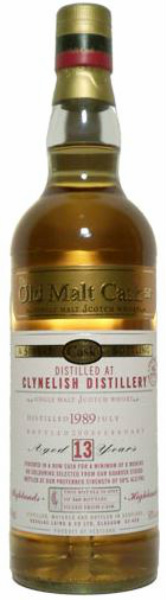
The title is correct, the picture is wrong. I found an old sample of this Clynelish on my attic, but it seems Whiskies were drunk in 2003 and not collected. I couldn’t even find one in an auction. No picture to be found of this particular 14yo rum finished Clynelish. All I could find was this picture of its 13yo sister bottling, also finished for 6 months in a Rum cask. For a brief time Fred Laing reserved the red lettering on OMC bottles for younger Whiskies in a time when  Douglas Laing was bottling almost only stellar and old bottlings. For one reason or another the red lettering, and the red tube, was soon abandoned. The bottle in the picture was bottled in February 2003, and the 14yo, I’ll be reviewing soon, later in that same year. It is therefore entirely possible the 14yo doesn’t even have red lettering.

Clynelish 14yo 1989/2003 (50%, Douglas Laing, Old Malt Cask, 6 Month Rum Finish, DL REF 3850, 312 bottles)Color: Light citrussy gold.

Nose: Wood and yes, it has some light golden Rum on the nose. This time the Rum didn’t overshadow the Whisky. You still can recognize a Single Malt Whisky in this. Flowery and soapy and hints of rhubarb. Soft young wood, leafy and fruity. Papaya, maracuja and a tiny hint of banana. In a blind tasting I would have said this was a Tomatin. Typical Bourbon cask notes and with tropical fruits, what else could it have been? Nice nose. Floral and fruity, but also damp earth and raisins. Hot butter. Sometimes whiffs of a Pinot Gris fly by. I like this. Well balanced and even though a lot can be picked up, the balance is so great and the aroma’s are so well-integrated it doesn’t even seem complex. The aroma’s show themselves in layers, but when an aroma is replaced by the next, it isn’t gone for good, everything comes back as a boomerang. Given some time a more burned note appears that wasn’t there before. I have always liked Rum finishes, maybe that’s where the interest in Rum comes from.

Taste: Recognizable as a Clynelish, with added yellow, tropical and red fruits. Quite hot, it bites back a bit. Sweet and more yellow fruits. Pineapple and white grapes, hints of unripe peach and unripe banana. After the initial sweetness, notes of paper and wood. Cheap wood, plywood maybe. This is less balanced than the nose is and the finish leaves a slightly bitter taste in your mouth. Burned wood and grape seeds. Nice stuff, just don’t expect a sweet Rum in this one.

Back in those times, it seems that Rum finishes were more common than today. Wine finishes were hardly available, and those that were around were not particularly good. Look around today, lots of finishes in casks that previously contained a Wine in all its guises. Rum finishes are still not done very often, apart from some Benriachs I guess. Speaking of which…

Points: 86

Caroni 1998/2008 (40%, Bristol Classic Rum, Trinidad & Tobago)

The Caroni distillery was founded in 1923 and after 80 years of operation, sadly was closed in 2003. In 2001 the Trinidad government sold its 49% share in Rum Distillers Limited to Angostura for $35 million who were forced to close the distillery two years later, because that same Trinidad Government closed their sugar refinery on the island. In the first half of the 20th century Trinidad had some 50 odd distilleries, but today only one survives, Angostura. The demise of the Trinidadian sugar cane industry means that molasses today are mainly imported from Guyana. Because of its heavy style, Caroni was a favourite with the British Navy and yours truly.

Bristol Spirits Caroni 1998-2008Color: Gold.

Nose: Dry, funky and slightly industrial. Like a crossing between Rhum Agricole and Jamaican Rum, with added motor oil and petrol. High ester heavy style Rum. Different kinds of wood and waxy. Lots and lots of aroma. Hints of oranges and mushrooms. Hot butter. Orange skins at first, but with good nosing a deeper (and sweeter) kind of sugared oranges appear. I’m a big fan of Rums like these. Later on, some oak and earwax. Burnt wood and smoke. Bonfire and a fishy note. Grilled fish (hanging over the bonfire). When my mind wanders off, I will associate the hint of smoke and burnt wood with Islay Whisky. Nice side effect. When all the extremities wear off on the nose, the whole becomes slightly sweeter and friendlier. More salty and smoky vanilla. What a nose!

Taste: Dry oranges with some hidden sweetness underneath. Still a bit industrial, not saying that is bad, on the contrary. Nice hints of oranges again, all of it, the skins, the freshly pressed juice and the candied oranges. All quite dry and smoky, never truly sweet. The wood is trying to get some bitterness across, but that hardy is the case. The Rum itself is highly aromatic, the bitterness is pushed back, there is simply not a lot of room for it. Bitter orange skin and again a burnt note. I can’t help but feel that the orange oil you get with the juice from the skins also gives off a slight acidic note that doesn’t completely integrate with the rest of the taste. Something that also happens in the Abuelo 12yo. Only here it’s not that bad.

This is great stuff from a sadly closed distillery. Not your run of the mill easy-going overly sweet Rum, but something more daring and industrial. Maybe this Rum isn’t for everyone, but if you like the profile this was one of the best.

The 1998 Caroni reviewed here was bottled in 2008. In 2013 exactly the same rum was released, just 5 years older. That one would be nice to review sometimes. The picture on the left is from the 2013 release, but looks exactly the same as the 2008 release.

Points: 86

Abeille-Fabre Châteauneuf-du-Pape Blanc 2010 Vignoble Abeille

Lots of information about the wines marketed as Château Mont-Redon, but not a lot about this particular wine. Château Mont-Redon is owned by Jean Abeille and Didier Fabre, they are the third generation of wine-makers, but already the fourth generation is awaiting. This particular wine is from the Vineyards of Jean Abeille. Château Mont-Redon’s vineyards are 174 ha big, of which a nice 100 ha lies in the AOC Châteauneuf-du-Pape

This white Châteauneuf-du-Pape is a blend of 40% Grenache Blanc, 25% Bourboulenc, 20% Clairette, 10% Picpoul Terret and finally 5% Roussane. Well, not your every day Chardonnay or Sauvignon Blanc, isn’t it! By the way, these numbers may vary with every vintage. Around 450.000 bottles of Châteauneuf-du-Pape are produced annually, of which a hefty 100.000 is of the white variety.s

Abeille-Fabre Châteauneuf-du-Pape Blanc 2010 Vignoble AbeilleColor: Straw yellow, light.

Nose: Very aromatic, fatty, buttery and nicely fruity. White peach. Mineral but also fruity, white peach in sweet yoghurt. Very appetizing. What I especially like about this one is the slightly industrial, rubbery and maybe gout de petrol like quality this wine has.

Taste: Thick vanilla, wood and warming, what? Warm stones. Mineral and earthy. Slightly waxy and soft lemon juice on top. Gooseberries and grapefruit! Acidity kept in check. Nicely balanced Wine. Vanilla and wood in the nose and now again some vanilla and wood in the taste, this must have seen some wood. Slightly bitter finish, which passes through the mouth leaving a nice taste behind. Well made.

Starts very fruity and aromatic, changes into a more serious nose with petrol. Same with the taste, ending in a slightly wooden bitterness. Not harsh in any way. The finish is long and the bitterness passes into something more woody-fruity and fatty. Fresh butter. High quality. 13.5% ABV. Don’t drink this too cold, when it warms up in your glass it still gives of a lot of aromatics.

Points: 86

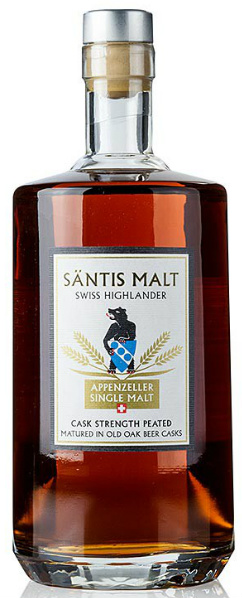
Säntis Malt Edition Dreifaltigkeit (52%, OB, Old Oak Beer Casks)

End of the line, for now. We finish our short trip in Europe in Switzerland to visit the Locher Brewery in Appenzell. Nothing more interesting than the quest to find Whiskies not from Scotland. Earlier I reviewed the entry-level Edition Säntis, which I found reasonable and showed already some potential. This time around we have quite a different Säntis Malt, which is called Edition Dreifaltigkeit. Dreifaltigkeit has been finished in a Sherry cask but also peated malt was used. Sounds good!

Säntis Malt Edition DreifaltigkeitColor: Vibrant orange brown.

Nose: Heaps and heaps of smoke, yet not a lot of peat (for a peated malt). Lots of fruit, black, red, the lot. Nicely thick, highly aromatic. Lots of fruity esters too. Sherried, meaty and fishy. Smoked sausage and a hint of smoked mackerel. You can name any meat or fish that has been smoked, it seems to be all here. When given some time, and air, an odor of stale beer enters the fold. I have the glass before me and at the same time was reading something, and some less than excellent sour whiffs fly by my nose. The initial fruit was stronger than the stale beer nose, but it seems they are trading places now. Just move the Whisky around a bit in your glass and the off note is gone. Dry and chocolaty notes enter late as well as dry horse manure. What a Malt! Great nose, up there with a lot of other great noses like this Longrow. Hope it tastes similarly good and we’ll have a winner here!

Taste: Taste wise it seems a lot simpler at first. First of all, it doesn’t seem to be 52%. I expected more of an alcoholic bite. It has some (bitter) wood, dust and paint. Dry paint residue and definitely some smoke, even in the taste. Sweetish fruits again (Sherry, Cream Oloroso or PX I would say) and just like the nose, a slightly acidic off-note. The off-note changes a bit and can be identified as beerlike towards the finish. Hoppy bitterness in the finish and also a sour note. The finish is long and shows the higher ABV.

The ultimate smoky malt. For me the Beer notes in this malt do not work, but they are well-kept in the background. I understand this is essentially a brewery, so it has ages and ages of history with making Beer, and using Beer casks, but this isn’t a Beer, its Whisky and it is proven over and over again, that Beer casks are not the best casks you can use for ageing Whisky. Having said that, this turned out to be a wonderful uniquely smoky malt. Recommended!

Points: 86

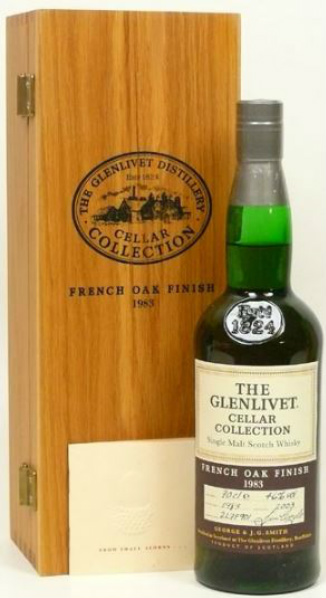
The Glenlivet 1983/2003 (46%, OB, Cellar Collection, French Oak Finish, 2L7F901)

The Glenlivet “Founder’s Reserve” I just reviewed, was actually quite simple and a bit disappointing. It is a very, very young Whisky, which in my opinion doesn’t show how good a Glenlivet can be. I rummaged a bit through my personal archive and unearthed another Glenlivet to review. So lets forget about the new one for a moment and let’s see how an old Glenlivet will do. Here we have a Glenlivet that has some 20 years behind its belt. 17 years in Bourbon and Sherry casks and a further 3 years in lightly toasted French Limousin oak casks. Not all casks were used for this bottling (quality control), so only 8.000 bottles were produced. A true limited edition! This review will probably show that this was 20 years well spent, time nobody seems to have these days since demand skyrocketed. We are told not to judge a bottle by its NAS, but in the old days the same people told us we hád to judge the Whisky by its AS (Age Statement) or Vintage. So without further ado, I give you a Glenlivet from their Cellar Collection, a 1983 French Oak Finish bottled in 2003, when age was still a benchmark.

The Glenlivet 1983/2003 (46%, OB, Cellar Collection, French Oak Finish, 2L7F901)Color: Amber gold.

Nose: Surprisingly fresh but also Sherried and certainly dusty. Elegant with silky wood notes, and some added depth of toasted wood and (partly burnt) caramel and slightly too sweet toffee. Lots of aroma. Flour. Funny enough, and I’m most probably not objective here, there is a silky wood note that seems to lie on top of the nose, not as much integrated as the deeper woody notes. Very nice to nose a Whisky that has several kinds of different wood aroma’s. With the toast comes candied fruits, adding to the depth of the Whisky. Vanilla and Ice-cream notes from American oak, so most definitely a mixture of Bourbon and Sherry casks.

Taste: Creamy Sherry and yes, lots of vanilla. Distant sweet Moscatel Wine. Very smooth. Even though this has seen two or three kinds of wood it is not overpowered by it. Sometimes the wood is hardy noticeable. In the back of your mouth some nice and sweet aroma’s form, but only if the Whisky is tasted with big gulps. Dusty on the palate as well, and alas, alas, a rather short finish.

I’m not sure what the French oak finish brings to the blend of Bourbon and Sherry casked Whisky. Sometimes you do get an un-integrated silky wooden note that lies on top. So maybe it is obvious what the finish did for this Whisky. I’m amazed this turns out to be 46% ABV. It seems more like 40 or 43% ABV. Maybe this should have been bottled with a higher ABV? Good stuff nevertheless. On paper one of the more complex Glenlivet’s from the Cellar Collection, but my mouth tells me otherwise. The aroma’s of this bottling are silky and deep and for some may lack a bit of fruity zest. Highly drinkable though and something you can enjoy properly.

For reasons only science can wholly explain, I followed the Glenlivet up with the Blackadder Lochside I reviewed earlier, and although the Glenlivet is also good, the Lochside blows it right out of the water, so when spending money at auctions I would know what to do!

Points: 86

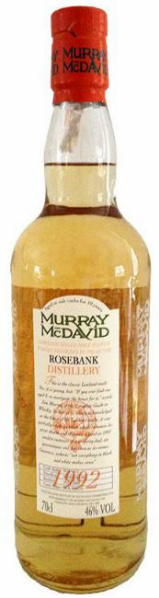
Rosebank 10yo 1992/2002 (46%, Murray McDavid, Bourbon Cask, MM1413)

Long time no Rosebank. It has been a long time since I reviewed a 1990 Rosebank, bottled by indie giants Gordon & MacPhail. That one was pretty good, it scored a healthy 88 points. Time for another go at Rosebank. This time a 1992 from Murray McDavid, remember them? By the way Murray McDavid bottled two different Rosebanks, both registered as MM1413. (The other one is a 1989, called Mission V). This 1992 is something of a farewell dram since Diageo decided, in it infinite wisdom, to mothball the distillery in 1993, never to work again…

Rosebank was founded in 1798, although some sources mention other years like 1840 and 1773. In the end, Rosebank was sadly mothballed in 1993 by Diageo which preferred Glenkinchie for its Classic Malts portfolio. And why not, nothing wrong with Glenkinchie I say. I’ve tried some very good Glenkinchies, and even reviewed a very good one, a 1987 bottled by Signatory. But why did Rosebank have to go? From an anoraks point of view, bad move since Rosebank distilled some pretty good spirit that turned into some pretty good Whisky if you ask me. Eternal shame.

Rosebank 10yo 1992/2002 (46%, Murray McDavid, Bourbon Cask, MM1413)Color: White wine.

Nose: Softly buttery and citrussy. Full aroma and nicely fresh. Nice acidity and sure some barley. Quite clean. If this isn’t your typical Lowland style, than nothing will be. Highly aromatic with soft wood and a nice grassy feel to it. Good spirit and even though the cask seems not that active (due to the lack of color), the spirit is decent and gentile, and the cask did enough to preserve that, and adding some vanilla and cold creamy butter to it. Lurking in the distance is actually some hints of new make spirit. Nice elegant (cedar) wood with milk chocolate and coffee with creamy notes (or coffee pudding).  Nice vegetal notes as well. Easily recognizable as a triple distilled lowlander. The big aroma is Rosebank from a good cask. Just compare this to the 1979 Rare Malts version (which I know is much higher in strength, but that would be missing the point).

Taste: Slightly toasted wood and creamy again. This starts with a bitterish and sappy oak attack (with some cardboard and malted barley), but that dissipates quite quickly to show it’s even more malty and grassy side. Also coffee and milk chocolate return here. A tad drier than expected and the body is more about new make spirit than the nose. Still not much though. And yes on the palate we can find the vegetal side. The bitterness of the wood stays on throughout. The whole is very nice, and don’t forget about the refreshing citrussy note!

Classic lowland and even though a fairly young Rosebank from a Bourbon Cask, this is clean and such a typical example of Lowland and Rosebank especially. Even this simple Rosebank shows what a mistake it must have been (looking at quality) to close this distillery down. Thank you very much. This particular expression reminds me of some Bladnochs, so I hope that distillery will be saved before it’s too late and someone turns it into their summer home of some sorts.

Points: 86

Caol Ila 21yo 1981/2002 (58.2%, Signatory Vintage, Cask #465, 364 bottles)

Just recently I reviewed a 21yo Caol Ila from Signatory Vintage Cask #467. When rummaging through some sample bottles I collected over the years one of its sister casks popped up. This time it is Cask #465. How’s that for luck. And as luck would have it, I still have a wee bit of cask #467 left, so a comparison can’t be avoided. Again no picture available for this particular cask, seems to me this is very obscure stuff. I’ll use the ol’ picture of cask #470 again. So without further ado…

Caol Ila 22yo 1981/2004 (59.0%, Signatory Vintage, Cask #470, 281 bottles)Color: Light gold. The color of this one is ever so slightly lighter than cask #467.

Nose: Grassy and vegetal. Citrussy. Fresh and actually young smelling. Even the wood smells sappy. Powdery. Hints of soft, fatty, and creamy smoke. Appetizing. Milk chocolate (with sugared citrus in it) and a tiny hint of latte. All very friendly smelling, and although this is not a heavily peated Caol Ila it is very attractive. Good balance.

Taste: Sweet and fruity. prickly smoke with some late development in the licorice department. Light licorice. also a tiny hint of cannabis, so probably a lot was allocated to the Netherlands. Alcohol and again a small hint of coffee and fern. Milk chocolate again. Small amount of woody bitterness starts the finish and lingers on the back of my tongue. Not the most expressive of Caol Ila’s but quite nice in its own way. Not a very long finish. The high strength is obvious on the tongue, but not a lot of aroma is left in my throat. It’s not what you would expect from a Caol Ila like this, but when you let that go, it’s pretty rewarding.

Comparing the two, the noses of the two are obviously pretty similar. Cask #465 has the better nose, more balance to it. Aroma’s seem to fit together better and has more depth and complexity. Still the difference is not great. The taste is very similar too. Cask #467 seems to be somewhat more raw at first, and less balanced.After a while it is also softer and sweeter in the finish. Cask #465 is for me the better pick of the two, with even a slightly better finish, so overall it performs better. Still they are really twins and the differences are in the details and easier to pick up on when doing a H2H.

Points: 86

Thanks go out to my mate Michel for providing this sample (a long time ago).