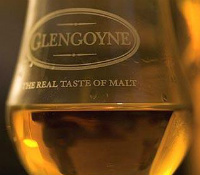
 We lifted off safely, and now we are on our way with Glengoyne. In 2005 Glengoyne started a series of ‘Choices’. In 2005 the Lucky choices were made by stillmen Ronnie, Ewan and Duncan. In 2006 the mashmen Peter, Jim and Charlie had a go, and finally in 2007 Billie, Deek and Robbie chose their casks to be bottled.
  Robbie is the distillery manager and Deek and Billie are warehousemen.
Today’s Butt was chosen by mashman James ‘Jim’ Leslie. This sort of this is always interesting to me. A Sherry Butt made of American oak, instead of Spanish or French oak.
Jim’s said the following about his choice; “I love Glengoyne at this age – the cask and the whisky are perfectly balanced. There is plenty of sweet fruit and rich oak.”
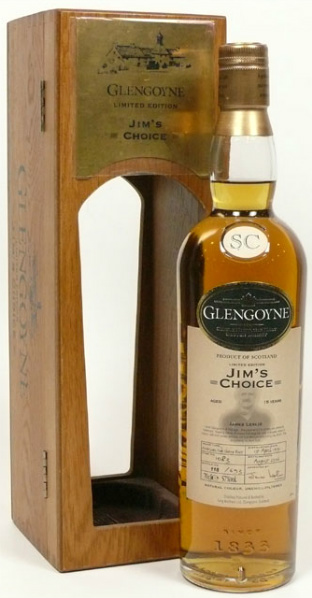 Color: Gold.
Nose: Wow, nice and spicy, apples, waxy with cold toasted wood. Rotting leaves. Not woody at all. Very lively and fresh. Fresh cut grass. Given some time the wood does start to play its part. Wood related vanilla (dry, as opposed to ‘sweet’ ice cream). Barley, mocha and clean, slightly sour oak. Also some varnish.
Taste: Spicy and elegant wood. Fino Sherry. Tobacco and cigar box. Slightly soapy, which also makes it a little bit unbalanced. The initial sweetness is gone quite quickly. Barley and dried grass. Pickle water (sweet/sour). Where the soap affects the balance of this Whisky, the finish does that too. It breaks down rather quick, and the whole palate is too much dominated by wood. No need to tell you that the finish is dry.
Well, for a Glengoyne this is a bit disappointing, and that’s saying a lot! Nosing it, I can imagine Jim to choose this, but on the palate there are so much more beautiful Glengoynes around. Especially the balance of the palate could have been better. Not bad.
Points: 86
 First of all, the picture below is a picture of a similar bottle that was bottled at Cask Strength for Switzerland a year later. The picture is for cask #4726. Glenfarclas is great, it’s family run and most of the make is going into Single Malts, so no room for error, everything must be good. Second, it’s at its best as a Sherried Whisky and even in these times the Grants are able to make a very good Sherried Whisky. The self-proclaimed kings of the Sherried Whisky, namely The Macallan, gave up on this practice. For reasons only the marketing department will know. Good luck to them, Glenfarclas may very well be Speyside’s finest!
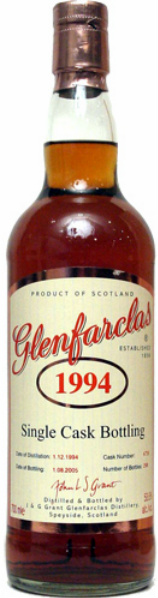 Color: Lively orange brown (like a Bourbon)
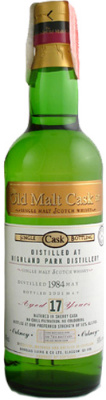 Color: White wine.
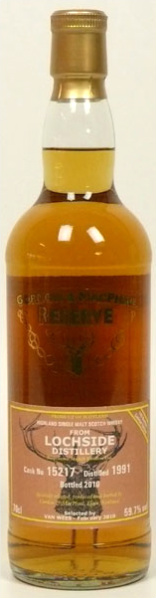
 Here we have one of the many 1991 Lochsides, and one of the many that were issued as a Gordon & MacPhail Reserve. This one was picked by Dutch retailer Van Wees. Gordon & MacPhail code for this one is AJ/JBEC. The spirit was distilled on September 18th, 1991 and eventually bottled on March 8th, 2010. Alas we don’t know exactly the date when Han van Wees tasted it and picked this ;-). Kudos to Gordon & MacPhail for all the information on the bottle and back label.
 Color: Gold
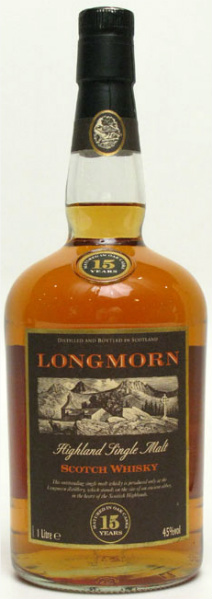 I just found out that Longmorn isn’t on Master Quill yet! Longmorn is one of my absolute favorites. Just have a go at a sixties or seventies fruitbomb or heavily sherried expressions from the days the stills were heated with coal. Sometimes it almost tastes like the coal went into the whisky too. A liquified locomotive. But no use crying over spilt whisky and let’s start-up with this old 15yo. This 15yo is no more and was replaced in 2007 by the current 16yo. So it’s off the market for five years now, but bottles are found in some shops and are still fairly cheap at auctions. Also the packaging has dramatically changed. The 16yo new bottle has metal and leather glued to it, and has an intricate box. This 15yo looks fairly simple. Surely Longmorn are capable of making a pretty good standard whisky? Lets find out how this eighties distillate behaves, and maybe we get a chance in the future to compare this to the new 16yo expression. I tasted the 16yo once in 2009, and scored it a measly 81. I hope it got better in the mean time.
 Why not try another Balmenach. Earlier I tried a
  Ahhh, yes, Gordon & MacPhail never cease to amaze me! Next up is this Glencraig 1970/1996 (40%, G&M, Connoisseurs Choice, Map Label, IF/CCC), but now it turns out that the exact same bottle with the exact same code (IF/CCC) was also released with the Old Map label too. Why? Can we conclude from this that 1996 was the year the labels got changed?
 Color: Full Gold
 Color: Full Gold
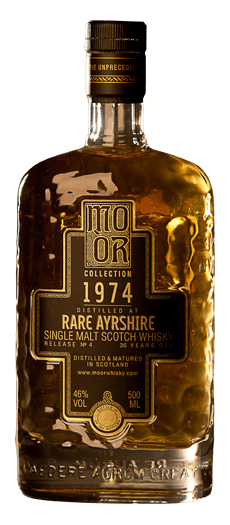 Color: Light Gold
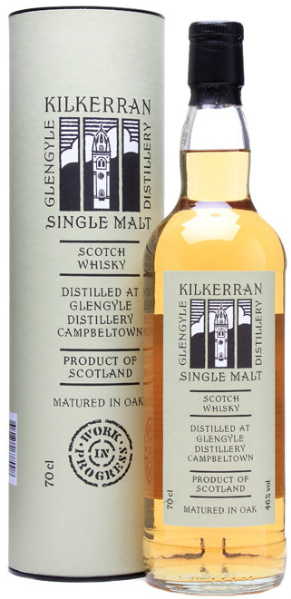 Nose: Fresh, sea air. Soapy and oily. Some smoke. The 7yo seems to me to be less fatty that the 6yo. The 7yo is more refined, but definitively from the same family as the 6yo version. Also some peat and clay. More sea freshness in this one. Lemon curd. In the nose this one has more of everything when compared to the 6yo. The 6yo is more meaty and musty.
 Master Quill