Chichibu 3yo 2009/2013 (53.5%, OB, Ichiro’s Malt, Chibidaru, Quarter Cask, 3900 bottles)

Chichibu is the first new Japanese distillery since the seventies, built near the city of the same name by Ichiro Akuto. Akuto started building the distillery in 2005 and in 2008 the first spirit ran off the stills. But 2005 is not the start of this story. No, this story starts in Chichibu in 1626 when the Akuto family started brewing Sake. In 1941 Ichiro’s grandfather, Isouji Akuto, built another distillery near the town of Hanyu, for making Sake and Shochu. Five years later a licence was obtained for distilling Whisky, initially a continuous still essentially making Grain Whisky. This still was eventually replaced by a copper still.

In 1980 Ichiro’s father, Yutaka Akuto, started to make Single Malt Whisky instead of the more common Blended Japanese Whisky (Scottish Malt Whisky blended with Japanese Grain Whisky). In 1983 the first spirit became Whisky but by 2000 Hanyu stopped making Whisky due to the severe lack of profitability. Ichiro, who worked at Suntory at the time, was brought in to save the company. He had to sell Hanyu to do just that. Hanyu was dismantled in 2004, but Ichiro bought the remaining Whisky stock as well as the distilling equipment. The equipment is still stored at Chichibu, but was never used since Ichiro´s new distillery was fitted with new equipment.

Chichibu Chibidaru 2009/2013Color: Full gold.

Nose: Fresh entry, elegant and flowery. Toned down, dried Jasmin leaves (tea and soap). Slight hint of powdery and spicy oak, alcohol and quite fruity. Pear and a hint of menthol and red fruit jello. Old dried ginger and sawdust. It smells pretty mature and complex for a 3yo Single Malt.

Taste: Quite woody, good aroma and even a bit sweet. Vegetal and much less fruity than the nose. It tastes even less complex than the nose, and with this it shows its youth. It’s easy to “see” that this one does needs its higher strength. Creamy vanilla, some candied yellow fruits enter the mix after (a lot of) air. Fabulous creamy custard paper pudding aftertaste with proper length. Lovely stuff especially considering its age.

This is an excellent 3yo Japanese Whisky, but it will only show its full potential if you let it breathe a lot. This is the kind of bottle you open and leave in the closet for a week or two without its cork. In the glass just let it sit around for half an hour before you even nose it. This needs air.

Now all the Karuizawa’s and Yamazakis are gone and Nikka struggles to release even a Whisky with an age statement I give you a glimpse of the future of Japanese Whisky. This is high quality stuff with massive potential, but as long as Ichiro is releasing Malts at barely the minimum age, that taste as well as this, it will tie us over as we wait for the Japanese Whisky to mature. My only fear will be that when a Whisky will reach its adulthood, it will be extremely expensive as the Karuizawa’s and the Yamazaki’s of today.

Points: 87
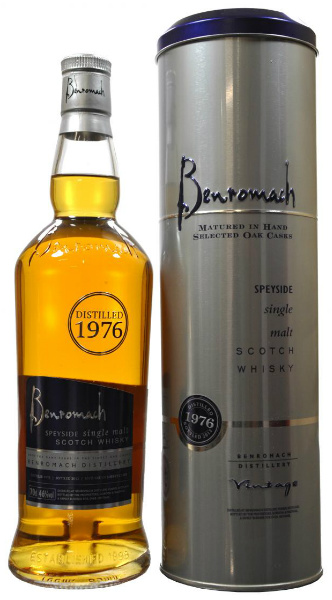
Benromach 1976/2012 (46%, OB, First Fill & Refill Sherry Hogsheads)

This is a 1976 Benromach, bottled in 2012. So it’s either 35 or 36 years old. Said to be from First fill and refill Sherry hogsheads. Just compare it to the 1969 vintage, which is from refill Sherry hogsheads only. The 1969 is much darker in color. So what kind of Sherry was this from? Sherries exist in lots of different styles, and just like a “normal” wine, Sherry has lots of different colors, and aroma’s, too.

Benromach 1976-2012Color: Gold with a slight reddish glow.

Nose: Oak and vanilla. Spicy, dry and vegetal. The smell you get when you break a fresh twig. Slightly burnt wood and a tiny hint of peppermint. It smells younger than it actually is and despite the 100% Sherry statement it is not far away from an older Bourbon matured Whisky (at first). The isolated oak flavour is there, but when this is not from American oak, there is less vanilla to go around. That seems to be the case. So European oak it is. Lovely wood notes, elegant and fine. The wood seems to hold some bitter orange skins in its aroma. Also noticeable is a slight (white) winey note, but also some nuttiness which leads me to believe these casks also held some Fino’s and/or oxidized white Sherries. Not a lot of fruitiness which sets it apart from the famous Tomatin’s from the same vintage.

Taste: Well hello there. This starts with the fruits the nose lacks, but also the wood plays a nice role in here too. Even at 46% ABV, this is quite hot and peppery. Dark chocolate. Nice. The initial fruits quickly disperse which leaves more room for the wood. Not a lot of sweetness, and the wood brings a slight bitterness that suits this exercise in wood (and the nuttiness of dry white Sherries) well.  The finish carries hidden notes of flor. This one needs lots of air to settle and to get the balance right (Depeche Mode), but when it does, it shows you its high quality. Still not an easy one and this one will only reward you if you keep an open mind and work at it a bit.

The contrast between this lighter Sherry bottling and the darker 1969 Sherry bottling probably isn’t a coincidence. They go together like the Glengoyne Summer (dark) and Winter (light). Sure this is high quality stuff, and you have moments in your life when you really need a Whisky like this. The aforementioned Glengoyne Winter is a similar Whisky. (The only differences being that the Winter is more funky and less elegant, but slightly sweeter and much higher in ABV). Having said that, in my case, there just aren’t a lot of days like that, so a Whisky like this lasts very long. Every time I need it, I thoroughly enjoy it, but when I have it at the wrong moment, it’s a difficult Whisky. So choose wisely, first when you buy it, it’s quite expensive, and second when to sip it. One thing for sure, or actually two, its great stuff and it will last long.

Points: 87

Pusser’s British Navy Rum “Nelson’s Blood” 15yo (40%, 2013, British Virgin Islands)

To make it a trio of Navy Rums over here at Master Quill is easy. At arm’s length I have the wonderful Pusser’s 15yo, a small batch Rum. Yes a Rum that has actually matured for at least 15 years in Bourbon Barrels. Or so they say. Pusser’s make the claim that (part of this Rum for sure) comes from century-old wooden stills and that the Rums are sourced from Guyana (Port Mourant is made with wooden stills), but also Rums from Barbados, Jamaica and Trinidad (all three not from wooden stills). Another claim made by Pusser’s is that some of the Rums were fermented in open vats where naturally occurring yeasts ferment the sugars in around 72 hours. Pusser’s 15yo contains added sugar.

Pusser's British Navy Rum 15yoColor: Orange Brown.

Nose: Thick fatty nose. High ester Rum from Jamaica meets Demerara Rum from Guyana. Add to that some brown sugar. Those two are pretty obvious. Just like the Red Label I reviewed the day before yesterday, both heavy types of Rum  don’t stay around too much. They just popped in to say hi and sort of left. Caramel, dark chocolate with sugared mint. (After Eight). Vanilla powder, raisins and slightly herbal. Sweet smelling and well-balanced. Brown sugar and milk chocolate. Definitely from the same family as the Pusser’s Red Label, but heavier and overall even “better” smelling. Again farmy notes. Elegant wood, old shop interior. Charred wood. Great complexity, this keeps on giving and giving. Wonderful.

Taste: Sweet and syrupy at first, followed by a dry Jamaican style high ester Rum. Hints of vanilla and do I detect some cola and ahorn syrup? Here we don’t have a heavy Demerara note. This is just too easily drinkable and just a bit too smooth. This really needs a higher ABV sister version. It’s also quite sweet, maybe they’ve added a bit too much extra sugar. Demerara and Jamaica should bring enough sweetness (or aroma) to the mix. This somehow almost seems like an addictive taste to me. It’s hard to put down, despite its sweetness. There is something about this Rum. I still can’t quite put my finger on it, but I like it very much. If a gun was put to my head and I had to think of something I would say its the Jamaican bit in this Rum…

I adore this 15yo, it’s an amazing blend. When I start with a Rum like this, it’s hard to put down. Everything seems right, everything is well-integrated, and even the bottle it comes from looks great. It’s just a wee bit too smooth and a wee bit too sweet. This should have been bottled at a higher strength. Even the simpler version I just reviewed is bottled at 42%. There even exists a higher strength version, bottled at 54.5% ABV. Please make a higher strength version of this blend too, please!

Points: 87

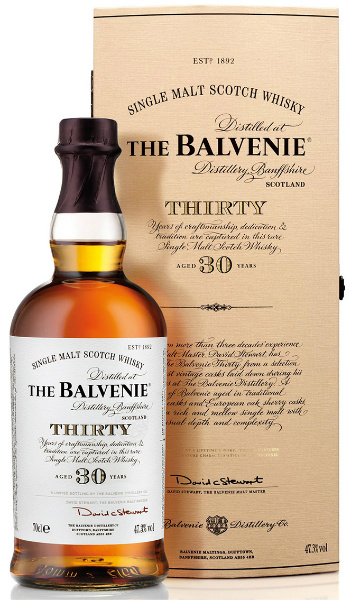
The Balvenie 30yo “Thirty” (47.3%, OB, Circa 2011)

After the young and very affordable Benromach, we are now going to look at a Balvenie that isn’t young nor affordable. For this expression, the story is that David Steward hand-picks some exceptional casks that are more than 30 years old. Casks that once held Bourbon as well as ex-Sherry casks. How unusual. These casks are then blended together and after a while bottled. Quite a surprising technique. A shame though, that only 30 years and older casks could be used for this expression, because the public demands Whiskies with an age statement… Nudge, nudge, wink, wink. Quite unfair of me actually, since The Balvenie bottle a whole lot of Whiskies with an age statement…

The Balvenie 30yo ThirtyColor: Light orange gold.

Nose: Funky, but in a good way. Sherried with Haagse Hopjes (Dutch coffee flavoured candy). Bad breath and old elegant wood often go together. Creamy. A distinguished gentleman, and after the Benromach “Organic” you know this will hurt your bank-account. Freshly sawn wood and hints of saw dust. Vanilla and some caramel. Powdered candy. Sometimes whiffs of Marmite and lavas float by. Actually, this doesn’t smell as old Whisky as I’ve expected. It smells like an old yet modern Whisky. Well balanced, but quite a lot of wood in the nose.

Taste: Sweet powdered candy, but also fruity. Sherry with cherries and other red fruits like raspberries. Thick toffee and slightly acidic. Acidity from fruits but also acidity you get from (freshly sawn old) oak. Not as complex in the taste as I expected. Coffee, cask toast and quite warming. Some bitterness towards the finish though.

A good, but not super-premium-great Balvenie. For this kind of money you can do better I guess. Just have a look at some of the TUN-versions that are around. Nevertheless, a more than decent Balvenie, period.

Points: 87

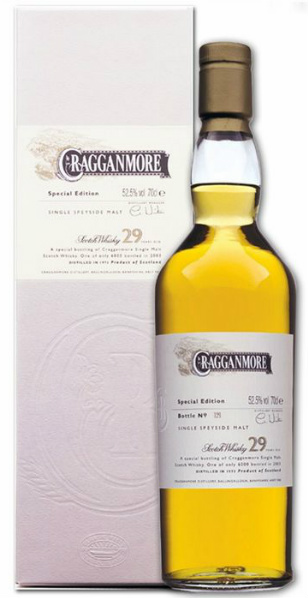
Cragganmore 29yo 1973/2003 “Special Edition” (52.5%, OB, 6000 bottles)

Cragganmore, and an old Cragganmore it is. Last year Diageo released a 25yo Special Release from 1988. That one costs a pretty penny, and is almost sold out by now. Nevertheless these days people throw themselves at anything that looks or feels like a super-duper premium bottling. However, the short row of special editions of Cragganmore was started back in 2003, by this 29yo from 1973. Yes a distillate from the seventies, and distillates from the seventies are usually even harder to come by. Nevertheless, this 1973 Cragganmore is still not very hard to get ánd even at a lower price than the aforementioned 1988 special release. What is happening here? Is the 1988 way better or has everybody simply forgotten about the 1973?

Cragganmore 29yo 1973/2003 Special Edition (52.5%, OB, 6000 bottles)Color: Gold.

Nose: Waxy and floral but rather closed. Quite light, delicate and vibrant. Old smoke and toast. Distant yellow fruits with a hint of tar. Nice combination. Steam age Whisky. Hints of barley and (floral) soap, but also hints of wood (old furniture) and even a tiny hint of pencil shavings. Hints of soft white pepper and some discernible sweetness. Dusty, fruity and slightly waxy, but I have to say it again, very closed.

Taste: Tropical fruits and quite sweet, like other bottlings from the seventies. Just remember Caperdonich and Tomatin. Cannabis and dish-water. Old papers and slightly cardboardy, which in this case isn’t a bad thing. Nice combination of cream and tired oak. It definitely tastes better than it smells. Don’t get me wrong, it smells good (albeit closed), but it tastes better. The finish is announced by some oaky bitterness, which fits the fruity waxiness perfectly. And old gent of a dram. Old and brittle but lots of stories to tell. You never know with old stuff like this, but to me, this seems to be exclusively from old Bourbon casks.

I am not Mr. Water. I hardly use water when tasting Malt prefer movement. Just let it move around in my glass, airing, oxidizing of you prefer, maybe warming it up in my hand a bit. That does the trick for me. However, if I encounter a closed Malt, then, and only then, water can be a nice experiment. I’m such an anorak, that I don’t even use a pipette, but I use a syringe. (Smaller droplets giving me more control). I know it’s sad, but I do have a life, so don’t worry about me. Well after some droplets and some more droplets, water didn’t open up the nose a lot. I did get more floral and toasty. It did do wonders for the taste. It got better, with more cannabis, more pencil shavings and more yellow sugared fruits. The toasty bit crept in here too. Lovely stuff, a bit brittle (apart from the body), so be carefull. So in this case, do try some water. Yes it needs some work, but it’s also quite an experience.

I haven’t tried all of the other special releases of Cragganmore but I can’t imagine them to be better than this one. Sure, age doesn’t matter (or so they say) and distillates of the seventies don’t have to be better than more recent distillates. However, this 1973 does come across as a very old Whisky, meaning it does smell and taste like something that can’t be made like this anymore. To “prove” or “un-prove” my point here is a review of a more modern Cragganmore, that did manage to fetch a higher score…

Points: 87

Laphroaig Week – Day 6: Laphroaig 21yo 1987/2009 (50%, Douglas Laing, Old Malt Cask, Refill Hogshead, DL REF 4855, 439 bottles)

Laphroaig SignPenultimate day of Master Quill’s Laphroaig week and just as yesterday, another Douglas Laing Laphroaig. Seeing a pattern here? So which one will finish this series off tomorrow?

As luck would have it, we have another 1987 Douglas Laing today. Judging by the looks of it, probably a very different one. Yesterday’s Laphroaig was pretty pale at best, but this one boasts a nice and healthy colour. It’s like summer and winter, Jekyll and Hyde, night and day, Sherry and Bourbon. Still something strikes me as odd here. The label states this is from a Hogshead, but even with the slightest of reductions to 50%, this still yielded 439 bottles. Surely this was a Butt or a Puncheon, or was is a big hoggie?

Laphroaig 21yo 1987/2009 (50%, Douglas Laing, Old Malt Cask, Refill Hogshead, DL REF 4855, 439 bottles)Color: Copper brown

Nose: Nice chocolaty Sherry. Sea wind at night, but in summer, so a chilly night after a warm Sunny day. Clay and very toned down peat. Sugared onion. Not very expressive. This one is a bit shy, even considering it’s heritage. It doesn’t leap out of the glass at you. Sherry influence is quite obvious, but it’s not very peaty just like yesterdays 1987. Smoke? Hardly. Cold black tea and some meaty notes, dried meat and almost cold gravy. Nice and restrained. All the aroma’s do fit well together. Not fruity.

Taste: Sweet with burnt sugar. Definitely a more bonfire aroma. Powdered sugar and some wood. Late licorice, just as yesterdays 1987 Laphroaig. Wood stripped of old paint, of which the dust is still flying in the air. The slightly burned note stays on throughout and makes it into the finish. When working on it, it does show some fruit, but not much. No fresh fruits, but something dried like dates and raisins. PX-Sherry? All in all elegant stuff, but with dirt under its fingernails. Not without flaws in its character too.

This is the second 1987 Douglas Laing Laphroaig and there are similarities and there are differences. Both expressions aren’t very expressive and are toned down. No heavy hitting peat and not much smoke (if any) a Laphroaig light so to speak. This 2009 bottling has the added Sherry, and by the taste of it, this wasn’t a top (PX) Sherry cask or it may have been a treated cask. I somehow can’t imagine this to have aged its whole life in the same cask. Having said that the combination of the two does work somehow.

Points: 87

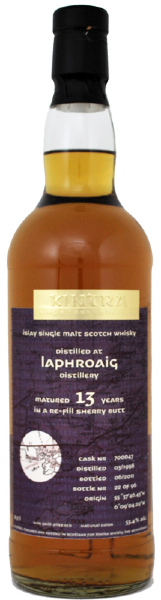
Laphroaig Week – Day 4: Laphroaig 13yo 1998/2011 (53.4%, Kintra, Refill Sherry Butt #700047, 96 bottles)

Laphroaig SignDay four, a.k.a. the middle, or the pivotal point in a week. We’re halfway through. We started out with three distillery bottlings of Laphroaig. An older 15yo, it’s replacement the 18yo, although not in its latest guise, and yesterday we had a look at a travel retail only bottling from last year: An Cuan Mòr. Up untill now Laphroaig hasn’t failed me yet. Today we’ll venture into more unknown territory. The territory of the independent bottler. Today we’ll have a look at a Laphroaig, Erik Molenaar got into his hands a while back. The market is rapidly changing. In 2011 Erik could get (part of a Sherry Butt) for a reasonable price. Today he probably would still be able to source such a Whisky, but unfortunately only at an unreasonable price. So even when this is from 2011, it can still be considered…well you catch my drift. So without further ado…

Color: Gold.

Nose: Funky Sherry. Has someone just farted over here? My word, lots of the S-element is filling the room. Sulphur that is, and it comes from my glass into which I have not farted, nor has anyone else. Fruity and half sweet underneath “the fart”. Enough with the fart already, will ya? Ok, lets move the Sulphur into the realm of fireworks then. Toasted wood, but also toasted bread. Meaty big aroma.

Taste: Sweet and Sherried. Fruity with loads of ashes. Short shock of fruity acidity. Creamy but with a wave of a bitter sulphury edge. The bitterness also could come from the oak. Nevertheless, the bitterness is also kept in check, so it doesn’t hurt the overall taste. The ashes transform into a sweeter form with and acidic edge, and both do not overpower the palate. The sweetness and acidity show themselves and go under again, like the Loch Ness monster. Warming and full body. Cozy. Nice mix of peat and funky Sherry. Sure, it may be flawed but the whole still (fire)works for me. Hints of black fruits and some smoke late in the finish.

Lots of my Whisky-loving friends don’t like sulphury notes too much. Some seem to be even overly sensitive to the stuff, if not allergic. They can go on and on about it and I sure do understand why. We know from the olden days how Sherried malts should taste like. Some of you know the golden days of The Macallan, old heavily Sherried Longmorns from the sixties and seventies, Glen Grants and Strathisla from the sixties. Fruity, full of aroma’s, with steam and coal, the lot! Today that quality can’t be reached anymore, and I don’t have the room here to discuss why. More modern Sherried malts are prone to have sulphury notes, and it’s up to you, if you can stand that or not. If you can (like I do), this is a big and nice, yet sulphury, Laphroaig.

Points:87

Boekenhoutskloof The Chocolate Block 2012 Franschhoek South Africa

Already a lot of Whiskies are covered this year, so why not divert to a nice Wine again. There is a lot around to enjoy! Today we’ll be looking at a nice blend from South Africa, but first, an introduction:

The winery was founded by Hugenot settlers in 1776. A group of wine-enthousiasts bought the farm in 1993 and major development took place since 1996. Boekenhoutskloof today has around 20 hectares of vines. 75% are red grape varieties (Syrah, Cabernet Sauvignon, Cabernet Franc and Merlot), and thus 25% are whites (Sauvignon Blanc, Semillon, Viognier). Boekenhoutskloof is farming organically and has plans for bio-dynamic wine making. The winery produces around 3 million bottles per year of which 95% is branded as Porcupine Ridge and Wolftrap, the other 5% are marketed as Boekenhoutskloof and Chocolate Block. Chocolate Block we’ll be looking at is made with 70% Syrah, 13% Cabernet Sauvignon, 10% Grenache, 6% Cinsault and 1% Viognier. The Syrah grape variety is grown in Malmesbury where it has deep-rooted vines and gives a lot of color, flavor and tannins. Grenache is grown in Citrusdal which has a sandy terroir, excellent for Grenache. Cabernet Sauvignon and Viognier are grown in Boekenhoutskloof and Cinsault is grown on granite soils in Wellington. So quite a complex blend.

The Chocolate Block 2012Franschhoek Valley is a broad valley in the south-east corner of Paarl, Western Cape. Franschhoek is warm and produces robust red wines (and fruity whites). The surrounding mountains (Wemmershoek to the north and Groot Drakenstein & Franschhoek to the south) cast shadows which help reducing the temperature and hours of sun the grapes get. They also reduce the influence from the sea. On the other hand, the mountains also hold the cooler winds from the south. Terroir is alluvial sandstone (doesn’t hold water well) and in the north some granite (in the mountains). On the hillsides there is some clay to be found.

Color: Dark ruby-red.

Nose: Spicy, sweet red fruits, very nice and very appetizing. Fat (sweet) fruit notes, like plums, apple skins with a hint of Tobacco, but also fruity strawberries. Lots of creamy vanilla. Excellent warming nose.

Taste: Dark fruits, although none of them leap out my glass specifically, slightly unripe strawberries and some red berries maybe. A sort of “total” taste. A mild and very nice acidity that transforms into the oaky bitterness that is in the finish. Spicy wood, and no shortage of soft tannins. Next a hint of licorice. Hint of oaky bitterness in the finish.

Definitely a Syrah, although the Cabernet Sauvignon is detectable too. Excellent stuff. The wine has an ABV of 14.5%. The bottle was from Lot No. L13/252 and this vintage yielded 1735 barrels.

Points: 87

Benromach 30yo (43%, OB, First Fill & Refill Sherry Casks)

For those of you who haven’t noticed it, Benromach is HOT these days! Since the day word got out Gordon & MacPhail are taking over the distillery, people started to take an interest, but nothing more. But all of a sudden Benromach seems to have arrived. The core range got a bit changed and the look modernized. Big winner from this all: The Benromach 10yo and when it was released later in 2014 The Benromach 10yo “100 Proof”, both reviewed by me lately. Gordon & MacPhail are some kind of synonym for quality, so even though the 30yo, we are about to review, was distilled under different management, The Whisky was cleared for release.

Benromach 30Color: Light gold with a pinkish hue. Sherry all right.

Nose: Extremely malty and waxy. Stuff you smell from older Whiskies. Wood excellently blended in, never to overpower. Great balance already. Vegetal oil and old polished furniture. Polished a long time ago for the last time. Next dry and powdery. Aren’t there any sherry note then? Yes there are. Although this could be from different kinds of Sherry casks, I’m especially picking up notes from Fino Sherry, hence the light colour? Although Fino’s are quite dry or even bone dry, This Whisky’s aroma promises some sweetness. Distant remnant of smoke and coal. The whole has some “oldness” to it.

Taste: Sugary sweet, (marzipan, vanilla), with fruity Sherry. Dry old raisins. Slight bitterness from the (toasted) wood, but more in a refill cask style. Hints of burnt caramel. Elegant again. The fruits, apricots, dried pineapple, try to add some acidity to the sweetness but they don’t manage to. It’s only a breath of fruity acidity, not enough apricots to do that. My tongue proves to me that the finish is drying and probably quite woody, but the sweetness coats it all and hides this very well. Two layers, interesting. The finish is exactly like the body, a seamless transition.

Today this Whisky is quite expensive. I love it but it somehow lacks some complexity to warrant its price. Although there in nothing wrong in this case with 43% ABV, I would have like this slightly higher in alcohol, it would make the woody part stand out a bit better, and I hope it would balance out the sweetness a bit. As I said before, good balance and none of the markers I mentioned are overpowering.

Points: 87

Thanks Stan for the Sample!

Glenlivet 21yo (43%, Gordon & MacPhail, Licenced Bottling, 2009, JI/JFEF)

After all those official bottlings on these pages, here is a sort of semi-official Glenlivet (without the “the”). This is a nice 21yo Glenlivet, bottled by Gordon & MacPhail in 2009. Please check out the codes printed on the glass, since these licensed bottlings are bottled quite often, and bottling years are interesting since there always is some batch variation. The code on this bottle is JI/JFEF, where JI stands for 2009. More recent bottles have even a bottling date printed on them, so now it’s even easier to know which version you have.

Glenlivet 21yo G&M, 2009Color: Lively orange gold

Nose: Yeasty, waxy, dusty and smells like old Whisky, which is nice. Very fruity. Toned down sugared fruits, mostly yellow, apricots for certain, with a touch of very ripe and sweet tangerine skins (the soft ones oozing with juice). Creamy vanilla and very likeable, not a lot of wood after 21 years. I have never smelled a Glenlivet from Glenlivet themselves, unless it was an old bottling, but this one is from late eighties distillate. (I did the math). I like it very much, although you can smell that this has been reduced, which usually is not so good. Light. Still, the liveliness and fruitiness and the smell of years long gone, makes this an excellent Whisky. Wait a minute, what about how it tastes?

Taste: Waxy and fruity, yes! A little bit of sweet vanilla ice cream with fresh papaya sauce over it. This time around there is most definitely some wood, and maybe some toast or smoke. In this case that’s a good thing because otherwise it just would be too light through reduction. The lightness is also noticeable by the rather short finish, which has a bitter edge from oak.

I don’t know why exactly, because it has been watered down to much and usually I don’t care a lot for woody bitterness in the finish, but for me this one works! I like it, I have one, and if that one would be empty, I would go for another one. This makes me happy, and I’m going to drink the whole sample. Nice! It is twenty-one years old, and considering the price it costs, this seems to me to be a must have. Alas these licensed bottlings from Gordon & MacPhail are getting rather rare these days, with the last version bottled in 2012. Go and find one.

Points: 87