Glenmorangie 18yo “Extremely Rare” (43%, OB, Circa 2010)

I’m not to sure what I think about the NAS (No Age Statement) craze at the moment. Sure the number is not important, but the taste is. So why did the scotch (marketing) guys were indoctrinating us (the consumer) with the slogans that “age matters”, and “older is better” and so on. We’ve come to live with age statements, and now they want to make us believe that “age doesn’t matter”. NAS gives them the freedom to blend without restrictions, any age goes as long as its 3yo, otherwise they can’t call it Whisky, and thát still is a word they would like to use on the labels.

We are now living a while with NAS bottlings, and yes, the Whiskies got younger, but not necessarily better, if you ask me. And by the way, I still prefer age statements. I’m more inclined to buy something that is good and has an age statement, like Benromach 5yo than something that doesn’t have an age statement like Tomatin Legacy or Laphroaig Select. But maybe that’s only me. In the end I do believe that age matters.

Time for another 18yo, this “Extremely Rare” Glenmorangie. What’s up with the funny name? It already has an age statement and it seems to be a blatant lie, since I see this in every shop and nobody tells me there is a shortage of this. Stop it! Great packaging though (it’s from their “Prestige Range” you know), and for an 18yo it’s not very expensive to boot. The whisky was aged for 15yo in Bourbon Casks and finished for three years in Oloroso Casks.
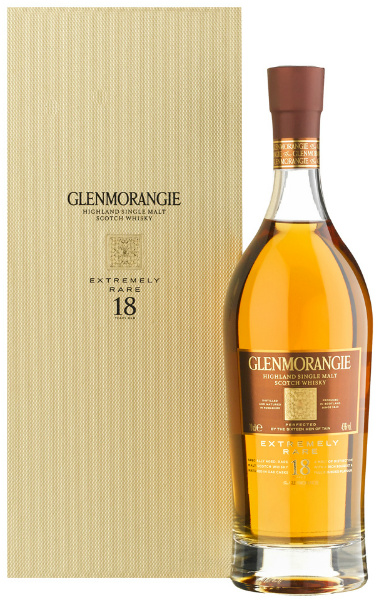
Glenmorangie 18yoColor: Gold

Nose: Fruity and spicy wood. Nutty and sweet. Honey. Hint of smoke and cask toast. Dried sweet orange skins. Lots of sugared yellow fruits. Almond dust. Quite a full aroma for a Glenmorangie. Reine Claude’s, wax, some smoke again and vanilla. Chocolate.

Taste: Matches the nose. Marzipan and lots of yellow fruits. Figs and toffee with the sweetness kept in check. Waxy as older malts tend to get (nice!). Easily drinkable, immediately nice. Not a lot of wood actually. The wood impairs milk chocolate, yet hardly an oaky sensation. Just like the Highland Park, 43% is too low, 46% probably would have been better. There is enough going on in this one to not let it get hot. Especially the finish, again just like the Highland Park 18yo, is the weakest link.

You see that age matters. Just like the 18yo Highland Park, this again is a perfect example how Whiskies do need quite some ageing, especially in a cold climate as Scotland has. Although there are some nice examples of NAS Whiskies, I do like my 18yo’s

Points: 87

Highland Park 18yo (43%, OB, 2012)

Nerdy anorak types like me still shed some tears when we think back to the “wide neck 18yo” Wow what a piece of work that was. That one was replaced by a new 18yo in the more feminine bottle. Since that replacement I tasted some less interesting batches which made me lose my faith in my beloved 18yo. I have never bought an 18yo since. Today I got an opportunity to try one batch of the “newer” 18yo’s, a look that is already with us since 2007.  Rumours are this 18yo will stay in the fold of Highland Park, so it’s not all NAS for the forseeable future, but prices will rise by 20%. So lets find out if this 18yo is good enough to stock up on. (L0470P L4 07/11)

Highland Park 18yoColor: Orange full gold.

Nose: Fresh, coastal. Hints of Sherry, Heather, clay and honey, yes recognizable as a (modern) Highland Park. Almonds and a small hint of peat and pencil shavings. I have to say I still remember this nose from a long time ago. Reminds me a bit of the “wide neck” 12yo. Quality stuff, although for me the E150 is noticeable too. Nice nuttiness.

Taste: Waxy, fruity and very likeable.  Hot butter and peat. Lots of fruit yellow and red, but also a peppery attack I don’t remember from earlier bottlings. Fern. It’s very aromatic and well made. Warming (beer like) finish with hints of smoke ánd a small amount of clay and peat. Excellent balance and overall tastes good. All-round ‘eh!

All goes well untill the finish. The finish is good but just too weak. If Highland Park are really planning to up the price of this I would most certainly hope they will give it some extra ABV to help the finish along. Still I’m happy to recognize this still as a classic Highland Park, it’s nice to still taste the typical Highland Park profile. I hope the 12yo is also still up to par too.

Looking at the present range of Highland Park, and I tasted quite a lot of them, some are a bit underwhelming and some are not reasonably priced anymore. When playing the game of elimination this 18yo is the last one standing…

Points: 87

Longmorn 17yo 1996/2013 (60.8%, The Ultimate, Sherry Butt #105091, 588 bottles)

Another year is almost over so this here is already the last post of 2014. What to review I asked myself? Maybe something incredibly special, something super premium or something outrageously expensive? Nothing like that. In the end I choose this Longmorn. Why? It seems like a good idea, to do none of the above, and I happened to have only one  open bottle left om my lectern that I hadn’t reviewed yet. Tying up loose ends. I hope this last year was a nice one and of course that the next one will be even better! Hope to see you back in the new year!

Dutch outfit Van Wees bottled eight heavy Sherry Longmorn’s distilled in 1996. These bottlings were rather popular, to put it mildly, since all didn’t need a lot of time to sell out. Highly collectible, but also good drinking Whiskies. Earlier, I already reviewed two casks from this series #72315 (the first release) and #72319 (the third release). Both were similar yet different, and both scored 88 points. This third review will focus on Sherry Butt #105091 (the seventh release). The first five were all sister casks #72315, #72318, #72319, #72323 and #72324 distilled on the first of May 1996. After that, three more Butts were bottled: #105092, #105091 and finally #105084. The latter was released during the Pot Still Festival 2014 in the Netherlands, making it the only one to be bottled in 2014, yet still at 17 years of age. Those last three butts were distilled on the 25th of June 1996 and yielded less bottles than the earlier butts but are higher in alcohol. There have been more butts bottled from the 723xx and 1050xx series, but those were bottled by Signatory Vintage for their own brand. Lets see if this will be another 88 points for Longmorn…

Longmorn 17yo 1996/2013 (60.8%, The Ultimate, Sherry Butt #105091, 588 bottles)Color: Copper brown.

Nose: Honey and quite vegetal. Especially the wood and honey make this Whisky not very distant from a very good Bourbon, although both Whiskies couldn’t be more different. Dry wood, old saw dust and dusty altogether. Burnt caramel and lots of sugared red fruits. Deep brooding and syrupy Sherry. Dark stuff from the gas light era. Elegant but more mysterious than the earlier bottlings.

Taste: Hot wood. Lots of wood and a sour note from fruit and Sherry. Coffee and dark chocolate with just the right amount of bitterness. Small hint of a sulphur compound, but the rest of the aroma’s are so powerful, Sulphur doesn’t stand a chance in dominating this Whisky. This Whisky also has a lighter side to it with paper and fern. Dark mahogany furniture with layers and layers of wax put on in its history to form this brittle woody and waxy nose.

Although I own both earlier reviewed Ultimate Longmorn’s, I haven’t opened the bottles. Both reviews were done from 6 cl samples. This bottle however, is one from my own collection I dared to open (curiosity killed the cat). The bottle is luckily still more than half full, but I had a fair chance in trying this without having to analyze it. In comparison, I do believe this #105091 is very drinkable and always leaves a good impression, but this time I won’t be giving another 88 points. The earlier releases, if memory serves me correctly, seemed to be more balanced, less dry and more fruity, than this one does. This time the added paper and fruity acidity do meddle with the balance of this Whisky, still good and I will not have any problem finishing this, but just not as good as the earlier one’s I have tried.

When compared to the Gordon & MacPhail Highland Park that also scored 87 points, the Highland Park has more raisins (dominant), coal and seems to be more accessible. It is less dry and sweeter on the palate. It is similar in quality, not higher in sulphur and actually quite nice. It is seems to me they are made for one another. I will only have to try them now in reversed order…

Points: 87

This one is for Cyril, great to hear you’re doing well!

Craigellachie 18yo 1994/2013 (54.4%, Cadenhead, Small Batch, Bourbon & Sherry Hogshead, 432 bottles)

Hey, let’s try another Craigellachie. I’ve just reviewed the new official 13yo, and got a taste of what the official Craigellachie tastes like. That one seems to me to be only from Bourbon casks, and this Cadenhead expression is not only from a Bourbon, but also from Sherry Hogsheads. Craigellachie is often a very nice distillate, meaty and funky, so I have high hopes for this, so without further ado…

Craigellachie 18yo 1994/2013 (54.4%, Cadenhead, Small Batch, Bourbon & Sherry Hogshead, 432 bottles)Color: Copper gold

Nose: Velvety, vegetal and occasionally soapy. Strong. Gin botanicals. Sweet smelling (funky and sweet lavas) and extremely fresh at first. Menthol. Lots of oak. Next a lot of development. The menthol and other “fresh” components dissipate and a funky and oaky sweatiness takes over. Sweet dusty licorice and slightly rotting oak and the sharper wood odor of pencil shavings. Yes you’ve guessed it, a very interesting Craigellachie! Buttery vanilla. and sweetish wet fern leaves. Lots happening here. Not a nose for the faint hearted. Complex stuff.

Taste: Sweet at first but very quickly turning into something dry. Nice oak again with pencil shavings and tiny hints of cannabis in vanilla ice-cream. Very aromatic. Warm coffee (with milk), wood and dark, but not too dark, chocolate. Well balanced and very interesting aroma’s thrown together. Funky beerlike finish. Animalesk. Mocha, toffee and salty caramel are there too. I feel this Whisky changes a lot along the way.

Probably a Whisky for connoisseurs. I like it a lot, but I don’t think newbies will be positive since accessibility is not the priority for this Whisky. The complexity and amount of aroma’s are just shy of being overwhelming.

Points: 87

Hakushu “Heavily Peated” (48%, OB, Suntory)

I’m writing this review just after finishing The Irish Whisky Week, so in my mind I will be comparing this Hakushu to the peated Irish Connemara’s. I see that this is the first review I write about a Japanese Whisky outside of the Japanese Whisky Week, so it has been a while! Japan reminds me a bit of Ireland. Not a lot of distilleries, but bottles abundant. More exotic to the western world. Yet there is a big difference. You hardly encounter a very expensive Irish Whiskey, or it is from a bottle that was bottled B.C. Yes the occasional Bow Street bottle can cost you a pretty penny. Japanese Whisky, however do cost you an arm and a leg. Just look at the craze with Karuizawa and Hanyu for instance. Here we have a widely available NAS Japanese peated Single Malt Whisky. It’s Suntory Time!

Hakushu Heavily PeatedColor: Light gold.

Nose: Oily and fatty peat, but not really upfront. Perfumy, elegant and floral. Sweet edible flowers. Vegetal. Hai, it seems to be more about flora than peata and smoka if you ask me. When it breathes for a while it gets less oily, and more sweeter and fruity (and thinner). When you let it breathe for a while, it develops into a more smoky type of Whisky, again showing it needs air (or some drops of water). Besides this all it also gives off some greenish and vanilla like notes. Young Whisky matured in American oak. The fruitiness develops into yellow fruits, that are becoming more and more “smellable”. Smoke, check.

Taste: Sweet, very tasty, fatty and young. Distant bonfire and again warming. Nice stuff. Hai, fruity, and nice slightly bitter peat. This couldn’t have come from Scotland. Scottish Whiskies are usually peatier and combined with an underlying sweetness and ashy smoke. This Hakushu is sweet all right but it isn’t hidden, the sweetness is there from the start. What’s very nice it the combination of upfront sweetness, very light peat, nice smoke is also its floral bit. Complex in the nose, and highly drinkable. Excellent. Heavily Peated? Maybe in a Japanese kind of way.

Very drinkable, I like it, but to my amazement, again a Whisky that is hardly available, and it wasn’t cheap to boot. Absolutely a young and very good Whisky of high quality, that again seems to be unobtainable. Bugger!

Points: 87

Macduff 32yo 1980/2012 (50.0%, The House of MacDuff, The Golden Cask, Cask CM 180, 155 bottles)

Macduff 32yo 1980/2012 (50.0%, The House of MacDuff, The Golden Cask, Cask CM 180, 155 bottles)Third Macduff on these pages and just like the other two, this is again an oldie. The oldest one was from the sixties, 1967 to be precise, just their fifth year of distillation. The second one came from the seventies, 1972, now we have one from the eighties (1980). So will the next one be from the nineties? At the rate (and prices) old Whisky is selling these days it probably will…

Color: Gold

Nose: Waxy and very fruity. Powdered yet not dusty. Slight hint of pepper with lots of vanilla in the mix. Some yellow fruits, white grapes, apricots and peach. Next some mocha, toffee and caramel are in there, giving balance. Later on, in the nose emerges a slight whiff of wood with dry roadside plants. Overall fruity and sweet-smelling. Good balance and very appetizing.

Taste: Strong and fatty. Cardboard and the taste is also pretty fruity. Vanilla with some sugary sweetness. Licorice and slightly bitter, the wood plays its part. Pretty hefty stuff. Not as complex as I would have hoped, but still pretty decent stuff altogether. The Whisky has a good start and a very nice body, the finish has a lot of staying power (toffee) and is quite warm.

This is a pretty good Whisky. It has a pair of balls and some nice sweet yellow fruits throughout. The finish is also decent, but for such and old Whisky I would have expected some more complexity.

Points: 87

Thanks Erik for the sample!

Port Morant 15yo 1992/2007 (46%, Berry Brothers & Rudd, Islay Cask, Guyana)

This Demerara Rum from Port Morant was bottled by Berry Brothers & Rudd and somewhere in its life came in contact with a cask that once held Islay Whisky. The label doesn’t state from which Islay distillery the cask came…

BBR Port Morant 1992 Demerara RumColor: White Wine with lots of viscosity.
Nose: Very aromatic with lots of petrol and tar, paper and cardboard and you know we like this in a rum. Vanilla, caramel, Demerara sugar. Industrial at first and not very fruity, Solvents, but not the usual stuff. Small hint of mint and a good body of wood, but nowhere near the amounts of wood that can be found in aged Rums. Fantastic balance, but wait. A lot more is happening here after a while. The wood opens up and the whole becomes more floral and adds notes of dry leaves. That’s a first for me with Demerara’s. Next are some spices, cardamom, white pepper and it finishes of in great funkiness. Actually it never ends, put it away and pick it up again and you smell new things. Wonderful stuff. Although this comes from an Islay cask, meaning peat I guess, I can not detect any peat at all but there is a tiny, tiny hint of smoke. Can’t imagine they would use an unpeated Malt Whisky cask for this.

Taste: Yes there is the peat! Very up front and comes sailing in on a wave of restrained sweetness. Nice. Fits the toasted wood note that comes next. Mocha, toffee and chocolate (not the darkest kinds though), hints of cucumber, can it get any crazier than this? The wood and the peat give off a slightly disturbing kind of bitterness to this not-so-sweet Demerara. The jury is still out if it actually fits the Rum. Sometimes this note resembles an electrical fire. Still, it oozes character and proves again that Demerara’s are a force to recon with. Alas, most distilleries are closed by now, luckily most stills have survived…

It reminds me a bit of a Cadenhead Enmore, also a Demerara Rum from Guyana which will be reviewed in the future. Talking about Cadenheads, also a Scottish independent bottler, that also used some Islay casks, but from them we know they were Laphroaigs, one of the most heavily peated Islay Whiskies.

Points: 87


Caroni 1999/2013 (56%, Kintra, Barrel RR619, Trinidad & Tobago)

Erik Molenaar (again)Kintra is no stranger to these pages but up untill now, all Kintra products were Single Malt Whiskies, but this time Erik Molenaar surprises us with a Rum, and not just any Rum, but one form Caroni, a Rum distillery sadly closed for over a decade. Caroni is a rum from Trinidad (& Tobago). Founded in 1923 and in its final form, worked from 1975 to 2003. Caroni is known for its heavy style that was perfect for British Navy Rum.
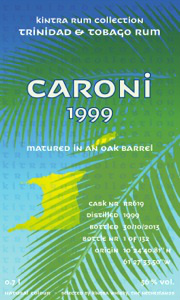
Color: Orange-brown

Nose: Very vegetal and smells from under the bonnet. Oil, petrol and fumes. Industrial and automotive, but in a good way. Lots of dry oak and tree sap. Unlike Whisky, a heavy style Rum like this Caroni, can cope with lots of oak, especially this Caroni’s dirty style! Furniture polish, burnt sugar and some tangerine skins. Black tea and when snorted up vigorously, a little hint of mint. Perfumy like the best kind of Rye Whiskey or high rye content Bourbon. Leaps out off the class with lots of complexity and very good balance. It’s a Rum that you want to smell over and over again, it never ceases to give. Wonderful. Amazing how something can smell dirty and industrial, ánd elegant at the same time.

Kintra CaroniTaste: Again a lot of oak, but as with the nose, this Rum can cope with the wood. The whole is quite dry and very aromatic, but very balanced. yet less complex on the palate. It does resemble Rye Whiskey a lot on the palate. Just cancel out the burnt sugar note and some other slight markers that are typical of Rum… The oakiness is well masked, but it really shows itself on the slightly bitter, waxy and drying finish.

Truth be told, this actually stayed too long in the cask, but since the Rum itself is so overwhelmingly rich, it can deal with the oak that’s there in abundance. Is that a problem? No it certainly is not. It’s the only small issue, but Rum, like Whisky, is what it is because of ageing in oak, and we all want nice woody tastes to begin with but quickly complain when we taste too much wood. Finally here is a Rum that deals with a lot of wood and keeps it in check. I really, really hope this is not a one-off deal for Kintra. An excellent find from a beloved closed distillery and a very nice price to boot. Thanks Erik, keep up the good work. More Rum please!

Points: 87

Tamdhu 8yo 2005/2013 (59.6%, The Ultimate, Sherry Butt #347, 724 bottles)

The people who choose the casks really aren’t crazy. They obviously taste a lot, as they have released already some 500+ different bottlings, and many more probably have been rejected. Looking at the history of The Ultimate, most bottlings up untill 2005 were bottled at 43% ABV, and after that at 46% ABV. Sometimes however, a cask strength Whisky is released. Sometimes as a ‘Rare Reserve’ release, sometimes because a Whisky just doesn’t respond well to water and sometimes, being the Whisky lovers they are, they leave a Whisky be. It’s already good and it would be a shame to reduce it, let’s just bottle it.

In the recent past this was true for a lot of Islay Whiskies, like Bowmore, Laphroaig and some others, but more recently, a couple of bottlings of “other” Whiskies have surfaced at cask strength, which for me fall in the category of being a stunner in their own right, let’s not fiddle with it. One of those are the sherried Longmorn’s (17yo) of which, up untill now, six casks have been released, two of those I already reviewed: cask #72315 (the first) and cask #72319 (the third). It turns out there is another series that flew under my radar for a while: very young sherried Tamdhu’s. There are six of those as well. Five from 2004 (6yo, 7yo and 8yo) and one from 2005 (another 8yo), that was released last. Let’s review the latter one: the 2005, 8yo, from cask #347.

Tamdhu 8yo 20052013 (59.6%, The Ultimate, Sherry Butt #347, 724 bottles)Color: Pale gold.

Nose: Very full, buttery and spicy. lots of wood aroma’s, sawdust, pencil shavings with a little bit of cask toast, and quite alcoholic. What a stunning nose for such a young Whisky. Wild vanilla in peppered pudding. Musty and some deep licorice from the Sherry and toasted wood. Maybe not the most complex nose, but hey, it isn’t even ten years old, but it is very appealing. I can’t stop smelling this. The sweetish, toffee and butter notes leave the glass and the wood remains. The spicy and peppery wood is omnipresent in this bottling, so if this would have been bottled some years later, it probably “wood” have been too much. Now the wood gives a lot of character to the nose, without dominating. Good call.

Taste: Nice full body full on wood and caramel, toffee. Pepper and spice. Butter and salt. It’s in utter balance since the nose and the taste are a complete match. The taste itself is a bit unbalanced (huh?) because the wood gives off some sour oak which makes the body a bit less sweet than expected and this type of Whisky does need some sugars in the mix. Because of the same reasons, the finish isn’t as long as expected, nor does it leave a specific taste in your mouth (but it does leave a little bit of woody bitterness and butter). It should have been more cloying. All the wood that can be smelled and tasted predicted a lot of dryness even though some sweetness is present. Maybe this should have been bottled even sooner? Who would imagine that! Quite hot at nearly 60% ABV.

So it’s lacking some sugars, there is a lot of wood, so isn’t it any good? On the contrary. What remains is a very good young Tamdhu, that isn’t super complex, but does have a lot of character and I most definitely like this very much. I’m lucky to have stumbled on this, and could still buy it. Recommended!

Merry Christmas everybody!

Points: 87

Kopke 10 Years Old (Matured in Wood)

Kopke logoAfter Warre’s Warrior this is just the second review of Port on Master Quill, which is quite strange since I do love my Ports. Lots of them have passed on my lectern, and only one has been reviewed op ’till now. So it’s about time to do something about that. On my lectern are a few Ports that haven’t been reviewed yet, so keep an eye out for some more Port on these pages…

Kopke 10 Years Old Port (Matured in Wood)Color: Warm, bleak red (rosé), not yet brown.

Nose: Sweet and lively, hints of acidity and freshness. Lots of red fruits, strawberry, raspberry. Cherry candy. It doesn’t smell its age (it smells younger). In the distance a little bit of wood and mint, but also some licorice. Classy nose. Very sweet with an added bonus. The influence of wood, which adds to the character and it doesn’t let the sweetness dominate (the nose).

Taste: Sweet but also enough acidity to counteract the sweetness. In fact the nose smelled a lot sweeter than this Port actually is. Lots of strawberry and raspberry again, this time with added acidity from currants. This tastes great and very likeable and harmonious. If in anything it shows its age than it is in the finish. The half-long finish is a little bit brittle, the lively fruitiness dissipates quickly, it goes from sweet to sour, to… a memory of Port (not saying it is short).

This isn’t a full-blown red Port anymore, it’s a Tawny that for me has some notes of red Port (youth?). On the taste it shows two sides of itself. Very fruity without being full on sweetness, and then a turning point into something more vague. If only the finish would have held up a bit more. But that’s nit-picking. This is a very good Kopke 10yo. It’s much better than I initially expected. Think strawberries. The Port has an ABV of 20% and was matured in small 250 liter casks. Recommended for Christmas!

Points: 87

Thanks to Richard and Esther for the bottle.