This Highland Park was actually selected to be the follow up review after Springbank 15yo from a few weeks ago, but after looking at the label of the sample, there seemed to be some information missing. This Travel Edition was bottled multiple times annually since 2018 (at least until 2023) and as could be read on these pages earlier, Highland Park can differ a bit from batch to batch. Batches of Highland Park are supposed to be as similar as possible to each other, not to scare the public, and in the pursuit of getting close to the same flavour, not every batch is as good as some others were. Similar in taste yes, but some batches were just better than others. I found this out the hard way, actually with two of the standard expressions of the 18yo (twice!). The first occasion was before Master Quill even happened, but the second time around, both got reviewed on these pages. One batch from 2012 and the other one from 2014. Back to this 18yo from 2018. Luckily, in this case the provider of the sample is again Nico (just like the Springer 15), and Nico is in a way the high priest of Whisky (I have a picture of him fully dressed up as the high priest of Whisky, but I don’t think I would get permission to put it in here). If I ask him a year later after receiving the sample from which particular batch this sample was, he can still unearth the very bottle this Whisky was sampled from and sends pictures of it. Now that we know from which particular batch this is we can continue reviewing it.
Oh goody, goody, a travel edition! Often not a good sign, since big companies (and Highland Park is owned by such a big company) usually use the travel retail outlets to offer, lets say, not their best drop, for more money than necessary. Some of these bottling have even lower ABV than a bottle from their general release. Just have a look at an airport or on a ferry and look for a travel retail bottling, quite a few are bottled at 40% ABV or if you are in luck 43% ABV. Back in the day, lets say the 60’s, the 70’s and the 80’s, 40% ABV was nothing to scoff at. Lots of Gordon & MacPhail’s Connoisseur Choice bottlings were 40% ABV and almost all of them easily held their own. Just have a look at St. Magdalene from this series. I know it is a scarcity now, since these bottlings come from a distillery that was closed in 1983 (a travesty!), but those of my age will now. Over time (Single Malt) Whisky became ever more popular so owners of distilleries sought ways to be more efficient and the search for types of Barley which would yield the most per acre began. The tastiest of barley’s have a lower yield per acre than the ones mostly used today and sometimes the older varieties are even harder to process. One example is bere barley, low yield, hard to manage, but very, very tasty, just take your time with a Springbank Local Barley made with bere barley. For instance, the 2017 11yo is a favourite of mine (and Nico) or a Bruichladdich made with bere barley, a fine dram as well, young (around 6yo) but fine nevertheless. I digress again. On general release there is a Highland Park 18yo “Viking Pride”, which is widely available, bottled in a clear glass bottle and reduced to 43% ABV, where this Viking Pride Travel Edition is in black glass and bottled at 46% ABV. So all signs say this one should be better than the normal one, so lets find out… (we won’t, because I have never tried the 43% version, but at least we will find out if this one is any good).
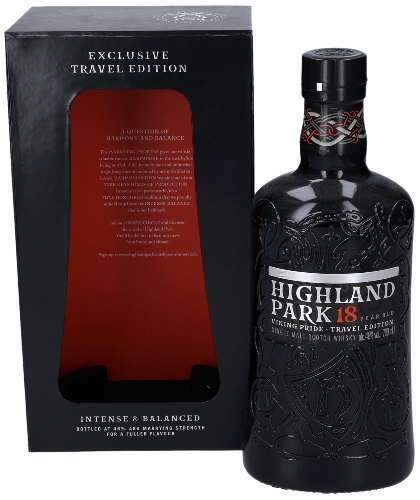 Color: Light copper gold.
Nose: Sherry, very clean. Immediately very appealing. Highland Park heather and some sweet honey as well. Creamy sweet, with the cream masking the fruitiness this unmistakably has. Breath of fresh air whiffs by right from the start. Clean oak, fragrant wood. Orkney is rugged, but this smells summery (present day), maybe because is was bottled in summer? Altogether a very pleasant smelling Highland Park. Creamy custard, caramel and toffee, but also herbal, as well as spicy, not only from the wood, there is more to it. Chocolate chip cookies. Hot chocolate (with Rum). Warming the glass in my hand, helps even more aroma’s out. A warming chocolatey and smoky note come out to play as well as a tiny hint of bacon aroma emerging from the sizzling pan. Yes, dark chocolate as well, but not its bitterness. If the taste matches this very tasty nose, then we’re most definitely in for a treat.
Taste: Oooh yes. Sweet on entry but there is so much more. A smoky and slightly bitter edge to it. Bitter wood, bitter smoke, nothing overpowering though. The heather and the honey from the nose are present here as well, like a carbon copy. It actually tastes exactly like it smells. Modern Sherry notes, slightly tarry. Dark chocolate. Just the right amount of creamy sweetness. The oak delivers vanilla, so this must have been Sherry cask made from American oak. Toasted oak as well. Nice sweetness again. When tasted on another day, the sweetness was less, so dependent on the taster. The whole is very tasty, yet it is what it is, its not a super complex beast, but in this case it’s alright. A smooth, easy and elegant expression. The Springbank 15yo was more a in-your-face type of Whisky. 46% ABV seems to be just about right for this Highland Park, where it seemed to be too low for the Springbank 15yo. Not sure if 43% ABV for the standard edition will be enough. Who in their right mind would like to reduce a 18yo Whisky to 43% ABV? Because the consumer wants it, or because it makes you more money? All blah-blah-blah, but hey what do I know, lets revisit this review if I ever get the chance to compare it to the 43% ABV standard version or try it on its own. Final thoughts: Definitely a very good 18yo again from Highland Park, also quite modern, the wide neck 18yo from yesteryear is most definitely a step up from this one. However today, the price of the wide neck is also a step up from this proud viking.
Points: 88
Again, thanks go out to Nico for providing this sample.
Here we have some room to decipher the code: L0387A L04 25:07 (and a time code):
- L0387 is the rotation number.
- A is 2018, B is 2019, C is 2020, D is 2021, E is 2022, and F is 2023. As far as I know no bottlings of this expression were done since 2024.
- 25:07 is the 25th of July.
- L04 is probably a number depicting a particular bottling line, I didn’t check this on other Highland Park bottlings yet.
- Now we also know the Whisky at hand was from the very first release.
A quick search on the ol’ interweb resulted in the following batches, and again, this list might not be complete:
L0387A L04 25:07 (2018)
L0520A L04 04:10 (2018)
L0216B L04 09/05 (2019)
L0449B L04 04/09 (2019)
L0165B L04 03/04 (2019)
L0117C L04 23/03 (2020)
L0117C L04 24/03 (2020)
L0003D L04 13/01 (2021)
L0081D L04 06/04 (2021)
L0355D L04 09/11 (2021)
L0135E L04 27/04 (2022)
L0038F L04 09/02 (2023)
L0124F L04 19/04 (2023)
L0209F L04 20/06 (2023)
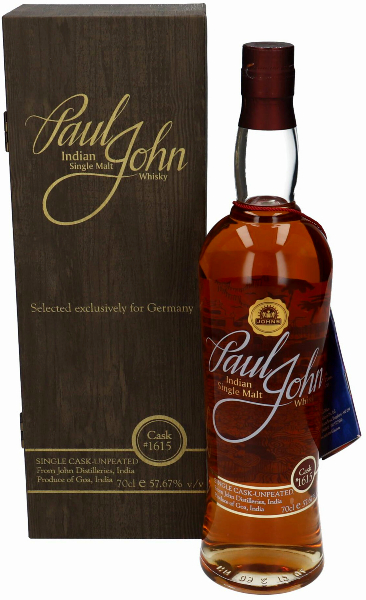 Color: Slightly orange gold.
 Color: Copper Gold.
 Guadeloupe is an overseas department and region of France and it consists of threes. It has three main islands and has three Bellevue distilleries. From west to east we first have the island of Basse-Terre, easy to recognize because of its mountains and an active stratovolcano called “La Grande Soufrière”. Last eruption: 1977 (phreatic eruption, steam). The last magmatic eruption was in 1580 (give or take 50 years, sice nothing was recorded). The soil of Basse-Terre, and this probably doesn’t come as a surprise any more, is volcanic and thus fertile, very suitable to grow many variants of sugarcane. More to the east lies the island of Grande-Terre, separated from Basse-Terre by a narrow body of water called Rivière Salée. Grande-terre is flat and has a limestone soil. A bit farther away to the east and more to the south lies Marie-Galante. Also flat with a limestone soil and thus akin to Grande-Terre.
 As said above, then there are three Bellevue distilleries. Don’t worry, there are many more distilleries on the three islands that are not called Bellevue. The first Bellevue is Bellevue au Moule better known under it’s Rum-brand name: Damoiseau, located on Grande-Terre. The second Bellevue is Bellevue Sainte Rose, better known under it’s Rum-brand name: Reimonenq, located on Basse-Terre. And finally Bellevue Marie-Galante located on…do you really want me to spell it out for you? So we have three islands and all three have their own Bellevue Rhum Distillery. How’s that for order in the universe?
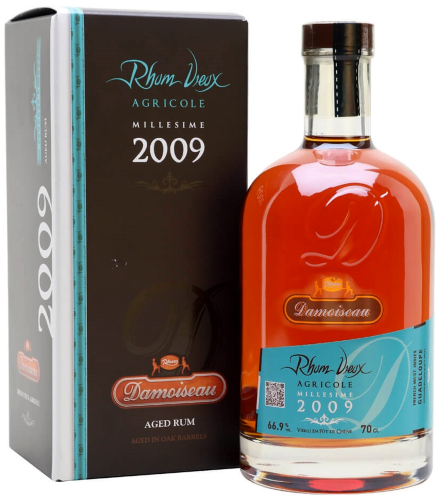 Color: Orange gold.
 Color: Orange gold. No red hue.
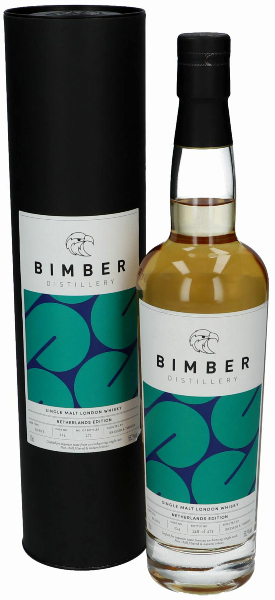 Color: Pale White Wine
 Color: Pale White Wine
 Color: Copper brown.
 Haagsche Hopjes (a Dutch coffee candy, pictured here to the right). Dusty, coal dust, paper dust and hot clear machine oil. Slightly spicy. Old oil-based half dried out paint. Lots of ripe red fruits mixed in with the coal. Tarry even. After all of this, some more wood emerges, still wet and more of the paper note, yet also slightly more modern now. A quality like this from the end of the eighties is in fact possible, the nose of the very first Hazelburn 12yo (Rotation 09/335) is similarly good, as well as its predecessor, the first edition of the Hazelburn 8yo. Reviews of both are already in the works. Maybe all three came from the same sort of casks? What was in these casks previously I wonder. I’m looking at this bottle, and still I can’t believe this smells like it does. Amazing, really. A fresh pour has some farmy elements to it that dissipates very quickly. The only beef I have with this Whisky is that it smells a wee bit too sweet, so I did have some worries about the taste.
 Color: Light gold.
 Color: Orange gold.
 Master Quill