Tomatin 15yo (43%, OB, Bourbon Casks)

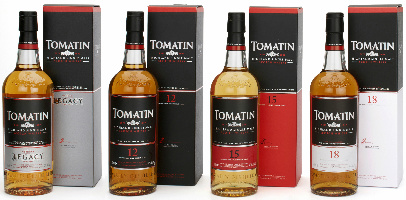
This is my last review of a Whisky from the standard range of Tomatins released by the distiller. The standard range comprises of Legacy, a 12yo, a 15yo, and last but not least, the 18yo. The age statement (or lack of it) not being the only difference. All are different in usage of casks:

  • Legacy – New Oak Casks and Bourbon Casks (82 Points).
  • 12yo – Bourbon & Sherry Casks (83 Points).
  • 15yo – Bourbon Casks (?? Points).
  • 18yo – Refill Bourbon Barrels with an Oloroso Sherry finish (87 Points).

So here we have the 15yo. This one is on paper the younger brother of the now sadly deleted 25yo. Both come from only Bourbon Casks. The new Tomatin is called Legacy, but the 25yo will turn out to be a Legend. But, and I can’t stress this enough, Tomatin 30yo, that’s even better imho!

Tomatin 15yoColor: Light gold.

Nose: Spicy and clean. Sweetish and creamy. Hints of toasted oak and crushed fresh leaves. Nice toned down fruitiness. Cookie dough. It does remind me a bit of the 25yo (and some notes of the fruitiness remind me of the 30yo). Fruity ánd perfumy. Very aromatic example of Tomatin. Good balance.

Taste: Clean and warming, warm wood and caramel. Hints of licorice, vanilla and toasted wood. Very creamy and half sweet. Again very good balance. Dangerously drinkable.

These four whiskies are absolutely family of each other. Brothers and sisters of one another. But just as with people, there is a family resemblance, but most definitely have different characters. It’s not merely an older version of the previous example, no, all are meant to be different through usage of different casks. I guess all of them will have different likers (or dislikers if you don’t like the mean Tomatin profile).

So time to come clean, which one would I buy? Well, according to points the 18yo is the winner. It has a stunning nose and taste to match, but there is always a candidate everybody likes, isn’t there. I scored the 15yo one point lower than the 18yo, but I think the 15yo is a true and honest malt (just look at its color), and is definitely easier to drink than the 18yo. I had problems writing tasting notes, because the glass seemed always empty, how is that for drinkability! So if you are new to whisky or just enjoy a good malt, I would buy the 15yo to start with, if you’re somewhat more seasoned and able to appreciate the added notes of the Oloroso finish , I would recommend the 18yo. Legacy and the 12yo are both alright, and dirt cheap to boot, but not my personal first choice. So for me the 18yo and the 15yo are the ones to buy, and differ strongly enough from each other to get both 🙂

Points: 85

Thanks to Jennifer for sending me this sample.

Highland Park 16yo 1986/2002 (57,9%, Adelphi, Refill Hogshead #2288, 273 bottles)

Together with the Cadenheads Glen Scotia I reviewed earlier I found this Adelphi Highland Park in the back of my lectern. Highland Park is no newbie on these pages and this will be the third independent bottling of Highland Park, as I have earlier reviewed Highland Parks from Douglas Laing and a heavily sherried one by Gordon & MacPhail. Adelphi is new to these pages. Adelphi once was a distillery, but it closed already in 1907. The name though was bought and used for this independent bottler since 1993. Funny that the people who are behind Adelphi Distillery now, are building themselves a new distillery not called Adelphi Distillery yet, but for the time being is called: Ardnamurchan. Another claim to fame is that Charles “Rory” MacLean does some if not all of the cask selections.

Color: Dull light gold.

Nose: Creamy, heathery and slightly soapy. Candied yellow fruits. Dried apricots. Very powdery and appetizing. A breath of fresh (sea) air. Very clean smelling, but also has a dirty edge to it. Only a small hint of dry wood and toasted oak. The nose somehow seems sweet, and sweaty, already, and the sweetness blends right in with the cream that’s very up front. It changes with air, so let it breathe. Classy smelling Whisky.

Taste: Smoked heather, honey sweetness and a peppery bite. It keeps it together right through to the finish, it (it being the balance) seems a bit flimsy towards the end, but the balance does manage to stay. A sign of quality. It has a tad of soapy woodiness to it. The sweetness develops from honey into toffee and caramel, but it never dominates. It seems to me the sweetness is somehow balanced with some hidden acidity. Quite nice.

A pretty good, easily recognizable Highland Park. The Heather and honey are definitely there, but the real bonus is the Talisker-like peppery bite. Since there isn’t a lot of bitterness or toast in this, and there seems to be a lot of potential, I wouldn’t have bottled this yet. It’s good, but it could have been slightly better. Of all the independent Highland Parks I have reviewed here, I guess this particular expression matches the profile of Highland Park the best. But do allow for some breathing. It needs air. Well done Rory, I mean Charlie!

Points: 86

Glen Scotia 17yo 1977/1994 (57.5%, Cadenhead)

I completely forgot about this one, otherwise I would have reviewed it sooner. This one was sitting comfortably in the back of my lectern and was overlooked for some time. Not the first time though, a Glen Scotia graces these pages with its presence and certainly not the first time a Cadenheads bottling with the green glass and the small label does. Previously I tried a much newer Mo Òr bottling distilled in 1994, so maybe a chance to see how Glen Scotia fared through its difficult history…

Color: (Dull) gold.

Nose: Spicy, nutty and clean. Quite sharp. Slightest hint of cat urine. Powdery and pretty bold altogether. Soft wood with a small hint of toasted wood. This is probably from a Bourbon Cask (Barrel or Hogshead). Actually it’s very clean and youthful, and it picked up quite some color along the way. It’s maybe half-creamy and has some hints of oranges, candied oranges that is. Later on some notes of cardboard and a yeasty cold room. Full bodied typical high strength Cadenheads bottling.

Taste: Wow, nice! Quite an attack from the alcohol. Very full-bodied with initial notes of wood and fern. Coffee, nuts and a slight woody bitterness. Again a typical clean Cadenheads Bourbon Cask bottling. Long spicy finish with black tea and almonds.

For me, and I’ve said it already. A typical Cadenheads bottling. Cadenheads in more recent times, seem to bottle a lot of ex-Bourbon Casks in their teens, and although there are obviously some differences, there are some similarities as well. High strength and clean. Great stuff for me, because I like cask strength, but it would have been nice to see these type of Whisky age a little longer, and with that, see the ABV drop a little. This certainly had a lot of potential, and would have been great in its (late) twenties and around 50 to 52% ABV.

Points: 86

Arran 16yo (46%, OB, Bourbon & Sherry Casks, 9000 bottles, 2013)

I always have mixed feelings considering Arran. It’s fairly new and I really like new enterprises like this. Mostly nice people with a lot of passion who start a distillery like this. Mice malt and so forth. A whisky I love to like. Just when it comes to tasting, and this sometimes happens, Arran usually does not gel with this taster. A Cask of Arran Single MaltLinkwood is another example. Luckily this also happens the other way around. For most people Teaninich is nothing out of the ordinary, but I really do like my Teaninichs…
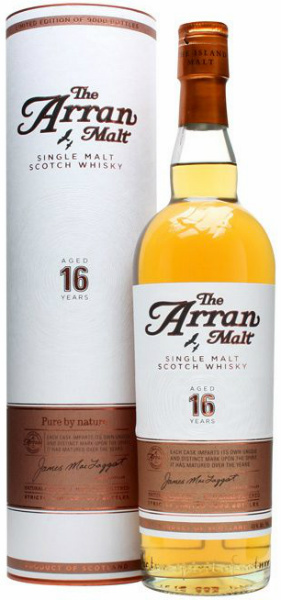
This will be my 18th Arran and I hope this is a good one. There were a couple of good ones in the past. It’s not all bad for me, you know. I remember a 1er Cru Bourgogne Cask Finish from 2006, and two different Single Casks from 2004. There are obviously more, but I have to admit, I haven tried a lot of the newer expressions for a while. Time to reacquaint myself with Arran and hopefully find out they got pretty good by now, I really would like that, no I would really love that!

Color: Light gold. Nose: Wow that’s more like it! A nice clean and slightly spicy woody attack. Ginger. New carpets on the floor. After that a full sweetish nose that also is pretty floral. Flowers that is, not perfume. Very elegant. Some acetone, mocha and toffee in the nose, but powdery as well. Not a bad start…

Taste: Sweet and perfectly woody. The sweetness drops off a bit, to show some slight hints of acidity, but the sweetness never relents, it keeps the whole in perfect balance. What a nice short sharp shock of spicy, maybe white peppery attack. And the wood is also very nice. The balance keeps up, but fades a bit in the finish, but who’s complaining! The finish is half long, and the wood aromas turn a bit into cardboard, not a lot, just a bit. Still a pretty good Arran. I love that.

This is a nice Arran, and considering it’s age and the distillate being from the early years, I’m guessing the 16yo, if they keep making it, it will only get better and better. Not being posh, it’s already very good, but I would like to see Arran to be stellar. I would love to like that a lot.

Points: 87

Thanks Richard for the sample!

Tomatin 12yo (40%, OB, Bourbon and Sherry Casks)

Not so long ago, this was the new-look entry-level malt from Tomatin, but in the quickly changing Whisky-world and especially the trend of releasing Whiskies without an Age Statement (NAS), Tomatin issued Legacy and they priced thát one even lower than this already inexpensive 12yo. Names hardly add something to whisky and I would have loved to see Legacy being released as a 10yo or a 8yo. Now that would have been exciting! Together with the wind of naming Whiskies, I sense a wind that loves young whiskies!
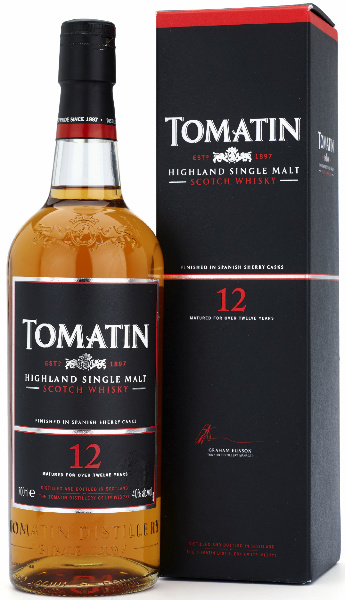
Legacy was made with new oak casks mixed with Bourbon casks. This 12yo is a mixture of Bourbon and Sherry casks, so there should be a lot of difference between the two. Besides this, the 12yo is bottled at 40% ABV, and Legacy gets three points more, 43% ABV.

Color: Ochreous gold (Chewbacca golden hairdo).

Nose: Creamy and alcoholic. Leafy and quite woody. Hints of Sherry mustiness and just a little bit of soap. Estery and thick. It smells chewy (how is thát possible), as if you could sink your teeth into this one, (do I detect a meaty touch?). Lots of vanillin from the cask, toasted cask and toast (bread). Behind the creamy vanilla a lot of sweetness (anticipated).

Taste: Thick and actually pretty good. Woody and spicy, but noting like wood in an old Whisky. To me the wood part is pretty similar to that of the Legacy and especially in the taste both are not worlds apart. The difference being some Sherry casks, that were used for the 12yo. It’s more “dirty”, more spicy and a has a different kind of sweetness to it. Leafy. I can’t imagine the Sherry part being more than 20 to 30% of all the casks used. For a sweeter malt, it is pretty drinkable and certainly well made and it has good balance to boot.

The 40% ABV is all right, it really doesn’t need more than that for the market it targets, but the Whisky doesn’t need it too. I tasted this 12yo a few times at festivals (Thanks Alistair), but never at home in my “controlled” environment. The score didn’t change, but it is nice to concentrate on this for a bit. Again bang for your buck from Tomatin!

Points: 83

Thanks Jennifer for the sample!

Aultmore 36yo 1974/2010 (46%, Mo Òr, Bourbon Hogshead #3740, 264 bottles, 500ml)

Here we have an Aultmore from 1974. The one official bottling in the Rare Malts range was also from 1974. Three years ago Douglas Laing bottled a 1974, and even more recently, two bottlings from The Whisky Agency saw the light of day. There is one more by Adelphi, but more about that one later.

Aultmore was founded in 1896 by Alexander Edward who also founded the Craigellachie distillery with Peter Machie in 1891. In 1896, Mr. Edward also owned the Benrinnes distillery. Mr. Edward sold Aultmore to John Dewar’s and Sons in 1923. John Dewar’s and Sons naturally became part of what is today Diageo, but Diageo sold the whole of John Dewar’s and Sons to Bacardi in 1998. Aultmore was built with two stills and two more stills were added in 1971, so this 1974 Aultmore was already made with four stills.

Color: Full gold

Nose: Estery and full. Seems sweet and has a perfect woody touch. Powdery with vanilla, but also some vegetal sourness creeps in, but only in whiffs, it’s not always there. Malty freshness, and the slightest hint of cow-dung, great! This kind of organics in Whisky is the best, look at all those fantastic Brora’s. I really like the complete profile this nose shows me. A great, but toned down or laid back Whisky. It doesn’t shout from rooftops it’s great, but whispers. People who know, will hear it’s call.

Taste: Woody cannabis, and in this case that’s very nice. Sugary sweet, but the “wood” is the taste giver of this malt. Mind you this is not a woody malt. It’s like somehow there is some fruit in here but it isn’t allowed to get out. Medium, slightly disappointing finish, and probably the reduction could have been skipped, since the Whisky shows some laziness. Could have been fuller, if so I’m shure it would have scored in the 90’s. Nevertheless a great Whisky!

One of my favorite Aultmore’s is also from 1974, a bottling by Adelphi, Cask #3739, yes a sister cask! That one yielded only 101 bottles @ 49.6% ABV. Cask #3740 yielded 264 bottles reduced to 46%, so I’m guessing this was a lot higher in ABV (I can’t imagine Adelphi doing a cask share, but you never know). If memory serves me well, this sister cask also has a lot of yellow fruits, cask #3740 lacks. I have a bottle of Adelphi’s 1974 Aultmore, so in the future, that one will be reviewed on these pages too…

Points: 88

Thanks go out to Dirk for handing me this sample some time ago…

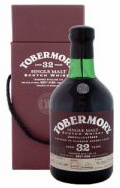
Tobermory 32yo 1972/2005 (50.1%, OB, Green Label, Oloroso Sherry Finish, 912 bottles)

This is the first Tobermory on these pages and the Whisky itself comes from the Island of Mull. This distillery was founded already in 1798 and was originally called Tobermory. Tobermory closed in 1930 and was turned into a power station. It stayed closed as a distillery, untill it reopened in 1972, but this time as Ledaig. Ledaig’s history, from its reopening was a rocky one, with a lot of buying and selling of the distillery with production stops to match. The current owner is Burn Stewart (which itself is/was owned by an insurance company (since 2002), that again was rescued by the government of Trinidad & Tobago in 2010. You don’t want to know…)

Back to Tobermory (or Ledaig). Ledaig was sold to Burn Stewart in 1993, and they decided to give back its original name: Tobermory. In 2005 Tobermory issued three 32yo from 1972. These were Oloroso Sherry finished Whiskies. One with a black label, one with a red label and this green label reviewed here. Purists mention an additional brown labeled version for sale at the distillery. Also 32yo and 1972, but “put on bottle” in 2010, so it must have been kept in stainless steel tanks of on glass from 2005 to 2010 to stop further ageing. Not a lot is known about this bottle…

Color: Brown

Nose: Tarry with lots of red and black fruits. Peat, asphalt and lemonade. Honey. Very appetizing. Coal smoke and steam. This is a true vintage steam locomotive. A little bit of plum with a lot of burned sugar. Toasted wood, burned wood (when turned cold again) and burned paper. Cookie dough. Later it gets dryer and more dusty. Incense. There are a lot of associations with burned stuff, but still, all that doesn’t overpower the whisky. The fruityness makes for great balance. This is truly one of these malts that oozes the days of yesteryear and really they don’t make them like this anymore…

Taste: Strong and again steam locomotive. The taste matches the nose perfectly. Thick sherry with some licorice. It’s fruity, red fruit and the fruit part is fresh and lively. Over this fruit steam and coal again. Hard (red) candied fruit. Quite nice is that the finish is only a little bit bitter. Warming. Wood and tar. The only beef I have with this Green label as opposed to the other two is that the taste is not that balanced and coherent. It doesn’t gel completely and with time it sometimes seems thinner than the other two.

Of the three, this is the least interesting one. In my humble opinion, the Red label Tobermory 32yo is the best, but the black follows in its footsteps quite well. Between the two it’s a matter of taste. Still, if the other ones aren’t available, do get this one in stead, because you’re up for a nice journey, and this one is pretty good by itself! All three of these whiskies may not be perfect, but they are classics in their own right and they do deserve a place in the Whisky hall of Fame!

Points: 88

Ben Nevis 1986/2012 (58.2%, The House of MacDuff, The Golden Cask, CM 188, 111 bottles)

Here are a few firsts, and on paper a quite interesting one to boot. This is the first Ben Nevis on these pages. It’s also the first time I’m reviewing a Whisky that was bottled by The House of MacDuff. Now for the interesting part. Some of you might have read “Wort, worms & washbacks” The memoirs of John McDougall written by Gavin D. Smith. By the way, Gavin was “reviewed” once before, so he’s no first. The House of MacDuff is a venture of Jane MacDuff ánd John McDougall. John also picks the casks for bottling under the Golden Cask brand. For those of you who haven’t read this book, well it’s utterly entertaining and very funny. Recommended. John has worked at a lot of very interesting distilleries in all Scottish regions, so I’m assuming that all picks by John just have to be great. I got a few samples from the series, and I’ll start with this Ben Nevis from 1986.

Color: Pinkish gold

Nose: Fresh, sharp and fruity sweet. Black tea (dry leaves). Nice bourbon cask not dissimilar from the Cadenhead offerings (Bourbon Barrels). Warm apple sauce and quite thick. Condensed sweet apple. Not a lot of wood, but there seems to be enough vanillin going around in this. Sawdust. Slightly vegetal too. Hints only of ethanol.

Taste: Sweet, vegetal and slightly woody (multiplex). Quite full and round (sweet) mouthfeel. This is not bad, not very complex but very likeable. Taste is pretty balanced, for me it just goes a bit wrong in the finish. Slightly acidic and the vegetal part (fern) starts to play a larger role. Also, but very late, comes in some bitterness from the wood. Fern with the sweetness, and the slight bitterness, is maybe a strange combination, but hey it’s only part of the finish, so don’t worry.
The Golden Cask don’t disclose all the facts of the cask, but this is probably a Bourbon Barrel. This bottling has yielded 111 bottles, so I’m guessing the cask was shared and this is only half the output from the cask. The second half was probably bottled for the Whiskymesse Rüsselsheim. That bottling yielded 100 bottles. 100 bottles of whisky on the wall, was probably the original order with The Golden Cask buying the rest of barrel #133. Therefore this Ben Nevis should also be 26yo.

Points: 84

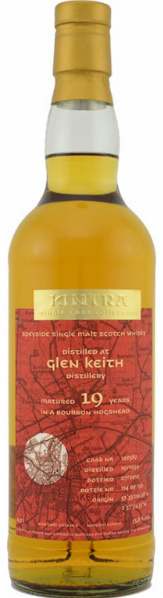
Glen Keith 19yo 1992/2012 (53.8%, Kintra, Bourbon Hogshead #120587, 156 bottles)

Recently I reviewed a Glen Keith by Malts of Scotland (a german bottler) that one was also 19yo (1990) and was quite the surprise. This time another Glen Keith that is 19yo old (1992) and this time by the Dutch bottler Kintra. Glen Keith itself was mothballed for more than a decade (1999-2013), but has restarted recently, Probably the last one of the mothballed distilleries that could have been revived. The rest of the closed distilleries are demolished or used for warehousing or have been turned into apartments or warehouses. It is very unlikely that any other of the closed distilleries will reopen. As of now probably only new distilleries will see the light of day.

Color: Gold

Nose: The nose starts out rather sweetish and slightly soapy. Next up some fresh air and latex paint. This changes seamlessly into a perfect woody touch, that gets spicier with time. Vanilla and ice-cream with cherry bon-bon liquor (without the chocolate). Sometimes it even smells a bit as new wood. Those of you that think that something’s wrong because of the hints of soap and latex paint are mistaken. Pretty neat nose, one to be taken in vigorously, Smelled like this I also get a hint of sweetened yoghurt and some toffee. Later on some hints of dark chocolate and red fruit gello. In no way does is smell like a cask strength Whisky. No, this is a very laid back Glen Keith.

Taste: A perfect balance between the wood and the sweetness. There is a nice caramel like sweetness that underlies the whole experience. Nice and warming, and never bitter. Luckily it is not quite clean. Again some ice-cream, but after the sweet and the vanilla, the wood returns, which makes for nice balance. They play together well. Small hints of lemongrass and some lemon skins, but don’t get the wrong picture, these are only in here in hints, and make the whole even more interesting. It does develop a bit in the glass, more to the woody side and late in the taste a little bitterness does emerge, like walnut skin. That’s no problem.

Compared to the Glen Keith by Malts of Scotland, this is even a better example of a Bourbon matured Glen Keith. Again a bottle that will be finished rather quickly. Nice Pick by Erik Molenaar.

Points: 86

Thanks to Andre and Erik for providing the sample.

Tomatin Legacy (43%, OB, Bourbon & Virgin Oak Casks)

There is a new Tomatin in town, and they’ve called it Legacy. No age statement on this one. First of all what does legacy exactly mean? Searching on-line I find this: anything handed down from the past, as from an ancestor or predecessor. We know this “Legacy” is aged in Bourbon and Virgin oak casks, so is this the way Whisky was made in the past? I will have to ask, but surely my interest in this Legacy has been aroused. maybe it’s not about the casks, but the way the distillate shines through?

Second thing i noticed is that it’s 43% ABV, making the 12yo the only one in the standard range this is 40% ABV. The rest is higher with 43% and 46%. Having said that, Tomatin placed this Legacy before the 12yo, simply by making it cheaper. Pretty neat.

Recently The Glenlivet released the Alpha, of which in a weeks time the true contents will be released. The Glenlivet used a huge social media ad campaign to aid its sale, whereas Tomatin did not. By now we do know that is also is made using Bourbon casks (first fill) and new wood (second fill). Alpha is 50% ABV. and costs 4 times as much as this Legacy. Let’s have a look…

Color: Light gold.

Nose: Clean and youthful, hints of mocha, caramel, toffee, but the hints don’t smell sweet. Wet new wood, freshly cut-down tree. tree sap (not resin!) and some nuttiness. Very toned down, no sharpness and only some spiciness from the wood but no burning alcohol of very young distillate. Very honest. Some vanilla and warm butter. Not bad!

Taste: Malty and half sweet. Wood and cardboard. Again wet fresh wood and tree sap, and again a very toned down profile, laid back. A hint of licorice and even an even smaller hint of tar. Not a very long finish. The virgin oak isn’t omni-present in this one so it doesn’t dominate. It’s not very sweet, but the sweetness is sugary. Good balance.

In the nose very different and younger from the Alpha. Extremely drinkable. This would be the lemonade in my lectern. The last bottle opened, but also the first one finished.

Alpha has the same color and is higher in ABV, smells spicier (older) and definitely more mature, the wood on the Legacy smells like a freshly cut down tree. Tastewise the Alpha comes across as older, spicier and bigger bodied, aided by the ABV. Conclusion: incomparable, the Whiskies are quite different and aimed at different people. Legacy is one to give some time to and feel what and aged whisky distillate really is. One to analyze, but also the easiest drinkable malt around. And it costs next to nothing to boot!

Points: 82

Thanks go out to Jennifer for providing me with this sample!