Glen Moray 22yo 1995/2018 (53.2%, Adelphi, Refill Sherry Cask #7785, 292 bottles)

Just like Deanston earlier, Glen Moray was another distillery that showed up on my radar rather late. Glenmorangie was there from the start, but I wasn’t a fan of their general output I knew up to then. Later I was reading about how Glenmorangie (Bill Lumsden) was using  Glen Moray as a testing ground for Glenmorangie, well you get why I wasn’t really interested early on, not being a fan of Glenmorangie itself. Over time I also got the chance to try a lot of official releases of Glen Moray, which are, and still are quite affordable, yet also not very exciting. This is now the fourth Glen Moray on these pages and oh dear, the tree bottles that went before this one didn’t even manage to get a score in the 80 point range. All three quite disappointing. However a wise man from Belgium once said to me, every Whisky distillery is able to make a good or great Whisky, so the fun lies in finding one of those (and when you find a good one, the challenge shifts into finding (or at least assessing) the best possible expression of said distillery. Adelphi is an independent bottler that has an above average output quality-wise. I believe I actually never had a bad one, not saying there aren’t any, but I would bu surprised of they do. When a 22yo Glen Moray bottled by Adelphi popped up on an auction, I snapped it up, curiosity eventually killed the cat, being only the second Glen Moray I ever bought, and I still haven’t bought one since. Let’s see if I should.
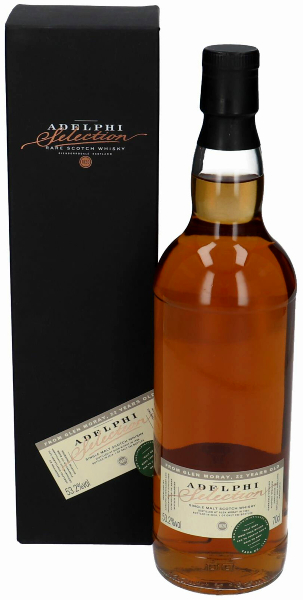
Color: Copper gold.

Nose: What a welcome smell after all that peat of the past reviews. Right now, I just love the possible variations of Single Malt Whisky. Funky Sherry, very fruity, nutty and waxy. Lots of nice organics ever so slightly meaty, like in cold gravy. Leather and jute, in this case a very expensive smell. Quite sweet and fruity, dried apricots mixed with a more minty aroma. Sometimes this smells like a Bourbon or even more like a Rye Whiskey, so not like a Whisky matured in a Bourbon or Rye cask. This also didn’t mature in an ex-Bourbon cask, but it probably did mature in a Sherry cask made of American oak in stead of European oak. Dry oak planks, you can almost smell the vegetal bitterness this has. It’s smooth and creamy. American oak has more vanillin and European oak has more tannin’s, which would be a hard thing to smell actually. Maybe we’ll encounter tannin’s when assessing the taste. I don’t smell sulphur per se, but the (rural) organics this nose has, definitely are based around one or more compounds containing the element of S (sulphur). However I have to say, the S-element gains in strength with some extensive breathing of this Whisky, but that is all way back, so this is not really a sulphury Whisky. The creaminess stays, and mixes a bit with a toasted (Sherry) cask aroma. You can add almonds and a little bit of cardboard to the leathery aroma mentioned earlier. Borderline dusty. Even though I believe this is from American oak, the overall the nose is well behaved, very well balanced and with an somewhat older style Sherry feel to it. Not a Sherry bomb like for instance a dark 1971 Longmorn nor like an old skool Sherried Malt. After even some more breathing, the fruit moves into the realm of apples now. Calvados. So it starts like a Rye Whiskey, with the body of a Single Malt and finishes off like a Calvados, how that for a change! Remarkable though that every time I pour this it never starts with the apple note.

Taste: Lots of fruit, but more of the overripe tropical kind. Buttery and creamy, almost custard like. Very tasty. Sweet and waxy, with only a slight bitter edge to it initially. It’s so big on fruit and its half-sweetness, that this more astringent, bitter bit integrates very well. I would day, wood and ear-wax. The wood has a bite. Nevertheless, highly drinkable and quite tasty, but also a bit hot initially. Sipping more brings out more bitterness, but it still doesn’t really hurt the Whisky, even though it does increase in intensity. Next a very nice burnt wood note that really blends in very well with the fruit. On all accounts this Malts shows its strength in balance. After sipping this, even the nose is starting to show more wood. On the palate we are now moving into the realm of toffee and caramel and right after this the wax from the nose comes back in as well. So even though it has this dry wood bitterness, the sweetness is never far away. This late in the tasting, the sweetness also shows us a tiny amount of integrated tar. I do have to mention that I do pick up more on the wood and bitterness with a tired palate, after dinner and/or late in the evening. Earlier in the day, (or even before breakfast, which is a time of day that is not uncommon for a reviewer of distilled spirits), the fruit is more prominent. Never forget that you as a taster are (highly) subjective, you change a lot during the day, or from day to day, so try to keep that in mind. If you tried a Whisky once, you may have an idea about the Whisky you tasted, but you really didn’t have the chance to really get know it, so proceed with caution with occasional tastings.

See, after all these, mediocre at best, Glen Moray’s I reviewed before, this time a very nice Glen Moray found its way into my glass and onto these pages, and I’m glad for it. Already based on the nose alone I was already very happy getting this one and even though it has this bitter edge, I’m also quite happy with the taste of it. Definitely a score into the eighties this time. Well done!

Points: 88

Tamdhu 15yo 1991/2006 (60%, Adelphi, Bourbon Cask #1955, 257 bottles)

Well let’s continue with another oldie, shall we? Clear out some of the sample bottles to fill it up with something new. This is Tamdhu, and Tamdhu is not on Islay, nor will this Whisky be peated. I expect a lot of this Whisky. First of all it’s Tamdhu, which makes a lovely distillate. It’s bottled by Adelphi, a bottler so good, it almost seems as if they can pick any cask they like. This has 60% ABV and just look at the color. Yeah baby, bring it on!

Color: Orange gold.

Nose: Wood and sometimes a hint of an aromatic White wine. Very spicy. This must have been a very active (toasted) cask. Although you might think this cask previously held some sort of Sherry, I hardly doubt it. Creamy vanilla. American oak, all the way. No Sherry notes whatsoever and yet pretty sweet-smelling, although the dryness of the oak, soon takes over, to never let go. Ehhhm, is this all? Hints of fresh air, but it’s mostly all aroma’s that have to do with oak. It’s definitely not overoaked, mind you, but it seems to be rather mono-dimensional. I’m actually a bit disappointed now, since this is Tamdhu, from Adelphi, which has a reputation, and it’s 60% ABV. I love cask strength. Still, nothing happens for me. Sawdust and hot oak. It smells a bit like a carpenters workshop. This definitely could have done with some blueberry notes, now it smells a bit, dull…

Taste: Initially quite sweet, and again, everything you’d expect from an ex-Bourbon cask. Vanilla, powdered vanilla, creamy pudding, instant pudding powder. Milk chocolate (powder) and a totally different green feel to it, as well. My heart skips a beat right now, because, this is more or less it. Lots of oaky notes, and a strange sweetness. Not a lot more is coming to me to be honest. Earlier I already thought my nose was failing me, but tastewise I don’t “see” a lot of evolution in my glass. WYSIWYG.

Although Adelphi claim*, Tamdhu prefers ex- Bourbon casks, I guess the statement from the Adelphi website, reproduced below, is not entirely correct. What the good people at Adelphi probably meant was that Tamdhu might favour Sherry casks made from American oak, which is still a Sherry cask, and not an ex-Bourbon cask, which, yes, are also made from American oak. This particular example has no flaws, it’s nice, but it almost has no complexity, nor does it evolve a lot after pouring or whilst drinking. I’m pretty sure I will forget rather quickly, how this tasted like, and I hardly forget the taste of a Whisky. Go figure. (When reading this last sentence in November 2021, I indeed really forgot how this Tamdhu tasted like. I’m actually amazed a 15yo Tamdhu from Adelphi scored so relatively low).

Points: 83

* 15 Yr. Old Speyside, 1 of only 257 bottles from cask no. 1955

The make from Tamdhu has always impressed us for its consistency, but this cask is as good as any we have ever seen. The distillery favours American oak, ex-Bourbon casks, and this is no exception, only the whisky is such a deep amber that it might have come from a re-fill butt. The first nose is of soft sponge, filled with vanilla cream. After a short time a delectable perfume emerges (face cream or hair lacquer), and then a floral note: geraniums in a pot (there’s a mossy note as well). With the addition of water the provenance of the cask comes through loud and clear, but it retains the delightful floral/perfumed aroma, joined by a sherbert-like ‘sparkle’. A smooth mouthfeel and a flavour which remains sweet throughout, leaving an aftertaste of white chocolate. Try it frozen, with dessert!

Glenfarclas 15yo 1991/2006 “Breath of Speyside” (60.2%, Adelphi, First Fill Sherry Butt #5642, 615 bottles)

Almost two weeks ago I reviewed a Adelphi Highland Park, and here is the next Adelphi bottling. This time a bastard malt. A bastard malt is a Whisky of which the distillery name can’t be found on the label. Usually some kind of fantasy name pops up like Probably Speysides Finest (Douglas Laing name for Glenfarclas), Director’s Tactical (Douglas Laing name for Talisker) or Laudable (Douglas Laing name for Laphroaig). Well this is called Breath of Speyside and in this case, that is Adelphi’s name for Glenfarclas. Glenfarclas do sell off lots of casks, but never allow the bottler to use the Glenfarclas name.

Glenfarclas 15yo 1991/2006 Breath of Speyside (60.2%, Adelphi, First Fill Sherry Butt #5642, 615 bottles)Color: Orange copper gold.

Nose: Cream and cherries. Quite fresh and fruity. Very lively, and not that deep dark in your face Sherry. Very obviously a first fill sherry. Perfumy, with a nice touch of wood, very elegant. lovely stuff and easier on the nose than A’bunadh, that can be harder or harsher (due to its youth). Toast and pepper come to mind and very spicy. Pot roast, tobacco and furniture polish. Very lovely and interesting nose. Great complexity and perfect balance, between the Whisky and the Sherry.

Taste: Creamy and woody. Nice sweetness that is delivered after the initial woodiness. It’s not overly woody though. Again roasted meat, combined with the dry woodiness and the late sweetness (caramel), makes for a very interesting play on your tongue. Excellent. Definitely elements of wine (Sherry). Also some organics I usually get from some white wines. Thick excellent stuff that works well at this high ABV. This Glenfarclas really intrigues me. Well chosen cask.

Heavily Sherried and high in alcohol, so this is Aberlour A’bunadh territory, the only difference being the age. A’bunadh is a young Whisky, probably around 8 to 10 years old, and this Glenfarclas is 15 years old. This one is milder older and wiser. It’s deeper, more complex and less rough around the edges. The only problem, you can only get this at three times the price of the Aberlour A’bunadh, just to show you how cheap the Aberlour actually is…

Points: 89

Highland Park 16yo 1986/2002 (57,9%, Adelphi, Refill Hogshead #2288, 273 bottles)

Together with the Cadenheads Glen Scotia I reviewed earlier I found this Adelphi Highland Park in the back of my lectern. Highland Park is no newbie on these pages and this will be the third independent bottling of Highland Park, as I have earlier reviewed Highland Parks from Douglas Laing and a heavily sherried one by Gordon & MacPhail. Adelphi is new to these pages. Adelphi once was a distillery, but it closed already in 1907. The name though was bought and used for this independent bottler since 1993. Funny that the people who are behind Adelphi Distillery now, are building themselves a new distillery not called Adelphi Distillery yet, but for the time being is called: Ardnamurchan. Another claim to fame is that Charles “Rory” MacLean does some if not all of the cask selections.

Color: Dull light gold.

Nose: Creamy, heathery and slightly soapy. Candied yellow fruits. Dried apricots. Very powdery and appetizing. A breath of fresh (sea) air. Very clean smelling, but also has a dirty edge to it. Only a small hint of dry wood and toasted oak. The nose somehow seems sweet, and sweaty, already, and the sweetness blends right in with the cream that’s very up front. It changes with air, so let it breathe. Classy smelling Whisky.

Taste: Smoked heather, honey sweetness and a peppery bite. It keeps it together right through to the finish, it (it being the balance) seems a bit flimsy towards the end, but the balance does manage to stay. A sign of quality. It has a tad of soapy woodiness to it. The sweetness develops from honey into toffee and caramel, but it never dominates. It seems to me the sweetness is somehow balanced with some hidden acidity. Quite nice.

A pretty good, easily recognizable Highland Park. The Heather and honey are definitely there, but the real bonus is the Talisker-like peppery bite. Since there isn’t a lot of bitterness or toast in this, and there seems to be a lot of potential, I wouldn’t have bottled this yet. It’s good, but it could have been slightly better. Of all the independent Highland Parks I have reviewed here, I guess this particular expression matches the profile of Highland Park the best. But do allow for some breathing. It needs air. Well done Rory, I mean Charlie!

Points: 86