Glenfarclas 42yo 1967/2010 ‘Probably Speysides Finest Distillery’ (50%, Douglas Laing, Old Malt Cask, Sherry Butt, DL REF 6245, 385 bottles)

And here’s yet another Speysider and not just any Speysider but an example of Speyside’s finest distillery…probably. Just consider the statement for a moment (maybe not if you’re called Luc). There’s also Macallan, Longmorn and Strathisla in Speyside. I know there are others, but I didn’t want to make this list too long. Glenfarclas isn’t mentioned on the label, but let me tell you this is a Glenfarclas, and a very old one too. I have tasted several very old Glenfarclas, and sometimes they tend to be very woody, but that’s also because there are a lot of very old Glenfarclas around, and 42yo is a long time to spend in a cask. I’m 42 now and I wouldn’t want to spend my whole life in a cask.

To the whisky then. Glenfarclas is still a family owned operation that started legally in 1836. In 1965 it was bought by John and George Grant. Since then there were a lot of Georges and John Grants. Very popular names indeed in that family (and The Beatles for that matter). Sometimes they have extra letters for identification purposes. Next time I’ll be up at Glenfarclas, I’m dying to meet Ringo S. Grant! Good to see a still family owned distillery surviving competing with the big conglomerates like Diageo. There are several more like Bladnoch for instance. Power to them!

Color: Orange Copper

Nose: Musty and leafy. Fruity, spicy and maybe some acetone. The odd combination of gravy with honey. Thick. Body, yet not too heavy. Then a coffee note: something like mocha and cappuccino, maybe a whiff out of the old fireplace in winter. It’s a treat to smell this, but it doesn’t smell so old as you might expect.

Taste: Dry and spicy wood. Slightly fruity with paint, and even a bit hot, which in this case is great! Honeyed licorice. When freshly opened it had a strange finish, but after a month or so that’s completely gone. So time was on its side. It has some bitterness in the finish but that doesn’t mean the whole is woody or even overly woody, no, the wood is fine here.

To sum it up, it doesn’t seem so old, it sure is balanced, but misses some complexity you might want if you buy such an old whisky from the sixties. Still it’s not bad though, not bad at all. And oooh, I like the heat in this, definitively a big plus.

Points: 88

Note: When this was distilled in November 1967, The Beatles were at Abbey Road Studios doing mixes for their Magical Mystery Tour album, and recorded their Christmas disk for the fanclub…so now you know.

Strathisla 25yo (40%, Gordon & MacPhail, Pinerolo Torino, 75 cl, Circa 1980)

And here’s already the second Strathisla by Gordon & MacPhail. This one has bottlecode SC999 and Gordon & MacPhail used these bottles roughly between 1981 and 1987. But if I would have a guess, this seems to be closer to 1981 than 1987. And thus this would be a late fifties distillate! (And the previous 15yo Strathisla, one from the mid seventies). That’s quite a difference and will probably be evident in the taste and smell. Also note that this 25yo is notably darker. Like the 15yo, this bottle was also bought for a ‘Genietschap’ Tasting. But this time for a tasting hosted in Switzerland.

Color: Copper, orange / brown.

Nose: Old Sherry. This is deep and spicy. It has some butter that fades quickly. Tarry, coal, old bottle effect and very, very appetizing. You just want to smell this as long as it stays liquid. Fabulous. No other word to describe this.

Taste: Sherry again, tarry and coal is in here too. Sometimes a whiff of sweetness passes across your palate. Laurel licorice and wood, which make it spicy. There are even some cherries in the finish. Again this is an old sherried whisky from the times they made this with steam or something, because for me again it has the traits of an old steam locomotive. It’s probably no coincidence that Jack Wiebers has a ‘Old Train Line’ series.

The Strathisla is warming, even when you think at the same time that the 40% isn’t enough. Imagine this at a higher strength or even cask strength for that matter. One thing is certain: they don’t make them like this anymore. Try to find it and dish out a lot of cash, because it’s worth it. Just have a go at this standard G&M, 25yo Strathisla, and find yourself a sweater made from those fabulous looking Strathisla sheep!
While the 15yo was initially considered a fake by the ‘Genietschap’. This 25yo definitively was not. It was considered the best of the evening.

Points: 94

P.S. If any of you turn out to be, Italian tax-band specialists, mine is Series EX, number 426944. Let me know if you know from which year this is.

Caperdonich 35yo 1972/2008 (50.3%, Duncan Taylor for The Nectar Belgium, Cask #7424, 136 bottles)

Duncan Taylor, once Glaswegian brokers in whisky casks. Now of Huntly in the North East of Scotland. These guys have some massive amounts of great casks lying around. I know a lot of bottlings they did that are legendary. For instance: Tomatin 1976, Bowmore 1966 and Bowmore 1968, to name but a few, but there are a lot more. But it’s not only the vast amount of casks, it’s also the quality, and consistency of their whiskies, and grains. Duncan Taylor are definitively among my favourite independent bottlers.

Color: Orange Gold

Nose: Wow, double wow. This is fabulous! Old Bottle and überfruity. Apricots, peaches and sugar-coated oranges. Very organic and even a bit nasty, but all in a very good way. I guess we already have one of those legends on our hand. It has some earwax and wood, but not as much as you would have thought for something that’s 35 years old.

Taste: Sorry, but its wow again! It has a spicy punch after all those years. It’s palate matches the nose. The same fruits for me, and almost no wood and it hasn’t been an inactive cask either, just look at the color. It also reminds me of a very well aged perfect Zind Humbrecht Gewurztraminer. This would have been almost perfect, (because does perfection exist on our planet?), when the finish would remain somewhat sweeter and retain the fruityness and if it could have kept its balance some more. In the finish, the wood plays a greater, drier and a bit sour and thus unbalancing role. But it maybe nitpicking, because this Caperdonich receives a well earned…

Points: 93

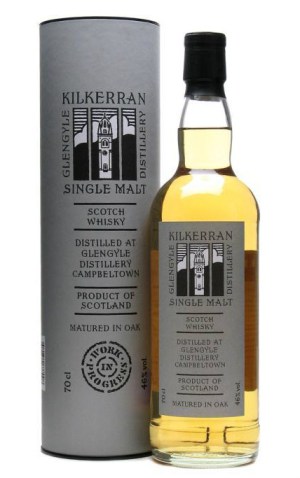
Kilkerran 6yo 2004/2010 ‘Work in Progress 2’ (46%, OB, 15.000 bottles)

This time a ‘new’ Campbeltown malt. Although the original Glengyle started in 1872 and closed again in 1925. The ‘new’ one started in 2004. Most of the distilling equipment come from the defunct Ben Wyvis distillery. Campbeltown used to be the center of the whisky world, but only Springbank and the intermittent Glen Scotia remain. Slowly some old names are revived. Longrow and now Glengyle. The name Glengyle was not for sale as the distillery was, so it’s called Kilkerran instead. Since 2009 an annual work in progress is released. We’ll have a look at the second WIP, that has the grey label.

Color: Light Gold.

Nose: Oily, fatty, some distant peatyness. Meaty, gunpowder and lightly smoky, so it has a firm body. Tarry and Crème Brûlée Later on even some coffee and a powdery note.  This has already got a very promising character. After nosing this you already know you’re gonna like it! Well I do. If some whiskies are elegant, this one is of the street, it’s dirty, it’s a bit naughty. Ahhh yes, we like naughty.

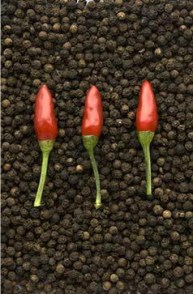
Taste: Yeah! Leafy and simple. It’s like dry leaves infused in some velvety light oil with licorice. It has some wood, but as a nice component of the whole. In the middle of the wood sits something sour. It’s almost a designer dirty whisky. Not overly complex, but oh so enjoyable. This is great and 46% is just right for something like this. In the finish you’ll have some black pepper first and after that a hot flash, like some red pepper powder.

We all like to say that the old stuff is better, and “they just don’t make it like that anymore”. Now just have a look of some of those new malts around. And it’s not only Kilkerran, but Kilchoman too, aren’t they making fabulous stuff? And the stuff is just seven years old to boot. Both of them. And if this as good as it is now, how will it be at the planned 12 years old? We just have to wait untill 2016 to try that. But untill then we’ll be just as happy with the annual WIP’s. Forget about cocaine and XTC, there’s a new uncolored and unchillfiltered drug in town and it’s called Kilkerran…(and Kilchoman).
A work in progress, keep on working people, you’re on the right track here.

Points: 86

To be complete:

The first work in progress had a white label, is 5yo, was issued in 2009 and yielded 12.000 bottles.

The third work in progress had a mossy green/cream label, is 7yo, was issued in 2011 and yielded 15.000 bottles.

Port Ellen 25yo 1982/2008 (50%, Douglas Laing, Old Malt Cask, Refill Butt, DL REF 4112, 589 bottles)

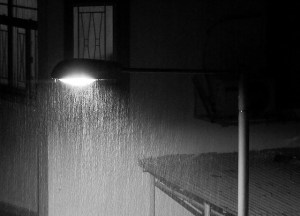
Its raining like crazy outside, and I have this Port Ellen on my lectern, so probably no better moment to have a go at this. Seize the day, the moment is now! There may be no tomorrow! Heed the call of the elements!

Douglas Laing sure did have a lot of Port Ellen ex-sherry casks lying around, and a lot of those casks were from 1982. Even though it wasn’t the best of years for Port Ellen (it closed just a year later), a lot of those 1982 casks turn out to be pretty fabulous. I bought this particular bottle because of the word “creosoted” on the label. I definitively want to find out what that tastes like.

Color: White Wine.

Nose: Wow, always a great peat smell, Sweet and succulent, oily, old puffer, kippers and tar. Citrussy and grassy too. Powdery? This really smells like it’s dived up from the bottom of the sea. Even if this turns out not to be the greatest Port Ellen, this nose is all worth it. Dirty and clean at the same time. Ergo very balanced! Smelling this is great but it’s also intriguing. There is more lying around the bend. I can’t quite put my finger on it, but there is more to it than meets the nose…

Taste: Sweet and rubbery. Ash, liquorice and tarry rope (is this the creosote?). Definitively a fishy note from the peat, what suites this whisky well. Coffee, mocha, very appetizing. For a dead distillery, and a 25yo whisky, this is very lively. Candy with pepper in the finish and some slight bitterness (with tar), from the oak, but it has to be that way.

You might say it’s not up to par to other Port Ellen’s, since you could consider this not to be the most complex example or it’s drinkability and (virtual) lightness. But I’m having a lot of fun with this one, its lively and I’m thoroughly enjoying myself. I’m pouring myself another dram of this.

Points: 89

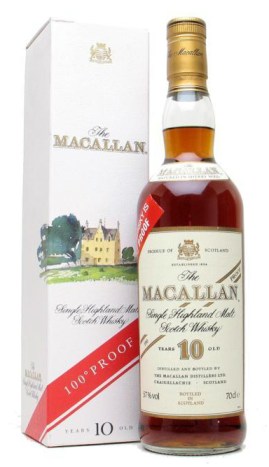
The Macallan 10yo (57%, OB, Sherry Wood, 100 Proof)

And here is a very old Macallan, a Macallan from the days we all thought, this is Macallan and it’s never gonna change. They sort of promised us that on the back label: For reasons not even science can wholly explain, whisky has always matured best in oak casks that have contained sherry. Due to increasing expense and scarcity, other distillers no longer insist on sherry casks, The Macallan directors do. After this they went on to produce the Fine Oak Series, a ‘blend’ of sherry and bourbon casks. A cunning move, why? Was it to scarce? Was it too expensive? Did they think they should use their big name to uncharter a new market? Because the sales proves it, Fine Oak does well and ís hip. It just isn’t Macallan anymore…

So for my generation, The Macallan was something like the bottle you see here. Nice brown/orange whisky made from Oloroso Sherry (and who knows some PX).

Color: copper brown. (it’s not dark brown, and it doesn’t have a red tinge to it, so it’s not mahogany, as I often read).

Nose: Yeast, nuts and caramel, typical Oloroso Sherry nose. Fresh like seaspray. Strong, full and creamy (this is what we want in a cigar). Chocolate and some wood and spices. This has oomph and a lot of depth. Nicer and less harsh than the A’bunadh. It’s like comparing an Aston Martin to a Hummer. (Both have their merits though. Would you drive your Aston in a war zone?) Did I just call drinking whisky a war zone? wow!

Taste: Thick and sticky. Tar and smoke. A hint of pepper and mocha. Dust. Strong Oloroso Sherry. Oak and liquorice. Hot (it’s 57%). Even an exotic note like curry. Oak and the hint of curry are predominant in the finish. Still it’s not and old whisky. It’s only 10 years old, but so different from the Hummer mentioned before. Why are there so much sherried Glendronachs around, and why aren’t there a lot more of these types of Macallan around?

Well this is old skool whisky. This may not be very complex,  but just try to ‘get’ the steam locomotive in these kinds of whiskies. The tar, the coal and the steam. I’m very sorry these Macallans aren’t around anymore. They were very classy, and if you can find them now, they are very expensive. If you have a chance, try this, it’s a piece of history.

Points: 89 (for now)

Aberlour ‘A’bunadh’ (60.9%, OB, Batch No. 33, 2010)

There just had to be an Aberlour in one of the first posts here. Aberlour 10yo was my first single malt whisky ever! There’s no 10yo anymore in my lectern, not even a 10yo in stock. Don’t get me wrong. It’s a decent whisky, and it delivers a lot for the price it costs. But the good people at Aberlour also make this A’bunadh (of the origin), and compared to the 10yo this is really a steal. Very high quality whisky and it comes in all those neat batches. Oh, and it cask strength, and I just love cask strength.

A’bunadh, as it’s called, has no age statement (NAS) on the bottle, but is believed to be between 8 and 10 years old, and comes solely from Spanish Oloroso Sherry Butts. Well, if you could smell it now, or see it’s colour you would know this is true.

Color: Dark Copper or Orange/Brown.

Nose: Musty and meaty. Oloroso Sherry with oak. It even smells young and harsh. It misses some depth you can pick up from old sherry casks. (Just nose some 40yo+ Glenfarclas and you’ll know what I mean). Toffee, clay and some sourness (from the oak). It’s dusty and has a flowery note. Blackberry anyone?

Taste: Thick and full of flavour. Berries again, ashy and very nice. Some cardboard and a bit harsh due to its youth and strength. Hot! Lots of first fill casks in here. It smelled like a young sherried whisky and it tastes like one to and that is very nice for a change. There is nothing wrong with young whiskies, as long as they are well made, and this, this is well made, I can assure you. Great balance. Toasted wood in the finish.

Even though it’s young, strong and harsh I still like this neat. Water takes away the little sweetness it has and makes it a bit more harsh. Drinking this at cask strength, makes me happy. It’s a bit of a drug that way. Recommended. There are a lot of batches which have their differences. More than you would have thought. So it can be a lot of fun comparing different batches from different years. Some are less harsh, or more sweet or…You guessed it, come back often to A’bunadh, and you’ll be welcomed back every time by a very nice whisky. By the way, who said there weren’t any good sherry casks anymore, and who said those sherried whiskies aren’t affordable anymore?

Points: 87

Strathisla 15yo (70° Proof, Gordon & MacPhail, 26⅔ fl. ozs., Pinerolo Import Torino, Circa 1982)

I’m a big fan of old Strathisla’s. When I taste some from the 60’s or 70’s, I’m in heaven. With some old sherry cask bottles around, you can’t go wrong with Strathisla (and Longmorn, and Macallan, and…). Even 60’s bourbon casks are fantastic. So for this one, I certainly had high hopes and I paid some good money to get one. When I bought it at an auction, I thought it would be older than it turned out to be. Just look at that label with its 70° Proof and 26⅔ FL. OZS. The glass code on the bottom of the bottle (SD133) makes it from circa 1990.

I brought this with me on a ‘Genietschap’ Strathisla tasting. After I opened it, and we all tasted it, we initially thought is was a fake. We expected some old bottle effect but there was none, we may have been spoiled with our experiences with those old Strathisla’s but one thing was for sure, this was a disappointment then. Let’s try it again now and see what happens.

Color: Full Gold (Caramel?).

Nose: This smells to me like something that has been coloured with caramel. It smells very rounded out and smooth like toffee. A bit like a blend without the grain. Malty and musty. Dusty and elegant. Fresh, sweet, creamy and fruity and some fresh air from the sea. Candied apricots. Cream Sherry with a smoky and sweaty touch to it. Well it almost smells…old now, maybe even meaty for a brief moment.

Taste: Sweet with bitter wood. Fruit, apricots on vodka. Almonds. It’s a lemonade with some iron in the mix. The bitter component transfers from wood to something more waxy, earwax maybe. At times it tastes thin and easy and can be quite nice, but somehow the top of the taste doesn’t gel with the finish, hence its unbalanced, and that’s a shame for such an old bottle. Definitively some E150a in here.

The nose is balanced but alas the same cannot be said for the taste and the finish. It all breaks down in the mouth.Luckily it leaves you with a warm feeling, so I would say that it’s a whisky for a book at bedtime. Also I have to say that a big gulp tasted better than a sip. If you come across this, don’t but it at a premium price. There are also older bottles around. With a white cap and bottle code SC999. that should be a better bet than this one. Still it’s not bad at all. It’s very interesting and will reward you if you’d only want to work at it. Recommended for connoisseurs I guess. It’s an experience. Still, get one of the older versions!

Points: 84

Inchgower 28yo 1982/2010 (50.7%, Bladnoch Forum, Hogshead #6966, 222 bottles)

And here is another Whisky that stands atop of my lectern. This time an Inchgower bottled by Raymond Armstrong, the owner of Bladnoch Distillery. Bladnoch was founded in 1817, and Raymond bought it in 1995 and opened it again in 2000. Well this “Raymondo” has a website, and if that’s not all, he even has a forum. Well if you think that’s it now, wait, it gets better! Raymond buys casks of other distilleries’ whisky, bottles them, and sells them to members of the Bladnoch Distillery Forum. And it has to be said, he does that at very, very reasonable prices.

Now we move on to Inchgower, since it’s Inchgower that’s inside of the bottle. If you want to see how Raymonds operation looks like, and how this particular Inchgower was bottled, here is a link to a film made by our one and only Ralfy, certified Malt Maniac. (Just for the fun of it, I have bottle number 14)
Color: Copper Gold.

Nose: Caramel, estery and oaky. Distant liquorice, tar, olive oil and maybe even petroleum. All of this combined with some warm apple sauce and gravy. The nose hints of coming sweetness. It is a great nose, but when you sniff this for some time before tasting it there is something that’s not quite right, sort of unbalanced. You know it smells great, but…

Taste: Tar again, coal, sour oak. Almost as if it were made with steam and luckily it is not the sweet monster I expected. I hate it when a whisky is sugary sweet or simply too sweet. Instant headache. But don’t worry this is nothing like that. The top of the taste is very good. You’ll like it. The middle is oak, in a nice and elegant way. The finish is more the sour part of oak and sort of unbalanced, breaks down and is not very long. The wood is never overpowering or too strong. It’s a very nice example of Inchgower.

The bottle is almost full, but was opened last november (how time flies). I’ve tried small drams since then, and it got absolutely more balanced since the day of opening. Initial score was 85, but it will go higher now.

Points: 88

In fact it tastes more like an 89, but I had to take a point off for the slightly unbalanced finish.

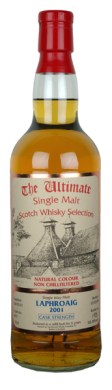
Laphroaig 8yo 2001/2009 (57%, The Ultimate, Hogshead #2927, 324 bottles)

I needed a Laphroaig for my last Por Larrañaga post, and since the weather outside is frightful, and a whisky could be so delightful, let’s review this one properly.

The Ultimate is a Dutch bottler from Amersfoort called Han van Wees. Han handpicked this Hogshead himself (if not his son Maurice probably did). I was at his shop and Han told me personally that this Laphroaig is a must, since it reminded him of “old skool” Laphroaig. Well if this man says something like this to you, who wouldn’t buy it? So let’s see how Laphroaig tasted in the past, and if it was any good then 🙂 (please keep in mind this whisky is from 2001, you know a year we remember like it was last year).

Color: White wine.

Nose: Obviously this has the typical Islay traits. It smells like it will taste sweet. It has nice fat succulent and clean peat. The tar is there too, as well as the ash. Salty and fresh. The smoke or bonfire are very subdued in this. It’s in there but its further along the beach. I know this reads like a lot of Islay whiskies, but hey it’s from there, and we wouldn’t like our Laphroiag to smell as an Aberlour don’t we?  Sniffing this profile as a whole, I notice great balance. Everything is there and nothing overwhelms. It’s not only peat or herring or rubber for that matter. It’s immediately likeable. I like the nose very much. By the way, I know it seems strange to say you smell something sweet or salty since both are tastes and not smells, but just open a jar of sugar or a container with sea salt in it, both have a certain smell.

Taste: Sweet ‘n peat. Liquorice and tar on a rope in seawater. The fresh sea wind carries seaweed. Chewing gum? Lot’s of legs in the glass. It feels classic, but is that because of what Han said? The finish is ever so slightly bitter and ashy and slightly less balanced and less sweet than the top and the middle notes. That’s probably because of its youth.

Yeah! Laphroaig! This is stunning quality at 8 years old. Can you believe I only paid 40 Euro’s for this? That’s getting a lot for your money. It’s a bang-for-your-buck, just like the Laphroaig 10yo cask strength versions of yesteryear (green and red stripe versions). Last but not least, this whisky is uncolored and unchillfiltered.

Points: 88

The picture of the bottle is for a 6yo refill butt version, the reviewed whisky is lighter in color. Label is identical, just with some differences in the small print, you can’t read anyway.