The Balvenie 30yo “Thirty” (47.3%, OB, Circa 2011)

After the young and very affordable Benromach, we are now going to look at a Balvenie that isn’t young nor affordable. For this expression, the story is that David Steward hand-picks some exceptional casks that are more than 30 years old. Casks that once held Bourbon as well as ex-Sherry casks. How unusual. These casks are then blended together and after a while bottled. Quite a surprising technique. A shame though, that only 30 years and older casks could be used for this expression, because the public demands Whiskies with an age statement… Nudge, nudge, wink, wink. Quite unfair of me actually, since The Balvenie bottle a whole lot of Whiskies with an age statement…
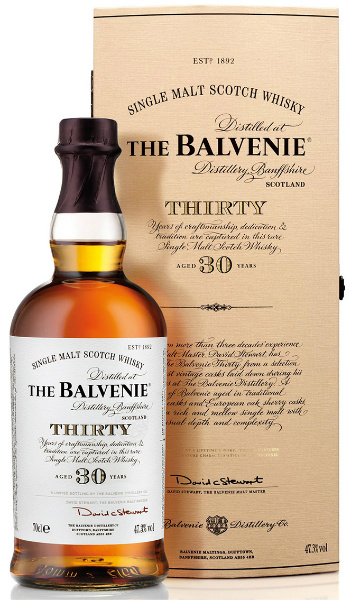
The Balvenie 30yo ThirtyColor: Light orange gold.

Nose: Funky, but in a good way. Sherried with Haagse Hopjes (Dutch coffee flavoured candy). Bad breath and old elegant wood often go together. Creamy. A distinguished gentleman, and after the Benromach “Organic” you know this will hurt your bank-account. Freshly sawn wood and hints of saw dust. Vanilla and some caramel. Powdered candy. Sometimes whiffs of Marmite and lavas float by. Actually, this doesn’t smell as old Whisky as I’ve expected. It smells like an old yet modern Whisky. Well balanced, but quite a lot of wood in the nose.

Taste: Sweet powdered candy, but also fruity. Sherry with cherries and other red fruits like raspberries. Thick toffee and slightly acidic. Acidity from fruits but also acidity you get from (freshly sawn old) oak. Not as complex in the taste as I expected. Coffee, cask toast and quite warming. Some bitterness towards the finish though.

A good, but not super-premium-great Balvenie. For this kind of money you can do better I guess. Just have a look at some of the TUN-versions that are around. Nevertheless, a more than decent Balvenie, period.

Points: 87

Benromach 2008/2014 “Organic” (43%, OB, Virgin Oak)

Not really a NASser since this is a vintage 2008 bottling. We also know this was bottled in 2014 so it is a 5yo or 6yo. Benromach doesn’t like hide its Whiskies in a shroud of mystery. Of course I love an aptly named Whisky but I was brought up with age statements so I like to (officially) know what I’m getting. Maybe all those NASsers are for a younger, more hip, generation? We’ll see. This “Organic” was distilled in 2008 and filled into virgin oak casks, just like they do with Bourbon spirit. Don’t worry, this will not turn this Whisky into a bourbon since only malted barley was used, and no corn nor rye. Why not make a rye Whisky then Benromach, wouldn’t that be something different and exiting?

Benromach Organic 2008Color: Gold

Nose: Yes woody. Sawdust, but also vanilla and warm vanilla pudding. Custard. I would say American Oak, wouldn’t you? Sugary sweet. The apparent sweetness is balanced out with some spicy oak, but not all oak is spicy, it also has a sappy oak quality to it. Sweet barley. Given some time, (when the taste becomes waxy), the nose tuns more floral. Floral with sandalwood.

Taste: Sweet at first, then vanilla and a more fruity note. Still all sugared fruits. Behind that the oak comes in again, but it’s not all wood alas, The wood also emits a cardboardy taste. Luckily that is soon exchanged with the sappy oak. That sappy oak turn a bit waxy and that in turn becomes a bitter edge into the finish. The bitterness also has some staying power. The finish is rather austere, so its quite different from the sweet start. The florality and waxiness of the nose, becomes also evident in the aftertaste.

For a Whisky this age and only new wood was used, this has already picked up a lot of color (as do Bourbons). Nosing and tasting this Whisky it really is what you may have expected. A Whisky that is defined by the use of new wood. Otherwise quite sweet and obviously not very complex, but more than expected.

Points: 82

Glenmorangie 10yo “Traditional 100 Proof” (57.2%, OB, 1 Litre, 2005)

Next up an oldie from 2005. A cask strength Glenmorangie. We don’t see many of them these days, especially one that isn’t touched by any special cask. The back label mentions that this unchillfiltered Whisky came straight from the cask made from mountain oak. So what kind of wood is this? My guess is American Oak from the Ozark Mountains, Arkansas USA. Hinting that this is a 10yo Glenmorangie fully matured in Bourbon casks and bottled at cask strength. Nothing more and nothing less. My most avid readers will know that I am not a very big fan of Glenmorangie but got quite a surprise when I reviewed a recent 18yo

Glenmorangie Traditional 100 ProofColor: Light gold.

Nose: Aromatic and spicy yet closed, or maybe there isn’t a lot going on? Vanilla and typical bourbon cask notes. Slightly soapy and fresh and obviously high in alcohol. Vegetal and woody. It almost smells like it looks. It does smell a bit of sackcloth and oak. Dusty and powdery. Not very complex.

Taste: Sweet. Vanilla and pudding. Sweet alcohol. Mocha and vanilla pudding. Hints of Cappuccino and vanilla ice-cream. A woody bite, almost cigarette like, but also a short-lived fruity sweetness. Sugared raspberries and half-ripe forest strawberries. Thick toffee to hold it all together. Nice coffee-ish finish. Well balanced. This reminds me a bit of a young Bladnoch. That one has more butter, is softer and is a bit more vegetal, but that may very well be the only difference.

At first, a simple Whisky, but it grows on you. Give it time to breathe and it develops nicely. Nevertheless, this is actually an example of why I didn’t like Glenmorangie back in the day. (Let’s say, 10 years ago). It looks great, promises a lot, but this particular Whisky is simple and un-rewarding on the nose. It may very well be the reason I stopped buying Glenmorangie for a whole decade. The taste is a lot better though. I only picked up the fruity bits, when tasting this in the morning before breakfast. Last night after a very tiresome day, I didn’t pick up on the raspberry and strawberry at all.

The recent and “extremely rare” 18yo I tasted a while back, somewhat restored my faith in Glenmorangie and made me buy that very 18yo. Today, and tomorrow can be different, you can get three of those 18yo’s for the price of this cask strength Glenmorangie. A no brainer if you ask me.

Points: 83

Highland Park “Einar” (40%, OB, The Warrior Series, 1 Litre, 2013)

First we had a core range, after that came the special bottlings and since a short while we also have special series. Highland Park had a lot of success releasing Earl Magnus (a 15yo released in 2009), Saint Magnus (a 12yo released in 2010) and Earl Haakon (a 18yo released in 2011), one per year. Thus a series was born. Next series was the warrior series, specially released for travel Retail (airports, boats and so on). In statistical sales figures, travel retail bottlings are treated as a country! That’s how many are sold this way. The warrior series comprises of six different bottlings, all released in 2013: Einar, Harald, Sigurd, Ragnvald, Thorfinn and Svein. Next came not a “series”, but a “collection” called The Valhalla Collection. Thor (16yo, 2012), Loki (15yo, 2013), Freya (15yo, 2014) and Odin (16yo, 2015). Again one per year. Aptly named though, since those bottlings seemed to be snapped up for collections and not so much for drinking purposes. By now Whisky became a commodity for trade and not an alcoholic beverage. Not a lot of reviews exist of these bottlings, so they must be sitting on shelves of collectors, trying to sell the now complete collection of 4 to…other collectors. Yeah, this will work just nicely.

Highland Park EinarColor: Gold.

Nose: Sweet, mocha, vanilla (ice-cream) and a hint of funky Sherry, soft peat and wood. Tiny hint of cask toast and alcohol. Toasted bread and something meaty. Dried. Sweet barley, almost like corn. Sweet funky mud. This one does develop over time. Powdered sugar and a floral soap quality (not much). A likeable and un-complex nose. Not bad at all.

Taste: Sweet and candy like. Sweet, almost artificial, red fruit drops. Sugar water and vanilla. Sugar with a bite. A slightly bitter note of oak at the start of the finish, as well as a small gingery note. Also here is the funkiness I got in the nose, that seems Sherried. Too simple actually, but without off notes as well.

Very sweet and light Highland Park. Typical travel retail bottling. It’s a litre, its 40%, its light. Even a litre of this will be drunk at a fast pace, because to properly taste this you need to take this in big gulps. Not one to ponder over for many hours. A bit too plain and simple, not to say a bit dull. Is it bad then? No not really. It’s somewhat recognizable as a Highland Park and that’s no bad thing. It’s still a decent Whisky, that can only be surpassed by (a lot of) other Whiskies. Nothing to scoff about. Never the less, not something I would buy (I would buy the 18yo (if its a good batch) or even the Dark Origins).

Points: 78

The Glenlivet “Nàdurra Oloroso Matured” (60.7%, OB, First Fill Oloroso Sherry Casks, Batch OL0614)

Back in the lion’s den. Purely by coincidence, I recently reviewed some independent bottlings of Whiskies produced by distilleries of Pernod Ricard, like Braeval and Glenallachie, but also some official bottlings like Strathisla 12yo, Aberlour 16yo and The NAS Glenlivet “Founders Reserve”, but also the nice AS Glenlivet from 1983. Now another Glenlivet, and yet another new NAS bottling. I promise you, I’m not sponsored!

The Glenlivet Founders’ Reserve is the new entry-level Glenlivet that replaces the 12yo in Western European and some other markets except Asia and the US. This NAS Oloroso Nàdurra replaces the nice AS 16yo Nàdurra. I know, that one came from Bourbon casks only. However, the 16yo Nàdurra will be replaced by three new versions that will be called…Nàdurra. The first one of these is this NAS Oloroso version, soon to be followed by a NAS Bourbon version and later a NAS Peated version. Since both Aberlour and The Glenlivet have the same owner, everybody will be comparing this one to the Aberlour A’bunadh.

Glenlivet Nàdurra Oloroso Matured (60.7%, OB, First Fill Oloroso Sherry Casks, Batch OL0614)Color: Dark gold, copper gold. Quite light for first fill Oloroso.
Nose: Lots of vanilla, new wood and a bit sharp on first sniff. A breath of fresh air. Spicy wood and pencil shavings. I get a lot of pencil shavings recently, maybe its me. I don’t get a lot of A’bunadh like first fill Sherry though. Considering the color and also the way this smells, my guess would be that this Oloroso Nàdurra is younger than its sister from Aberlour. A’bunadh is pretty up front dark first fill Oloroso, and this Nàdurra is not. It really does smell like a young whisky with nice notes of wood without being overpowered. Nice, but not complex. The wood also gives off light chocolaty notes and some sweetish vegetal bits. Old bar of soap (from the eighties) and some licorice. For me a lot of these aroma’s come from wood and obviously from the Sherry used, but for me they aren’t typical Oloroso aroma’s you get from an A’bunadh. Wood it is then.

Taste: Sweetish and a bit hot. New wood, tree sap with its light bitterness. Coffee and licorice, a nice combination. Hints of glue. Prior to swallowing a hint of, and here it comes again, pencil shavings. We all have chewed on a pencil some time during our lives haven’t we? Italian laurel licorice. When the wood, a slight hint of bitterness, and the high strength pass, not a very big finish remains. Youth?

A young Whisky that by itself is a study of wood and not of Sherry. It isn’t complex, slightly underdeveloped, and it surely does have its moments. I guess the choice is right to think of this Whisky a bit as a Whisky for…well, not entry-level, by bottling this with a high ABV. Another good decision is probably that it is made to another profile from the A’bunadh which is more about the Sherry itself, whereas this is more about the wooden cask itself. Nice stuff, helped along by the high strength and spicy wood. Younger and really no match for A’bunadh in my opinion, but those who like higher strength Whisky, but found the A’bunadh too much, will disagree. (maybe a comparison to Benromach 10yo 100 proof would have been a better angle…)

Points: 83

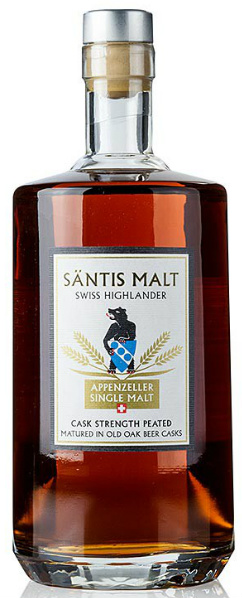
Säntis Malt Edition Dreifaltigkeit (52%, OB, Old Oak Beer Casks)

End of the line, for now. We finish our short trip in Europe in Switzerland to visit the Locher Brewery in Appenzell. Nothing more interesting than the quest to find Whiskies not from Scotland. Earlier I reviewed the entry-level Edition Säntis, which I found reasonable and showed already some potential. This time around we have quite a different Säntis Malt, which is called Edition Dreifaltigkeit. Dreifaltigkeit has been finished in a Sherry cask but also peated malt was used. Sounds good!

Säntis Malt Edition DreifaltigkeitColor: Vibrant orange brown.

Nose: Heaps and heaps of smoke, yet not a lot of peat (for a peated malt). Lots of fruit, black, red, the lot. Nicely thick, highly aromatic. Lots of fruity esters too. Sherried, meaty and fishy. Smoked sausage and a hint of smoked mackerel. You can name any meat or fish that has been smoked, it seems to be all here. When given some time, and air, an odor of stale beer enters the fold. I have the glass before me and at the same time was reading something, and some less than excellent sour whiffs fly by my nose. The initial fruit was stronger than the stale beer nose, but it seems they are trading places now. Just move the Whisky around a bit in your glass and the off note is gone. Dry and chocolaty notes enter late as well as dry horse manure. What a Malt! Great nose, up there with a lot of other great noses like this Longrow. Hope it tastes similarly good and we’ll have a winner here!

Taste: Taste wise it seems a lot simpler at first. First of all, it doesn’t seem to be 52%. I expected more of an alcoholic bite. It has some (bitter) wood, dust and paint. Dry paint residue and definitely some smoke, even in the taste. Sweetish fruits again (Sherry, Cream Oloroso or PX I would say) and just like the nose, a slightly acidic off-note. The off-note changes a bit and can be identified as beerlike towards the finish. Hoppy bitterness in the finish and also a sour note. The finish is long and shows the higher ABV.

The ultimate smoky malt. For me the Beer notes in this malt do not work, but they are well-kept in the background. I understand this is essentially a brewery, so it has ages and ages of history with making Beer, and using Beer casks, but this isn’t a Beer, its Whisky and it is proven over and over again, that Beer casks are not the best casks you can use for ageing Whisky. Having said that, this turned out to be a wonderful uniquely smoky malt. Recommended!

Points: 86

The English Whisky Co. 3yo 2007/2010 “Chapter 6” (46%, OB, American Standard Barrel #001-011)

Next stop is in Roudham, Norfolk, UK. Although close to the source, from a Scottish perspective, this is a World Whisky. The English Whisky Co. is the brand name and the distillery is called St. George’s Distillery. Founded by James and Andrew Nelstrop, its location was chosen because of clean and pure water, and well Barley and Norfolk, need I say more? Initially they wanted to build a micro distillery, but customs and excise wouldn’t have it, they wanted a big distillery, otherwise they wouldn’t bother giving off a licence. In december 2006, distilling commenced under the supervision of Laphroaigs one and only Iain Henderson. 29 barrels were filled. This particular Whisky was distilled two months after opening by Iain, aged for three years so it is barely legal…

The English Whisky Co. 3yo 20072010 Chapter 6 (46%, OB, First Fill American Bourbon Casks #001-011)Color: Light gold.

Nose: Extremely malty, and noses like new make spirit. White bread used for sandwiches dumped in water. I guess the eleven casks used weren’t very active. Grassy, lemongrass and sugar. Hay and all sorts of grass plants. Citrussy. It will remain the new make spirit it essentially is. Malt, bread and Vodka. That’s it. Sure, noses like this are part of the Whisky industry as a whole, so you “gotta love it”. But I don’t like it when I buy a bottle of a finished product. I’m not nosing this and enjoying myself, to be honest.

Taste: Soft and sweet. At least the taste shows some potential. Well rounded, and just the right amount of sweetness. Taste wise no off notes whatsoever, just plain young and massively un-complex. Enjoyable? Very! Toffee and vanilla. light and sunny. You get my drift.

Nosing this stuff I really asked myself why would anyone bottle this when it is clearly not ready. This is why they came up with the rule that Whisky must be three years old. Well, if you make stuff like this in a cold climate with inactive casks (first fill, really?) and it reaches three years of age, then it hardly meets requirement doesn’t it. Tasting it is a different story completely. Good potential, and I’ll be watching this Whisky grow. I hope they will succeed. Good luck!

Points: 75

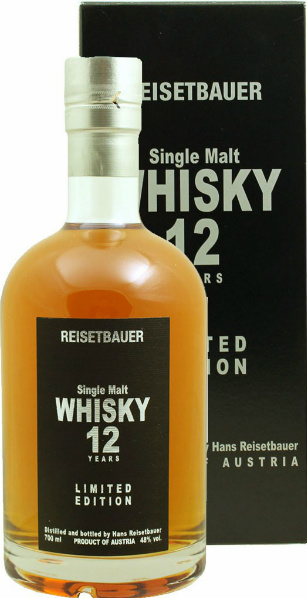
Reisetbauer 12yo (48%, OB, Limited Edition)

Time to take a small trip and have a look around some European distilleries producing Single Malt Whisky. We’ll start our mini trip in Austria to have a look at Hans Reisetbauers flagship Whisky, the 12yo. Earlier I already reviewed the 1998 Reisetbauer 7yo. Hans matures his Whisky in casks that once held Chardonnay and Trockenbeerenauslese, one, a dry and the second a sweet White Wine. Hans doesn’t import barley, but grows four hectares of summer brewing barley himself.

“The barley was crushed and malted at 65° C before being cooled and fermented in stainless-steel tanks for around 70 hours. The fermented mash is then twice distilled in copper pot stills. At this pointed the distillate, which has an alcohol content of around 70 per cent, is aged until fully mature in four casks that the top Austrian wine makers Alois Kracher and Heinz Velich previously used for aging Chardonnay and Trockenbeerenauslese.”

Reisetbauer 12yoColor: Slightly copper gold.

Nose: Plastics and fruit. Orchard fruits. Hints of pear, apples. Ear wax. Extremely duty underneath and for a while the plastics dominate the nose. Some of the plastics are slightly burnt. The plastic note is very close to the waxy aroma, which probably comes from the wine casks used. Given some time to breathe, aroma’s of Grappa emerge. If I would venture a guess (and I can be completely wrong here), I would say the grappa note comes from the Chardonnay casks, and the waxy/plastics come from Trockenbeerenauslese (a sweet White Wine). Next up the woody notes, which are quite soft and slightly spicy. Mocha and Latte. The plastics give way, but the Grappa remains. Very interesting distillate. Nosed blind I wouldn’t have guessed this is a Whisky.

Taste: Plastics again and lots of wax. Polyester!That’s it! Have you ever repaired a polyester boat? WYSIWYG (What You Smell Is What You Get). The Polyester is there immediately, but luckily dissipates quite quickly, to give way to wax wood and a winey note. Coffee in the aftertaste. “Do-a-burp™” after drinking this and it’s all plastics again.

Just reading my note about the nose alone, its pretty obvious this is not a Scottish Malt, and reading it all it hardly seems to be a Whisky at all! In case of the 7yo Reisetbauer I reviewed earlier, I found that it already was dominated by the cask used. The 12yo we have at hand is so dominated by the casks, that it is difficult, if not impossible to detect that this is a Whisky at all! This is a Wine (and polyester) finished Single Malt Grappa. If you want a Whisky, you’re better off with the 7yo. Nevertheless, this distillate has a lot of good sides to it too, so maybe it is unfair to hammer it with its off-notes.

Points: 73

Glenallachie 7yo 2007/2014 (50%, Dewar Rattray, The Specialists’ Choice, Sherry Butt #900168, 350 bottles)

Glenallachie, just like Braeval, is one of the fairly new distilleries originating in the sixties. Glenallachie was founded in 1967. (Remember Sgt. Pepper’s ?) Glenallachie is located in Banffshire in a region that we particularly know as Speyside. Built by Scottish and Newcastle Breweries and sold to Invergordon Distillers in 1985. S&N ran it for two years and thus closed it down in 1987 and subsequently sold it to Pernod Ricard. Those of you who have read my recent reviews of Glenlivet, Strathisla and Braeval, know that Pernod Ricard are putting a lot of effort into marketing their big brands Aberlour and especially The Glenlivet, but don’t do a lot, if anything, with their other distilleries Strathisla and Braeval, but also Glenallachie, Glenburgie, Glentauchers, Miltonduff, Scapa and Tormore don’t get a lot of “Airplay”.

Glenallachie 7yo 2007/2014 (50%, Dewar Rattray, The Specialists' Choice, Sherry Butt #900168, 350 bottles)Those distilleries are viewed as production capacity for numerous blends owned by Chivas Brothers, like the well-known Chivas Regal. As said before, I would like to see those marketed as Single Malts by their owners! For the time being we’ll have a look at this independent version of a quite young and Sherried Glenallachie.
Color: Copper gold.

Nose: Nice half-stale meaty Sherry, with lots of wood, sawdust and pencil shavings and some nice woody spices. All of this wood after only seven years! Chocolate with a breath of fresh air. Lavas and other leafy spices. Remember cleaning out the gutter, when the heap of leaves aren’t completely dried out? After that chocolate combined with toffee, so it is most certainly interesting. Cold gravy.

Taste: Wood with chocolate and a hint of cherry liqueur. Forget about Ferrero Rocher, now we have this! Dark chocolate again and all the woody notes I mentioned above apart from the cedary pencil shavings. The wood brings some bitterness and a kind of acidity, The Whisky really doesn’t need. This sour note would probably disappear after some more ageing, so for me it shows its youth. Wood and leaves is what stays behind towards the finish.

Although initially very interesting, the nose is pretty nice and starting to sip this, yes, nice again, but along the way parts of the taste doesn’t seem to match the rest of it. Somewhere it’s pretty unbalanced and pretty young. A bit mono dimensional. It’s ok and without mayor flaws, but also not a lot to rattle my boat as well.

Points: 83

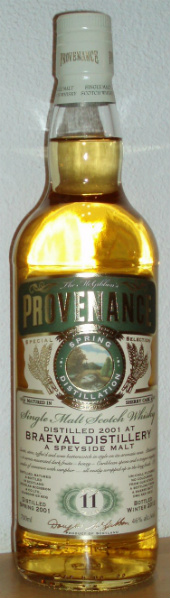
Braeval 11yo 2001/2012 (46%, Douglas McGibbon, Provenance, Spring/Winter, Sherry Cask, DMG 9312)

You don’t have to polish your glasses. So soon after the other Braeval and Braes of Glenlivet Whiskies I reviewed, yet another Braeval graces these pages. Yes, another independent bottling of Braeval. This should come as no surprise since the owners Pernod Ricard (Chivas Brothers) don’t do a lot with this brand either. More or less the same situation as Strathisla, which is owned by the same company. It seems to me all their energy flows into The Glenlivet and Aberlour and not a lot of faith exists in marketing Single Malts from these lesser known distilleries. Bacardi (John Dewar & Sons) which owns Aberfeldy, Craigellachie, Aultmore, Macduff, and Royal Brackla, have recently decided to market the Whiskies of all their distilleries with an age statement. Lets hope Pernod Ricard will follow suit.

Braeval 11yo 2001/2012 (46%, Douglas McGibbon, Provenance, Sherry Cask, DMG 9312)Color: White wine. Not too pale.

Nose: Sweet, Bourbony and malty. Sweetish and pretty clean. Vanilla and pleasant oak. Spicy and leafy. Whiffs of latex paint and even slightly perfumy. Sometimes even vanilla ice-cream and Cappuccino. Becoming grassy over time, combined with a breath of fresh air. Not very outspoken though. 46% ABV is a decent strength, and since all aroma’s aren’t that outspoken I guess this didn’t benefit from reduction. Still a very agreeable nose.

Taste: Spicy and slightly (new) woody. Sweetish and lots of vanilla. American oak Sherry cask? Good balance. Good strength, but I’m sure this would be better undiluted, maybe that way it was too hot or just to plain strong for some. After some time the new wood and leafy note stays and combines with a little bit of barley with vanilla, mocha and vanilla ice-cream. Fresh forest after a rain shower, including the wet forest floor and mushrooms. Nice, innocent and anonymous.

Unlike both other examples of this distillery I reviewed before, this one has been reduced to 46% ABV. This example is also from this very decade and a bit younger than both others, so what does that do for this distillery? Well hard to tell actually since this isn’t a very complex malt. As all other Braevals, this is pretty good, yet this example is a bit anonymous. Reduction places it into the path of maybe less experienced drinkers, who still are a bit cautious with cask strength Whisky.

Points: 82