 Cardhu is a very special distillery in the portfolio of Diageo, since it is their biggest selling malt (Spain and France mainly), but when talking to other enthusiasts the response isn’t all that…well enthousiastic. There is only talk of old bottles of Cardhu. Since 2006 a special cask reserve is issued, which isn’t welcomed with open arms, but since it sells so well, it must be the ultimate entry-level whisky. Personally I don’t like it.
 Founded in 1811 by the illicit distiller John Cumming, who became legal in 1824. In 1884 the old distillery is replaced. Purchased by John Walker & Sons in 1893. Then in 2002 a small revolution took place. Cardhu, the whisky was silently changed into a vatted malt. (Several single malts blended together). The bottle and the label stayed the same, just the word ‘single’ changed into ‘pure’. Well this didn’t last long, in 2004 the ‘pure malt’ was withdrawn. Luckily in 2005 this 22yo was issued.
Color: Gold.
Nose: Hmmmm, smooth. Sweet mocha. Fatty milk chocolate. Very elegant wood. Noses sweet and yes, smooth. It doesn’t seem overly complex, but is does smell very balanced. Everything fits and is instantly likeable. Hint of mens cologne, and an even smaller hint of sweat. Great!
Taste: Sweet and malty, with a sweet/spicy kick, and a peppery, warming, yet still sweet finish, with some butter and cream. A combination to die for. Very good. The wood profile is great, it’s there, but some components aren’t. Not a lot of bitterness, some sourness, but still it’s there with its spiciness. Again not overly complex, but all that’s there is great! Apricots on syrup are presented very late in the finish, excellent vegetal and green finish. Even though the fight between the sweet and sour seems a bit unbalanced, it is very interesting.
Points: 91
 Time for another Lowlander. Rosebank this time. I reviewed a
  hoping for a resurrection. Who knows. For the time being, lets see if this Rosebank is any better than the Glenkinchie reviewed earlier.
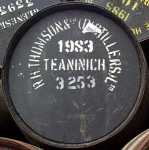 Teaninich isn’t amongst those superstars of Single Malt Whiskies around, but it has a fanatical following with certain enthusiasts. Well I’m one of them. Almost every time I taste a Teaninich, blind or not, this always tickles my fancy. I connect with it. It suits my palate. Dare we say: “For reasons not even science can wholly explain…”
  Teaninich was founded in 1817. In 1970, yes a small jump in time, a whole new six still ‘distillery’ was built alongside the current one, consisting of four stills. The new one was called the A-side (The old stuff was therefore called the B-Side). They worked together as one distillery. In 1984 the old distillery was mothballed, and 15 years later, demolished.
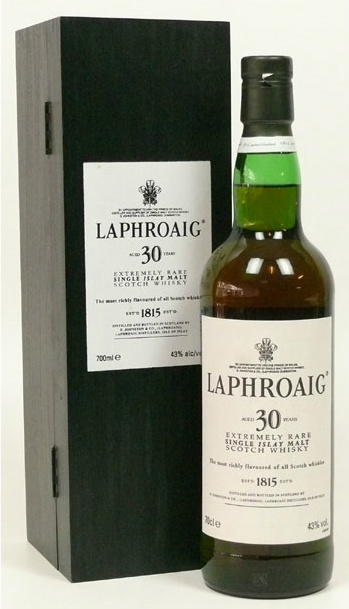 Time for a nice old Laphroaig. The
 The Old Train Line series is probably the series with the most beautiful labels I know. The series is bottled by German bottler Jack Wieber based in Berlin.
 Founded in 1843 by William Mathesen, but whisky was distilled on site as early as 1703 (or 1738). Glenmorangie is now known for their stills with very tall necks that ensure a very light and clean spirit that had to reach incredible heights. Glenmorangie are also known for their Dr. Bill Lumsden, a man who doesn’t fear innovation and experimentation with his grains and woods.
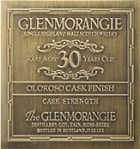 The whole is pretty balanced. It’s easy noticeable that this is from light spirit. The nose is great, and the taste is very nice. The only two things that let this down is its lightness. And a Glenmorangie should be light, that’s one of their pillars. Personally I like a bit of body to it, like yesterdays
 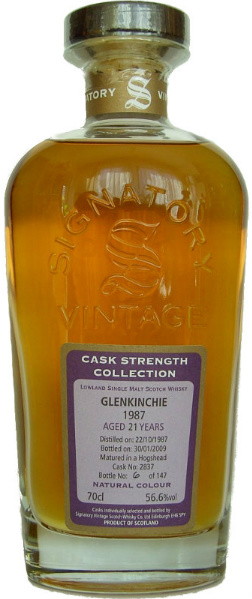 Glenkinchie, a rarely seen Lowland distillery within the ranges of independent bottlers. Founded in 1837, Glenkinchie is foremost known for the closure of Rosebank. When Diageo set up their range of classic malts they chose Glenkinchie over Rosebank. As you might know, Rosebank is known to have a huge following, so this decision wasn’t welcomed at all. Now Rosebank is no more, we’ll have to see if this Glenkinchie is worth your money. Instead of a regular Diageo bottling, let’s try an independent one.
 Springbank, the strongest survivor of Campbeltown, and one of the few family owned distilleries. Once a great center for whisky, and once a region of its own, it still is, but barely.
 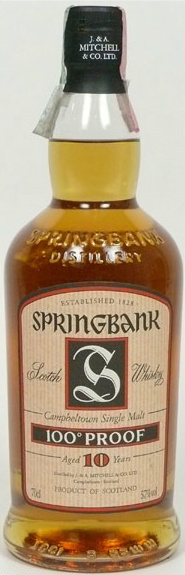 The people behind Springbank do their utmost best to let Campbeltown survive as a region. Glen Scotia is intermittently operated by the crew of Springbank, and of course Springbank themselves are responsible for Longrow, Hazelburn and Kilkerran (Glengyle Distillery). All names from a distant Campbeltown past. Founded in 1828 by the Reid family, who were married into the Mitchells. In 1837 the Mitchell’s bought the distillery. In 1897 J. & A. Mitchell Company Ltd. is founded, the company that is still on the label today. Since 1969 J. & A. Mitchell is also owner of Cadenhead’s. Between 1979 and 1987, Springbank was closed. And since 1989, production is again as it should be. Almost nobody malts themselves these days, but Springbank take the remarkable step to reopen the maltings in 1992. Springbank is a cult malt has a great following, and is by far the most popular malt on Wall Street.
 Yes it’s “Snickers” in a bottle. Slightly unbalanced by the soury woody, and peaty, finish. The finish also leaves a minty sensation on the tongue. Sweet mint as in “After Eight”.
 It’s Islay time! oops, maybe that was from Ardbeg. Well Bowmore is also from Islay and both are in the same time-zone. I see it’s the first Bowmore here, so I choose a potentially good one. Obviously not from a single cask, since no Bourbon Cask (Barrel or Hogshead) can yield 708 bottles.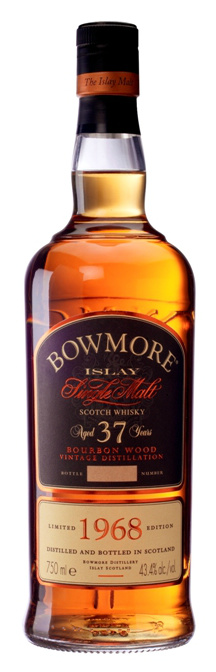
 Clynelish is a very popular dram. There are several reasons why. First of all it’s a sister of Brora, which maybe the best malt of all. Second. Clynelish has a unique waxy personality and it’s spirit is always of high quality. It’s very hard to find one that is not up to par.
 Taste: Spicy and definitively from a sherry cask. Wood, beer and spice again. Sweet and tarry. Shortbread and gingerlike. Turkish delight and has some traits of a Riesling wine. Full bodied. Slight sour wood and licorice on the finish.
 Master Quill